
World
US and Denmark reach deal on Greenland, Trump says
In a separate statement, US Secretary of State Marco Rubio said that the deal “permanently and completely” addressed Washington’s national security concerns with respect to the island.


The United States, Denmark and Greenland have entered into an agreement for the US to develop a significant military presence on Greenland, while prohibiting US adversaries from building their own bases on the island, Donald Trump said on Friday.
In a Truth Social post, the US president wrote that no US enemies would be able to make sensitive investments on the island without the approval of the United States and that the agreement had no expiry date, Reuters reported.
“At my direction, we worked with representatives of Denmark and Greenland to guarantee that the United States will FOREVER have the complete ability to do what is necessary in Greenland in order to secure and defend the security of Greenland, and the United States of America,” Trump wrote.
Earlier on Friday, Reuters exclusively reported that the US and Denmark were closing in on a deal that would result in an increased US military presence in Greenland, an autonomous territory of Denmark, but would stop well short of Trump’s long-held dream of acquiring the island for the United States.
The US already has nearly total overflight and basing rights in Greenland due to a 1951 treaty.
Trump’s announcement suggests he was nonetheless pleased with the outcome of the negotiations and that he might not revive his territorial claims, at least in the near future. He said, without elaborating, that the US would soon be rolling out a large military presence on the island, which already hosts one Space Force base in its remote northwest.
“This is a dream come true for the United States of America,” Trump wrote.
EXTENT OF AGREEMENT REMAINS UNCLEAR
The Danish prime minister’s office said on Friday that the agreement would strengthen North Atlantic and Arctic security.
Greenland’s prime minister, Jens-Frederik Nielsen, said in a statement that the agreement recognized Greenland’s interests and the Arctic island’s place in international cooperation. “This benefits us all,” he said.
Much was unclear as of Friday night, including whether any new US bases would be constructed as a result of the agreement. Trump’s Truth Social posts about negotiations or agreements often lack context or specifics.
Imran Bayoumi, a former Pentagon official now with the Atlantic Council think tank, said it would be new if the US can build bases without the approval of Greenland or Denmark but that largely “it seems that Washington could have achieved a lot of these objectives through diplomacy and dialogue without straining the broader US-NATO relationship.”
It was also unclear how the agreement would be received in Greenland, an autonomous territory of Denmark. The island’s residents aspire to independence and have bristled at US attempts to assert control.
In a separate statement, US Secretary of State Marco Rubio said that the deal “permanently and completely” addressed Washington’s national security concerns with respect to the island.
“Greenland will forever be part of the strategic defense area of North America and exclude any adversary from it and the surrounding area,” he wrote.
A State Department official, speaking on condition of anonymity to discuss specific terms, said the deal prohibits non-NATO countries from building a base in Greenland and will allow only the US and its allies to make unspecified “sensitive investments.” The official said the agreement grants the US permanent access, basing and overflight rights, and would continue to apply even if Greenland becomes independent.



An Indian tourist was killed and a New Zealand national injured after two helicopters collided while attempting to land in Nepal’s Everest region on Tuesday, police said.
The accident occurred on a snowy landing site in Solukhumbu district when helicopters operated by Fishtail Air and Air Dynasty struck each other during landing attempts.
“The 47-year-old Indian tourist died on the spot,” Nabin Raja Budhathoki, head of Solukhumbu District Police, told AFP.
A 53-year-old New Zealand national was injured and airlifted to the capital, Kathmandu, for further medical treatment. Authorities were also arranging to transport the deceased tourist’s body to the capital.
Both helicopter pilots survived the collision.
Helicopters are widely used in Nepal to transport tourists, mountaineers and supplies across the Himalayan region, as well as to conduct emergency evacuations.
However, the country’s mountainous terrain and rapidly changing weather conditions make aviation operations particularly challenging.
Nepal is home to eight of the world’s 14 highest mountains, including Mount Everest, attracting thousands of international climbers and trekkers each year.
World
US carries out ‘defensive’ strikes on Iran’s Qeshm Island, officials say
Another official said the strikes were defensive measures against Iranians using surface-to-air missiles against US assets.

The US carried out strikes on Iran’s Qeshm Island in the Strait of Hormuz, a US official said on Monday.
The strikes, earlier reported by the Wall Street Journal, appeared to be limited and were not a resumption of major combat operations, the official said, speaking on the condition of anonymity.
Another official said the strikes were defensive measures against Iranians using surface-to-air missiles against US assets.
The Pentagon referred a request for comment to the US Central Command, which oversees American forces in the Middle East. CENTCOM did not respond to requests for comment.
Earlier on Monday, Iranian state media outlet IRNA reported that there were several explosions on Qeshm Island.
The Journal reported that the attack was the latest in a series of strikes carried out by Washington in recent weeks.
Fox News, citing officials, said the strikes were defensive and carried out in response to Iran firing at a US aircraft.
In recent weeks, President Donald Trump hinted at renewing attacks on Iran after the US midterm elections on Tuesday. But after a speech at the Lincoln Memorial Reflecting Pool on Monday, he indicated he might be thinking otherwise.
World
Trump White House maps path to govern without Congress if Democrats win: report
If Republicans lose control of Congress, Trump said he expects he could issue vetoes for “a month or two” before reaching compromises with Democrats.
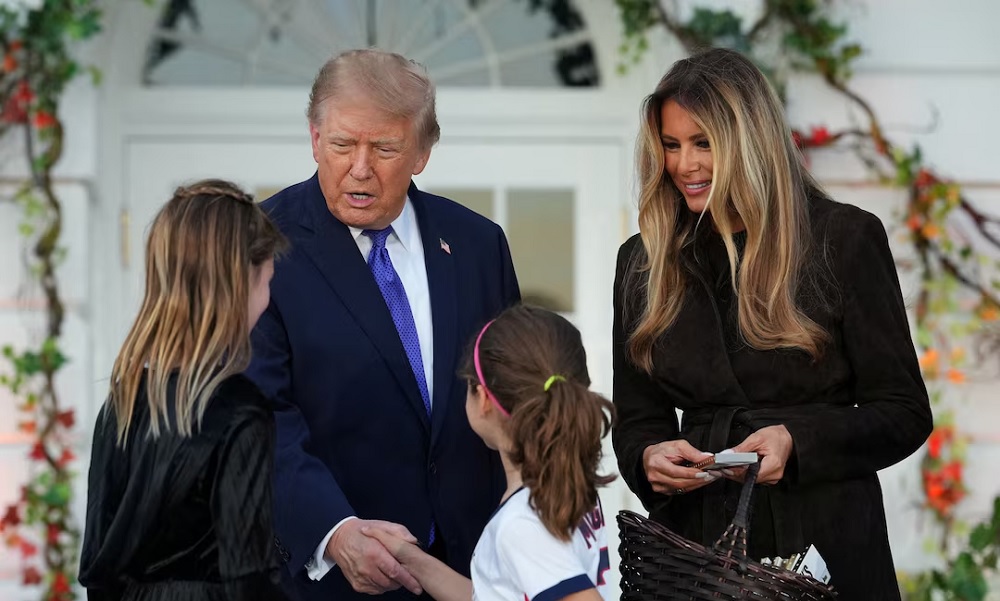
President Donald Trump’s White House has spent months preparing for a possible Democratic takeover of Congress, developing plans to keep advancing major parts of his agenda through executive power while bracing for investigations of his administration, Reuters reported citing a White House official and two people familiar with the plans.
Senior officials, including deputy chief of staff Stephen Miller and budget director Russell Vought, have been working with the White House Counsel’s Office since April to identify executive actions on immigration, tariffs, housing costs and federal spending that Trump could pursue without congressional approval, said the three people, who spoke on the condition of anonymity.
White House counsel Will Scharf and his team also are looking at “what Trump can legally do on his own, where he could push the limits of his authority and how to defend those decisions in court,” the White House official said.
The planning underscores a paradox of Tuesday’s midterm elections: Capturing control of Congress would give Democrats the power to investigate Trump, block legislation and constrain his spending priorities. But Trump would retain broad executive authority over trade, foreign policy and the federal bureaucracy that he has already used aggressively during his second term.
If Republicans lose control of Congress, Trump said he expects he could issue vetoes for “a month or two” before reaching compromises with Democrats.
“I guess I’ll become Mr. Veto,” Trump told the New York Post’s Pod Force One podcast in an interview excerpt released on Sunday. “And then at some point, we’ll probably make deals.”
Democrats need a net gain of four seats in the US House of Representatives as well as the US Senate to overturn Republicans’ narrow 218-214 and 53-47 majorities. Opinion polls favor Democrats to win the House, while the Senate remains too close to call.
For the past month, Trump has held rallies across the country trying to preserve Republican control of Congress, even as his aides privately prepare for a very different political landscape in 2027.
The White House pushed back on the prospect of Republican losses and accused the media of promoting a false narrative.
“This administration and commonsense Republicans will continue to secure our borders, restore law and order, putting more money back into the pockets of hard-working Americans, and deliver wins for the American people,” White House spokeswoman Lauren Bis said.
Among the executive actions under consideration are new tariffs on imports of critical minerals and wind turbines, tighter rules on visas for international students and temporary foreign workers, and measures aimed at lowering housing and construction costs, the White House official said.
Federal agencies have submitted proposals and legal reviews of actions the administration could take unilaterally, one of the people with knowledge of the plans said.
Vought, whose US Office of Management and Budget oversees federal spending, is examining which priorities can move forward using money already appropriated by Congress, two of the people said.
He also wants to change federal grant rules to give political appointees more say in which government programs receive taxpayer money, they said, potentially giving the White House more influence over federal spending without seeking congressional approval.
Trump has been briefed on the preparations and has taken part in discussions about them, the White House official said.
When asked how comfortable Trump would be governing through executive authority under a Democratic Congress, one of the people said, “very comfortable.”
GOVERNING WITHOUT CONGRESS
Trump has already tested the reach of presidential power since returning to office in January 2025, using executive authority to impose sweeping tariffs, intensify immigration enforcement, shrink the federal workforce, and pursue foreign-policy goals including the war against Iran without Congress’ approval or new laws.
A major exception was Trump’s massive package of tax and spending cuts that was passed by the Republican-controlled Congress and signed into law by the president in July 2025.
“President Trump in the last two years has basically ignored Congress and tried to do as much as possible through executive orders and executive power,” said Nathan Gonzales, editor at Inside Elections, which provides nonpartisan political analysis. “I think he will only continue if there are Democratic majorities.”
Trump has repeatedly invoked national emergencies to expand his ability to act without new legislation. Congress can vote to end those emergencies, but Trump could veto such a move, requiring two-thirds majorities in both chambers to override him.
A Democratic Congress could still create significant obstacles.
Control of the Senate would allow Democrats to block Trump’s judicial and executive-branch nominees, including any Supreme Court pick.
“I would anticipate they will be very reluctant to approve any of the president’s appointments,” said Andrew Busch, a public policy professor at the University of Tennessee, Knoxville, and author of a history of midterm elections.
Democrats could also refuse to pass Trump-backed legislation. But Trump could veto Democratic legislation he doesn’t like, and Democrats are unlikely to have enough votes in the House to override him.
Courts could block executive actions that exceed Trump’s legal authority. The White House plans to seek legal opinions from the Justice Department to determine what Trump can do without Congress and how to defend those actions if they are challenged in court, one of the people said.
DEMOCRATIC INVESTIGATIONS
One challenge, however, cannot be sidestepped through executive action: congressional investigations.
Reuters previously reported that senior House Democrats and committee aides have discussed using hearings, subpoenas and document requests to examine whether Trump has used his presidential power to benefit himself, allies or donors.
Trump aides have been preparing for that prospect for months, all three people said.
White House lawyers have been briefing political appointees and agency leaders on how to handle congressional inquiries, document requests and subpoenas, one person said. They have advised officials to be careful about what they put in writing.
They also sought a Justice Department opinion that could allow Trump to invoke executive privilege to shield communications with private advisers from congressional scrutiny, the person said.


Saar: Deportation of undocumented Afghans from France discussed

Arman FC secure 3-1 victory over Sarsabz Yashlar in ACL

13-member Afghan trade delegation heads to Iran

France in talks with IEA authorities to facilitate return of Afghan migrants
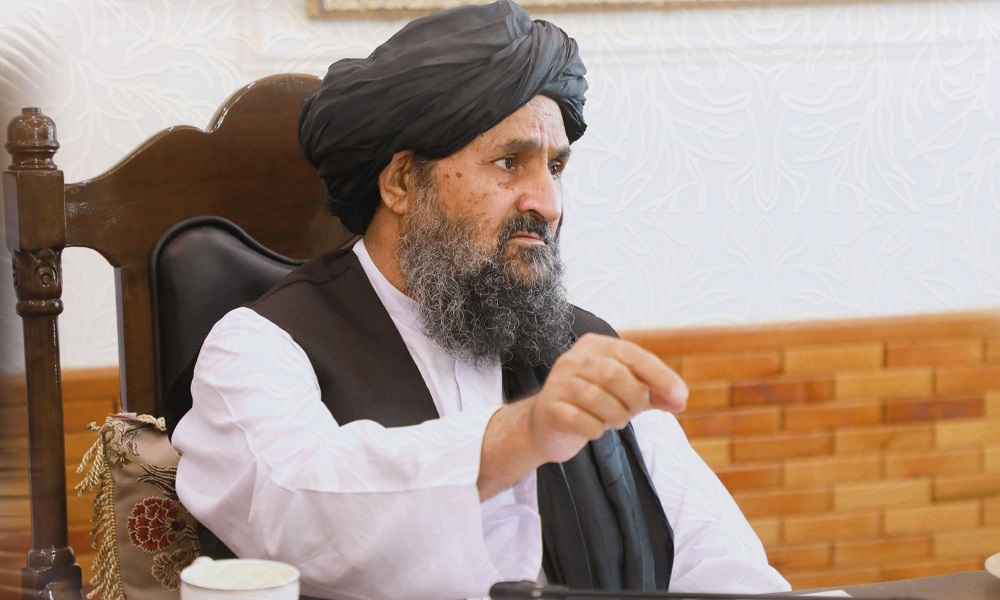
Afghanistan-Russia economic cooperation coordination meeting held in Kabul

Cricket Bonanza: Afghanistan set for packed international schedule

Afghanistan finish runners-up after 6-0 defeat to Brazil in futsal final

Trump says US will not attack Iran before midterm elections in November

Lionel Messi bids tearful farewell to Argentina after 3-0 win over Benin

Afghan futsal coach: Brazil tournament is first step towards new goals and World Cup
Saar: Deportation of undocumented Afghans from France discussed

Tahawol: calls for dialogue between Kabul and Islamabad

Saar: Trump’s remarks on Afghanistan war

Tahawol: US offers to ease Kabul-Islamabad tensions
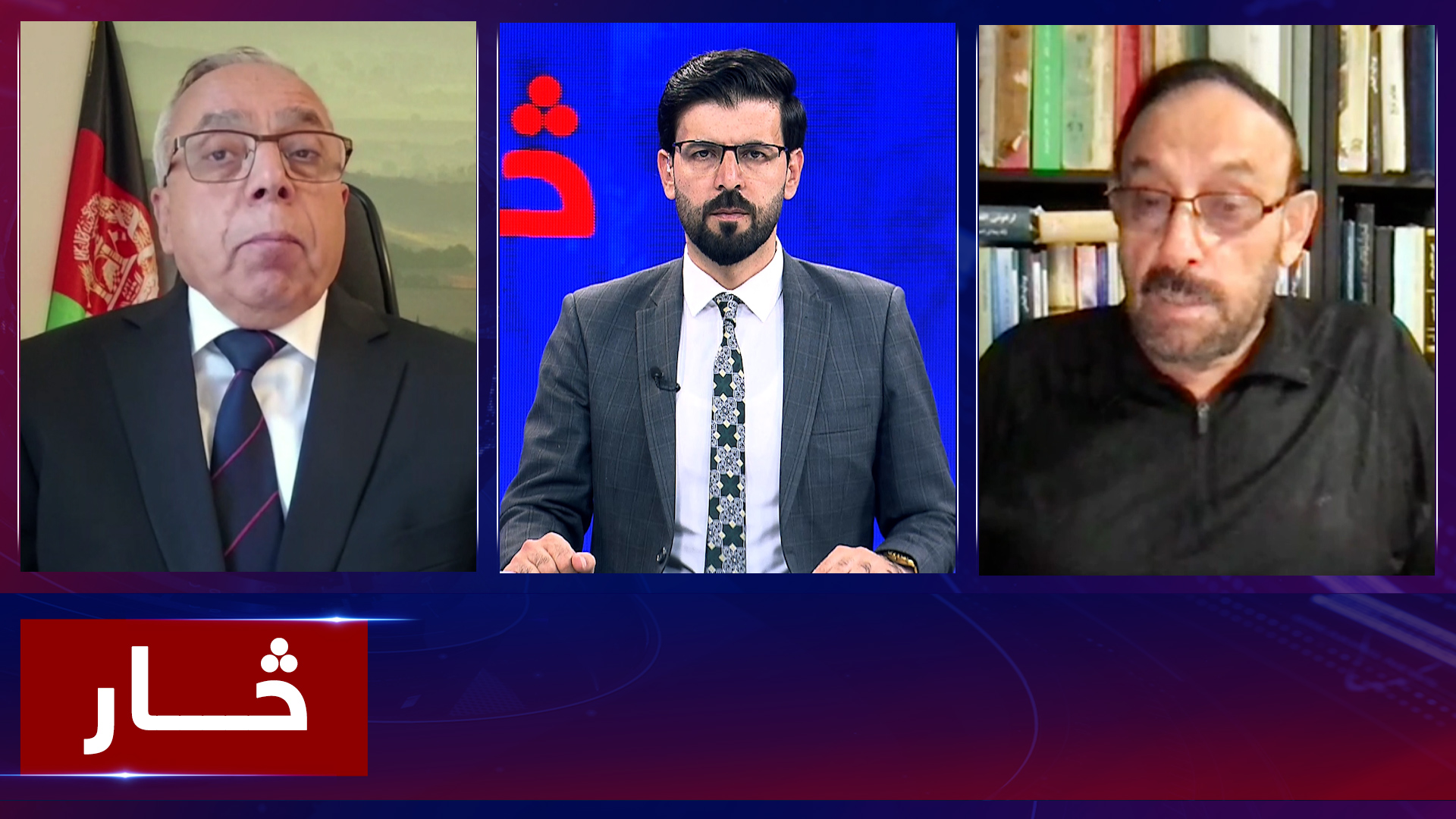
Saar: Identity of ISIS suspect arrested in pakistan revealed
-
 Business3 days ago
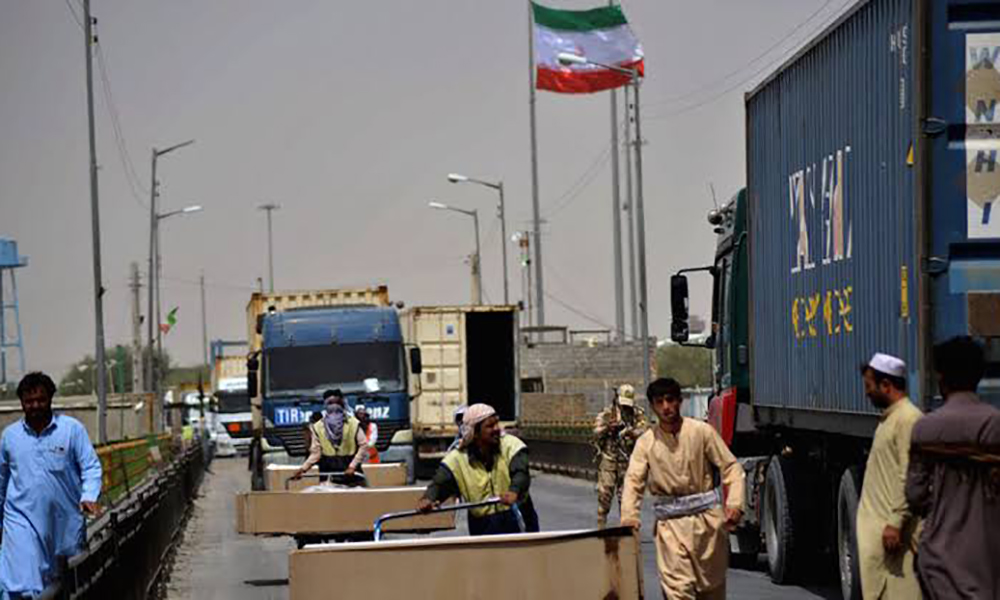
US sanctions and blockade measures disrupt Iran’s trade with Afghanistan and regional neighbors
-
 Sport2 days ago
Afghanistan crowned 2026 Hong Kong Sixes champions after beating Australia in final
-
 Sport3 days ago
Afghanistan storm into Hong Kong Sixes final after beating Scotland
-

 Sport4 days ago
Rashid Khan makes history as first-ever bowler to claim 200 T20I wickets
-
 Business4 days ago
Afghanistan inaugurates first phase of Kandahar cement factory
-
 Health4 days ago
Afghanistan to launch nationwide polio vaccination campaign
-

 Latest News3 days ago
UNHCR: 6.3 million Afghans have returned since 2023, 60 percent reportedly forced to return
-
 Latest News4 days ago
Turkish intelligence captures suspected Daesh operative in Afghanistan-Pakistan region