
AWCC customer in Kandahar wins 1 million AFN in ‘lucky lottery’

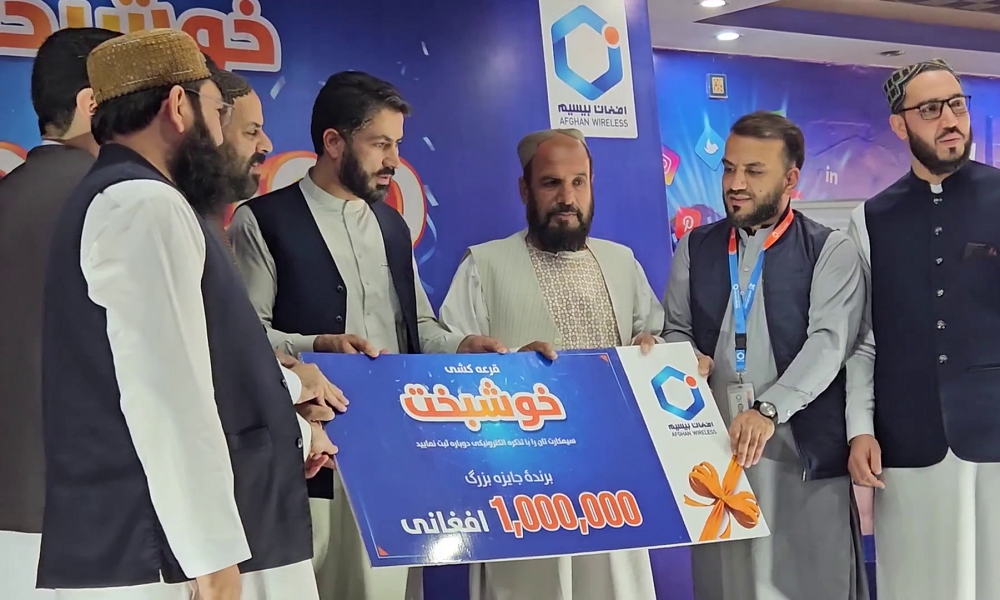
An Afghan Wireless Communication Company (AWCC) customer from Kandahar on Wednesday won a whopping 1 million afghanis (AFN) in the company’s “lucky lottery”.
Lucky lottery winner Mohammad Rasoul was thrilled to have won the money.
A very excited Rasoul told Ariana News: “I got a call and I was asked if this number was mine. I said yes and they said that you have won a one million afghani award from the Afghan Wireless Communication Company.”
AWCC officials meanwhile said this exciting initiative has brought much relief to many customers over the past few months.
AWCC has been a leader in the industry since its inception 25 years ago and was recognised as Afghanistan’s Telecom Company of the Year at the 2024 Asian Telecom Awards in March this year.
In just over a year, AWCC has increased its active customer base by more than 10%, and has expanded its mobile network footprint by about 15% – taking much needed telecommunication services to some of the most remote regions in the country.
In addition, AWCC rolled out its Kabul-Mazar-Hairaton fiber route earlier this year, connecting Central Asia to South Asia and placing Afghanistan at the center of the region’s digital connectivity hub.
The company has also delivered critical support in times of emergency in the country over the years.
Last year, staff were swiftly mobilized to provide emergency connectivity and humanitarian assistance to earthquake hit Herat.
Islamic Emirate officials in Kandahar meanwhile said they are committed to supporting the private sector, especially the telecommunication networks.











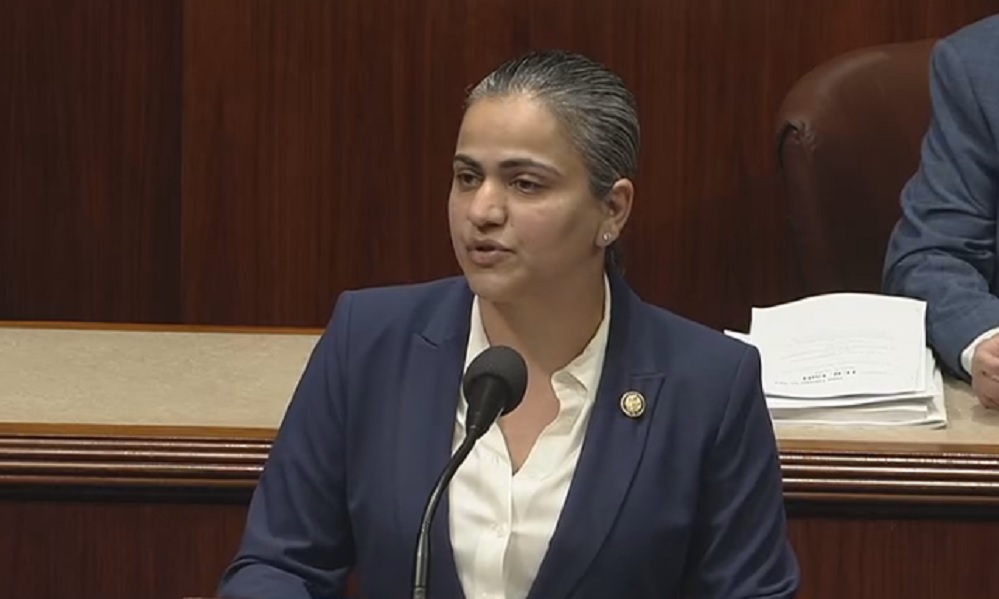
Former California state senator Aisha Wahab was sworn in Wednesday as a member of the U.S. House of Representatives, becoming the first Afghan American to serve in Congress.
Wahab, 39, will serve the remainder of former Rep. Eric Swalwell’s term through the end of the year. Swalwell resigned in April following allegations of sexual misconduct by multiple women.
During her remarks after taking the oath, Wahab spoke about her journey from foster care to Congress and described the American Dream as a promise that a person’s past does not determine their future.
“I walked into Congress carrying the beating heart of a former foster care kid,” Wahab said.
Wahab was born in New York to Afghan refugees and was raised in the foster care system, first in New York and later in Fremont, California. She previously served on the Hayward City Council and represented California’s 10th Senate District. She holds a doctorate in social work from the University of Southern California.
She defeated BART Board President Melissa Hernandez in the Aug. 18 special election for the remainder of Swalwell’s term. Wahab also won two crowded June primaries and will face Hernandez again in the Nov. 3 general election.
In her congressional remarks, Wahab called for cooperation between Democrats and Republicans, saying Americans are struggling with the rising costs of housing, utilities, groceries, education, healthcare and other basic necessities.
“As a policy maker, my goal is simple: to work with each and every one of you to deliver for the American people, regardless of party,” Wahab said.
Rep. Zoe Lofgren introduced Wahab on the House floor and highlighted her background and work on behalf of foster youth and vulnerable communities.
“Today, she makes history as the first Afghan American elected to Congress,” Lofgren said.
Science & Technology
UNICEF estimates 20 million children suffered online sexual abuse in one year
Almost 60% of reported abuse occurred on social media platforms, led by Facebook, WhatsApp, Instagram, Snapchat and TikTok, while 14% took place in online gaming, the report found.

About 20 million internet-using children across 21 countries were subjected to sexual exploitation or abuse on digital platforms in a single year, with most cases occurring on social media platforms, a new report by the U.N. children’s charity said on Thursday.
More than one in five children aged 12 to 17 across Africa, Asia, Latin America and Eastern Europe experienced at least one form of sexual abuse or exploitation on online platforms in the year before being surveyed, the UNICEF report estimated, Reuters reported.
Roughly 15 million children in the countries surveyed were exposed to unwanted sexual content, 9 million were pressured into sexual conversations or sharing sexual images, and 4 million had sexual images shared without their consent, the report found.
The number of children subjected to this abuse globally is certain to run into many tens of millions, it said.
The research, which UNICEF described as one of the largest studies of its kind, was based on national representative surveys collected between 2020 and 2025 of around 21,000 internet-using children in the 21 countries, which included Kenya, Pakistan, Brazil and Serbia.
SOCIAL MEDIA FOCUS
Almost 60% of reported abuse occurred on social media platforms, led by Facebook, WhatsApp, Instagram, Snapchat and TikTok, while 14% took place in online gaming, the report found.
A spokesperson for Meta which owns Facebook, WhatsApp and Instagram, said the surveys go as far back as 2020, before the company introduced protections UNICEF recommends such as automatically defaulting teens into private accounts and preventing adults from messaging teens they are not connected to. It added that it defines WhatsApp as a private messaging app and not a social media platform.
“While the report doesn’t provide any specific evidence of abuse, we’ll continue to fight child exploitation aggressively across our apps and support law enforcement in prosecuting the criminals behind it,” the Meta spokesperson said.
Snapchat pointed Reuters to a blog post by Global Head of Platform Safety Jacqueline Beauchere, who said the company was actively combating online sexual extortion through proactive detection, account removals, user reporting tools and safety features designed to protect vulnerable users.
TikTok said it has built a range of safeguards to protect minors, including restricting certain features for younger users, making accounts for under-18s private by default, and using technology to detect potentially predatory behaviour.
The UNICEF report said more than half the cases involved someone the child already knew, including friends, relatives or romantic partners, while 38% of children first encountered the perpetrator online.
Fewer than 1% of cases involving children were reported to the police, a social worker or a helpline, according to the research.
The report also highlighted growing concerns over artificial intelligence. Across nine countries where data was collected, an estimated 1.1 million children reported having AI-generated sexual images or videos created depicting them.
Children who experienced tech-facilitated sexual exploitation were around four times more likely to report suicidal thoughts or self-harm and reported significantly higher levels of anxiety than their peers, the research said.
“These experiences cause profound emotional and mental distress. Many children suffer in silence, unsure where to turn for help,” UNICEF Executive Director Catherine Russell said in a statement.
UNICEF urged governments and technology companies to strengthen safety measures on digital platforms, update laws to address evolving forms of abuse including AI-generated content, and improve child protection and reporting systems.


Aisha Wahab sworn in as first Afghan American in U.S. Congress

UNICEF estimates 20 million children suffered online sexual abuse in one year

Tahawol: Shifting regional views on Islamic Emirate discussed

Saar: UNSC review of Afghanistan situation discussed

Pakistan says continued talks on Afghanistan depend on action against terrorist groups

Four mediators struggle to secure lasting Pakistan-Afghanistan ceasefire

HesabPay unveils new visa card and digital payment app in Kabul

AFC Champions League Elite draw nears as Al-Nassr seeded above Al-Hilal

Afghanistan secure direct qualification for 2027 Men’s ODI World Cup

Uzbekistan’s Fergana region strengthens economic ties with Afghanistan
Tahawol: Shifting regional views on Islamic Emirate discussed
Saar: UNSC review of Afghanistan situation discussed

Tahawol: SCO meeting outcome on Afghanistan discussed

Saar: Calls for faster progress on Trans-Afghan Railway project discussed

Tahawol: Five years since the US withdrawal from Afghanistan
-

 World4 days ago
Trump floats idea of renaming Atlantic or Pacific Ocean
-
 Sport3 days ago
Afghanistan drawn in Group A of AFC U17 Asian Cup qualifiers
-

 Regional2 days ago
Pakistan, Saudi Arabia and Türkiye strengthen new Mecca Defence Alliance
-

 Business5 days ago
Afghanistan transports more than 704,000 tonnes of goods by rail in August
-

 Latest News5 days ago
US chose to stay in Afghanistan instead of eliminating terrorism, says Russian FM
-

 Latest News5 days ago
US Congress extends Afghanistan War Commission’s mandate by one year
-

 Latest News4 days ago
US deports Afghan man with family ties to US military to Central African Republic
-
 Climate Change4 days ago
Nepal flood rescue mission enters critical phase as thousands remain missing