
Latest News
How Hamas duped Israel as it planned devastating attack

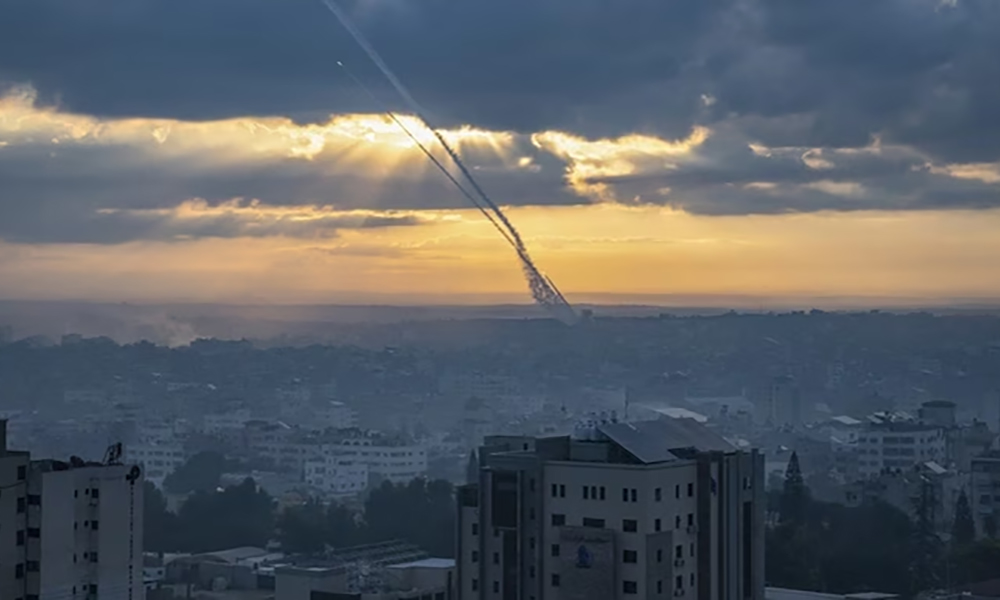
A careful campaign of deception ensured Israel was caught off guard when the Palestinian Islamist group Hamas launched its devastating attack, enabling a force using bulldozers, hang gliders and motorbikes to take on the Middle East’s most powerful army.
Saturday’s assault, the worst breach in Israel’s defenses since Arab armies waged war in 1973, followed two years of subterfuge by Hamas that involved keeping its military plans under wraps and convincing Israel it did not want a fight.
While Israel was led to believe it was containing a war-weary Hamas by providing economic incentives to Gazan workers, the group’s fighters were being trained and drilled, often in plain sight, a source close to Hamas said.
This source provided many of the details for the account of the attack and its buildup that has been pieced together by Reuters. Three sources within Israel’s security establishment, who like others asked not to be identified, also contributed to this account.
“Hamas gave Israel the impression that it was not ready for a fight,” said the source close to Hamas, describing plans for the most startling assault since the Yom Kippur War 50 years ago when Egypt and Syria surprised Israel and made it fight for its survival.
“Hamas used an unprecedented intelligence tactic to mislead Israel over the last months, by giving a public impression that it was not willing to go into a fight or confrontation with Israel while preparing for this massive operation,” the source said.
Israel concedes it was caught off guard by an attack timed to coincide with the Jewish Sabbath and a religious holiday. Hamas fighters stormed into Israeli towns, killing 700 Israelis and abducting dozens. Israel has killed more than 400 Palestinians in its retaliation on Gaza since then.
“This is our 9/11,” said Major Nir Dinar, spokesperson for the Israeli Defence Forces. “They got us.”
“They surprised us and they came fast from many spots – both from the air and the ground and the sea.”
Osama Hamdan, the Hamas representative in Lebanon, told Reuters the attack showed Palestinians had the will to achieve their goals “regardless of Israel’s military power and capabilities.”
In one of the most striking elements of their preparations, Hamas constructed a mock Israeli settlement in Gaza where they practiced a military landing and trained to storm it, the source close to Hamas said, adding they even made videos of the maneuvers.
“Israel surely saw them but they were convinced that Hamas wasn’t keen on getting into a confrontation,” the source said.
Meanwhile, Hamas sought to convince Israel it cared more about ensuring that workers in Gaza, a narrow strip of land with more than two million residents, had access to jobs across the border and had no interest in starting a new war.
“Hamas was able to build a whole image that it was not ready for a military adventure against Israel,” the source said.
Since a 2021 war with Hamas, Israel has sought to provide a basic level of economic stability in Gaza by offering incentives including thousands of permits so Gazans can work in Israel or the West Bank, where salaries in construction, agriculture or service jobs can be 10 times the level of pay in Gaza.
“We believed that the fact that they were coming in to work and bringing money into Gaza would create a certain level of calm. We were wrong,” another Israeli army spokesperson said.
An Israeli security source acknowledged Israel’s security services were duped by Hamas. “They caused us to think they wanted money,” the source said. “And all the time they were involved in exercises/drills until they ran riot.”
As part of its subterfuge in the past two years, Hamas refrained from military operations against Israel, even as another Gaza-based Islamist armed group known as Islamic Jihad launched a series of its own assaults or rocket attacks.
The restraint shown by Hamas drew public criticism from some supporters, again aimed at building an impression that Hamas had economic concerns not a new war on its mind, the source said.
In the West Bank, controlled by Palestinian President Mahmoud Abbas and his Fatah group, there were those who mocked Hamas for going quiet. In one Fatah statement published in June 2022, the group accused Hamas leaders of fleeing to Arab capitals to live in “luxurious hotels and villas” leaving their people to poverty in Gaza.
A second Israeli security source said there was a period when Israel believed the movement’s leader in Gaza, Yahya Al-Sinwar, was preoccupied with managing Gaza “rather than killing Jews”. At the same time, Israel turned its focus away from Hamas as it pushed for a deal to normalise relations with Saudi Arabia, he added.
Israel has long prided itself on its ability to infiltrate and monitor Islamist groups. As a consequence, the source close to Hamas said, a crucial part of the plan was to avoid leaks.
Many Hamas leaders were unaware of the plans and, while training, the 1,000 fighters deployed in the assault had no inkling of the exact purpose of the exercises, the source added.
When the day came, the operation was divided into four parts, the Hamas source said, describing the various elements.
The first move was a barrage of 3,000 rockets fired from Gaza that coincided with incursions by fighters who flew hang gliders, or motorised paragliders, over the border, the source said. Israel has previously said 2,500 rockets were fired at first.
Once the fighters on hang-gliders were on the ground, they secured the terrain so an elite commando unit could storm the fortified electronic and cement wall built by Israel to prevent infiltration.
The fighters used explosives to breach the barriers and then sped across on motorbikes. Bulldozers widened the gaps and more fighters entered in four-wheel drives, scenes that witnesses described.
‘HUGE FAILURE’
A commando unit attacked the Israeli army’s southern Gaza headquarters and jammed its communications, preventing personnel from calling commanders or each other, the source said.
The final part involved moving hostages to Gaza, mostly achieved early in the attack, the source close to Hamas said.
In one well-publicised hostage taking, fighters abducted party-goers fleeing a rave near the kibbutz of Re’im near Gaza. Social media footage showed dozens of people running through fields and on a road as gunshots were heard.
“How could this party happen this close (to Gaza)?” the Israeli security source said.
The Israeli security source said Israeli troops were below full strength in the south near Gaza because some had been redeployed to the West Bank to protect Israeli settlers following a surge of violence between them and Palestinian militants.
“They (Hamas) exploited that,” the source said.
Dennis Ross, a former Middle East negotiator who is now at the Washington Institute for Near East Policy, said Israel had been distracted by violence in the West Bank, leading to a “thin, under-prepared presence in the south.”
“Hamas probably succeeded beyond their expectation. Now they will have to deal with an Israel determined to decimate them,” he said.
Retired General Yaakov Amidror, a former national security adviser to Prime Minister Benjamin Netanyahu, told reporters on Sunday the assault represented “a huge failure of the intelligence system and the military apparatus in the south.”
Amidror, chairman of the National Security Council from April 2011-November 2013 and now senior fellow with the Jerusalem Institute for Strategy and Security, said some of Israel’s allies had been saying that Hamas had acquired “more responsibility”.
“We stupidly began to believe that it was true,” he said. “So, we made a mistake. We are not going to make this mistake again and we will destroy Hamas, slowly but surely.”
Source: Reuters








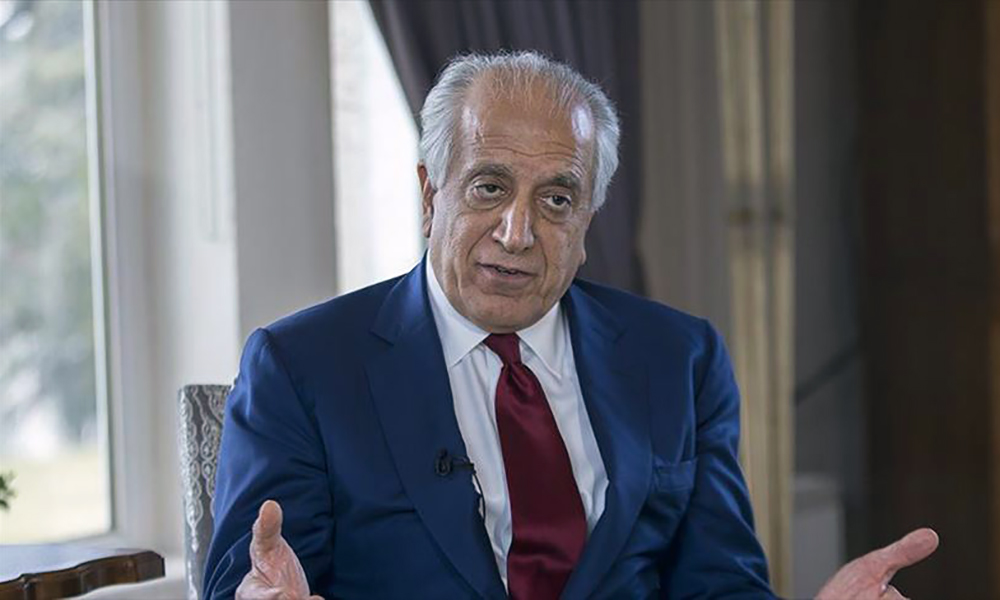
Former U.S. special representative for Afghanistan reconciliation Zalmay Khalilzad has warned that the latest Pakistani airstrikes in Afghanistan and recent violence inside Pakistan are part of a wider crisis, saying he sees no indication that the situation is about to change.
In a post on X on Thursday, Khalilzad described the Pakistani airstrikes that have killed Afghan civilians and the increasing use of force against civilians in Pakistan as “interconnected tragedies,” implying both effected by Pakistan’s establishment.
“Unfortunately, I do not see any signs of change,” Khalilzad said, adding that current indicators suggested the use of force against Pakistanis would “likely get worse” in the coming days.
His comments came after Pakistan carried out a new wave of airstrikes inside Afghanistan overnight Thursday, saying it had targeted 10 locations used to launch and store drones.
Pakistani Information Minister Attaullah Tarar said the strikes were conducted in response to drones launched from Afghan territory a day earlier and described them as “deliberate, precise, calibrated and proportionate.”
Afghan officials said the strikes killed four civilians. The attacks reportedly hit locations including Kandahar, Khost and Paktia provinces. Afghanistan’s Islamic Emirate authorities have denied launching the drones cited by Pakistan and have condemned the strikes.
The latest attacks follow Pakistani airstrikes earlier this week in Kunar and Paktika. Pakistan said those operations killed 28 militants, while the United Nations confirmed that three Afghan civilians — a man, a woman and a girl — were killed, with four others injured.
The renewed airstrikes come amid a sharp deterioration in relations between Kabul and Islamabad. Pakistan has accused Afghanistan of allowing militant groups, including the Tehreek-e-Taliban Pakistan (TTP), to operate from its territory and launch attacks inside Pakistan.
Afghan authorities reject the allegations and say militancy inside Pakistan is an internal issue.
Khalilzad has previously called for a change in Pakistan’s strategy toward both its internal security problems and Afghanistan.
Afghanistan’s Ministry of Foreign Affairs summoned Pakistan’s chargé d’affaires to Kabul and lodged a strong protest against the violation of Afghan airspace and Pakistani military airstrikes on several Afghan provinces.
The ministry handed the Pakistani diplomat a formal protest note following the attacks on Kandahar, Paktia and Khost provinces on Wednesday night, which reportedly caused civilian casualties.
The Islamic Emirate strongly condemned the strikes, calling them a violation of Afghanistan’s sovereignty and territorial integrity and contrary to Islamic, international, humanitarian and good-neighborly principles.
The ministry also rejected what it called baseless claims that Afghan territory was being used as a source of Pakistan’s recent security incidents.
It said using such claims to justify military action was an attempt to distort facts, mislead public opinion and conceal Pakistan’s internal failures.
The Islamic Emirate further accused Pakistan’s military leadership of avoiding commitments made to regional countries and warned that such actions could further escalate tensions in the region.
Latest News
Museum dedicated to preserving ‘Jihadi’ artefacts opens in Kandahar
The museum’s collection includes more than 100 items gathered from different locations.
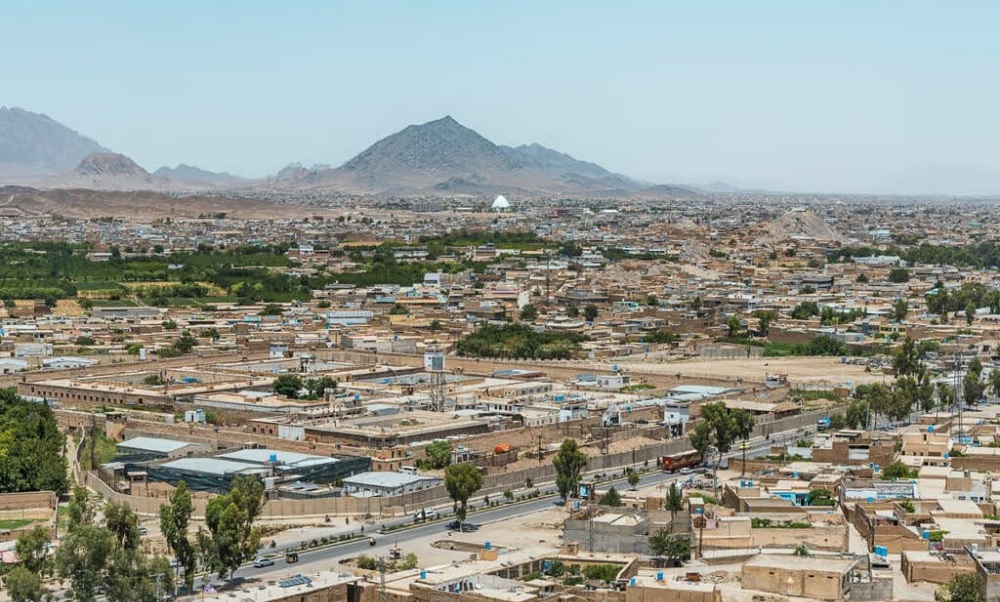
A museum dedicated to preserving what Afghan authorities describe as “Jihadi artefacts” has officially opened in Kandahar, with officials saying more than 100 items have so far been collected for display.
Mufti Mohammad Tahir Ahmad, Director General for the Preservation of Jihadi Artefacts at the Ministry of Information and Culture, attended the inauguration ceremony alongside Qari Ahmadullah Saeed Khosti, Director of Registration for Jihadi Artefacts and Documents.
Mufti Inamullah Samangani, head of the Kandahar Information and Culture Department, and officials from several government departments also attended the ceremony.
According to the official responsible for preserving the artefacts in Kandahar, the museum’s collection includes more than 100 items gathered from different locations.
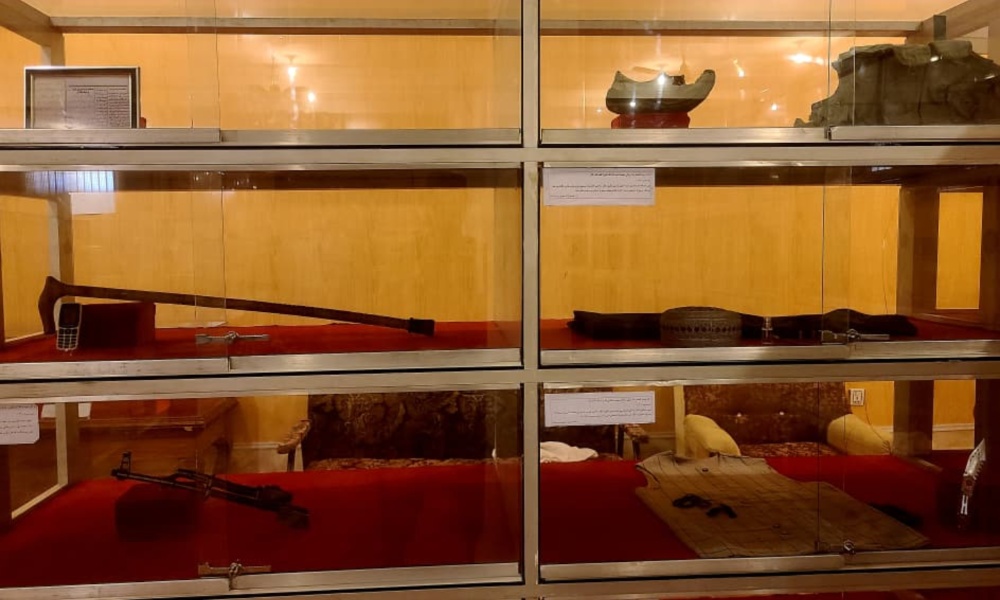
The collection includes weapons that officials say were captured from British, Soviet and US forces, as well as personal belongings and other items associated with people killed during Afghanistan’s conflicts over the past two decades.
Officials said efforts to collect additional artefacts would continue in order to expand the museum’s collection.
The museum is now open to visitors, according to the officials.


Saudi Grand Mufti tells troops to be ready to sacrifice their lives fighting Houthis

Afghanistan wins two bronze medals in wushu at Asian Games

White House reinstates access to CNN, MS NOW and Politico following judge’s order

Toofan Herat beat Khurasan Faryab 2–1 in Afghanistan Champions League

Tahawol: Discussion on fresh Pakistani airstrikes on Afghanistan

Saudi energy group signs major Afghanistan deals covering gas exploration and pipeline plans

ATN secures exclusive rights to broadcast T20I series in India across Afghanistan

Trump floats idea of renaming Atlantic or Pacific Ocean

US hits Egyptian bank branches with Iran sanctions as war marks six months

Nepal flood rescue mission enters critical phase as thousands remain missing
Tahawol: Discussion on fresh Pakistani airstrikes on Afghanistan

Saar: Calls for international support for Afghanistan discussed

Tahawol: Opening of the 81st UN General Assembly Session

Saar: OIC Assessment of Afghanistan’s humanitarian and development situation discussed

Tahawol: Reactions to Pakistan’s attacks on Afghanistan discussed
-

 Sport4 days ago
Afghanistan to face Japan and Nepal in Asian Games cricket group stage
-
 Latest News5 days ago
Pakistan says Kohat attackers had roots in Afghanistan
-
 Regional4 days ago
Iran and US trade threats after Houthi attacks escalate regional conflict
-

 World3 days ago
CNN, MS NOW and Politico sue Trump, challenging White House ban
-
 Business5 days ago
Dogharoun handles 60% of Iran’s exports to Afghanistan
-
 World5 days ago
World leaders return to UN amid wars in Middle East and Ukraine
-

 Health4 days ago
Four-day polio vaccination campaign begins across Afghanistan
-

 Latest News4 days ago
Khalilzad condemns Pakistan airstrikes, says current strategy is not working