
Regional
Israel and Syria agree ceasefire as Israel allows Syrian troops limited access to Sweida


Israel and Syria have agreed to a ceasefire, the U.S. envoy to Turkey said on Friday, after days of bloodshed in the predominantly Druze area that has killed over 300 people.
On Wednesday, Israel launched airstrikes in Damascus and hit government forces in the south, demanding they withdraw and saying that Israel aimed to protect Syrian Druze – part of a small but influential minority that also has members in Lebanon and Israel, Reuters reported.
“We call upon Druze, Bedouins, and Sunnis to put down their weapons and together with other minorities build a new and united Syrian identity,” Tom Barrack, the U.S. ambassador to Turkey, said in a post on X.
Barrack said that Israel and Syria agreed to the ceasefire supported by Turkey, Jordan and neighbors.
The Israeli embassy in Washington and Syrian consulate in Canada did not immediately respond to requests for comment.
Syria’s Sweida province has been engulfed by nearly a week of violence triggered by clashes between Bedouin fighters and Druze factions.
Earlier on Friday, an Israeli official said Israel agreed to allow Syrian forces limited access to the Sweida area of southern Syria for the next two days.
The Syrian presidency said late on Friday that authorities would deploy a force in the south dedicated to ending the clashes, in coordination with political and security measures to restore stability and prevent the return of violence.
Damascus earlier this week dispatched government troops to quell the fighting, but they were accused of carrying out widespread violations against the Druze and were hit by Israeli strikes before withdrawing under a truce agreed on Wednesday.
Israel had repeatedly said it would not allow Syrian troops to deploy to the country’s south, but on Friday it said it would grant them a brief window to end renewed clashes there.
“In light of the ongoing instability in southwest Syria, Israel has agreed to allow limited entry of the (Syrian) internal security forces into Sweida district for the next 48 hours,” the official, who declined to be named, told reporters.
Describing Syria’s new rulers as barely disguised jihadists, Israel has vowed to shield the area’s Druze community from attack, encouraged by calls from Israel’s own Druze minority.
It carried out more strikes on Sweida in the early hours of Friday.
The U.S. intervened to help secure the earlier truce between government forces and Druze fighters, and the White House said on Thursday that it appeared to be holding.
Syrian leader Ahmed al-Sharaa, who has worked to establish warmer ties with the U.S., accused Israel of trying to fracture Syria and promised to protect its Druze minority.
Reuters reporters saw a convoy of units from Syria’s interior ministry stopped on a road in Daraa province, which lies directly east of Sweida. A security source told Reuters that forces were awaiting a final green light to enter Sweida.
But thousands of Bedouin fighters were still streaming into Sweida on Friday, the Reuters reporters said, prompting fears among residents that violence would continue unabated.
The Syrian Network for Human Rights said it had documented 321 deaths in fighting since Sunday, among them medical personnel, women and children. It said they included field executions by all sides.
Syria’s minister for emergencies said more than 500 wounded had been treated and hundreds of families had been evacuated out of the city.
‘NOTHING AT ALL’
Clashes continued in the north and west of Sweida province, according to residents and Ryan Marouf, the head of local news outlet Sweida24.
Residents said they had little food and water, and that electricity had been cut to the city for several days.
“For four days, there has been no electricity, no fuel, no food, no drink, nothing at all,” said Mudar, a 28-year-old resident of Sweida who asked to be identified only by his first name out of fear of reprisals.
“The clashes haven’t stopped,” he said, adding that “we can’t get news easily because there’s barely internet or phone coverage.”
The head of the U.N. human rights office urged Syria’s interim authorities to ensure accountability for what it said are credible reports of widespread rights violations during the fighting, including summary executions and kidnappings, the office said in a statement.
At least 13 people were unlawfully killed in one recorded incident on Tuesday when affiliates of the interim authorities opened fire at a family gathering, the OHCHR said. Six men were summarily executed near their homes the same day.
The UN refugee agency on Friday urged all sides to allow humanitarian access, which it said had been curtailed by the violence.
Israel’s deep distrust of Syria’s new Islamist-led leadership appears to be at odds with the United States, which said it did not support the recent Israeli strikes on Syria.



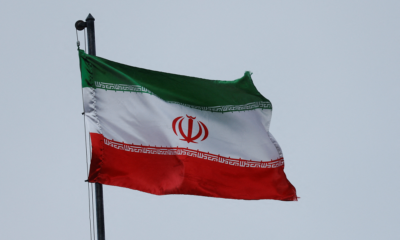


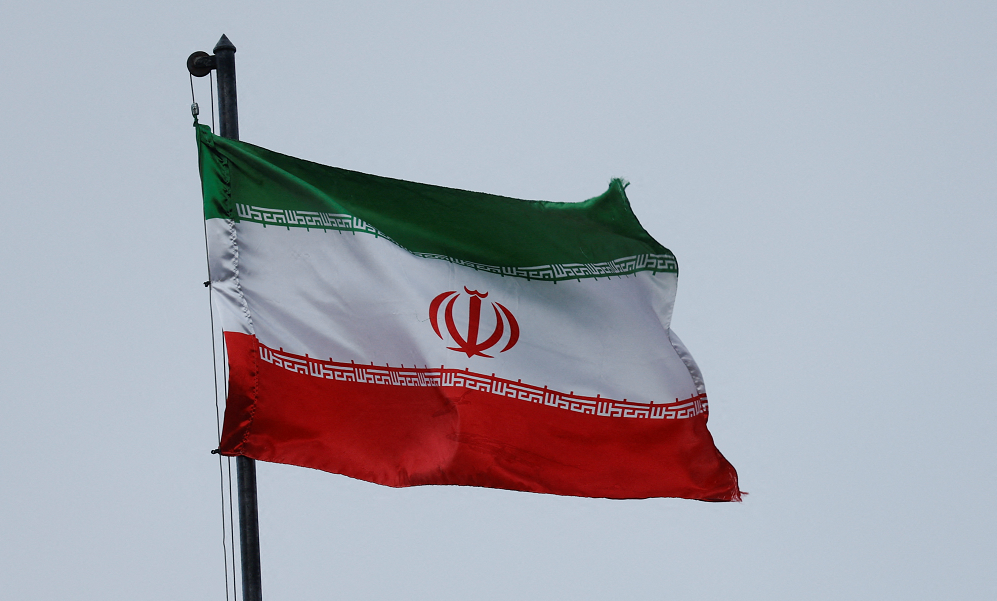
Iran executed a man convicted of passing missile site intelligence to Israel during the 12-day war, according to the judiciary.
Iran’s judiciary-run Mizan news agency said Hossein Pedaran was hanged after the Supreme Court upheld his death sentence on charges of espionage and intelligence cooperation with Israel, Reuters reported.
It said Pedaran had provided Israel’s Mossad intelligence service with information on sensitive military sites in the central province of Isfahan, and had carried out the espionage for financial gain.
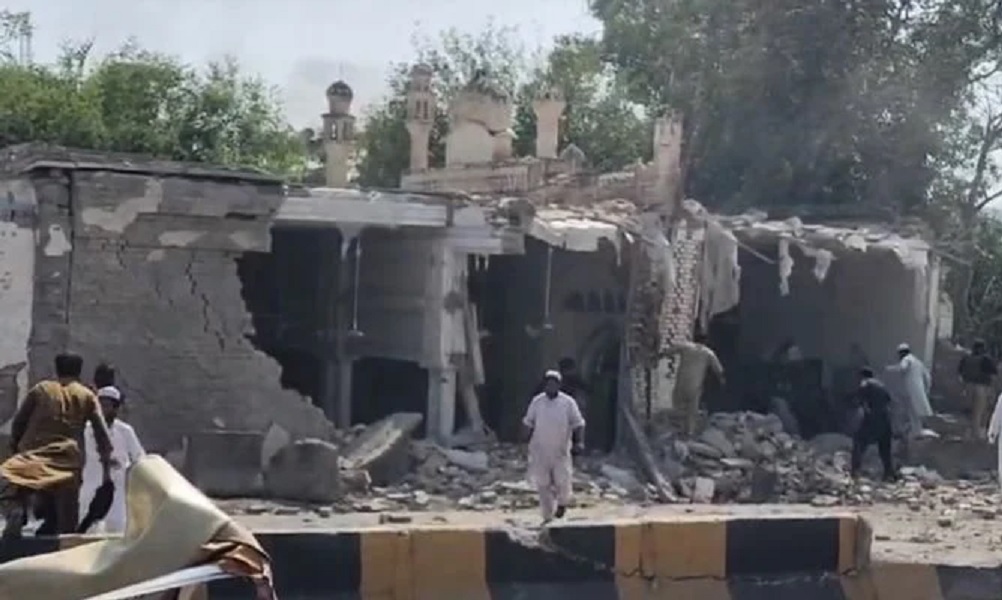
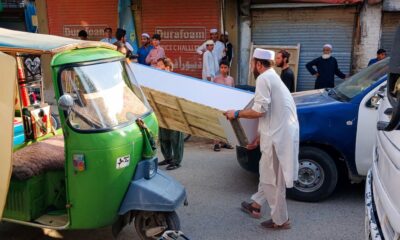
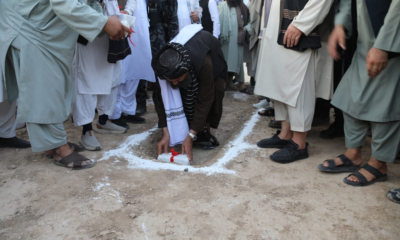
At least 15 people were killed and more than 50 others injured in a blast near a mosque in Kohat district of Khyber Pakhtunkhwa province on Friday, Pakistan’s Geo News reported.
Police said the blast occurred during Friday prayers and damaged the outer section of the mosque. Several police personnel were among those injured.
Khyber Pakhtunkhwa’s Inspector General of Police, Zulfiqar Hameed, said an explosives-laden vehicle struck the gate of the old Police Lines before exploding. He said the incident was followed by gunfire and another explosion at a Special Branch building.
Security forces and rescue teams were deployed at the scene, while emergency measures were declared at the district hospital to treat the injured.
There was no immediate claim of responsibility for the bombing.
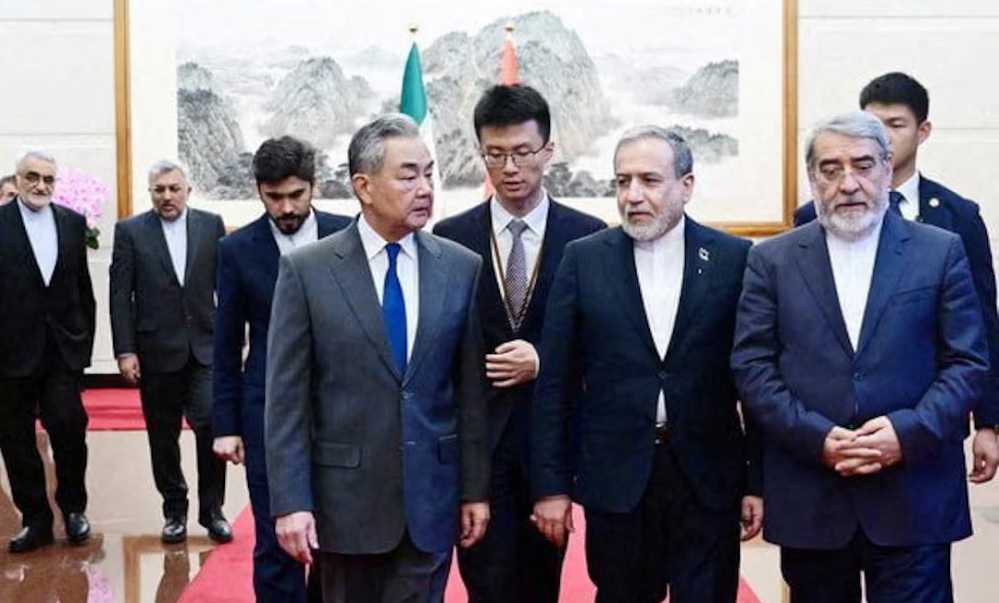
China has privately asked Tehran to help rein in Yemen’s Houthis after an appeal to Beijing by Saudi Arabia following the Iran-backed group’s military blitz in the past week, according to three Iranian sources familiar with the matter, Reuters reported.
Riyadh turned to China for help after the Houthis made rapid advances along the Red Sea coast and around the Bab el-Mandeb Strait, moves that have left Saudi oil exports and shipping more exposed, the sources said.
China has publicly called for restraint, dialogue and the restoration of safe navigation, but its private message went further than the public statements, they said.
Beijing wants Iran to use its influence with the Houthis to help prevent the conflict spreading further across energy routes on which China, the world’s second-largest economy, depends.
The sources, who were briefed on the discussions and spoke on condition of anonymity, did not provide details of how the message was delivered or whether it was conveyed during a visit to China on Wednesday by Iranian Foreign Minister Abbas Araqchi.
The sources said Tehran’s response was that stability and peace in the region depend on ending the US-Israeli war on Iran.
Chinese officials did not issue any explicit threats or indicate that Beijing would seek to pressure Tehran economically if it failed to use its influence over the Houthis, the three Iranian sources said.
In response to a Reuters request for comment on this story, the Chinese foreign ministry said: “China does not wish to see regional tensions further spill over into Yemen and the Red Sea. Escalating regional instability is not in the interests of any party”.
“The sovereignty and security of all countries should be respected, and facilities vital to people’s livelihoods must not be targeted. China calls for an end to actions that further complicate the situation and urges resolving issues through dialogue and negotiation,” it said.
Iran’s foreign ministry and the Saudi government’s media office did not immediately respond to Reuters requests for comment for this article.
DANGERS OF A WIDER REGIONAL WAR
China has been Iran’s largest trading partner for more than a decade and remains the main buyer of its oil. Chinese purchases accounted for more than 80% of Iran’s seaborne oil exports in 2025, averaging about 1.4 million barrels per day, according to commodities data and analytics firm Kpler.
“Beijing is one of the few capitals that can still press Iran to rein in the Houthis,” said a senior Western diplomat in the region.
The Houthis, who emerged in the 1990s in opposition to Saudi Arabia’s Sunni religious influence in Yemen, are armed, trained and funded by Iran, according to Iranian sources and Western countries, and form part of Tehran’s anti-Western, anti-Israel “Axis of Resistance”.
Any threat by the Houthis to shipping in the Red Sea and through the Bab el-Mandeb Strait risks sharply worsening the global energy crisis since Iran started blocking the Strait of Hormuz and increasing the danger of a wider regional conflict.
With Hormuz already effectively shut, sustained Houthi attacks on vessels or ports in the Red Sea would disrupt the Middle East’s two main oil-export routes simultaneously, opening a new front in both the energy crisis and Iran’s broader confrontation with the United States.
Iran and its allies now exert pressure over both ends of the region’s key maritime network, one of the sources said, adding that “China depends on both”.
Alex Vatanka, director of the Iran Program at the Middle East Institute in Washington, said Beijing may oppose US pressure on Tehran, but its interests in the Middle East extend well beyond Iran. Roughly half of China’s oil imports come from the region, while trade between China and the Gulf Cooperation Council states totals around $300 billion a year.
“Iran can disrupt Hormuz. But at some point that leverage begins hurting the very power Tehran increasingly depends on,” Vatanka said.
CHINA’S DILEMMA
It is unclear whether Tehran will act on the concerns raised by Beijing, according to the three Iranian sources.
The relationship nevertheless carries significant economic and strategic weight for Iran as it continues to face hostilities with the US, they said.
China is among the few countries with the financial capacity to provide the investment Tehran needs to sustain its oil industry and ease pressure on its economy, battered by war and sanctions.
Beijing has also demonstrated its diplomatic influence. In 2023, China brokered the agreement that restored ties between Iran and Saudi Arabia after years of hostility.
That influence has limits, however. Critics inside Iran have complained about the relatively modest level of Chinese non-oil trade and investment since the two countries signed a 25-year cooperation pact in 2021, particularly compared with China’s growing investment commitments in Gulf Arab states.
China remains a factor Tehran cannot afford to ignore, but two of the Iranian sources said Beijing’s interests were only one consideration among many. Iran’s decisions are shaped by competing strategic, economic and political priorities, they said.
“Tehran and Beijing need each other. China is a factor Tehran cannot ignore, and Beijing wants Hormuz reopened and Red Sea shipping secured,” the Western diplomat said.
Analysts say the key test will be whether China is prepared to attach consequences to its demands. Ultimately, they say, the clearest sign of Beijing’s resolve would be evidence that it is willing to use its leverage over Tehran.


Tahawol: Kabul’s warning over any threat from Pakistan discussed

Abu Muslim Farah and Ariana Khost play out goalless draw in ACL

ACL season six: Aino Mina and Omar Zawak play out 1–1 draw

Iran executes man convicted of spying for Israel’s Mossad, judiciary says

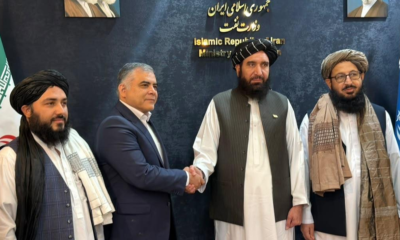
Afghan official meets Iranian oil minister to discuss energy cooperation

Four mediators struggle to secure lasting Pakistan-Afghanistan ceasefire

Syria and Saudi Arabia condemn Kabul bombing, express solidarity with Afghanistan

Afghanistan’s trade diversification challenges Pakistan

Saudi energy group signs major Afghanistan deals covering gas exploration and pipeline plans

ATN secures exclusive rights to broadcast T20I series in India across Afghanistan
Tahawol: Kabul’s warning over any threat from Pakistan discussed

Debate on Afghanistan and New Investment Opportunities

Tahawol: Reasons behind Qatari, Turkish security officials’ Kabul visit discussed

Saar: Outcome of UN Security Council meeting on Afghanistan discussed

Tahawol: Afghanistan’s readiness for US relations discussed
-
 Latest News4 days ago
UN warns of mounting humanitarian and human rights pressures in Afghanistan
-

 Regional3 days ago
Saudi Arabia calls alleged Mecca attack a ‘red line’ as Houthis deny involvement
-

 World5 days ago
North Korea’s Kim vows to expand ties with Russia, backs victory in ‘sacred war’
-
 Latest News5 days ago
UNICEF expands aid to millions of Afghan children after flash floods
-
 Latest News5 days ago
Kyrgyz, Afghan foreign ministers discuss expanding trade and investment ties
-
 Latest News4 days ago
Petition filed in Islamabad High Court against PMDC directive affecting Afghan students
-
 Latest News4 days ago
Five Years On: IEA touts economic growth despite international isolation
-

 Sport4 days ago
India take 2-0 lead in 3-match series against Afghanistan