
Regional
Israel hits Iran with new strikes despite Trump admonition

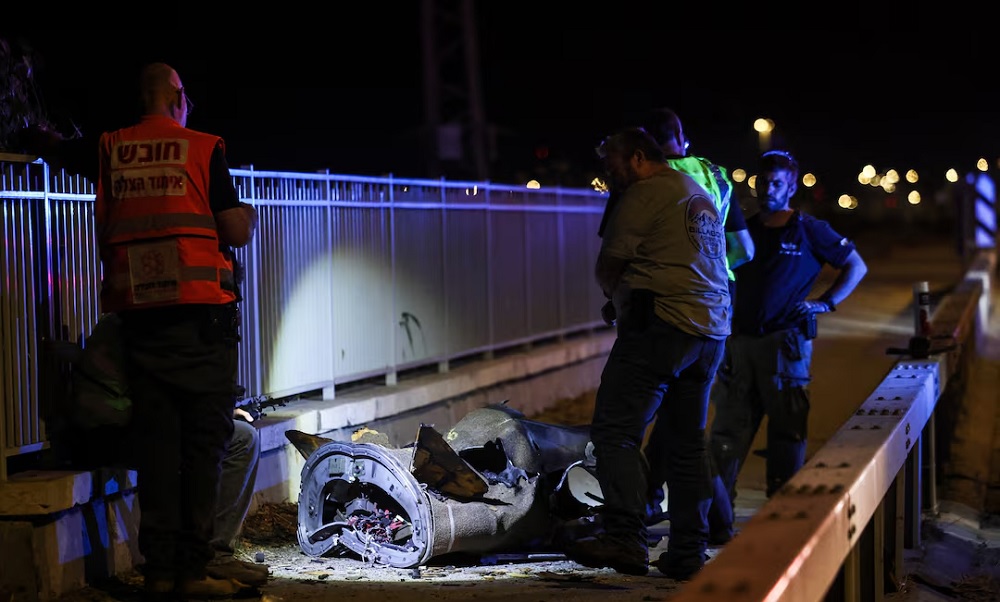
Israel said it struck military targets in western and central Iran on Monday, even after U.S. President Donald Trump reportedly told Israeli Prime Minister Benjamin Netanyahu to refrain from further attacks.
Hours earlier, Trump said new strikes by Israel and Iran would not affect his administration’s peace talks with Tehran, adding that Israeli Prime Minister Benjamin Netanyahu “doesn’t call the shots.”
Trump has leaned on Israel to stop its attacks in Lebanon to allow room for a deal to end the wider war with Iran, including rebuking Netanyahu with obscenities in a phone call last week. However, Israel earlier on Sunday launched strikes in the Beirut area for the first time since the U.S. announced a truce plan for Lebanon last week, Reuters reported.
Iran fired a salvo of missiles at Israeli targets in retaliation, putting U.S.-Iran peace talks at risk. But Trump insisted that an agreement to end the wider war remains well within reach.
“It’s not going to have any impact on the deal,” Trump told the Financial Times. “I call the shots. I call all the shots. He (Netanyahu) doesn’t call the shots.”
A few hours later, Israel’s defence forces said they had struck Iranian military targets. Iran’s Revolutionary Guards said Israel had carried out attacks on targets inside Iran using air-launched ballistic missiles.
The latest hostilities drove oil prices up more than 3% in early trading on Monday, with benchmark Brent futures back above $96 a barrel.
Iran’s Revolutionary Guards said they had targeted Ramat David air base, near Nazareth. The Israeli military said it identified missiles launched from Iran and that its defense systems had intercepted them.
TRUMP URGED NETANYAHU TO HOLD OFF FURTHER STRIKES
Trump, who was spending the weekend at his golf club in Bedminster, New Jersey, and Netanyahu spoke by phone for a little less than half an hour on Sunday, an Israeli official said, without giving further details. The White House and the Israeli prime minister’s office did not immediately respond to requests for comment.
Trump told Netanyahu during the call to refrain from further strikes because “we are close to doing something good in terms of a deal,” according to a U.S. official quoted by Axios.
Since the start of U.S.-Iran talks aimed at halting the war, Israel has continued attacks in Lebanon in a conflict with Hezbollah that Israeli officials insist should be treated separately from any ceasefire with Iran.
Tehran has long said any peace deal with the U.S. would depend on a ceasefire also holding in Lebanon, which Israel invaded in March in pursuit of Iran-backed Hezbollah fighters who fired rockets and drones across the border in solidarity with Tehran.
Iran’s chief peace negotiator, parliamentary speaker Mohammed Baqer Qalibaf, said U.S. bases and Israeli assets are legitimate targets because of hostile acts, including the “violation of agreements over Lebanon.”
Before Sunday, Iran had not attacked Israel since a ceasefire in the wider war started in April, although Hezbollah has done so.
Trump has repeatedly insisted that Washington and Tehran were close to an agreement on ending the war.
“We’re very close to a deal, or I’m going to blow the hell out of them,” Trump told NBC News’ “Meet the Press” in a prerecorded interview that aired on Sunday to mark 100 days of the conflict.
TRUMP WANTS NO ATTACKS IN LEBANON
Israel has never halted its Lebanon campaign, which has killed thousands of people and driven hundreds of thousands from their homes. Hezbollah, which did not take part in the truce talks, has also continued its attacks and says it will not give up its weapons unless Israel halts its attacks and withdraws from Lebanon.
Netanyahu said the Israeli strikes on Sunday on Beirut’s southern outskirts, a district known as Dahiyeh that has long been a Hezbollah stronghold, were ordered in response to Hezbollah firing toward Israel.
The wider war has been stalemated since the U.S. and Israel paused their attacks on Iran in early April, with Tehran blocking most shipping through the Strait of Hormuz, the main transit route for one-fifth of the world’s oil. Washington has imposed its own blockade of Iranian ports.
Though Washington and Tehran have said they are close to a preliminary agreement that would reopen the strait, they have repeatedly traded strikes, with escalations in recent days that have included attacks on nearby Arab states hosting U.S. bases.
Trump has said any agreement to end the war must prevent Iran from developing a nuclear weapon, and he is under pressure to deliver terms tougher than those agreed in 2015 under then-President Barack Obama in a deal Trump later repudiated.
Tehran’s demands include the lifting of U.S. and international sanctions, recognition of its sway over the strait and the release of billions of dollars in frozen assets.
A source familiar with U.S. plans told Reuters on Saturday that Washington could make Iranian assets available to Gulf neighbors to repair damage inflicted by Iran.
Iran’s Deputy Foreign Minister Kazem Gharibabadi said on Sunday any such diversion of Iranian assets would be illegal, and Tehran would take measures in response.
Netanyahu was criticized last week by political rivals over a new ceasefire in Lebanon ahead of this year’s national election.





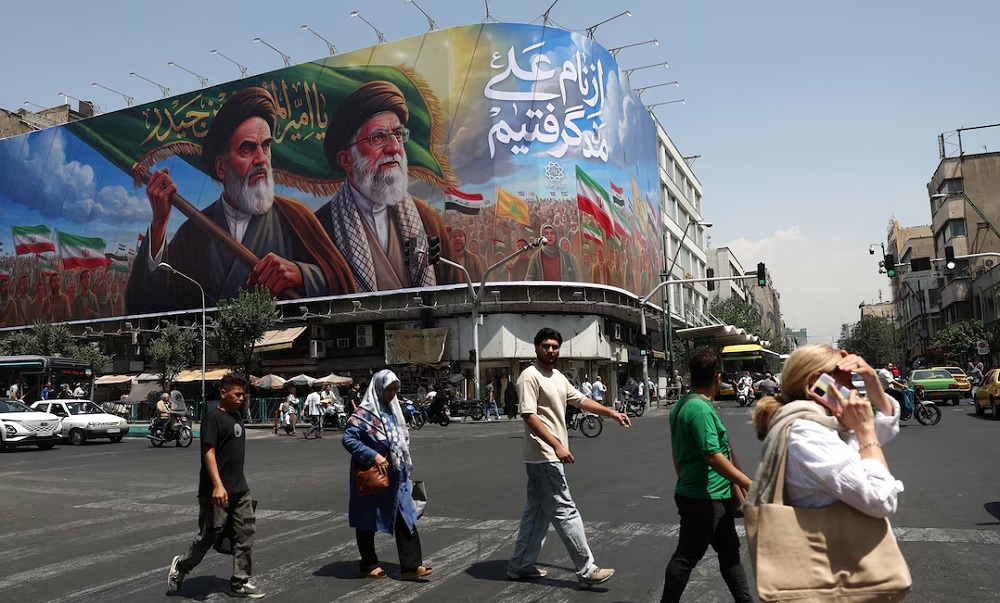
The U.S. government will attempt to redirect Iranian assets to Gulf states for rebuilding and repairs of damage caused by Iran, a source familiar with the matter said, as Tehran followed up a wave of strikes against Kuwait and Bahrain with further drone launches.
U.S. Treasury Secretary Scott Bessent has directed a team to assess costs for damages already inflicted on Gulf allies by Iran, the source said, adding that the U.S. will consider using Iranian assets for repairs of any future destruction as well, Reuters reported.
The disclosure came a day after Mohsen Rezaei, an adviser to Iran’s supreme leader, told CNN that a peace deal to end the three-month war hinged on the release of $24 billion in Iranian assets frozen by the United States.
The source on Saturday did not specify what kind of assets the Treasury was examining. The language used to describe the new measures did not appear limited to frozen assets.
The threatened redirection of Iranian assets could create a new irritant to a fragile ceasefire between the United States and Iran, which was tested again this weekend with strikes by the U.S. and Iran.
Peace negotiations appear to have stalled, although a minister from mediator Pakistan traveled to Tehran on Saturday with a letter for Iran’s Supreme Leader Ayatollah Mojtaba Khamenei, Iran’s semi-official ISNA news agency reported.
U.S. forces struck Iranian coastal radar sites in Goruk and Qeshm Island, both in the Strait of Hormuz, early Saturday after shooting down drones launched by Iran that U.S. Central Command says posed a threat to maritime traffic. A further two Iranian attack drones that were threatening shipping in the strait were also shot down, the U.S. military said late on Saturday.
Iran’s Revolutionary Guard said it retaliated against U.S. bases in Kuwait and Bahrain, and Kuwait’s army said on Saturday it engaged seven ballistic missiles that passed over residential areas, resulting in material damage but no casualties.
In Bahrain, sirens sounded and residents were urged to seek shelter. Kuwait and Bahrain condemned the strikes.
PAKISTANI MINISTER LANDS IN TEHRAN
Iran later said it had hit U.S. bases in both countries with ballistic missiles, but the U.S. military said six missiles were intercepted and a seventh did not reach its target.
The U.S. and Iran have been engaged in largely indirect negotiations for an interim deal to halt the three-month-old war that would leave issues including Iran’s nuclear programme to further negotiations.
But a deal has remained elusive while the two sides have periodically skirmished.
Tehran wants access to billions of dollars in oil revenue, waivers on sanctions on crude exports, the lifting of a U.S. blockade on its ports and leverage over the Strait of Hormuz.
Iran has effectively blocked the waterway, where about a fifth of global oil traffic transited before the war.
Iranian state media reported that Pakistani Interior Minister Mohsin Naqvi arrived in Tehran on Saturday for talks with Iranian officials, including Foreign Minister Abbas Araqchi.
Naqvi said he was carrying a “special letter” from his country’s army chief and prime minister to Khamenei, ISNA reported.
Trump is facing mounting domestic political pressure due to rising gas prices to bring the unpopular war to an end. He told NBC that while most of Iran’s drone and missile manufacturing facilities had been destroyed, the Iranians still had access to about a fifth of their missiles.
“They have some missiles, they have some drones. I would say percentage wise, maybe 21% to 22% of their missiles. It’s a lot of missiles, but it’s not what it was when we first attacked,” Trump told NBC News’ “Meet the Press” program, according to excerpts released by the network on Friday.
The conflict has driven up oil prices and disrupted supply chains for other goods, including humanitarian aid.
FIGHTING FLARES ACROSS REGION DESPITE CEASEFIRES
In a parallel conflict in Lebanon, two Lebanese army officers and a soldier were killed in an Israeli strike on a military vehicle in south Lebanon, the Lebanese army said. The Israeli military said it was investigating the incident.
Iran has made a ceasefire in Lebanon between Israel and Iran-aligned Hezbollah a condition for any peace deal with Washington.
Lebanon’s army said on Saturday its commander, General Rudolf Haykal, left for Pakistan at the invitation of his Pakistani counterpart, without giving further details.
The surprise visit was notable given the insistence by Washington — and by Lebanese leaders, including the president — that ceasefire talks for Lebanon remain separate from U.S.-Iran negotiations mediated by Pakistan.
Hezbollah leader Naim Qassem this week rejected a U.S.-brokered pact between Israel and the Lebanese government to halt the fighting in Lebanon. The deal did not provide for an Israeli withdrawal and Hezbollah had not been party to the negotiations.
Israel has said its forces would not withdraw or halt operations in the country amid increasing friction with the U.S.
Regional
Iran declares support for Hezbollah with wider peace deal in doubt
Israel has kept up strikes in southern Lebanon, and has said its forces would not withdraw or halt operations in the country amid increasing friction with the U.S.
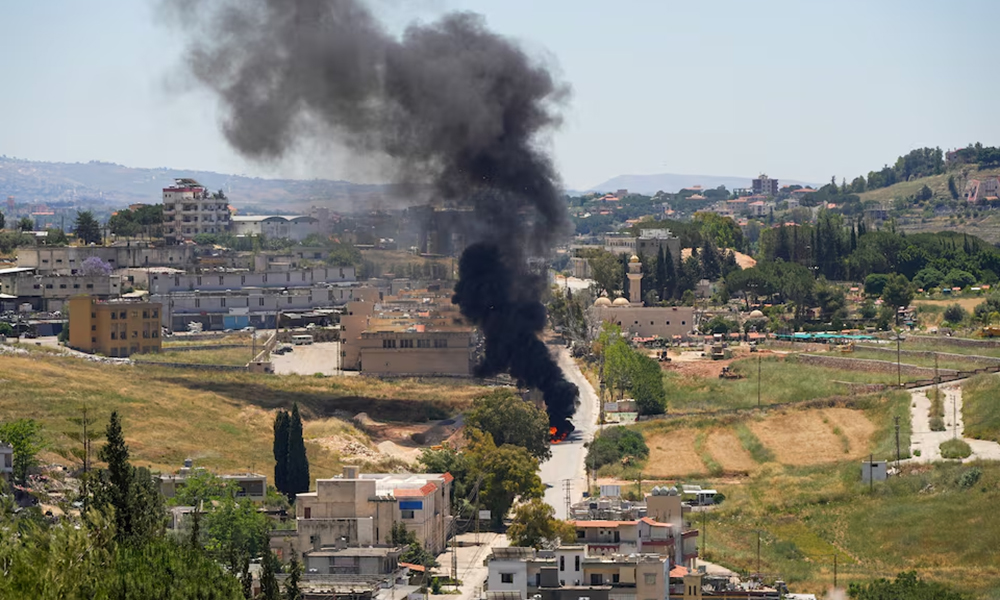
Iran has reaffirmed support for its Lebanese ally Hezbollah and demanded that Israel withdraw from southern Lebanon, underscoring complications facing an interim deal to end the broader conflict between the U.S. and Iran, Reuters reported.
Tehran has made a ceasefire between Israel and Hezbollah a condition for any peace deal with Washington to resolve the regional war, now in its fourth month, and restart shipping through the Strait of Hormuz.
The latest round of fighting between Hezbollah and Israel erupted at the start of March, two days after the U.S. and Israel launched strikes against Iran. Hezbollah said its actions were in support of Tehran.
“This war will end only when it ends in Lebanon as well,” Iranian Foreign Minister Abbas Araqchi told Lebanese TV station Al Mayadeen late on Thursday.
“The end of the war on Lebanon must be accompanied by the withdrawal of Israeli forces from the territories they have occupied,” he said.
The comments came after Hezbollah leader Naim Qassem rejected a U.S.-brokered pact between Israel and the Lebanese government to halt the fighting in Lebanon. The deal did not provide for an Israeli withdrawal and Hezbollah had not been party to the negotiations.
Israel has kept up strikes in southern Lebanon, and has said its forces would not withdraw or halt operations in the country amid increasing friction with the U.S.
Hezbollah said on Friday it had carried out two attacks on Israeli troops in south Lebanon, including near the recently captured Beaufort Castle, while Lebanese security services said Israeli airstrikes hit towns across southern Lebanon, read the report.
Mohsen Rezaei, an adviser to Iran’s supreme leader, said Hezbollah had “made great sacrifices in the recent war and it is our ally. Therefore, we support Hezbollah and remain firmly committed to our obligations toward it.”
In comments reported by the semi-official Mehr news agency, Rezaei cautioned Israel against following through on threats to resume strikes against Beirut, the Lebanese capital.
“Today we again warn this sinister regime to leave Lebanon. They should know that Lebanon will be an inseparable part of any agreement and any ceasefire,” he said.
Lebanon’s parliament speaker and Hezbollah ally Nabih Berri said on Friday he would agree to the withdrawal of the Iran-backed group from southern Lebanon if Israeli troops simultaneously left territory they occupy in the country.
Lebanon’s President Joseph Aoun on Friday accused Iran’s Revolutionary Guards of using Lebanon as a “bargaining chip” in negotiations with the U.S., telling CNN this was “unacceptable”.
Along with Lebanon, residents of Gaza, northern Israel and Kuwait have all been under fire this week, despite U.S.-arranged ceasefires that President Donald Trump said involved “shooting in a more moderate manner”, rather than a total halt to fighting.
On Friday, Iran’s navy said it had fired warning shots at U.S. destroyers in the Gulf of Oman to counter “maritime mischief and harassment and the hijacking of commercial vessels and oil tankers”. Earlier, U.S. forces said they had boarded an oil tanker in the Indian Ocean and that they would continue to block “vessels providing material support to Iran”.
The U.S. Central Command denied Iran’s claims.
“Iranian forces did NOT attack or fire at U.S. Navy warships. Doing so would be a gross violation of the ceasefire,” Central Command said in a statement on X.
In Oman, an alleged drone attack forced the suspension of oil loading at the Mina al Fahal terminal after an explosion, sources said, before normal operations resumed.
After the U.S. and Israel launched the war against Iran on February 28, Tehran fired missiles and drones against Gulf states hosting U.S. bases and largely stopped shipping through the Strait of Hormuz.
Trade remains at a fraction of its former levels through the waterway, which previously carried about a fifth of global oil and liquefied natural gas supplies.
The conflict has driven up oil prices and disrupted supply chains for other products. The U.N. World Food Programme said on Friday that it was pushing millions of people closer to hunger due to rising fuel and transport costs, Reuters reported.
The U.S. and Iran have been engaged in largely indirect negotiations to secure an interim deal to halt the war that would leave issues including Iran’s nuclear programme to further negotiations.
As part of any agreement, Tehran wants access to billions of dollars in oil revenue, waivers on sanctions on crude exports, the lifting of a U.S. blockade on its ports and leverage over the strait.
Trump, who faces domestic pressure over an unpopular war, has said his top priority is to stop Iran from acquiring nuclear weapons. Iran says its atomic program is for peaceful purposes.
Iranian parliament deputy speaker Hamid-Reza Haji Babaei said on Friday that uranium enrichment was Iran’s right, and that Trump had failed to understand that Iran’s “most powerful atomic bomb” was the Strait of Hormuz.
Regional
Trump says he does not need deal with Iran to get enriched uranium
Trump also said that he did not want to meet with Iran’s Supreme Leader Mojtaba Khamenei.
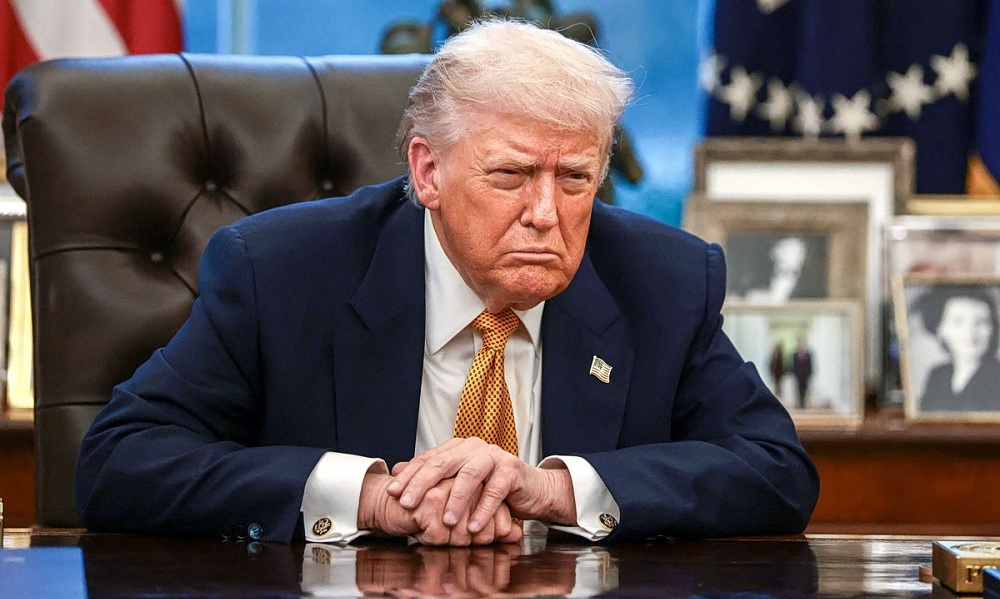
U.S. President Donald Trump on Thursday said that Washington did not need a deal with Iran to get enriched uranium from the country, Reuters reported.
“We could get it right now. I don’t think they could stop us if we wanted, but there’s no reason to. It’s entombed,” he told reporters in the Oval Office.
Trump also said that he did not want to meet with Iran’s Supreme Leader Mojtaba Khamenei.
But he added that if Washington and Tehran reached a deal, it was possible that the two would meet and added: “If it happened … I’d be respectful”.


Afghan diplomat, Gulf Cooperation Council discuss relations in Riyadh talks

Israel hits Iran with new strikes despite Trump admonition

SAAR: UN Security Council Holds Quarterly Meeting on Afghanistan

UNAMA voices concern over reported detention of women in Herat

IEA’s Supreme Leader says implementation of Sharia depends on revival of religious education

Afghanistan signs $46 million deal to develop standard laboratory complexes

Large blast near Beit Shemesh part of pre-planned test: Israeli defense firm

Trump returns from China with stability but little progress

Afghanistan announce squad for India series

Afghanistan, Russia sign military cooperation agreement
SAAR: UN Security Council Holds Quarterly Meeting on Afghanistan

Tahawol: Impact of Middle East crisis on aid transfers to Afghanistan

Saar: Calls to strengthen economic and trade cooperation discussed

Tawsia: Signing of $20 million Herat salt mining deal discussed

Tahawol: Discussion on fear of internal disputes in Iran
-
 Business5 days ago
Afghanistan’s trade with Central Asia records sharp growth
-

 Sport3 days ago
Gaikwad set to replace injured Kohli for Afghanistan ODI Series
-

 Latest News5 days ago
Three Afghans among four farmworkers burned alive in Italy; two Pakistanis arrested
-

 Sport4 days ago
Afghanistan name squad for A-team tri-series in Sri Lanka
-
 Business4 days ago
Afghanistan highlights strategic connectivity role at Termez Dialogue
-
 Latest News4 days ago
Kohli ruled out of Afghanistan ODI series with hamstring injury
-
 Latest News5 days ago
Rubio says at least five countries willing to accept stranded Afghans in Qatar
-

 International Sports3 days ago
Eight Goalkeepers Set to Shine at the 2026 FIFA World Cup