
World
Houthi advance in Yemen puts U.S. in a new bind
The U.S. administration can’t afford to have the Houthis close the strait, driving up energy prices and disrupting global trade.

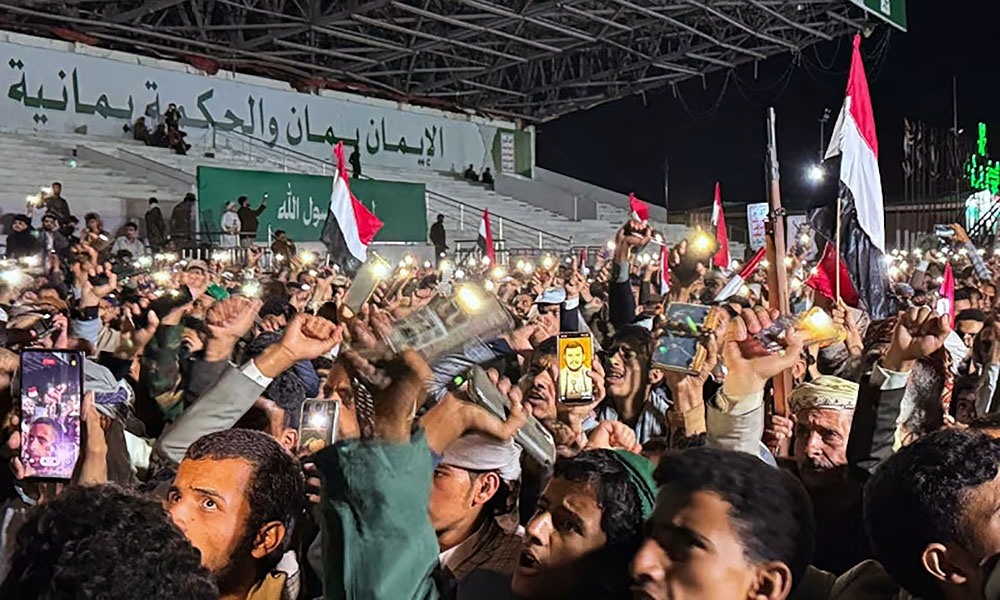
A lightning offensive by the Iran-aligned Houthis has put the militants in a position to control a crucial Middle East waterway, creating a major new problem for U.S. President Donald Trump as his war with Iran grinds on in its seventh month, Reuters reported.
Widening the Middle East conflict, Houthi fighters have advanced south along Yemen’s coast, increasing their ability to choke off the Bab el-Mandeb Strait — the “Gate of Tears” at the mouth of the Red Sea — giving Tehran potential leverage over both of the region’s main oil-shipping corridors.
The militants reached the island of Perim on Friday, in the middle of the strait between Yemen and Africa. That is bad news for Saudi Arabia, which has been shipping much of its oil from Red Sea ports since the war effectively closed the Strait of Hormuz, on the opposite side of the Arabian Peninsula.
It also comes at a difficult time for Trump, who is already grappling with record-low approval ratings and searching for a way out of the conflict, most recently by announcing an economic pressure campaign designed to force concessions from Iran’s government.
High U.S. gasoline prices driven by the conflict have jeopardized his Republican Party’s chances of keeping control of Congress in the November midterm elections. Iran remains defiant despite being hurt militarily and economically.
“Just weeks ago, Trump adopted a strategy of squeezing Iran’s economy while keeping military conflict at levels too low to squeeze the American economy,” said Stephen Wertheim, a senior fellow at Carnegie Endowment for International Peace. “The Houthis have shattered Trump’s plan.”
The U.S. administration can’t afford to have the Houthis close the strait, driving up energy prices and disrupting global trade.
But at the same time, entering a fight with a foe that has withstood previous attacks by Saudi Arabia and the U.S. would be a dangerous new mission for a U.S. military already stretched by the fighting in Iran.
Saudi Arabia’s de facto ruler, Crown Prince Mohammed bin Salman, phoned Trump on Thursday and asked for U.S. military help fighting the Houthis, three sources told Reuters. He was told Washington would not intervene directly for now but would help with intelligence, the sources said.
Trump confirmed on Saturday that he had spoken to the crown prince, and said the Houthis had also phoned his administration and asked for Washington not to become directly involved in the conflict, read the report.
A senior Trump administration official declined to address specific questions, but said the U.S. is focused on national security interests such as ensuring freedom of navigation in the Red Sea “while empowering our regional partners to take the lead in managing and resolving regional security challenges”.
Saudi Arabia, Iran and the Houthis did not respond to a request for comment. Iran’s foreign ministry said in a statement on Thursday that the Yemen conflict could not be solved by blockade or military action against the Houthis and called for dialogue, without addressing Iran’s own role.
Iran responded to U.S. and Israeli attacks earlier this year by disrupting the Strait of Hormuz, the outlet to the Gulf through which around a fifth of global oil supplies flowed before the war.
If the Houthis close the Bab el-Mandeb, that would deal another economic blow, constraining another 7% of global petroleum supplies and about 12% of global trade.
“This was always the worst-case scenario, that the Iranians exert control not only of Strait of Hormuz but Bab el-Mandeb, two of the leading energy choke points in the world,” said David Schenker, who served as Assistant Secretary of State for Near East Affairs during Trump’s first term and is now at the Washington Institute for Near East Policy, a think tank.
“It’s an enormous amount of leverage that [the Iranians] have in hand.”
Analysts and former officials say Trump now faces a choice: devote U.S. forces and scarce air-defense munitions to pushing back the Houthis, or leave Saudi Arabia and its allies, a Yemeni government based in the south, to confront them alone.
The Houthis seized Yemen’s capital 12 years ago, and a Saudi-led military intervention has failed to dislodge them since.
Taking on the Houthis would effectively end a deal Trump struck last year in which the U.S. would stop bombing the group in exchange for a halt to strikes on Red Sea shipping. That would be likely to expose U.S. forces to missile attacks from Yemen.
It would also be another burden for the U.S. military.
U.S. officials say a fight with the Houthis could require significant naval and aerial resources and divert U.S. intelligence assets, given the need to pinpoint Houthi positions that have changed since last year.
If U.S. Navy vessels and aircraft have to start shooting down Houthi drones and missiles, it could also worsen diminished stockpiles of U.S. munitions and air-defense interceptors.
The senior administration official denied that the U.S. was concerned about its resources being stretched. “The United States Military has more than enough munitions, ammo, and stockpiles to serve all of the Commander-in-Chief’s strategic goals and beyond,” the official said.
Tim Lenderking, who served as U.S. special envoy on Yemen under former President Joe Biden and is now a principal at law firm Squire Patton Boggs, said that with Trump signaling an unwillingness to get directly involved militarily against the Houthis, the U.S. needs to do more to share intelligence with the Saudis for their air campaign and step up diplomatic and material support for Yemen’s internationally recognized government.
“This administration came in asking the question, ‘What can Yemen do for us?’” Lenderking said during a webcast sponsored by the Middle East Institute think-tank in Washington. “Well, Yemen can spoil our day.”


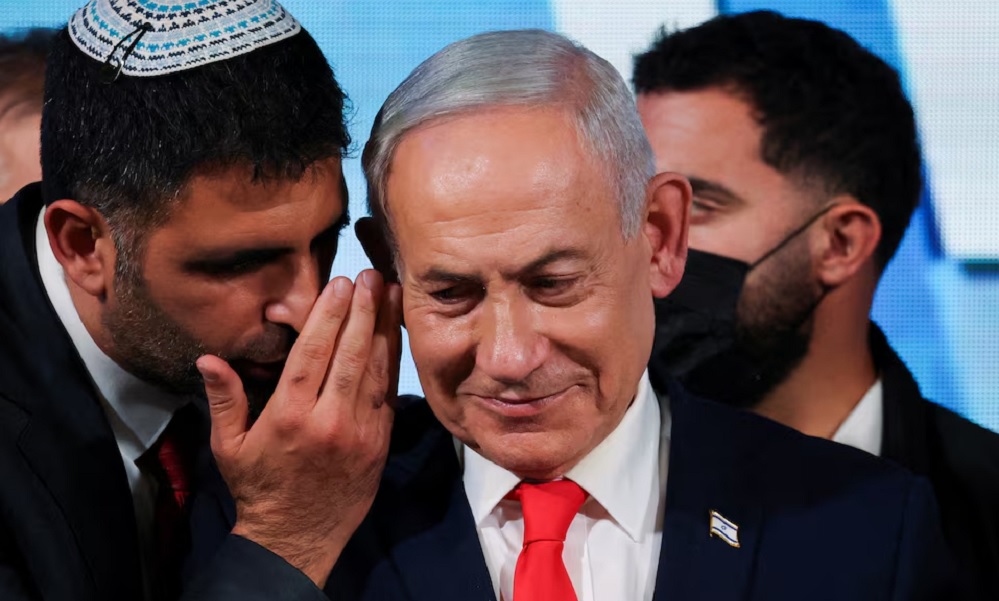
Prime Minister Benjamin Netanyahu and rival Gadi Eisenkot offered competing claims to lead Israel after Tuesday’s election, with Netanyahu calling for a right-wing government and Eisenkot saying voters had rejected the longtime Israeli leader, even as exit polls left their blocs deadlocked.
Netanyahu called for the formation of “a strong, right-wing national government,” while Eisenkot said the public had voted against Netanyahu remaining prime minister and called on him to retire from politics. Neither of them claimed victory, Reuters reported.
Neither declaration resolved the electoral arithmetic.
With actual votes trickling in, Kan 11 and Channel 13 exit polls had the blocs tied at 51-51, while Channel 12 gave Netanyahu’s Likud-led bloc a narrow 52-49 edge. None left either side with the 61 seats needed for a majority in the 120-seat Knesset.
The deadlock could work in Netanyahu’s favour, leaving him in office as a caretaker prime minister during what are likely to be prolonged coalition negotiations or even until another election can be held.
Far-right religious parties led by Itamar Ben-Gvir and Bezalel Smotrich were projected to take a combined 13 seats within Netanyahu’s bloc – with no major gains for either of them.
Arab parties outside the two main blocs could hold the balance of power. But Eisenkot, leader of the Yashar party and a former military chief, has all but ruled out forming a government with them, complicating his path to power.
SECURITY FIGHT SHARPENS
Netanyahu highlighted Israel’s military successes and raised the prospect of renewed joint action with US President Donald Trump against Iran as he addressed party faithful after 3 a.m. (0100 GMT) at Likud election headquarters in Jerusalem.
“Israel faces a singular historical opportunity, together with our partner President Trump, to remove the existential threat of Iran once and for all. But ulterior motives must not divert us from this sacred mission,” he said.
Eisenkot earlier warned Netanyahu not to use Israel’s security for political purposes.
“Netanyahu is a caretaker prime minister, without a mandate or the people’s trust,” Eisenkot said, calling on the security establishment to “stand firm” against any attempt to put political interests ahead of Israel’s security.
Voter turnout was 77.7%, Israel’s Central Elections Committee said, the highest in more than two decades and around 7 percentage points higher than in 2022.
Final results are expected on Thursday or Friday, and Israel’s fragmented political system leaves smaller parties potential kingmakers in coalition negotiations that have run to weeks or months after past elections. If neither bloc can form a government, another vote may need to be held, something Eisenkot opposed given the high voter turnout.
Yohanan Plesner, president of the Israel Democracy Institute, called the exit polls a major defeat for Netanyahu’s coalition but cautioned that Eisenkot had not emerged as a clear winner and much could change as votes were counted.
NETANYAHU SETBACK, NO CLEAR WINNER
If the exit poll projections hold, Netanyahu’s nationalist-religious coalition, which at its height held 68 seats, would fall far short of the 61 needed to govern, leaving him with no clear path to forming a government.
Eisenkot, 66, who lost a son and two nephews in the Gaza war, emerged as Netanyahu’s strongest challenger, stressing his security credentials while positioning himself as a centrist domestically.
He entered politics only four years ago and joined Netanyahu’s war cabinet after the 2023 Hamas attack, but quit eight months later, criticising the prime minister’s leadership.
Eisenkot offers a break with Netanyahu’s leadership and far-right allies, but not with the hawkish approach to security that has become more entrenched since the 2023 Hamas attack. He opposes Palestinian statehood and says Hamas’ military wing must be destroyed or dismantled.
Eisenkot says Israel’s response — a war that has killed more than 74,000 Palestinians, according to Gaza health authorities — was a failure because Hamas remains in charge.
The headquarters of the Joint List, an alliance of several Arab parties, burst into whistles and applause when exit polls were released, on a historic night for turnout among Palestinian citizens of Israel.
“We refuse the occupation and racism, and we will remain here,” said Faten Gattas, a candidate in the Joint List, in a speech at the alliance’s headquarters in Nazareth. Candidates hoped high Arab turnout would allow them to play a decisive role in blocking Netanyahu’s coalition from returning to power.
A WARTIME VERDICT
Voters grappled with the trauma of Israel’s deadliest day, when Hamas killed 1,200 people and took 251 hostage, and the wars in Gaza and with Lebanon’s Hezbollah and Iran that followed.
While Netanyahu was criticised for the country’s biggest security failure, he argued that he had made Israel and the world safer by killing top leaders of Hamas, Hezbollah and Iran.
The policies of Netanyahu’s right-wing coalition have been divisive at home and deepened Israel’s international isolation, but he has portrayed himself as the leader with the mettle to face down Israel’s foes.
Netanyahu, 77, has served as prime minister for nearly 19 of the past 30 years and has repeatedly survived political crises. His opponents have managed to wrest the premiership from him only once since 2009, after four inconclusive elections in two years. Eighteen months later, he was back.
He entered the election facing long-standing corruption charges, which he denies, and criticism over intelligence failures that allowed Hamas-led militants to carry out their attack.
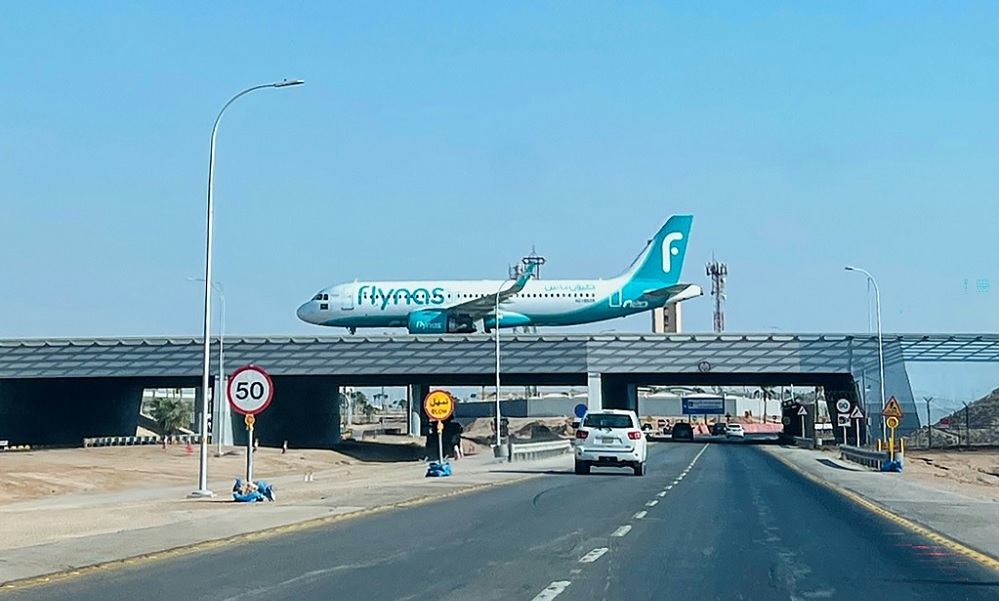
Yemen’s Houthis have kept up their attacks on Saudi Arabia as senior officials from the kingdom, Turkey and Pakistan are due to hold high-stakes talks with Iran in Tehran on Monday, following warnings of a return to war, AFP reported.
Fresh explosions rattled Riyadh overnight, along with a text message warning to residents, after the Iran-allied Houthis claimed a new attack on the Saudi capital’s international airport on Sunday.
Saudi Arabia, the world’s top oil exporter, has become deeply embroiled in the eight-month war since hostilities in its long-running conflict with the Iran-allied Houthis resumed in July.
Defence Minister Prince Khalid bin Salman is among the delegations travelling to Tehran, made up of officials from the three countries that signed a defence alliance in Mecca in August.
Their visit follows warnings by the United States, Iran and Israel that hostilities could resume.
Tensions have increased ahead of Israel’s pivotal election on Tuesday and next week’s US mid-terms, where US President Donald Trump’s Republicans are battling to keep control of both chambers of the US Congress.
Iran’s security chief Mohsen Rezaei will take part in Monday’s meeting with Prince Khalid, Pakistani army chief General Asim Munir and Turkish intelligence chief Ibrahim Kalin, the deputy secretary of Iran’s Supreme National Security Council, Ali Bagheri Kani, told state TV.
“This historic meeting in Tehran may be the last chance before escalation spirals out of control, an attempt to impose a path of de-escalation before it’s too late,” Hesham Alghannam, a Saudi security analyst and researcher, posted on X.
“The presence of military and security figures at this level together means that the remaining time is extremely limited.”
‘Serious tensions’
On Sunday, as blasts rang out over Riyadh and authorities sent texts warning residents of a “hostile aerial threat”, the Saudi-led coalition fighting the Houthis said it struck missile launchers and storage facilities in Yemen.
The Houthis said they had attacked Riyadh’s King Khalid International Airport once again. The repeatedly targeted facility has been largely closed since 13 people were killed and more than 300 wounded in a major attack this month.
Mediation efforts between the US and Iran have been led by Qatar and Pakistan. A Qatari delegation visited Tehran on Sunday, Iran’s foreign ministry spokesman Esmaeil Baqaei said.
“Our region is in the grip of serious tensions, and neighbouring countries are striving to convey a message and put forward initiatives,” Baqaei said on Monday.
Andreas Krieg of London-based risk consultancy MENA analytica said Prince Khalid’s presence in Tehran was “hugely significant”, calling him the “strategic mastermind of Saudi Arabia”.
Prince Khalid, brother of Saudi de facto ruler Crown Prince Mohammed bin Salman, has emerged as one of Saudi Arabia’s key diplomatic interlocutors, dispatched on sensitive regional missions.
“For him to go to Iran directly in this very sensitive time is a very, very strong signal that the kingdom is not just… sitting and waiting for things, events to unfold,” Krieg told AFP.
“There’s a clear effort by the Mecca alliance to signal to Iran that they’re ready to work together to defend the kingdom and defend the kingdom’s borders,” he added.
“And so should Iran think to escalate, which they will likely do if Israel and the US strikes, and they will most likely strike Saudi Arabia, Iran will have to bear the consequences.”
‘Don’t test us’
Comments by senior officials have raised speculation about renewed hostilities.
Iran’s Foreign Minister Abbas Araghchi said on Sunday “there has been talk of a new war” but that Tehran’s policies remain unchanged.
Trump said on Friday that Washington “may do another little Epic Fury”, referring to the US-Israeli campaign against Iran that began on February 28.
On Sunday, Israeli Prime Minister Benjamin Netanyahu warned that Iran may try to disrupt the Israeli elections, where he is in a close-fought race to stay in power.
“We have intelligence signs that our enemies, Iran and its proxies, could challenge us with attacks in order to disrupt the elections,” Netanyahu said.
“Don’t test us. You will suffer disproportionate blows,” added Netanyahu, who has campaigned heavily on his security credentials.
The remarks came as Israel’s Channel 12, citing unnamed sources, reported a confrontation between Netanyahu and army chief Eyal Zamir over an unspecified new directive in the war with Iran, which the premier denied.
World
Houthis say they attacked Saudi oil pumping stations, Riyadh airport as fighting intensifies
The Houthis have been firing ballistic missiles and drones at Saudi airports, ports and oil installations, turning US ally Saudi Arabia into a pressure point in the wider war.
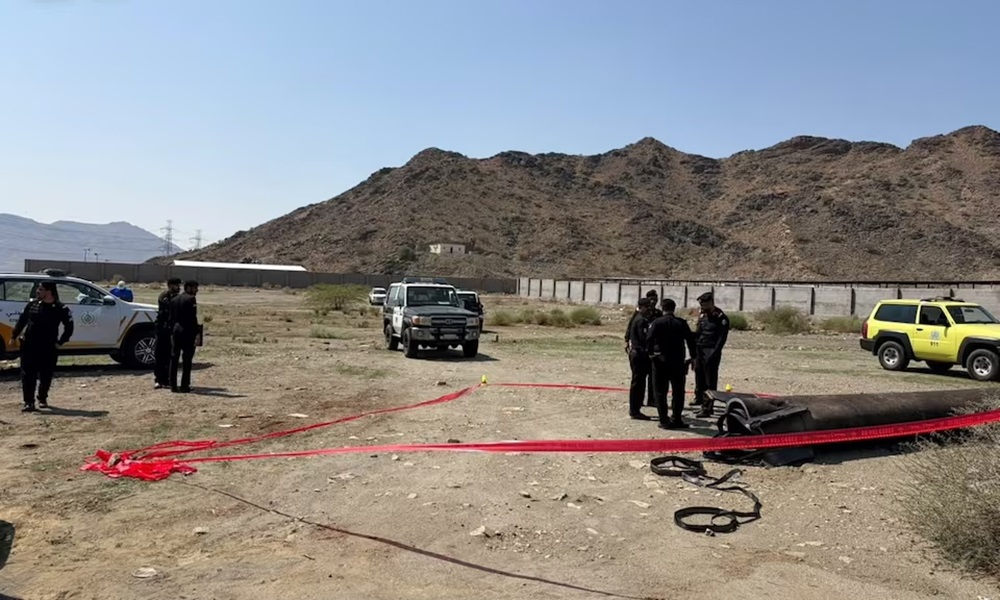
Yemen’s Iran-aligned Houthis said on Monday they had attacked Saudi Arabia’s East-West crude oil pumping stations and Riyadh airport, as rising hostilities choke oil supplies and threaten to erupt into a larger conflict, Reuters reported.
The Saudi-led coalition in Yemen said earlier it had destroyed two ballistic missile launchers in the capital Sanaa, including one used to fire a missile towards Riyadh that the coalition said it had intercepted.
There was no immediate Saudi confirmation of the Houthi attacks.
The Houthis have been firing ballistic missiles and drones at Saudi airports, ports and oil installations, turning US ally Saudi Arabia into a pressure point in the wider war.
The Houthis also said they had struck Riyadh’s King Khalid International Airport, which resumed operations at two terminals on Sunday after an attack claimed by the group earlier this month killed 13 people, the deadliest in the kingdom in more than a decade.
Top officials from the Mecca Pact countries Saudi Arabia, Turkey and Pakistan are set to meet Iranian officials in Tehran on Monday to discuss regional coordination, two people with knowledge of the matter said.
The planned talks would be the first high-level contact between Iran and all members of the three-nation bloc since Saudi Arabia came under escalating attacks from Yemen’s Iran-aligned Houthis, read the report.
Saudi Arabia temporarily shut down its 1,200-km (746-mile) East-West pipeline in September as a precaution after a drone attack that Riyadh and Baghdad said originated in Iraq. The pipeline has served as a key route for Middle East oil exports while the Strait of Hormuz has been largely shut by the war.
The Houthis also said on Saturday they had targeted the East-West pipeline, crude oil pumping stations, an Aramco facility in Yanbu and the Rabigh refinery. There was no Saudi confirmation of those claims.
The Saudi coalition said on Monday it had also carried out a military operation against Houthi targets in Yemen, destroying five tunnels used to store ballistic missiles, four ballistic missile launchers and a missile storage facility.
The operation also targeted Houthi supply lines, fighters and military equipment along front lines inside Yemen, coalition spokesperson Turki al-Maliki said, pledging continued “deterrent operational measures” to protect civilians.
Saudi Arabia has intensified its strikes on the Houthis since the group captured strategic areas along Yemen’s Red Sea coast last month, advancing towards the Bab el-Mandeb Strait, a key global shipping route for Gulf oil producers on the other side of the Arabian Peninsula from the Strait of Hormuz, Reuters reported.
The latest fighting has effectively ended a UN-brokered truce that had largely held since 2022. Saudi Arabia led a coalition into Yemen’s civil war in 2015 to back the internationally recognised government, a year after the Houthis seized the capital Sanaa.


Several Pakistani soldiers killed and wounded in retaliatory strikes in Paktika: Defense Ministry

IEA says women’s rights must be defined and upheld under Islamic Sharia

First ever direct flight from Herat to Dubai takes off
Afghanistan shares industry and commerce ministry’s priorities with donors, international organizations
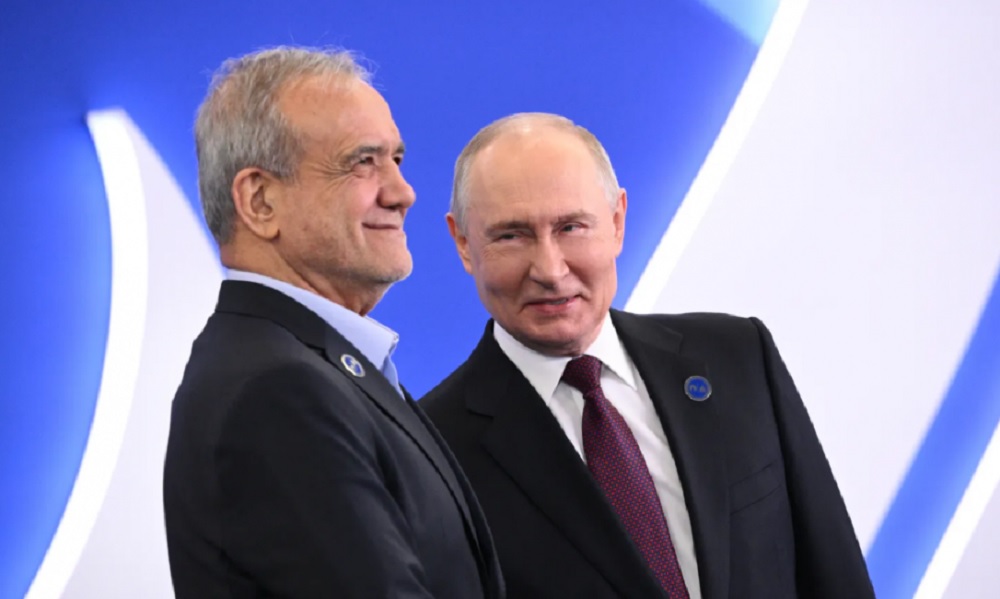
Iran’s Pezeshkian tells Putin Middle East can solve problems without US

Cricket Bonanza: Afghanistan set for packed international schedule

Afghanistan on climate front line as Kabul faces groundwater warning

ACB announces Afghanistan squads for Bangladesh, Zimbabwe series

Afghanistan to face Pakistan, India and Australia at 2027 Cricket World Cup

Four members of one family killed in Helmand in Pakistan airstrike
Tahawol: Emphasis on security cooperation at Tehran talks discussed
Saar: Pakistan threatening strikes on Afghanistan

Iran says outcome of Israeli elections ‘makes no difference’
Houthis attack Saudi Arabia before high-stakes talks in Tehran
Tahawol: Ukraine war and ongoing peace efforts
-
 Latest News4 days ago
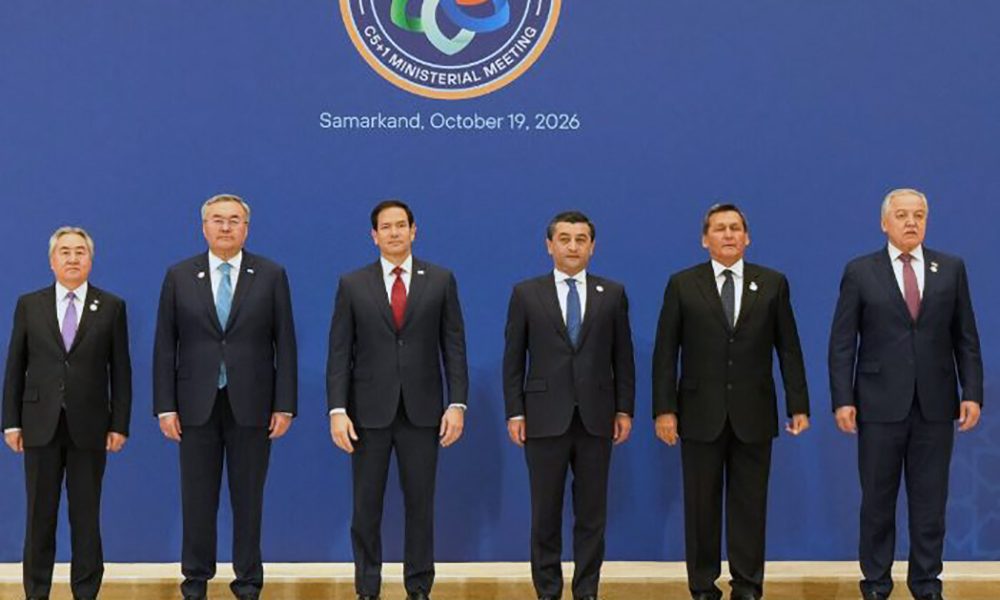
US Central Asia strategy faces challenges linked to Afghanistan’s political and security situation
-
 Sport4 days ago
Afghanistan defeat Zimbabwe to win Tri-Series ahead of 2027 Cricket World Cup
-
 Business4 days ago
Turkmenistan targets 80 billion cubic meters of gas production in 2026
-
 Latest News5 days ago
Khalilzad warns of worsening relations between Afghanistan and Pakistan
-
 Sport3 days ago
Afghanistan rise above England to match their highest-ever ODI ranking
-
 Business3 days ago
Iran moves to ease export barriers to Afghanistan, Pakistan and Iraq
-
 Latest News4 days ago
UN praises resilience of Afghans, raises concerns over restrictions on women and girls
-
 Latest News3 days ago
Afghanistan, Turkmenistan discuss Herat gas pipeline expansion and distribution networks