
Latest News
IEA urges India to complete unfinished projects in Afghanistan

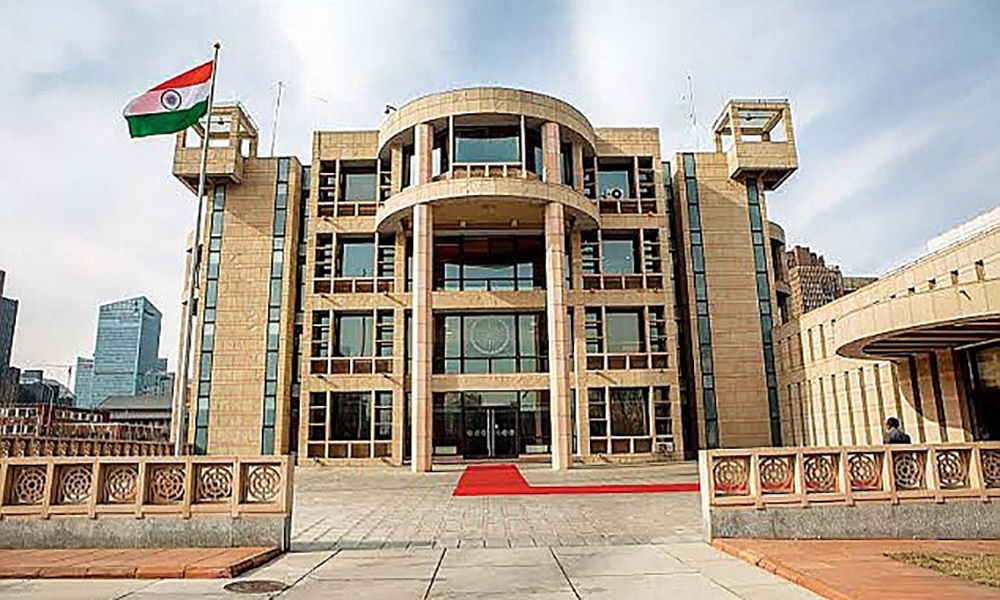
The foreign ministry of the Islamic Emirate of Afghanistan (IEA) has called on India to complete its unfinished developmental projects in Afghanistan.
According to a statement issued on Saturday, the IEA also called on India to embark on other “vital projects,” in Afghanistan.
The statement was issued after India’s Foreign Minister Subrahmanyam Jaishankar said Friday a team of diplomats, excluding the ambassador, had gone to Afghanistan to address issues such as humanitarian assistance, vaccine campaigns and development projects in the country.
“We have taken a very considered deliberated view that our relationship at the end of the day is with the people of Afghanistan, to the society and that it is a relationship which is deep enough and in a sense, historically long enough for us to actually find ways of factoring in these political changes and continuing that people-to-people, so like a relationship,” Jaishankar told reporters.
IEA’s foreign ministry said it welcomed India’s move to step up diplomatic presence at its embassy in Kabul, and reiterated security assurances.
The ministry expressed hope that relations between India and Afghanistan would expand further.







Latest News
Retired U.S. general: ‘I was quite unhappy with the ending in Afghanistan’
He said the images of Afghans trying to hold onto a departing U.S. military aircraft in Kabul were similarly traumatic.
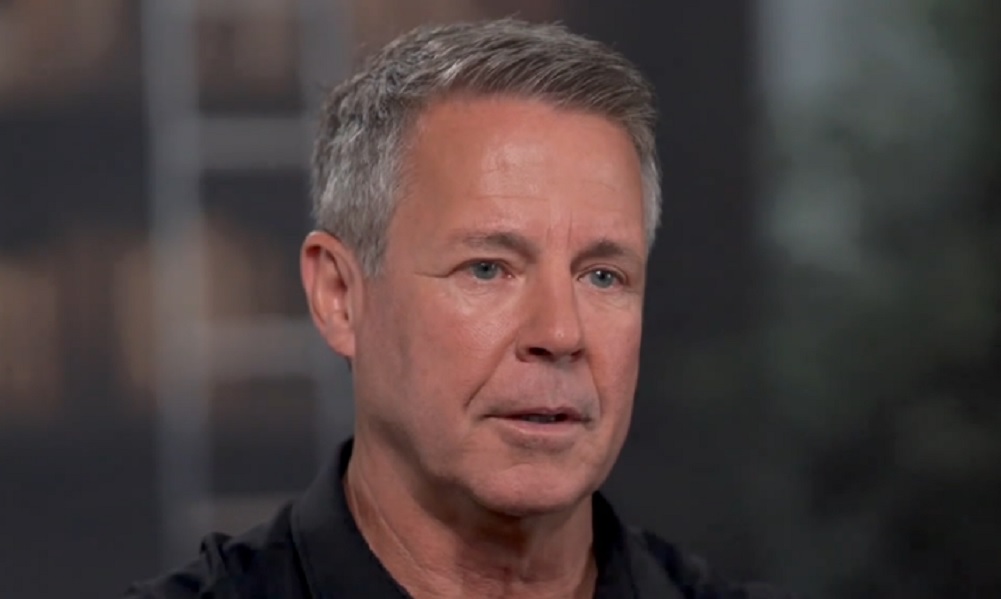
Retired U.S. four-star General Austin “Scott” Miller, the former commander of U.S. and NATO forces in Afghanistan, says he was deeply unhappy with the way the U.S. mission in Afghanistan ended.
In an interview with ABC News, Miller said he knew the withdrawal could end badly, but he was still angry and disappointed by the fall of Kabul and the way the U.S. left Afghanistan.
“I was quite unhappy with the ending in Afghanistan,” Miller said. “Even if I knew it wasn’t going to be good, I knew this could happen, but I was angry.”
Miller said one of the most difficult parts of leaving Afghanistan was telling Afghan partners and friends that he was leaving. Some of those relationships had lasted 10 to 15 years.
“I felt like I had a distasteful task,” he said. “I had to tell them I’m leaving. I really am leaving, and this force is leaving.”
Miller said that although he was simply carrying out U.S. government policy as a soldier, the reaction from his Afghan friends was painful.
“The look in their eyes… was almost as if you’re betraying us,” he said.
Miller: “I felt helpless” during Kabul evacuation
Miller said watching the chaotic evacuation from Kabul after the Islamic Emirate seized the capital was extremely difficult.
“I felt helpless,” he said. “If I could have snuck on an airplane, I would have gone over there.”
He said he wanted to return to Afghanistan to help, but he was no longer in a position to do so.
Miller also recalled the suicide bombing at Abbey Gate at Kabul airport, which killed U.S. service members and Afghan civilians.
“That one almost brought me to my knees. That one hit me in the gut hard,” he said.
Kabul scenes reminded Miller of 9/11
Miller said the chaos at Kabul airport reminded him of the September 11, 2001 attacks in the United States.
He recalled seeing people jumping from the World Trade Center to escape the flames on 9/11.
He said the images of Afghans trying to hold onto a departing U.S. military aircraft in Kabul were similarly traumatic.
“It was traumatic for a lot of people because we do remember how this started. And now, we’re looking at how it’s ending,” Miller said.
Miller says the evacuation could have been handled differently
Asked what could have been done differently, Miller said the growing risks on the ground were not fully understood.
He said the United States could have reduced the number of people who needed to be evacuated before the situation became an emergency.
“I would have liked to have seen some of that come out while we had all the airlift as we were taking the military out,” he said.
Latest News
Iran executes at least 20 Afghan nationals in 2026; rights groups raise concerns
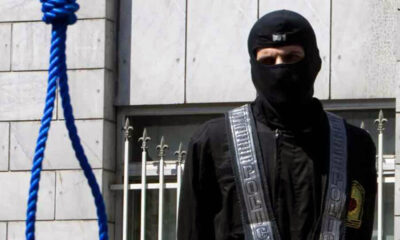
Most of the documented executions reportedly took place at Adelabad Prison in Shiraz, Taybad Prison, Yazd Prison and Dastgerd Prison in Isfahan.
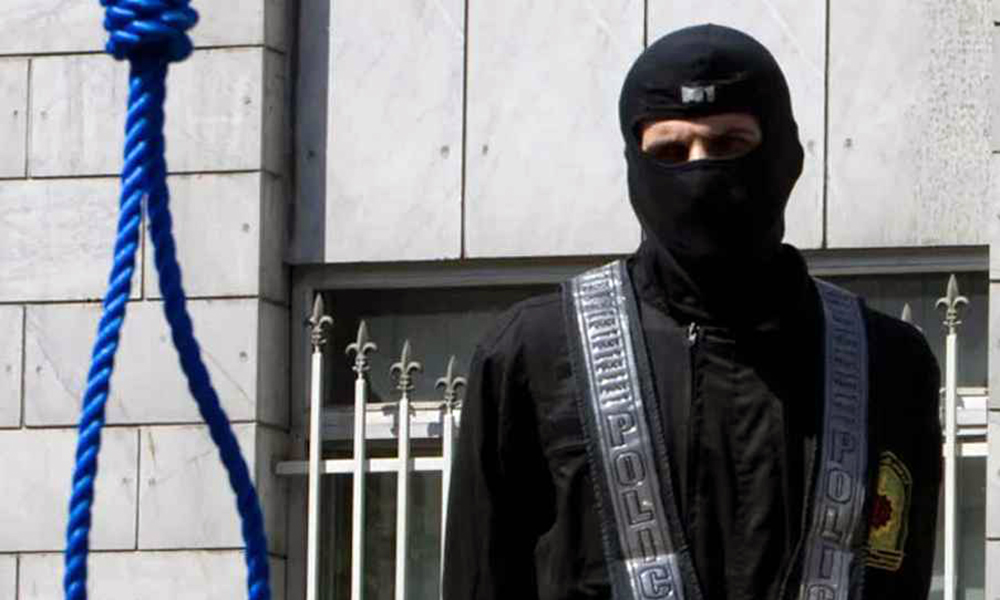
Iran has executed at least 20 Afghan nationals by hanging since the beginning of 2026, according to human rights organizations monitoring executions in the country.
Reports reviewed by the groups indicate that executions of Afghan citizens have been recorded in almost every month of the year. The reported charges include drug-related offenses, murder, espionage on behalf of Israel, and participation in anti-government protests.
Human rights organizations have raised concerns over whether defendants in these cases received fair trials, citing questions surrounding access to legal representation, judicial transparency and effective opportunities to defend themselves.
According to the reports, at least three other Afghan nationals have also been sentenced to death.
Most of the documented executions reportedly took place at Adelabad Prison in Shiraz, Taybad Prison, Yazd Prison and Dastgerd Prison in Isfahan.
Among the cases highlighted by rights groups are those of two cousins, Gol Mohammad Mohammadi and Qayem Hosseini, who were sentenced to death following trials linked to anti-government protests in Isfahan in January.
Human Rights Organization Iran and Hengaw also reported that three Afghan nationals — Afshar Shah-Ahmadi, Iman Shafayi and Sadruddin Ahmadzadeh — were executed in July after being convicted of involvement in the burning of a police station.
Rights groups say their concerns extend beyond the executions themselves, pointing to alleged shortcomings in investigations, access to legal counsel and transparency in capital punishment cases.
Activists also say some executions in Iran are carried out without official announcements, making it difficult to determine the full number of Afghan nationals executed in the country.
According to Hengaw, at least 85 Afghan citizens were executed in Iran in 2025.
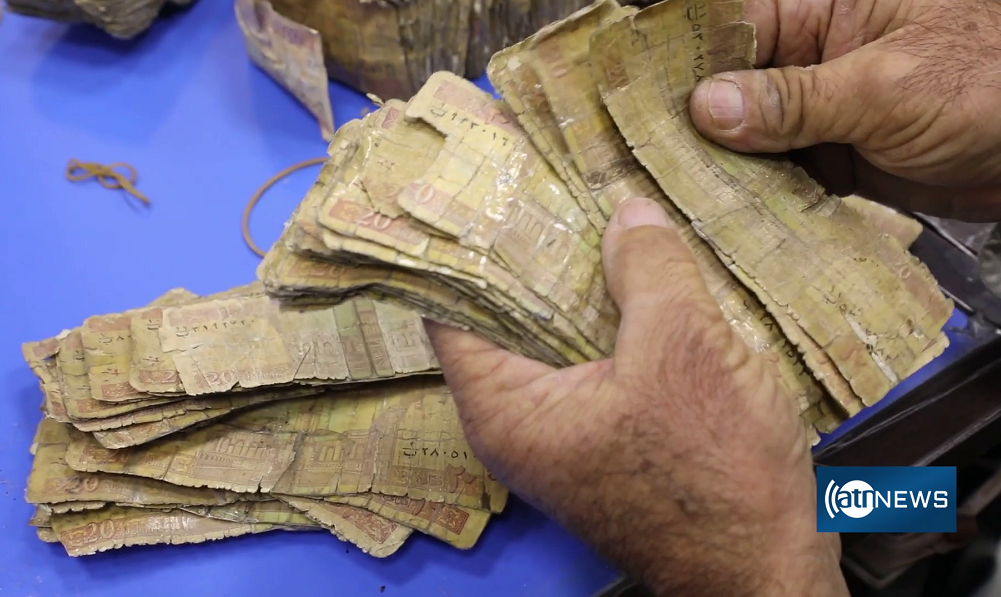
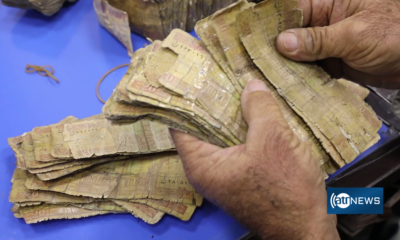
Da Afghanistan Bank (central bank) says it has collected and destroyed worn-out banknotes worth around AFN 2.5 billion over the past year as part of efforts to maintain the quality of currency in circulation.
Hasibullah Noori, spokesperson for Da Afghanistan Bank, said citizens can exchange worn banknotes for new ones by visiting the central bank or commercial banks.
The move comes as some citizens and money changers report an increase in worn banknotes in the market. They say such notes are often difficult to use in daily transactions, with some people refusing to accept them.
Money changers say the situation has created difficulties in routine transactions and called for more worn banknotes to be removed from circulation.
Da Afghanistan Bank has urged citizens to take better care of Afghan currency to prevent banknotes from becoming worn before the end of their expected lifespan. The bank says premature replacement and printing of banknotes imposes additional costs.
Bank officials said new banknotes are being injected into circulation based on monetary policy and market demand.


Retired U.S. general: ‘I was quite unhappy with the ending in Afghanistan’

Trump says Iran’s Kharg is being ‘blown to smithereens’, but gives no details

Iran executes at least 20 Afghan nationals in 2026; rights groups raise concerns

Tahawol: Latest on Stalled Kabul-Islamabad Talks

Saar: Afghanistan’s Relations with Regional Countries

AFC confirms clubs for 2026/27 competitions; draw set for August 18

Only two days to go before Afghanistan and Ireland begin ODI series

Four mediators struggle to secure lasting Pakistan-Afghanistan ceasefire

Kabul opens cardiac hospital for children

Heavy monsoon rains claim lives across India as flooding and landslides continue
Tahawol: Latest on Stalled Kabul-Islamabad Talks
Saar: Afghanistan’s Relations with Regional Countries

Tahawol: Islamic Emirate seeks to normalize US ties

Saar: Discussion on ensuring Afghanistan’s border security

Tawsia: Afghanistan’s efforts to boost production and exports disucssed
-
 Latest News4 days ago
Pakistan open to state-to-state dialogue with Afghanistan on terrorism
-
 Sport4 days ago
ATN secures exclusive rights to broadcast T20I series in India across Afghanistan
-

 International Sports5 days ago
Tottenham face Charlton as ATN brings live EFL Cup action to Afghan fans
-

 World5 days ago
Trump administration issues pause on visa appointments for applicants worldwide
-

 Regional4 days ago
Qatar PM to visit Tehran to pursue mediation efforts
-
 World5 days ago
US spy chief visits Russia for meetings, media reports
-
 Latest News4 days ago
Standardized orthography for Dari and Pashto languages is essential: official
-
 Latest News4 days ago
Trump says overnight US withdrawal from Bagram left Afghanistan vulnerable to collapse