
Latest News
Neighbors ‘colluding’ with Taliban over drone warfare: military experts

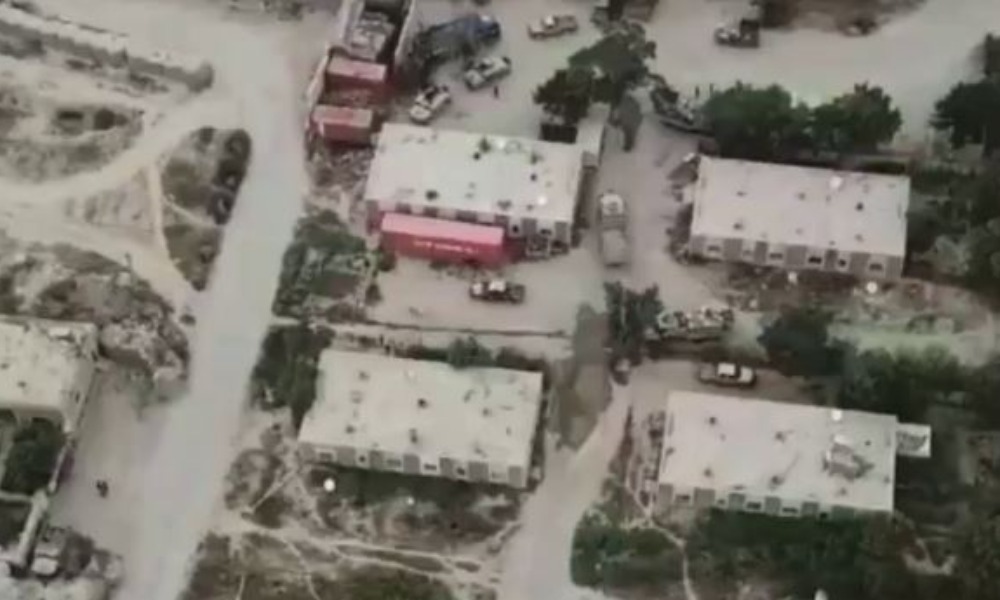
A number of former military chiefs and members of the Wolesi Jirga (Lower House of Parliament) have said the Taliban are not able to get access to hi-tech drones without the help of neighboring countries.
The use of drones is one of the Taliban’s latest tactics. The group has not only used the devices to gather surveillance footage of possible targets but have also used them to carry out bombardments against military installations.
Sources in Kunduz said on Monday the Taliban also carried out an airstrike on a national army battalion in Imam Sahib district of the province on Sunday – using drones. This comes after they dropped explosives on the 217 Pamir Corps.
The use of this technology by the Taliban is not new, but in recent months such attacks by the group on military bases have increased.
“The use of drones by the Taliban has concerned the people. The group has attacked the 217th Pamir Corps and an ANA battalion in the Imam Sahib district of Kunduz,” said Mohammad Yusof Ayoubi, head of Kunduz Provincial Council.
Military experts say the use of such technology by the Taliban alone is not possible, and that countries in the region are involved in the attacks.
They say there are now free markets in parts of Pakistan, where the Taliban obtain drones and advanced weapons.
“Advanced weapons are still sold freely in parts of Pakistan. The Afghan military can easily thwart Taliban airstrikes, even with Kalashnikovs,” said former military chief Dawlat Waziri.
Although the Ministry of Defense did not comment on the use of Taliban drones, the National Directorate of Security (NDS) has already confirmed the use of such technology by the group.
The House Defense Committee also says the Taliban are active near military bases due to the lack of intelligence.
“Weak intelligence has led to a large presence of the Taliban near military bases. This must be stopped,” said Mir Haidar Afzali, Chairman of the Defense Affairs Committee of the Wolesi Jirga.
Military experts say the attacks are dangerous, but say security and defense agencies could easily prevent them.

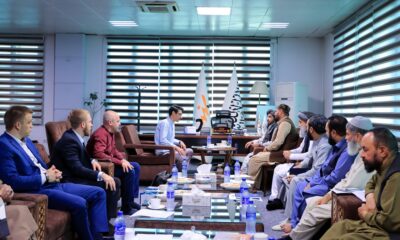


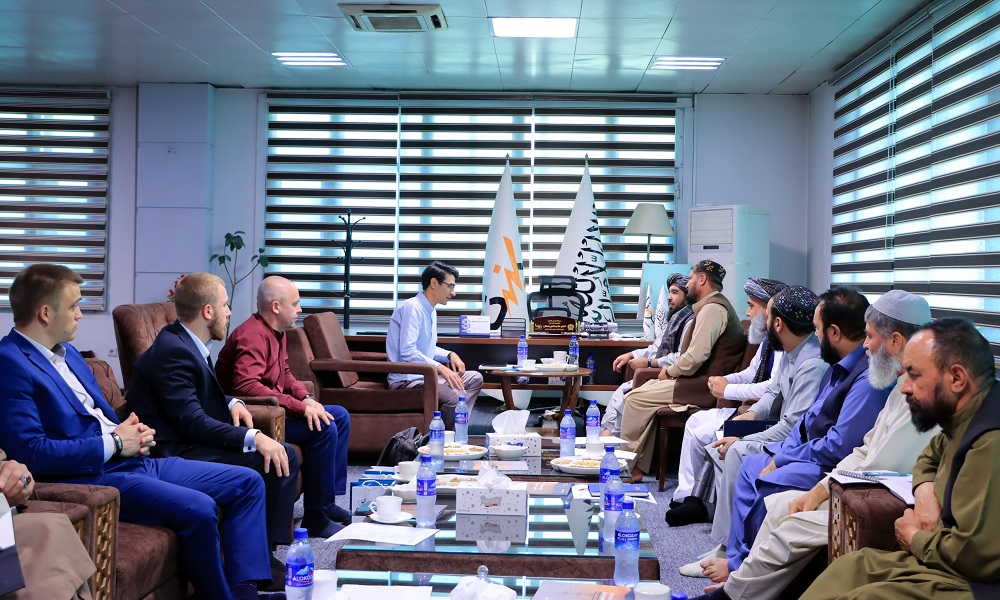
Russia’s Power Machines Company is interested in investing in the rehabilitation and modernization of Afghanistan’s power plants, Da Afghanistan Breshna Sherkat (DABS) said on Tuesday.
DABS Chief Executive Officer Abdul Haq Hamkar discussed the potential investment with technical officials from Power Machines, with talks focusing on rehabilitating existing power plants, modernizing equipment and expanding power-generation capacity.
According to DABS, Hamkar said the company would cooperate in facilitating preliminary technical assessments of Afghanistan’s power plants and in exploring investment opportunities in the sector.
Denis Rudakov, head of Power Machines’ commercial department, said the Russian company plans to conduct preliminary technical assessments of existing power plants in Afghanistan.
Based on the findings, Power Machines will prepare proposals for rehabilitating facilities, modernizing equipment and increasing electricity-generation capacity, DABS said.
Afghanistan currently has several operational power plants, while efforts are underway to increase their generation capacity and upgrade their equipment, according to DABS.
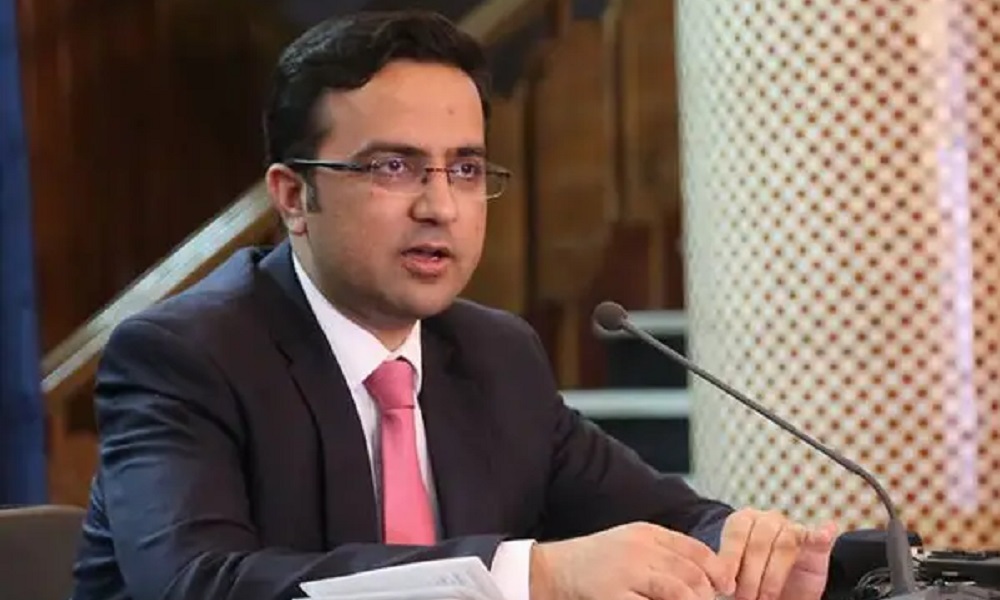
Zabihullah Mujahid, spokesman for the Islamic Emirate of Afghanistan (IEA), on Tuesday denied that IEA authorities detained Mahmood Shah Habibi, an Afghan-American businessman the US claims disappeared in Kabul four years ago.
“We have no information about Mahmood Shah Habibi. He is not with the Islamic Emirate of Afghanistan. If he were, this issue would have been resolved long ago,” Mujahid said.
His remarks came a day after the FBI marked the fourth anniversary of Habibi’s disappearance and renewed its appeal for information about his whereabouts.
According to the FBI, Habibi disappeared near his home in Kabul on August 10, 2022. At the time, he was working as a consultant for Asia Consultancy Group, a Kabul-based telecommunications company. He had previously served as Afghanistan’s director of civil aviation.
The FBI has alleged that Habibi was detained by the IEA’s General Directorate of Intelligence.
The FBI has continued its investigation and in 2025 released a missing-persons poster for Habibi. The U.S. State Department has also offered a reward of up to $5 million for information leading to his location, recovery and return.

Afghanistan’s Justice Minister Abdul Hakim Sharei says the reclamation of state-owned land seized by land grabbers is a legal matter and should not be linked to ethnicity, religion or language.
Sharei, who also heads the Commission for the Prevention of Land Grabbing, made the remarks at a meeting with officials and representatives of charitable organizations in Kabul.
He said the commission is legally and religiously obligated to enforce rulings issued by the special court handling cases involving seized state land. Once the court determines that a disputed plot belongs to the state, the commission must enforce the decision, he said.
Sharei said the special court bases its rulings on documents, evidence and the law, adding that legal principles must be applied equally to all parties.
The justice minister also called on charitable organizations to work toward establishing a nationwide union and to expand their activities into fundamental and infrastructure projects.
He urged charities to avoid photographing or filming people while distributing aid, saying such practices could undermine the dignity of those receiving assistance.
Representatives of charitable organizations raised concerns over taxes, customs procedures and lengthy administrative processes. The Ministry of Justice said it would work to address the issues following the establishment of a nationwide union.


Tahawol: Hamid Karzai’s call for Afghan reconciliation discussed

Saar: Preparations for IEA’s fifth anniversary discussed

Russian firm eyes investment in Afghanistan’s power plants

Syria sentences absent Bashar al-Assad to death over killings, torture

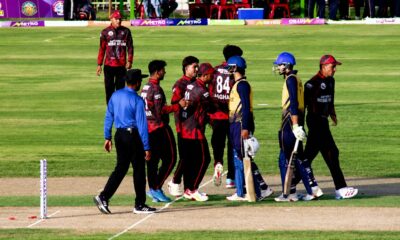
Abasin Defenders beat Shamshad Eagles by four wickets in Kabul Premier League

Pakistan’s governance system has ‘collapsed’: Mohsin Naqvi

Spain sweep FIFA World Cup player awards after historic triumph

Mango growers suffer heavy losses as exports fall and climate takes its toll

Countdown begins for inaugural Afghanistan Wrestling Premier League

Iran, Afghanistan and Tajikistan discuss expanding regional transit cooperation
Tahawol: Hamid Karzai’s call for Afghan reconciliation discussed
Saar: Preparations for IEA’s fifth anniversary discussed

Tahawol: Iran’s acknowledgment of Afghanistan’s cooperation discussed

Saar: Five years of Islamic Emirate rule in Afghanistan reviewed

Tahawol: Afghanistan: An Alternative to the Strait of Hormuz?
-

 Sport3 days ago
Afghanistan secure direct qualification for 2027 Men’s ODI World Cup
-
 Regional4 days ago
Goods transporters to go on strike from Saturday after talks with Pakistan govt fail
-
 Latest News3 days ago
Pakistan-backed armed groups in Balochistan using former Afghan government forces: report
-

 Sport4 days ago
Rashid Khan takes six as Afghanistan thrash Ireland by 92 runs
-

 World4 days ago
US Senate passes Russia sanctions championed by Graham; US House next
-
 Sport5 days ago
Afghanistan ends continental futsal championship with dominant win over New Zealand
-
 Business5 days ago
Uzbekistan, Kazakhstan target Afghanistan in push to expand regional trade
-

 Regional5 days ago
Trump says he thinks war with Iran will end ‘pretty soon’