
Climate Change
Webinar series highlights growing climate pressures on livelihoods in Afghanistan
Afghanistan is widely regarded as one of the countries most vulnerable to climate change, with limited capacity to manage its effects.


A recent webinar series hosted by the United Nations Assistance Mission (UNAMA) in Afghanistan has underscored the escalating impact of climate change on humanitarian needs and livelihoods across Afghanistan.
Held in partnership with Samuel Hall, the six-part series in late 2025 brought together Afghan experts, humanitarian workers, UN agencies, NGOs and local stakeholders to examine the country’s mounting environmental challenges and explore potential responses.
Afghanistan is widely regarded as one of the countries most vulnerable to climate change, with limited capacity to manage its effects. Participants warned that communities are already facing severe consequences, including rising displacement, worsening food insecurity and increasing pressure on natural resources.
The discussions highlighted that nearly 70 percent of the population depends on climate-sensitive agriculture, leaving livelihoods exposed to shifting weather patterns. A changing water cycle has intensified water scarcity nationwide, while urban centres such as Kabul are grappling with declining groundwater levels.
At the same time, increasingly erratic seasonal flooding continues to damage homes, infrastructure and farmland, compounding humanitarian needs.
Speakers also pointed to the growing link between climate change and displacement, noting that environmental shocks are driving both internal migration and cross-border movements as livelihoods come under strain.
Across the six sessions, participants explored a range of themes, including water management, climate finance, the role of women and youth, and the intersection of climate change with peace and security.
The series aimed to amplify Afghan perspectives and maintain focus on the country’s climate challenges, particularly as Afghanistan remains largely absent from global climate forums.
Organisers said the discussions highlighted both the scale of the crisis and the depth of local expertise available to respond, while calling for sustained, coordinated and evidence-based action.
Summary notes and recordings from the sessions have been released to inform policymakers, donors and practitioners, outlining key recommendations and areas requiring further investment and collaboration.








Climate Change
Hundreds of thousands flee as devastating wildfires rage across France and Spain
Firefighters, military personnel and emergency responders have been deployed across the affected regions, while thousands of residents remain displaced.
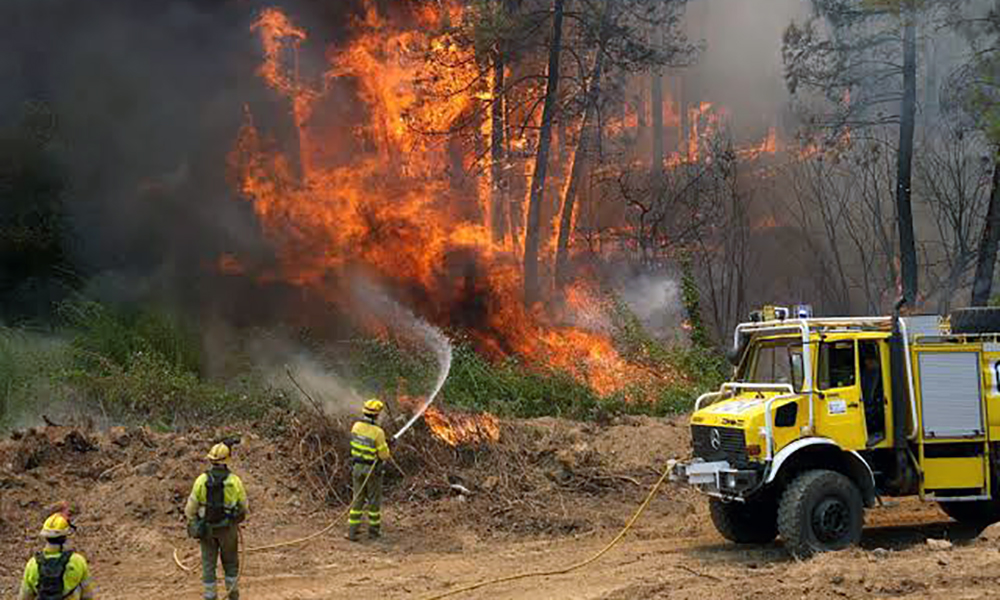
Hundreds of thousands of people have been forced to evacuate their homes as massive wildfires continue to sweep across parts of France and Spain, prompting emergency declarations and international assistance.
Authorities say more than 267,000 people have been evacuated as the fast-moving blazes, fueled by high temperatures, strong winds and dry conditions, continue to spread across large areas of both countries.
In France, officials ordered the complete evacuation of the Cap Ferret peninsula on the Atlantic coast as wildfires burned through more than 10,000 hectares of forest. Thousands of residents and tourists were instructed to leave the area by road and boat as flames advanced despite extensive firefighting efforts.
French President Emmanuel Macron described the situation as “very intense,” while the government activated the European Union’s Civil Protection Mechanism, bringing in additional firefighting aircraft from other EU member states to help battle the blazes.
In neighboring Spain, the government declared a national emergency after multiple wildfires threatened communities west of Madrid and in the province of Ávila. Authorities warned that several fires risked merging into larger fronts, complicating efforts to contain them.
Firefighters, military personnel and emergency responders have been deployed across the affected regions, while thousands of residents remain displaced.
Scientists have repeatedly warned that climate change is increasing the frequency and intensity of extreme heatwaves and wildfire conditions across southern Europe, with prolonged drought and soaring temperatures creating ideal conditions for rapidly spreading fires.
No final estimate of the damage has yet been released, and officials cautioned that dangerous weather conditions are expected to persist, raising concerns that the fires could continue to spread in the coming days.
Emergency services remain on high alert as authorities urge residents in affected areas to follow evacuation orders and avoid travel near active fire zones.
Climate Change
At least 3,700 excess deaths reported during heatwave in France, Belgium and Netherlands
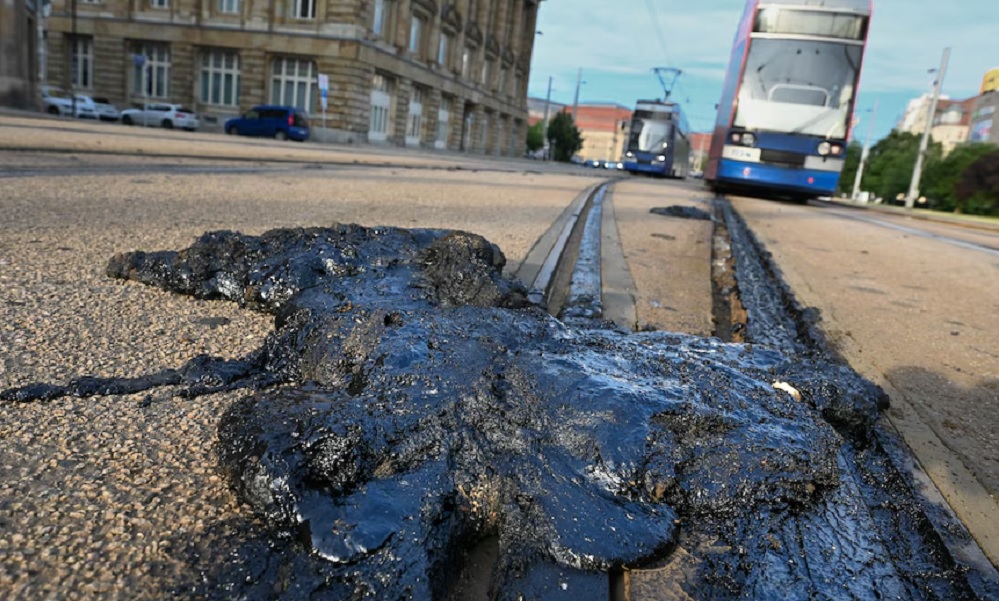
France, the Netherlands and Belgium have recorded 3,700 excess deaths during the June heatwave that sent temperatures soaring across Europe, with authorities warning that the numbers are preliminary and could rise.
Experts have said the heatwave, which lasted from about June 20-28, was the worst recorded in Europe, causing disruption to power generation, damaging infrastructure and overwhelming healthcare systems. The extreme heat was almost certainly driven by climate change, scientists said, Reuters reported.
There were 2,025 excess deaths recorded in France during the heatwave, with a particular increase in deaths among people aged over 45, French Health Minister Stephanie Rist told local television on Friday.
Deaths at home rose 91% between June 22-28 compared to the previous week, while deaths in nursing homes and healthcare facilities also increased, the country’s public health authority said in a bulletin.
“Mortality will … be higher than these initial figures suggest,” the authority warned.
‘UNPRECEDENTED’ MORTALITY DATA
In Belgium, the Health Ministry said on Thursday it had registered excess mortality of about 1,200 deaths between June 18 and June 29, adding that 530 of the deaths were among people aged 85 or older. People aged under 65 accounted for 180 of the excess deaths.
“Such excess mortality during a heatwave is unprecedented in our country,” the ministry said in a statement.
Authorities in the Netherlands said the heatwave led to about 480 excess deaths, mainly among the over 80s.
Climate Change
Forty drown in France as people seek relief from Europe’s heatwave
France experienced its hottest day on record on Tuesday, Meteo France forecaster said, with a peak of 44.3 degrees Celsius (111.74 degrees Fahrenheit) in one town in the south west.

Forty people have drowned in France over recent days as they sought to cool down to escape record heat, the prime minister said on Tuesday, as a heatwave swept across much of Europe.
Britain, Italy, Switzerland and Spain were also sweltering in extreme heat, with record temperatures in some areas disrupting schools and transport networks and forcing tourist sites – including the Eiffel Tower – to shut.
Europe is warming at more than twice the global average, according to the World Meteorological Organization, making such prolonged heat episodes increasingly likely.
HEAT ALERT ACROSS FRANCE
France experienced its hottest day on record on Tuesday, Meteo France forecaster said, with a peak of 44.3 degrees Celsius (111.74 degrees Fahrenheit) in one town in the south west.
Fifty-four departments are under red alerts in what Meteo France said was unprecedented. That will jump to 58 on Wednesday.
Across the country, people have been jumping into canals and rivers to cool off. Sports minister Marina Ferrari said she understood the urge to escape the heat but warned against swimming in unauthorized or dangerous areas.
Speaking ahead of an emergency meeting on the heatwave, Prime Minister Sebastien Lecornu called the drownings “a sad scourge” and said there had been 40 deaths since June 18, most of them young people.
On Monday, first responders were unable to resuscitate two children, aged 2 and 4, who were found unconscious by their mother in the family car outside their home, said a prosecutor in Carpentras, southeast France.
HEAT DOME
The heatwave is being driven by a weather pattern known as an Omega block, because it takes the shape of the Greek letter Ω, with a bulge of hot air trapped between cooler systems, allowing temperatures to build day after day. Heatwaves and storms are being intensified by climate change.
Meteo France said current conditions were comparable to the August 2003 heatwave, which lasted 16 days and led to an estimated 80,000 excess deaths across Europe. It was uncertain how long the current episode would last.
“Thursday will once again be a sweltering day (in France), with temperatures remaining just as high. On Friday, a gradual drop is expected to begin from the Atlantic coast,” the weather forecaster said.
Heatwaves can affect people’s physical and mental health but also force businesses to adapt and put grain harvests at risk.
HEAT ALERTS IN ITALY, BRITAIN
In Italy, the health ministry issued its highest level alert for 15 cities and authorities took measures to curtail work in some sectors. Storms were expected over the Alps and Apennines, bringing heavy rain, gusty winds and hail.
Britain is also in the grip of the heat, with the Met Office forecasting temperatures of up to 37 C in southern England on Tuesday — potentially a new June record — before rising further on Wednesday and Thursday. Dozens of schools planned early closures.
Transport networks across Europe came under strain, with trains cancelled or running more slowly.
CLIMATE SHELTERS
Spain’s meteorological agency has issued red alerts across parts of the country, warning of dangerous heat with temperatures expected to reach 44 C. Dozens of municipalities across northern Spain cancelled traditional bonfires due to wildfire risks.
Madrid has opened climate shelters for the homeless and other vulnerable people.
In Belgium, soaring temperatures forced a primary school near Brussels to relocate its final exams to a nearby church.
In Switzerland, the northeastern canton of St. Gallen restricted water withdrawal from rivers and lakes, citing low levels and high temperatures.
TRYING TO ADAPT
In cities affected by the heatwave, fans and air conditioning units were flying off the shelves.
“I came quick, I haven’t even had my coffee this morning, I ran here to buy an electric fan,” said filmmaker Victoria Yakubov, who managed to snag one last remaining fan in a Paris shop. “Everything was gone in less than 30 minutes.”
It was the same story in London, with fans “flying off the shelves”, John Lewis Oxford street branch manager, Paul Marsden said.
As parts of Europe baked, and the Eiffel Tower closed at 4 p.m. (1400 GMT) because of the heat, cooler northern destinations were drawing tourists seeking a “coolcation”.
“We were thinking about travelling to Croatia, but we came to Sweden because it’s cooler here,” said German tourist Katharina Rexing in Stockholm’s Old Town, on a day when it was 22 C in the Swedish capital and 30 C in Croatia’s Zagreb.


FIFA reveals scale of record-breaking World Cup 2026 operation

MSF urges Pakistan to halt forced returns of Afghan refugees

Oman presents Iran with Gulf-backed plan for voluntary fees to use Hormuz

Germany deports first Afghan without criminal record since 2021, Reuters reports

Tahawol: Iran–US relations amid recent developments

India offers 1,000 online scholarships for Afghan students for 2026-27 academic year

Cricket world pays tribute to Afghanistan fast bowler Shapoor Zadran

Turkey spent over $120 million to prepare airport for Qatar-donated U.S. presidential aircraft

Thousands pay final respects as Afghan cricketer Shapoor Zadran buried in Kabul

Afghanistan U-15 team qualifies for FIFA U-15 World Cup
Tahawol: Iran–US relations amid recent developments

Saar: Attack in Pakistan-controlled Chitral

Tahawol: Afghanistan–Uzbekistan Economic Cooperation Enters New Phase

Saar: Growing Criticism in Pakistan Over Islamabad’s Afghanistan Policy

Tahawol: Trump halting major Iran escalation
-

 Latest News3 days ago
Badakhshan Governor, Army Chief reaffirm commitment to Afghanistan’s security
-

 Latest News5 days ago
Five armed men killed while attempting to cross Durand Line into Badakhshan
-

 Latest News4 days ago
U.S. government plan to interview Afghan refugees raises deportation concerns
-

 Latest News4 days ago
Afghanistan, Turkey discuss expanding agricultural cooperation
-

 Regional3 days ago
US pauses strikes on Iran as diplomatic efforts gather pace amid regional tensions
-

 Business2 days ago
Iran seeks to establish free trade zone with Afghanistan and China
-

 Latest News4 days ago
Uzbekistan delegation arrives in Kabul to attend trade forum
-

 World4 days ago
Trump says Israeli PM Netanyahu will visit US next week