
Business
ADB approves $50 million grant for Afghanistan’s COVID vaccine campaign

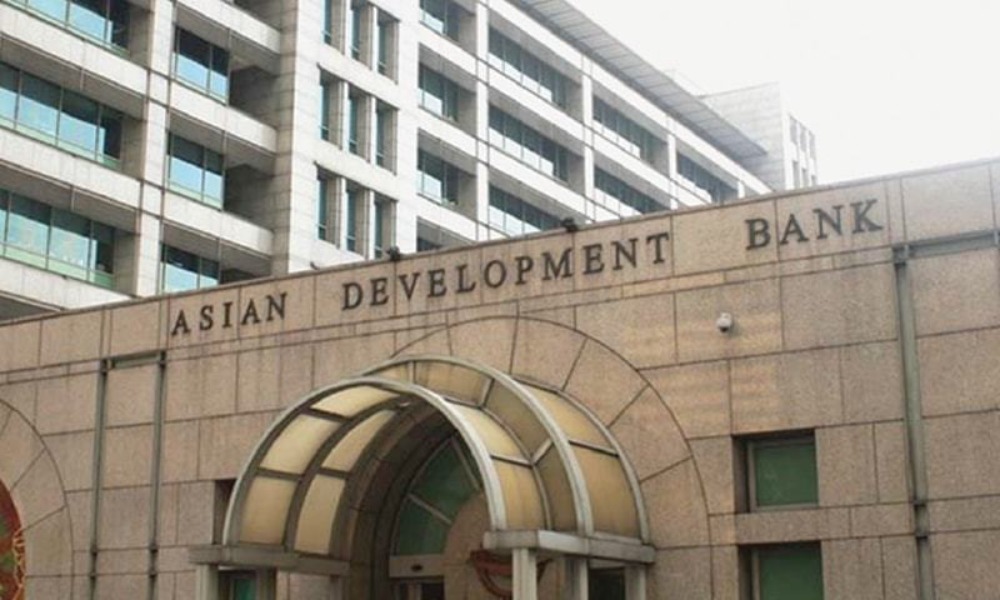
The Asian Development Bank (ADB) on Tuesday approved a $50 million grant to help the Afghan government procure and deploy safe, high-quality COVID-19 vaccines, and strengthen the country’s capacity to implement its vaccine program.
The ADB said in a statement that the project will support the National Plan for COVID-19 Vaccination in Afghanistan by procuring and transporting six million doses of COVID-19 vaccines for priority segments of the population, as determined by the government.
“As Afghanistan continues to grapple with COVID-19, this project will help ensure that safe and high-quality vaccines are made available to the Afghan people,” said ADB President Masatsugu Asakawa.
“Making vaccines available to vulnerable groups and strengthening Afghanistan’s immunization program will help to save lives and is a vital step toward recovery.
This support is part of ADB’s strong commitment to helping Afghanistan overcome the pandemic and achieve a sustainable economic recovery,” Asakawa said.
Under its national plan, the Afghan government aims to vaccinate all eligible people including vulnerable groups, approximately 60 percent of the total population.
ADB’s COVID-19 Vaccine Support Project will provide financing to procure vaccines for at least 2.6 million people, or about 11 percent of the eligible population, including through the COVID-19 Vaccines Global Access (COVAX)
Advance Market Commitment facility.
The grant will also strengthen the Ministry of Public Health’s capacity in planning,
communications, coordination, and implementation of the vaccine program at national and provincial levels.
According to the ADB, technical training including specialized gender sessions will ensure that vaccines are administered to women in a culturally sensitive manner and a waste management firm will be engaged to build capacity for proper disposal of medical waste.
ADB estimates that Afghanistan’s GDP contracted by five percent in 2020 as the pandemic forced business closures and disrupted supply chains.
Unemployment is projected to have risen from 23.9 percent in 2019 to 37.9 percent in 2020 adding to the negative pressures of increased costs of food,
housing, and health services.
ADB’s grant complements other development partners’ efforts and contributes to fostering growth in the Central Asia Regional Economic Cooperation region through addressing pandemic risks and cross-border health threats.
Afghan health officials meanwhile said Tuesday that the number of coronavirus infections has increased in Afghanistan recently.
The Ministry of Public Health said 176 new cases of COVID-19 and seven deaths were reported in the past 24 hours across Afghanistan.
According to the ministry 28 others recovered in the mentioned time.
The ministry warned a lockdown will be imposed in major cities including Kabul if people fail to take the necessary precautions to help curb the spread of the virus.




Business
TAPI pipeline nears first gas sales in Afghanistan
Herat Governor Mawlavi Islam Jar recently said construction of the TAPI pipeline in the province is expected to be completed within two months.
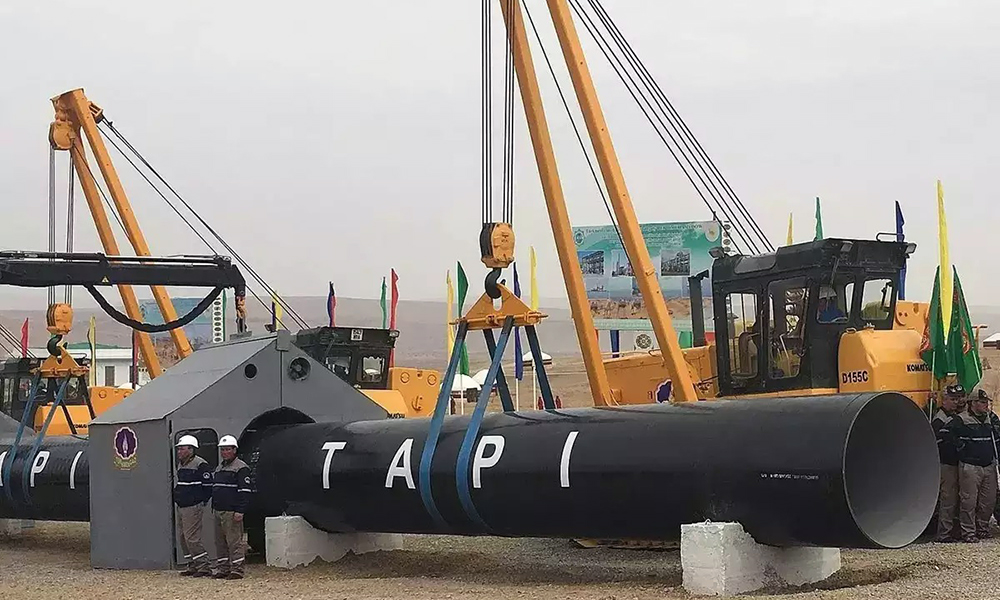
The Turkmenistan-Afghanistan-Pakistan-India (TAPI) gas pipeline is moving closer to its first commercial gas sales in Afghanistan after years of delays, with Herat expected to become the first Afghan market served by the project.
According to the Times of Central Asia, Turkmenistan plans to supply gas to Herat through the TAPI pipeline, while the timeline for extending the project to Pakistan and India remains uncertain.
The report says Turkmengaz and Afghan Gas signed a memorandum on August 10 covering the purchase of gas through TAPI. However, the agreement does not yet specify the price, supply volume or exact date for the start of commercial deliveries.
Afghan and Turkmen officials are also working to develop a gas distribution network in Herat to supply industrial facilities, power plants and households.
Meanwhile, Herat Governor Mawlavi Islam Jar recently said construction of the TAPI pipeline in the province is expected to be completed within two months.
According to the governor, Turkmen officials have completed their work on the project and will hand it over to Herat authorities once the remaining process is finalized.
Jar has also urged residents and factory owners in Herat’s industrial park to make the necessary preparations for the start of gas distribution and pipeline connections.
The TAPI project is designed to transport Turkmenistan’s natural gas through Afghanistan and Pakistan to India, with a planned annual capacity of 33 billion cubic meters.
Business
Afghanistan, Russia discuss special economic zone and expanded trade cooperation
The Russian ambassador also presented a proposal concerning joint-stock companies related to “Stras and Afsutor.”
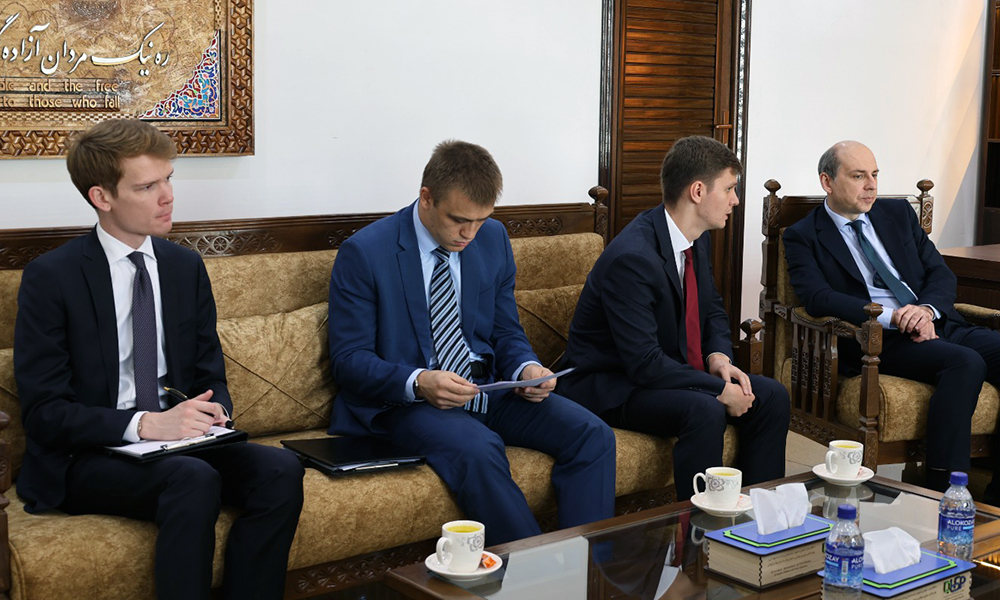
Afghanistan and Russia have discussed plans to expand economic and trade cooperation, including a proposal to establish a special economic zone at the Hairatan border port.
Ahmad Jan Bilal, Director General of State-Owned Enterprises, met with Dmitry Zhirnov, the Russian ambassador to Afghanistan, at his office. Saeedurrahman Mazhari, head of the director general’s office, and Momtazuddin Momtaz, head of legal affairs, also attended the meeting.
During the talks, Zhirnov thanked Bilal for arranging the meeting and proposed the establishment of a special economic zone in Hairatan. He said the zone could provide facilities for the storage, processing and packaging of agricultural products, as well as other economic activities.
The Russian ambassador also presented a proposal concerning joint-stock companies related to “Stras and Afsutor.”
Bilal welcomed the proposal and stressed the importance of establishing an economic zone. He said the General Directorate of State-Owned Enterprises was working to further strengthen and expand the activities of the relevant companies to help increase exports of Afghanistan’s fresh and dried fruits to international markets.
He added that Afghanistan welcomes Russia’s cooperation in various economic sectors and is ready to expand further joint economic and trade partnerships.
Bilal also called for cooperation and agreements on establishing a workshop for repairing Kamaz vehicles in Afghanistan and importing petroleum products from Russia.
At the conclusion of the meeting, the Russian ambassador assured the Afghan side of Russia’s comprehensive cooperation on the issues discussed.
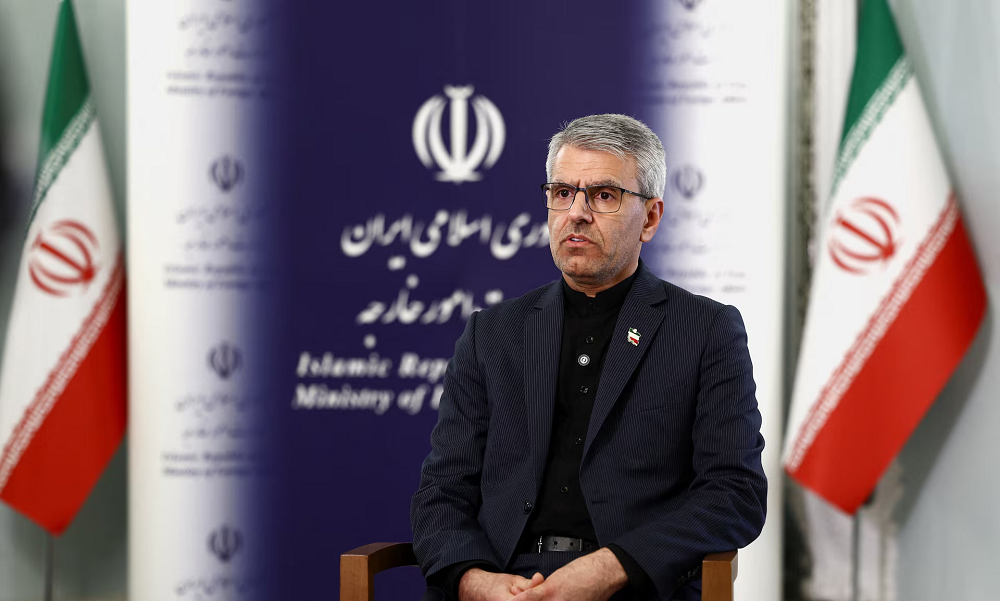
Iran says reducing border and customs barriers is essential to increasing trade and economic exchanges with Afghanistan, as officials report a sharp rise in rail freight between the two countries.
Iranian Foreign Ministry spokesman Esmail Baghaei said at a weekly press briefing that Tehran and Kabul have discussed ways to facilitate economic and commercial cooperation, particularly by reducing customs and border obstacles.
Baghaei said the issue was discussed during a meeting between Afghanistan’s Deputy Prime Minister for Economic Affairs and Iran’s president. He added that important measures have since been placed on the agenda and that constructive exchanges have continued at the ministerial level.
The Iranian official expressed hope that the process would help increase bilateral trade and remove existing obstacles to the movement of goods between the two countries.
Meanwhile, Jabbar Ali Zakari, Iran’s deputy minister of roads and urban development and head of the country’s railway company, said rail freight between Iran and Afghanistan has increased significantly.
Zakari said less than 15,000 tonnes of goods were transported by rail between the two countries annually in the past, while the figure has now reached around 130,000 tonnes per month.
He said Iran expects the volume to reach approximately 1.5 million tonnes annually if the current trend continues.
Iranian officials say expanding railway links with Afghanistan and other regional countries could further strengthen trade, transit and connectivity between Iran, Afghanistan and Central Asia.


Tawsia: Afghanistan’s efforts to boost production and exports disucssed

Kandahar exports 294,000 tons of fruit over past year

Case of 87 Afghan students reaches Islamabad High Court over visa delays

TAPI pipeline nears first gas sales in Afghanistan

Wali Khan urges Pakistan to resolve tensions with Afghanistan through diplomacy

Pakistan’s governance system has ‘collapsed’: Mohsin Naqvi

AFC confirms clubs for 2026/27 competitions; draw set for August 18

Only two days to go before Afghanistan and Ireland begin ODI series

Four mediators struggle to secure lasting Pakistan-Afghanistan ceasefire

Afghanistan invites Iranian investors to expand economic cooperation
Tawsia: Afghanistan’s efforts to boost production and exports disucssed

Tahawol: Fifth anniversary of America’s defeat in Afghanistan discussed

Saar: Ongoing expulsion of Afghans from Iran and Pakistan discussed

Tahawol: Calls for US engagement with the Islamic Emirate discussed

Saar: Call for dialogue to resolve issues with Afghanistan discussed
-
 Business5 days ago
Afghanistan’s trade diversification challenges Pakistan
-
 Latest News5 days ago
SCO summit to be held without confirmed Afghan invitation
-

 Sport5 days ago
Afghanistan squad announced for three-match T20I series against India
-

 Latest News5 days ago
Former US ambassador says Washington could eventually reopen embassy in Kabul
-
 Latest News5 days ago
Afghanistan’s polio cases rise to 19 in 2026, WHO says
-

 Latest News4 days ago
First deportation flight to Haiti arrives as US ends temporary protected status
-
 Latest News2 days ago
Pakistan open to state-to-state dialogue with Afghanistan on terrorism
-

 International Sports4 days ago
Watford face Peterborough in EFL Cup; ATN to bring live action to Afghan fans