
Latest News
Biden says Afghan leaders must ‘fight for their nation’

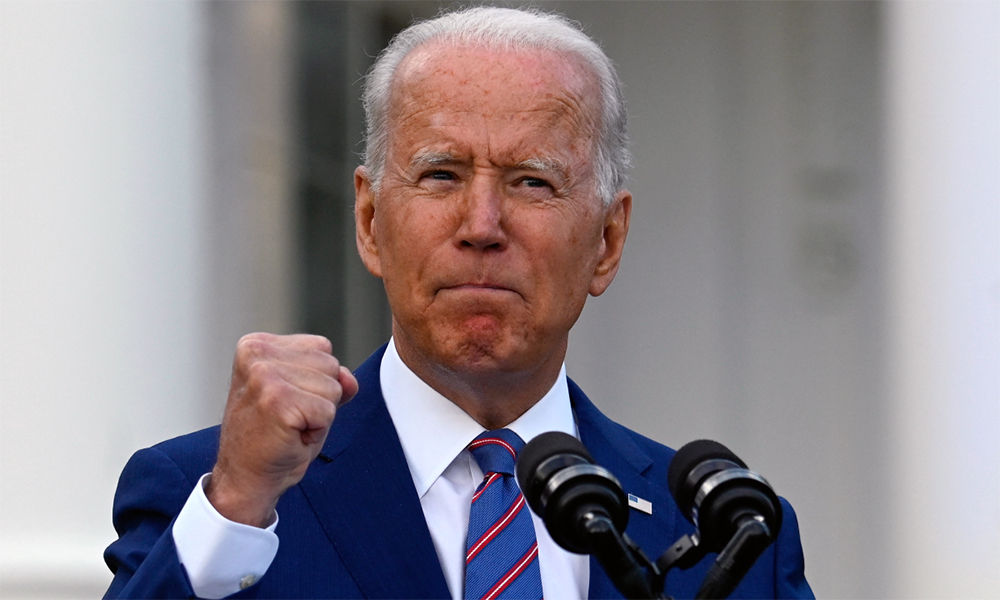
Taliban insurgents tightened their grip on captured Afghan territory on Tuesday, now controlling 65% of the country, as U.S. President Joe Biden urged the nation’s leaders to fight for their homeland, Reuters reported.
Pul-e-Khumri, capital of the northern province of Baghlan, fell to the Taliban on Tuesday evening, according to residents who reported Afghan security forces retreating toward the Kelagi desert, home to a large Afghan army base, Reuters said.
Pul-e-Khumri became the seventh regional capital to come under the control of the Islamist militants in about a week.
“Afghan leaders have to come together,” Biden told reporters at the White House, saying the Afghan troops outnumber the Taliban and must want to fight. “They’ve got to fight for themselves, fight for their nation.”
According to the Reuters the U.S. president said he does not regret his decision to withdraw, noting that Washington has spent more than $1 trillion over 20 years and lost thousands of troops. He said the United States continues to provide significant air support, food, equipment and salaries to Afghan forces.
In Kabul, Afghan President Ashraf Ghani said he was seeking help from regional militias he has squabbled with for years. He appealed to civilians to defend Afghanistan’s “democratic fabric.”
In Aibak, a provincial capital between the northern city of Mazar-i-Sharif and Kabul, Taliban fighters were moving into government buildings. Most government forces appeared to have withdrawn, Reuters reported.
“The only way is self-imposed house arrest or to find a way to leave for Kabul,” said tax officer Sher Mohamed Abbas, when asked about living conditions in Aibak.
“But then even Kabul is not a safe option anymore,” said Abbas, who supports a family of nine.
The north for years was Afghanistan’s most peaceful region, with only a minimal Taliban presence. The militants’ strategy appears to be to take the north, and border crossings in the north, west and south, and then close in on Kabul.
The Taliban, battling to defeat the U.S-backed government and reimpose strict Islamic law with peace talks at an impasse, met little resistance as they swept into Aibak on Monday.
A spokesman for the group’s political office told Al Jazeera TV on Tuesday that the group is committed to the negotiation path in Doha and does not want it to collapse.
Taliban forces now control 65% of Afghanistan, threaten to take 11 provincial capitals and seek to deprive Kabul of its traditional support from national forces in the north, a senior European Union official said on Tuesday.
The government has withdrawn from hard-to-defend rural districts to focus on holding population centers. Officials have appealed for pressure on Pakistan to stop Taliban reinforcements and supplies flowing over the border. Pakistan denies backing the Taliban.
The United States has been carrying out some air strikes to support government troops. Defense Department spokesman John Kirby said the strikes were having a “kinetic” effect on the Taliban, but acknowledged limitations.
“Nobody has suggested here that air strikes are a panacea, that will solve all the problems of the conditions on the ground. We’ve never said that,” Kirby said.












Kazakhstan’s Foreign Minister Mukhtar Tileuberdi has called for pragmatic and coordinated international engagement with Afghanistan, saying the country’s long-term stability is closely linked to the security and sustainable development of Central Asia.
Speaking during the general debate of the 81st session of the United Nations General Assembly in New York on Friday, Tileuberdi said humanitarian assistance to Afghanistan remains essential but alone cannot break the cycle of poverty, displacement and dependency.
He said Kazakhstan supports a “pragmatic, coordinated and step-by-step” approach to international engagement with Afghanistan, with the United Nations playing a central role.
Tileuberdi also said Kazakhstan is working with the UN to operationalize the United Nations Regional Centre for the Sustainable Development Goals for Central Asia and Afghanistan in Almaty.
He said the success of the centre should be measured by the results and assistance it delivers to the region.


Abu Muslim Farah defeat Khurasan Faryab 2-0 in ACL season six

Saar: Concerns over Pakistan’s political crisis discussed

Afghanistan Champions League: Omar Zawak Herat beat Toofan Herat 1-0

Blast in Pakistan’s Dera Ismail Khan kills 11, injures 30

Ariana Afghan Airlines increases Kabul-Delhi cargo flights

Saudi energy group signs major Afghanistan deals covering gas exploration and pipeline plans

Trump floats idea of renaming Atlantic or Pacific Ocean

US hits Egyptian bank branches with Iran sanctions as war marks six months

Nepal flood rescue mission enters critical phase as thousands remain missing

Iranian clubs to face Gulf opponents at neutral venues in Asian Champions League Elite
Saar: Concerns over Pakistan’s political crisis discussed

Exclusive interview with Abdul Latif Mansoor, Minister of MRRD

Tawsia: Overview of Afghanistan’s iron mines

Tahawol: Discussion on fresh Pakistani airstrikes on Afghanistan

Saar: Calls for international support for Afghanistan discussed
-

 World5 days ago
CNN, MS NOW and Politico sue Trump, challenging White House ban
-

 Latest News4 days ago
Ariana Afghan Airlines ranks seventh among 45 Central Asian airlines
-

 Latest News5 days ago
UN reiterates call for respect for international law after Kunar airstrikes
-

 Regional4 days ago
US and Iran hold first talks since June after Trump’s ‘annihilation’ threat
-

 Latest News4 days ago
Silk Road highway in Wakhan corridor now reaches the China border
-

 Regional3 days ago
Iran airlines cancel flights as US sanctions hit
-

 Latest News5 days ago
Afghan Official: Pakistan’s airstrikes will not go unanswered
-

 Sport5 days ago
Afghan boxing referee heads to China for international festival