
Latest News
Afghan female doctor wins Nansen refugee award

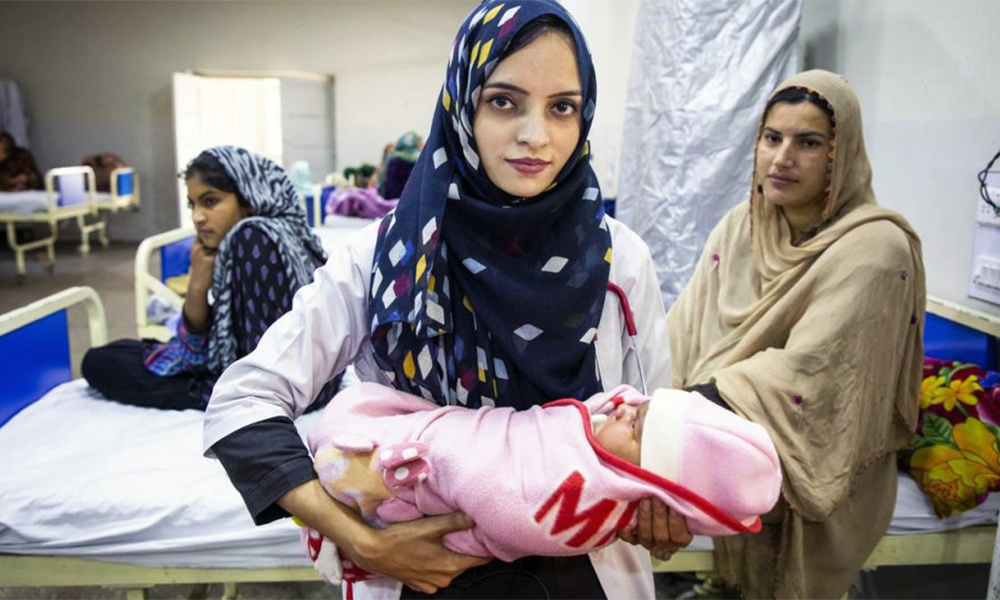
The UN Refugee Agency (UNHCR) announced on Wednesday that a 29-year-old Afghan refugee doctor, serving local communities and refugees in Pakistan, has won this year’s regional Nansen Refugee Award in the Asian region.
UNHCR’s Nansen Refugee Award has been given to Dr Saleema Rehman in recognition of her outstanding service and commitment to Pakistanis and refugees in the country.
It also acknowledges her contributions as a refugee to Pakistan, particularly the unwavering dedication towards her patients during the Covid-19 pandemic.
The award highlights the powerful example that Dr Rehman has set for other Afghan refugee women and girls, the UNHCR said.
“Access to education is very important in our lives. Investing in the education of a woman is an investment in a whole next generation,” Dr Rehman said at a ceremony held in her honour at the Swiss Embassy in Islamabad on Wednesday.
Her father, Abdul, swore to himself that if the infant lived, he would make sure that he or she received an education and became a doctor, read UNHCR statement.
He stayed true to that promise and supported his daughter through years of schooling, despite facing criticism from his own community. Many among them frowned upon the idea of a girl having aspirations outside the home and marriage.
“In the early days, I was often the only girl on school benches,” recalls Saleema. “I remember how my community disapproved of my father’s decision to send a girl to school. That’s when I began to understand how important it was to make something of myself, set an example and dare young girls in my community to dream.”
Saleema fulfilled her own lifelong dream earlier this year when she opened a private clinic in Attock in order to serve refugee and local women who struggle to access affordable health care.
Ambassador of Switzerland Benedict de Cerjat and Charge d’Affaires of Norway Elin Kylvåg presented the award to Dr Rehman.
According to the UNHCR statement in 2020, the last year of Saleema’s training as a gynecologist, Holy Family Hospital was declared a COVID-19 response hospital, and she found herself on the frontlines of the pandemic, treating women with the virus who were giving birth. Many of her patients were refugees and locals who had contracted the virus because they relied on daily wage work outside the home and could not afford to isolate.
The Swiss ambassador described her as an inspirational young Afghan woman. “She is a bright example on how valuable it is for the international community to support countries hosting refugees with inclusive policies like Pakistan.”
Chief Commissioner for Afghan Refugees Saleem Khan welcomed the award for Dr Rehman and said “we feel proud of Dr Rehman. She’s a wonderful example of her community. Pakistan can take pride in producing such a fine doctor — countless young Afghans have benefited from Pakistan’s progressive policies”.
The UNHCR representative in Pakistan and other dignitaries representing a range of countries and organisations attended the ceremony.












Kazakhstan’s Foreign Minister Mukhtar Tileuberdi has called for pragmatic and coordinated international engagement with Afghanistan, saying the country’s long-term stability is closely linked to the security and sustainable development of Central Asia.
Speaking during the general debate of the 81st session of the United Nations General Assembly in New York on Friday, Tileuberdi said humanitarian assistance to Afghanistan remains essential but alone cannot break the cycle of poverty, displacement and dependency.
He said Kazakhstan supports a “pragmatic, coordinated and step-by-step” approach to international engagement with Afghanistan, with the United Nations playing a central role.
Tileuberdi also said Kazakhstan is working with the UN to operationalize the United Nations Regional Centre for the Sustainable Development Goals for Central Asia and Afghanistan in Almaty.
He said the success of the centre should be measured by the results and assistance it delivers to the region.


Abu Muslim Farah defeat Khurasan Faryab 2-0 in ACL season six

Saar: Concerns over Pakistan’s political crisis discussed

Afghanistan Champions League: Omar Zawak Herat beat Toofan Herat 1-0

Blast in Pakistan’s Dera Ismail Khan kills 11, injures 30

Ariana Afghan Airlines increases Kabul-Delhi cargo flights

Saudi energy group signs major Afghanistan deals covering gas exploration and pipeline plans

Trump floats idea of renaming Atlantic or Pacific Ocean

US hits Egyptian bank branches with Iran sanctions as war marks six months

Nepal flood rescue mission enters critical phase as thousands remain missing

Iranian clubs to face Gulf opponents at neutral venues in Asian Champions League Elite
Saar: Concerns over Pakistan’s political crisis discussed

Exclusive interview with Abdul Latif Mansoor, Minister of MRRD

Tawsia: Overview of Afghanistan’s iron mines

Tahawol: Discussion on fresh Pakistani airstrikes on Afghanistan

Saar: Calls for international support for Afghanistan discussed
-

 World5 days ago
CNN, MS NOW and Politico sue Trump, challenging White House ban
-

 Latest News3 days ago
Ariana Afghan Airlines ranks seventh among 45 Central Asian airlines
-

 Latest News5 days ago
UN reiterates call for respect for international law after Kunar airstrikes
-

 Regional4 days ago
US and Iran hold first talks since June after Trump’s ‘annihilation’ threat
-

 Latest News3 days ago
Silk Road highway in Wakhan corridor now reaches the China border
-

 Latest News5 days ago
Afghan Official: Pakistan’s airstrikes will not go unanswered
-

 Regional5 days ago
G7 foreign ministers call on Iran to stop arming Houthis
-

 Regional3 days ago
Iran airlines cancel flights as US sanctions hit