Connect with us

Latest News

Five Pakistani soldiers killed in attack ‘launched’ from Afghanistan

Published

on

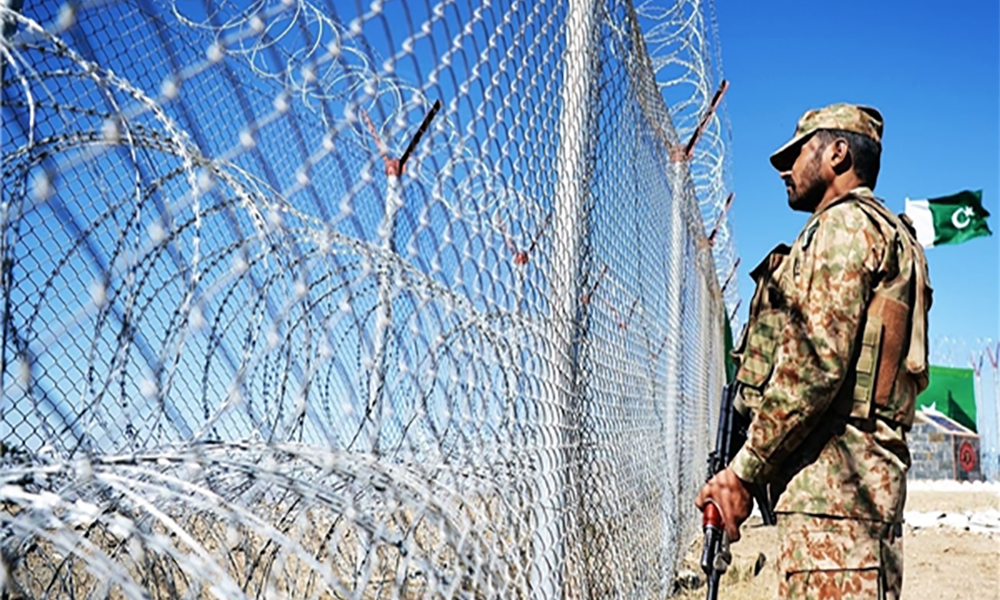
Militants firing from inside Afghanistan killed at least five Pakistani soldiers at a border post in northwestern Kurram district on Sunday, the Pakistan military said, the second such attack since the Islamic Emirate of Afghanistan (IEA) came into power in August.

The Pakistan army said it retaliated, causing heavy casualties, but independent confirmation was not immediately possible because the districts along the mountainous Afghan border are off limits to journalists and human rights organizations, Reuters reported.

“Militants from inside Afghanistan across the international border opened fire on Pakistani troops in Kurram district,” the military’s media wing said in a statement.

The Tehrik-e-Taliban Pakistan (TTP), or Pakistan Taliban, which renewed an allegiance with the IEA after the fall of Kabul, claimed responsibility for Sunday’s attack, Reuters reported.

The Afghan government denied the firing had come from within Afghan territory.

“We assure other countries, especially our neighbors, that no one will be allowed to use Afghan land against them,” Bilal Karimi, deputy IEA spokesman told Reuters.

The IEA late last year played the role of facilitator in talks between the TTP and the Pakistan government.

Those talks fell apart in December and since then there have been a series of attacks on Pakistani forces along the border.

“As per its promises, Taliban (IEA) government should stop such cross-border militants attacks,” Sheikh Rasheed Ahmad, Pakistan’s interior minister, said in a statement.


Latest News

Hana raises concerns over Afghan women and children amid Iran’s expulsion policy

It said the risks are particularly serious for children born in Iran or those who have spent much of their lives there.

Published

on

The Hana Human Rights Organization has raised serious concerns over the situation of Afghan women and children in Iran, saying the country’s plan to regulate and expel undocumented Afghan nationals remains in effect.

According to Hana, Iran’s Ministry of Interior has confirmed that the “Plan for the Regulation and Expulsion of Unauthorized Afghan Nationals” has not been suspended.

The organization said the policy is continuing amid the consequences of armed conflict and an increasingly securitized environment in Iran, which it said has heightened the vulnerability of Afghan migrants and asylum seekers.

Hana said it has previously documented cases involving the arrest and mistreatment of Afghan nationals, deportations, family separation and difficulties obtaining civil documentation and accessing essential services.

The organization warned that continued implementation of the expulsion policy could worsen these problems.

Hana expressed particular concern for Afghan children under 18, stressing that children’s rights are independent of their parents’ migration status.

It said irregular residence should not, by itself, justify a child’s detention, separation from family or removal without an individualized assessment. Any decision affecting a child, it added, should prioritize the child’s best interests, preserve family unity and provide additional safeguards for unaccompanied and separated children.

The organization warned that large-scale expulsions without clear procedures to identify and protect children at risk could result in family separation, disruption to education, lack of legal protection, difficulties establishing legal identity, exploitation and return to unsafe conditions.

It said the risks are particularly serious for children born in Iran or those who have spent much of their lives there.

Hana also highlighted gender-specific risks facing Afghan women and girls. It warned that deportation to Afghanistan without assessing risks linked to gender, previous political or social activities, family circumstances and access to support networks could expose them to serious human rights violations.

The organization said being classified as an “unauthorized foreign national” should not replace an individual assessment of a person’s protection needs and the risks they may face upon return.

Hana stressed that while states have the authority to regulate the entry and residence of foreign nationals, migration enforcement must comply with international human rights principles, including non-refoulement, the prohibition of collective expulsion, access to individualized procedures and respect for family unity.

It called for heightened protection for women and children, warning that continuing the expulsion plan without effective legal and protection safeguards could lead to further human rights violations against Afghan migrants and asylum seekers in Iran.

Continue Reading

Latest News

Water dispute in Baghlan leaves four dead

Published

on

Security officials in Afghanistan’s Baghlan province say an armed clash between members of two families over a personal dispute and access to water for agriculture in Tala wa Barfak district has left four people dead and one injured.

Ismail Ayubi, police chief of Tala wa Barfak district, said the incident took place in the Dewalk area of Barfak, a remote part of the district.

He said the main cause of the clash was a dispute between the two families over the use of agricultural water.

Baghlan police said that, due to the lack of mobile network coverage in the area, a local resident traveled to an area with network access to report the incident to security forces.

Following the report, security forces took the necessary steps to respond to the incident. Officials said those involved in the clash fled the area after the incident, and no one has so far been arrested.

The district police chief said efforts are ongoing to identify and arrest those responsible. Security forces are also working to maintain public safety and prevent further insecurity in the district.

An investigation into the circumstances of the clash and the identification of those involved is ongoing.

Continue Reading

Latest News

Afghan children return from malnutrition treatment to food-insecure families

Published

on

Children recovering from malnutrition in Afghanistan often return to households that lack the resources to provide the nutritious food they need to fully recover and grow, Action Against Hunger has warned.

The organization said recurrent drought, poverty, food insecurity and limited household incomes are making it difficult for families to prevent children from falling back into malnutrition after completing treatment.

However, repeated drought and other climate-related shocks have reduced harvests and household income, leaving families struggling to provide adequate nutrition for their children.

Action Against Hunger said the situation highlights the need to go beyond treating malnutrition and address the underlying causes of hunger and poverty.

The warning comes as malnutrition cases continue to rise across Afghanistan. In June 2026, the Therapeutic Feeding Unit in Kabul recorded 142 new admissions, a 149 percent increase compared with the same period in 2025.

Similar increases have been reported in other provinces where Action Against Hunger operates. In Lashkar Gah, Helmand province, the organization expanded the capacity of its therapeutic feeding unit from 45 beds to 72 and then to 118 within a matter of weeks due to the sharp rise in cases.

Action Against Hunger said climate-related shocks, including severe winter conditions, drought and water shortages, have further weakened food security across the country. Water shortages have damaged agricultural production in rural areas, forcing some families to leave their homes in search of livelihoods and basic necessities.

The organization stressed that sustained investment in both emergency nutrition services and longer-term livelihood programmes is needed to help families break the cycle of poverty and recurrent malnutrition.

Cobi Rietveld, Afghanistan Country Director at Action Against Hunger, said addressing the root causes of hunger is essential for achieving lasting progress against malnutrition.

“When families have the means to earn a living and provide for their children, the benefits extend far beyond nutrition,” Rietveld said, adding that livelihood support can help families meet their needs with dignity, protect children’s futures and build resilience against future crises.

Continue Reading
Advertisement
Advertisement
Advertisement
Advertisement

Trending

Copyright © 2025 Ariana News. All rights reserved!


Warning: Undefined array key "slug" in /var/www/vhosts/ariananews.af/httpdocs/wp-includes/class-wp-theme-json.php on line 2117

Warning: Undefined array key "slug" in /var/www/vhosts/ariananews.af/httpdocs/wp-includes/class-wp-theme-json.php on line 2117

Warning: Undefined array key "slug" in /var/www/vhosts/ariananews.af/httpdocs/wp-includes/class-wp-theme-json.php on line 2117