
Latest News
IEA marks Afghanistan’s Independence Day

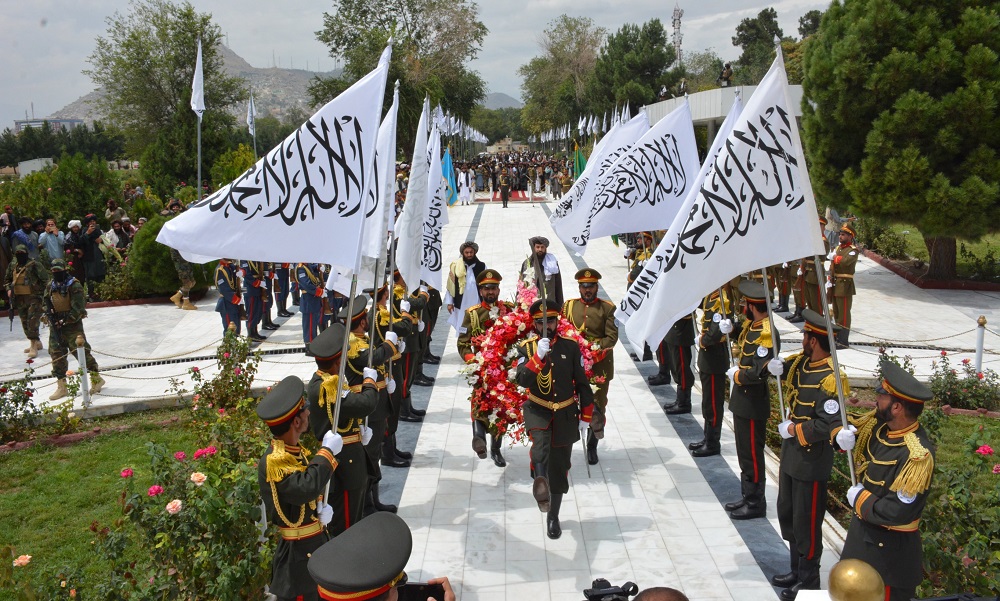
Marking 103 years of independence from Britain, Mullah Mohammad Yaqub Mujahid, acting defense minister of the Islamic Emirate of Afghanistan (IEA), on Friday warned against efforts to divide Afghans.
“They are trying to divide us along regional, religious and linguistic lines and cause infighting among ourselves so that they achieve their evil goals. We should never let anyone do this. We should be vigilant,” Mujahid said.
He said that Afghans have never accepted occupation and have fought invaders throughout the history. Mujahid said IEA wants to engage with the world but not at the cost of the country’s independence being undermined.
“We want engagement, we want the country to develop, we want the economy to grow, we want political progress, we want to have a strong military like those in the region, but not at the cost of our independence being undermined,” Mujahid said.
He said that IEA will not accept world’s demands which are against Islam.
“We cannot accept anyone’s orders and demands which are against our religion and our national interests,” Mujahid said.
IEA in a statement on the occasion of Independence Day also warned against interfering in the internal affairs of Afghanistan.
“The Islamic Emirate, as an independent and fully legitimate government, is committed to honor the esteemed value (independence) and wants relations with countries in the region and the world based on Islamic principles. We hope every invader has learnt a lesson from the past and henceforth will adopt a policy of peace, tolerance and non-interference in the affairs of others,” the statement read.
IEA’s acting prime minister, in a message, called on security forces to behave well with people, have coordination and obey leaders.
Khalil-ur-Rahman Haqqani, acting minister of refugees and repatriation, also warned the opponents not to test Afghans again.
“The East, the West and their hirelings should not test Afghans. Afghans have already been tested. There is no need to test them again,” Haqqani said.
Some participants called for reopening of girls’ schools.
“One issue they (West) are insisting on is and which people also want is girls’ education. As an elder, I ask the Emirate to resolve the issue, otherwise the Western world will not recognize the Emirate, not even in 20 years,” said Farooq Azam, an adviser for the ministry of energy and water.




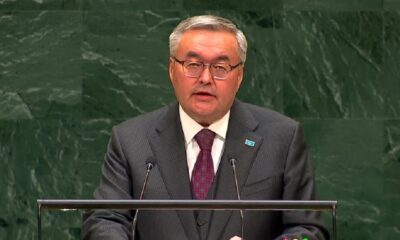




Kazakhstan’s Foreign Minister Mukhtar Tileuberdi has called for pragmatic and coordinated international engagement with Afghanistan, saying the country’s long-term stability is closely linked to the security and sustainable development of Central Asia.
Speaking during the general debate of the 81st session of the United Nations General Assembly in New York on Friday, Tileuberdi said humanitarian assistance to Afghanistan remains essential but alone cannot break the cycle of poverty, displacement and dependency.
He said Kazakhstan supports a “pragmatic, coordinated and step-by-step” approach to international engagement with Afghanistan, with the United Nations playing a central role.
Tileuberdi also said Kazakhstan is working with the UN to operationalize the United Nations Regional Centre for the Sustainable Development Goals for Central Asia and Afghanistan in Almaty.
He said the success of the centre should be measured by the results and assistance it delivers to the region.


Ariana Afghan Airlines increases Kabul-Delhi cargo flights

Khalilzad questions Pakistan’s commitment to Afghan welfare

India, UN envoy discuss Afghanistan’s humanitarian needs

Kazakhstan calls for coordinated international engagement with Afghanistan

Pakistan PM, UN chief discuss Afghanistan amid rising Kabul-Islamabad tensions

Saudi energy group signs major Afghanistan deals covering gas exploration and pipeline plans

Trump floats idea of renaming Atlantic or Pacific Ocean

US hits Egyptian bank branches with Iran sanctions as war marks six months

Nepal flood rescue mission enters critical phase as thousands remain missing

Iranian clubs to face Gulf opponents at neutral venues in Asian Champions League Elite

Exclusive interview with Abdul Latif Mansoor, Minister of MRRD

Tawsia: Overview of Afghanistan’s iron mines

Tahawol: Discussion on fresh Pakistani airstrikes on Afghanistan

Saar: Calls for international support for Afghanistan discussed

Tahawol: Opening of the 81st UN General Assembly Session
-

 World4 days ago
CNN, MS NOW and Politico sue Trump, challenging White House ban
-

 Latest News3 days ago
Ariana Afghan Airlines ranks seventh among 45 Central Asian airlines
-

 Latest News4 days ago
UN reiterates call for respect for international law after Kunar airstrikes
-
 Latest News5 days ago
Khalilzad condemns Pakistan airstrikes, says current strategy is not working
-

 Regional3 days ago
US and Iran hold first talks since June after Trump’s ‘annihilation’ threat
-

 Latest News3 days ago
Silk Road highway in Wakhan corridor now reaches the China border
-

 Latest News4 days ago
Afghan Official: Pakistan’s airstrikes will not go unanswered
-
 Sport4 days ago
Afghan boxing referee heads to China for international festival