
Regional
Blasts near Pakistan candidates’ offices kill 26 on election eve

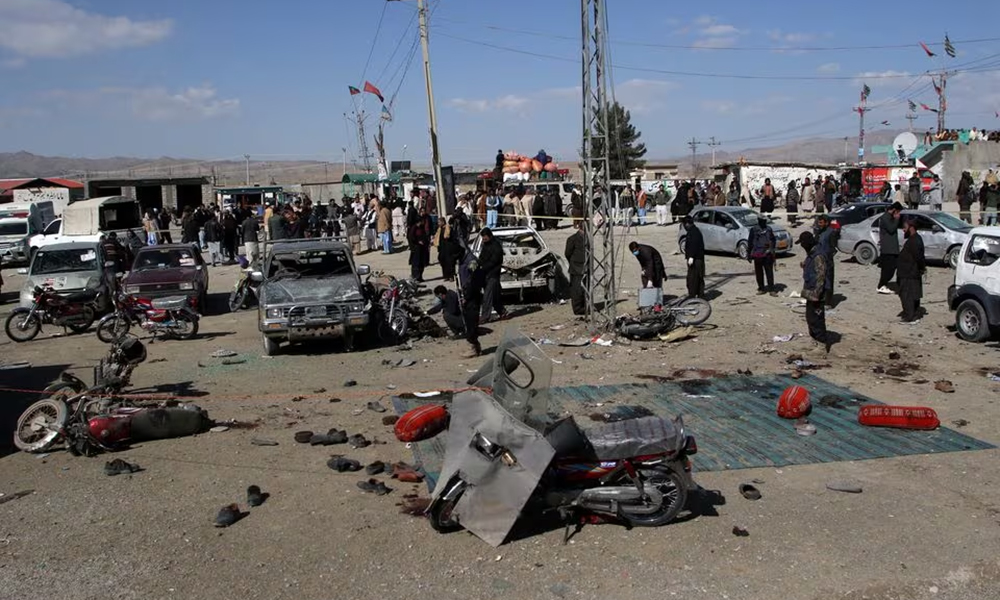
Two explosions near electoral candidates’ offices in Pakistan’s southwestern province of Balochistan killed 26 people and wounded dozens on Wednesday, officials said, raising concerns over security on the eve of a general election, Reuters reported.
Pakistan goes to the polls on Thursday amid rising militant attacks and the jailing of Imran Khan, the winner of the last national election, who has been dominating the headlines despite an economic crisis and other woes threatening the nuclear-armed country.
Authorities have said they are boosting security at polling booths.
The first attack, which killed 14 people, took place at the office of an independent election candidate in Pishin district.
The second explosion in Qilla Saifullah, near the Afghan border, detonated near an office of Jamiat Ulema Islam (JUI), a religious party that has previously been the target of militant attacks, according to the province’s information minister.
The deputy commissioner of Qilla Saifullah, Yasir Bazai, said that 12 people were killed and 25 wounded by a device planted on motorcycle parked near the office, read the report.
Daesh claimed responsibility for the two blasts in a message on its Telegram channel on Wednesday.
Several other groups, including the Islamist militant Pakistani Taliban (TTP) and separatist groups from Balochistan, oppose the Pakistani state and have also carried out attacks in recent months.
A TTP spokesman claimed an attack on Monday that killed 10 people at a police station in northwest Pakistan. The TTP has said it was targeting police and security officials rather than electoral candidates.
Pakistan’s foreign office said in a statement its western border crossings with Iran and Afghanistan would close and re-open on Friday to ensure security during the election, Reuters reported.
Khanzai hospital, close to the site of the explosion in Pishin on Wednesday, put the death toll at 14 and said more than two dozen were wounded. The deputy commissioner of Pishin district, Jumma Dad Khan, said that the blast had wounded many people.
“I’m appalled by today’s terrorist attacks and condemn those seeking to prevent people from voting,” British High Commissioner to Pakistan Jane Marriott said.
The attacks came as political parties wrapped up their campaigning in the quiet period mandated by electoral rules the day before the election.
Khan, in a message from jail, earlier urged his supporters to wait outside polling booths after casting their votes, as rival political parties held large rallies to mark the end of the election campaign period.
Any large-scale gathering of Khan’s supporters near booths could raise tensions because of what they call a military-backed crackdown on him and his party that has restricted campaigning. The military denies interfering in politics.
“Encourage the maximum number of people to vote, wait at the polling station … and then stay peacefully outside the Returning Officer’s office until the final results are announced,” said Khan on social media platform X, accompanied by an undated photograph depicting him wearing simple black clothing.
His Pakistan Tehreek-e-Insaf (PTI) party also released a video of Khan recorded just days before he was arrested in August, calling on people to turn out to vote.
Kasim Khan, Khan’s son with British journalist Jemima Goldsmith, in a post on X called on people to vote with an image of him and his brother holding a PTI flag. A PTI official confirmed the account belonged to Kasim Khan, a rare social media post from Imran Khan’s children who have previously stayed out of the public eye.
Electoral frontrunner Nawaz Sharif led a huge rally in the eastern city of Kasur with his brother, former Prime Minister Shehbaz Sharif, who is running in that constituency.
Amid a sea of tens of thousands of supporters waving green party flags, Sharif, also a former prime minister, called on the country’s youth to support his party and took aim at Khan who has previously attracted support from young voters in the area.
“Don’t fall for him,” Sharif said.
Supporters of the rival Pakistan People’s Party also gathered in the southern city of Larkana led by Bilawal Bhutto Zardari, who could play kingmaker if no single party receives enough parliamentary seats to form a government outright.
The former foreign minister and son of assassinated former Prime Minister Benazir Bhutto criticised opponents, including Sharif, for what he described as compromising the country’s security and economy during their tenures, Reuters reported.



Regional
Aimal Wali Khan calls Dera Ismail Khan attack a ‘state failure’
Khan called on the federal and Khyber Pakhtunkhwa governments to take greater responsibility for protecting citizens and addressing the deteriorating security situation in the province.
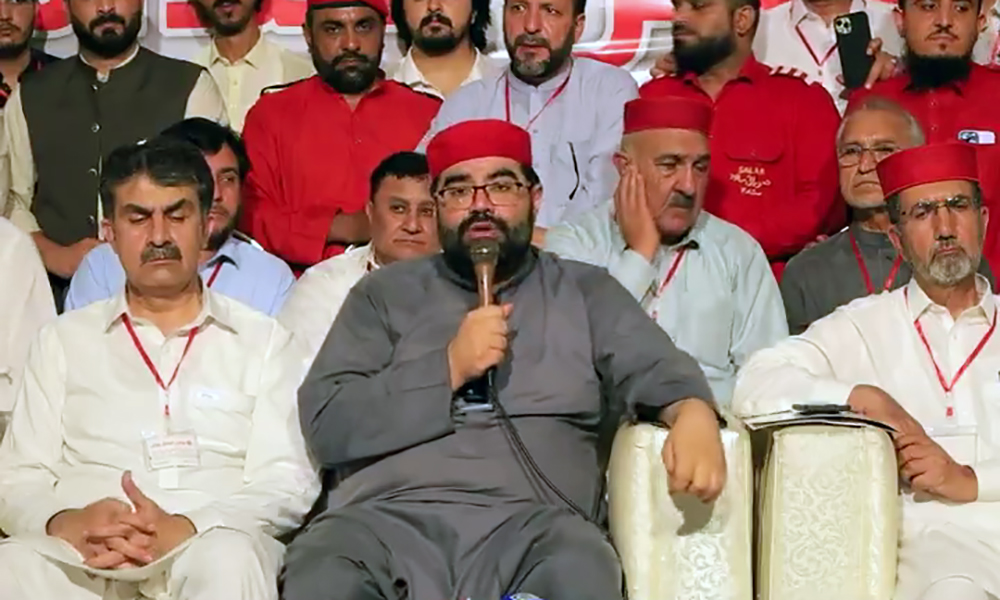
Awami National Party (ANP) President and Senator Aimal Wali Khan has condemned the suicide attack on the Aman Mela checkpoint in the Darazinda area of Pakistan’s Dera Ismail Khan district, describing it as a failure by the state to ensure the security of citizens.
According to Dawn, Khan called on the federal and Khyber Pakhtunkhwa governments to take greater responsibility for protecting citizens and addressing the deteriorating security situation in the province.
In a statement, Khan said Khyber Pakhtunkhwa is experiencing one of the darkest periods in its history. He alleged that the Pashtun population is facing systematic violence and said prolonged insecurity has left the province deeply affected by terrorism.
Khan also condemned an attack on an ambulance reportedly carrying the body of a person killed in the blast, describing it as an “inhumane act.”
The ANP leader questioned the government’s response to the worsening security situation, saying that blaming groups referred to by authorities as “Fitna al-Khawarij” and “Fitna al-Hindustan” does not absolve the state of its responsibility to protect citizens.
He urged the federal and provincial governments to stop blaming each other and instead focus on restoring peace and strengthening security across Khyber Pakhtunkhwa.
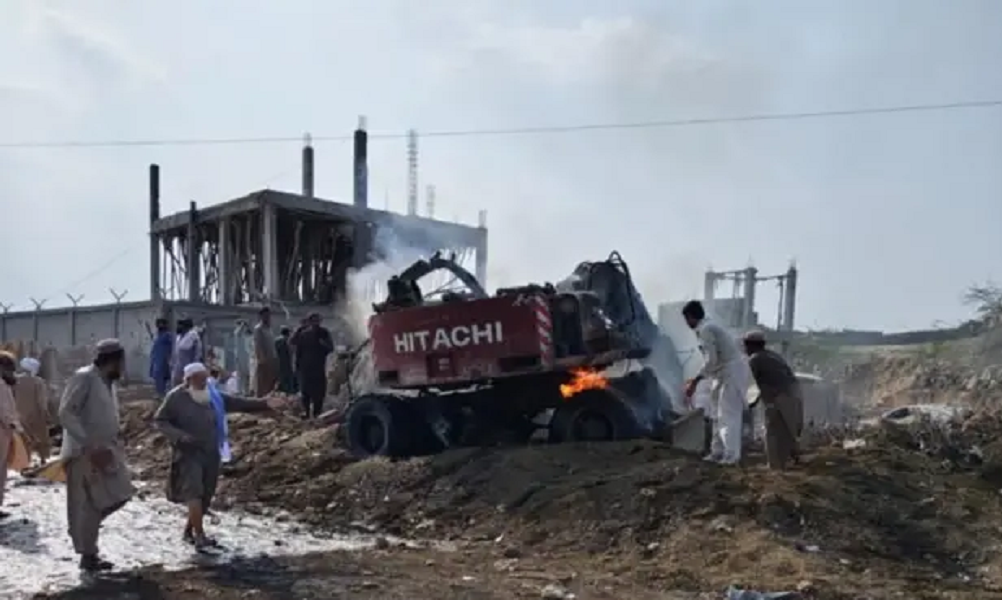
Eleven people were killed and 30 injured in a blast in Dera Ismail Khan in northwestern Pakistan on Saturday, emergency service Rescue 1122 said.
The Tehreek-e-Taliban Pakistan claimed responsibility for Saturday’s attack.
The blast occurred near Aman Mela in the Darazinda area of the district, Rescue 1122 said in a statement.
Rescue teams from the Darazinda station reached the scene and began relief operations, providing medical assistance to the wounded and taking them to hospital, the service said.
Security incidents have continued in the district this month, including attacks involving the Pakistani Taliban.
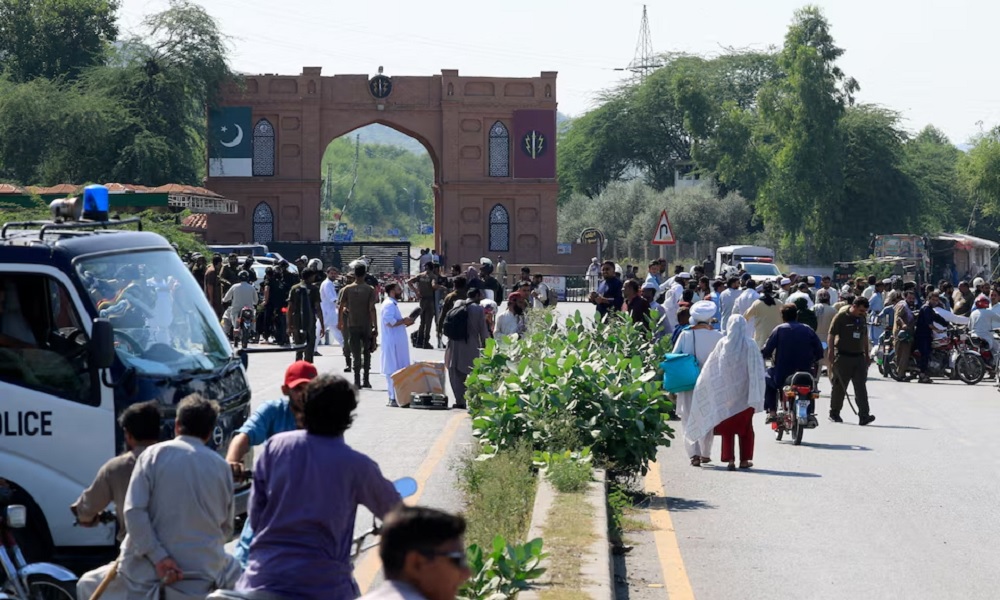
Jailed former prime minister Imran Khan’s Pakistan Tehreek-e-Insaf party has postponed a planned long march from Peshawar to Islamabad until October 4, the chief minister of the PTI-ruled Khyber Pakhtunkhwa province, Sohail Afridi, told reporters on Friday.
PTI had planned to begin the march on September 27 to press for the release of Khan, who has been in jail since 2023. The PTI’s last large-scale protest two years ago ended in deadly clashes with security forces, Reuters reported.
Earlier this week, Pakistan curbed access to its capital, Islamabad, by blocking major highways with shipping containers and deploying tens of thousands of security forces, ahead of the march planned by Khan’s supporters.
Party spokesperson Zulfi Bukhari, however, told Reuters that although they had moved the planned date to October 4, they could launch the march earlier.
“We can now do it whenever we deem fit. The question is to the government, as to how long they’re willing to keep the country closed off?”, Bukhari said.
Authorities have detained three of Khan’s sisters and hundreds of party activists in recent days, citing a need to maintain public order.
Khan, 73, a former cricket star ousted by parliament in a 2022 no-confidence vote, has claimed to be a political prisoner.


Germany reports 488 Afghans for possible deportation, 267 have no criminal convictions

Afghanistan says 28 killed, 32 captured in Nuristan operation

Afghan bodybuilder Ali Bilal finishes runner-up at Mr Olympia for third straight year

UNDP, UN Women launch financing initiative for Afghan women entrepreneurs

Aimal Wali Khan calls Dera Ismail Khan attack a ‘state failure’

Saudi energy group signs major Afghanistan deals covering gas exploration and pipeline plans

Trump floats idea of renaming Atlantic or Pacific Ocean

US hits Egyptian bank branches with Iran sanctions as war marks six months

Nepal flood rescue mission enters critical phase as thousands remain missing

Iranian clubs to face Gulf opponents at neutral venues in Asian Champions League Elite

Saar: Concerns over Pakistan’s political crisis discussed

Exclusive interview with Abdul Latif Mansoor, Minister of MRRD

Tawsia: Overview of Afghanistan’s iron mines

Tahawol: Discussion on fresh Pakistani airstrikes on Afghanistan

Saar: Calls for international support for Afghanistan discussed
-

 Latest News4 days ago
Ariana Afghan Airlines ranks seventh among 45 Central Asian airlines
-

 Regional4 days ago
US and Iran hold first talks since June after Trump’s ‘annihilation’ threat
-

 Regional3 days ago
Iran airlines cancel flights as US sanctions hit
-

 Latest News4 days ago
Silk Road highway in Wakhan corridor now reaches the China border
-
 Business4 days ago
Afghanistan, Turkmenistan agree to establish joint road transport commission
-
 Latest News4 days ago
India condemns Pakistani airstrikes on Afghanistan
-

 Sport3 days ago
Afghanistan open Asian Games cricket campaign with win over Japan
-
 World3 days ago
Trump welcomes Chinese President Xi as US-China summit gets underway