
Latest News
Afghan officials slam Pakistan for harboring Taliban

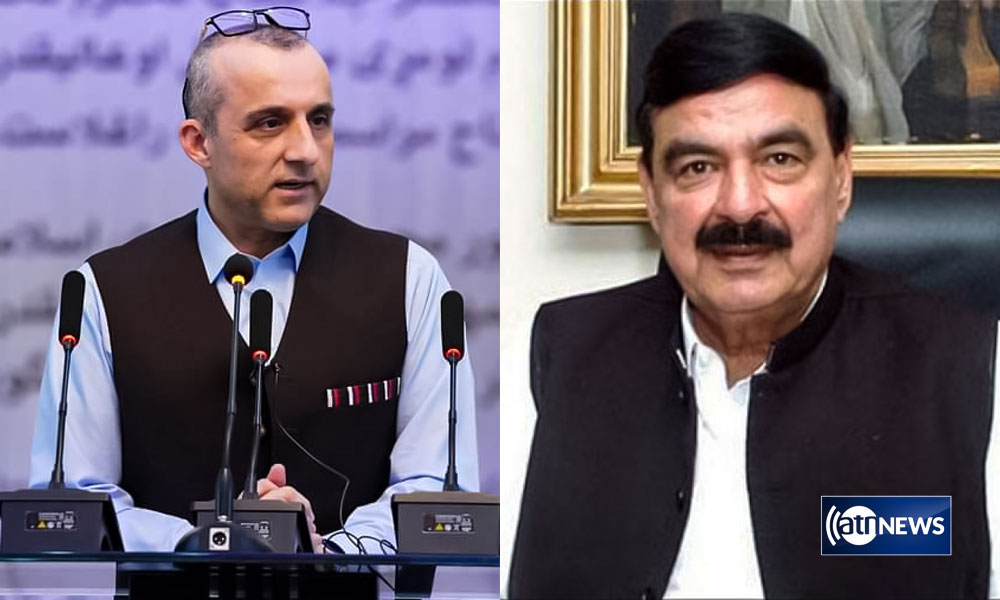
Following the admission by Pakistan’s Interior Minister Sheikh Rashid Ahmed about the presence of Afghan Taliban in Pakistan, and that their families live in the country, including on the outskirts of Islamabad, Afghan officials Tuesday slammed Pakistan for harboring members of the group.
In response to Ahmed’s revelations, First Vice President Amrullah Saleh implied that Afghanistan has long suspected this and asked what “more evidence [is] needed.”
“The Interior Minister of Pakistan tells BBC Persian that Taliban receive treatment in Pakistani hospitals, maintain cemeteries, Talib leaders are based in Pakistan and their children go to school there,” Saleh wrote on his Twitter.
Saleh asked in this case “who are responsible for the massacre of Afghans?”
“Any more evidence needed?” Saleh tweeted.
Afghan National Security Adviser Hamdullah Mohib also reacted to Ahmed’s remarks but praised him for his honesty.
“I commend Pakistan’s Interior Minister Sheikh Rashid for exposing Pakistani support to Taliban. We need more brave Pakistanis to speak out against the onslaught on Afghanistan,” Mohib tweeted.
Pakistan’s interior minister said Sunday that the families of Taliban live in his country, including in areas around the capital, Islamabad, and that members of the insurgent group receive medical treatment in local hospitals.
The admission by Ahmed came during an interview aired by a privately-owned Pakistani television channel, Geo News.
This is a significant departure from Islamabad’s consistent rejection of allegations leveled by Afghan leaders that the Taliban use Pakistani soil to direct and sustain insurgent activities in Afghanistan.
“Taliban families live here, in Pakistan, in Rawat, Loi Ber, Bara Kahuh, and Tarnol,” Rashid told the Urdu-language network citing the names of Islamabad suburbs. “Sometimes their dead bodies arrive and sometimes they come here in hospitals to get medical treatment,” he said.
Rashid remarks however sparked an outcry among Afghans on social media.
Many Afghans slammed Pakistan for their support of the Taliban with one social media user stating: “Curse on Pakistan, which has no gift for Islamic countries except destruction.”
Another user said Pakistan runs the global terrorism system.
“This time people will choose death over migrating to Pakistan [in the event of a civil war],” another user wrote.
Recently the acting interior minister Abdul Satar Mirzakwal confirmed that there have been reports of government military tanks being moved across the border to Pakistan following the fall of districts in Afghanistan.
Mirzkwal warned that if security forces detect movement of this type the air force will target the tanks.
Afghan officials have however for years accused Pakistan of providing safe havens to the Taliban and said more recently that it is because of this that the Taliban have been able to ramp up attacks across the country.











Kazakhstan’s Foreign Minister Mukhtar Tileuberdi has called for pragmatic and coordinated international engagement with Afghanistan, saying the country’s long-term stability is closely linked to the security and sustainable development of Central Asia.
Speaking during the general debate of the 81st session of the United Nations General Assembly in New York on Friday, Tileuberdi said humanitarian assistance to Afghanistan remains essential but alone cannot break the cycle of poverty, displacement and dependency.
He said Kazakhstan supports a “pragmatic, coordinated and step-by-step” approach to international engagement with Afghanistan, with the United Nations playing a central role.
Tileuberdi also said Kazakhstan is working with the UN to operationalize the United Nations Regional Centre for the Sustainable Development Goals for Central Asia and Afghanistan in Almaty.
He said the success of the centre should be measured by the results and assistance it delivers to the region.


Abu Muslim Farah defeat Khurasan Faryab 2-0 in ACL season six

Saar: Concerns over Pakistan’s political crisis discussed

Afghanistan Champions League: Omar Zawak Herat beat Toofan Herat 1-0

Blast in Pakistan’s Dera Ismail Khan kills 11, injures 30

Ariana Afghan Airlines increases Kabul-Delhi cargo flights

Saudi energy group signs major Afghanistan deals covering gas exploration and pipeline plans

Trump floats idea of renaming Atlantic or Pacific Ocean

US hits Egyptian bank branches with Iran sanctions as war marks six months

Nepal flood rescue mission enters critical phase as thousands remain missing

Iranian clubs to face Gulf opponents at neutral venues in Asian Champions League Elite
Saar: Concerns over Pakistan’s political crisis discussed

Exclusive interview with Abdul Latif Mansoor, Minister of MRRD

Tawsia: Overview of Afghanistan’s iron mines

Tahawol: Discussion on fresh Pakistani airstrikes on Afghanistan

Saar: Calls for international support for Afghanistan discussed
-

 World5 days ago
CNN, MS NOW and Politico sue Trump, challenging White House ban
-

 Latest News3 days ago
Ariana Afghan Airlines ranks seventh among 45 Central Asian airlines
-

 Latest News5 days ago
UN reiterates call for respect for international law after Kunar airstrikes
-

 Regional4 days ago
US and Iran hold first talks since June after Trump’s ‘annihilation’ threat
-

 Latest News3 days ago
Silk Road highway in Wakhan corridor now reaches the China border
-

 Regional3 days ago
Iran airlines cancel flights as US sanctions hit
-

 Latest News5 days ago
Afghan Official: Pakistan’s airstrikes will not go unanswered
-
 Regional5 days ago
G7 foreign ministers call on Iran to stop arming Houthis