
Latest News
Afghanistan on ‘countdown to catastrophe’ as winter looms

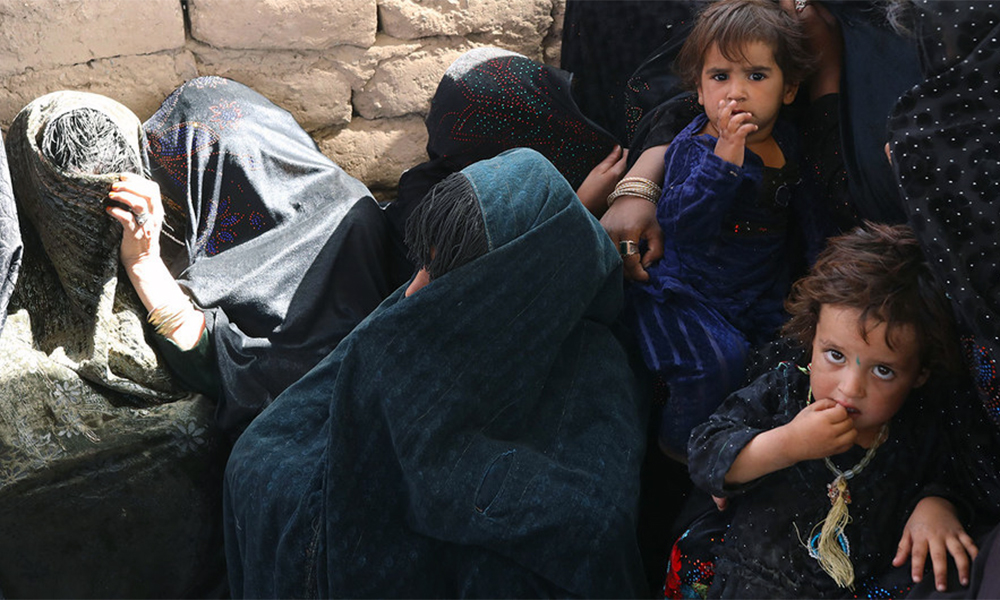
The combined shocks of drought, conflict, COVID-19 and an economic crisis in Afghanistan, have left more than half the population facing a record level of acute hunger, according to a new UN assessment published on Monday.
The latest Integrated Food Security Phase Classification (IPC) report co-led by the Food and Agriculture Organization (FAO) and World Food Programme (WFP), revealed that the lives, livelihoods and access to food for 22.8 million people will be severely impacted.
“It is urgent that we act efficiently and effectively to speed up and scale up our delivery in Afghanistan before winter cuts off a large part of the country, with millions of people – including farmers, women, young children and the elderly – going hungry in the freezing winter”, said FAO Director-General QU Dongyu. “It is a matter of life or death”.
According to the report, more than one-in-two Afghans will face Phase 3 crisis or Phase 4 emergency levels of acute food insecurity from November through to March (winter) and will require an urgent international response to prevent a humanitarian catastrophe.
“We cannot wait and see humanitarian disasters unfolding in front of us – it is unacceptable”, he added.
This is the highest number of acutely food insecure people ever recorded by the UN, during 10 years of conducting IPC analyses in Afghanistan.
And globally, the country is home to one of the largest number of people facing acute hunger.
“Hunger is rising and children are dying”, said WFP Executive Director David Beasley.
“We can’t feed people on promises – funding commitments must turn into hard cash, and the international community must come together to address this crisis, which is fast spinning out of control”.
Among those at risk are 3.2 million children under five, who are expected to suffer from acute malnutrition by the end of the year.
Last month, WFP and the UN Children’s Fund (UNICEF) warned that without immediate life-saving treatment, one million children risked dying from severe acute malnutrition.
And for the first time, urban residents are suffering from food insecurity at similar rates to rural communities.
“Afghanistan is now among the world’s worst humanitarian crises – if not the worst – and food security has all but collapsed”, said the WFP chief.
“This winter, millions of Afghans will be forced to choose between migration and starvation unless we can step up our life-saving assistance, and unless the economy can be resuscitated”.
To meet rising needs, the UN will need to mobilize resources at unprecedented levels, yet the UN’s Humanitarian Response Plan remains only a third funded.
“We are on a countdown to catastrophe and if we don’t act now, we will have a total disaster on our hands”, Beasley said.












Kazakhstan’s Foreign Minister Mukhtar Tileuberdi has called for pragmatic and coordinated international engagement with Afghanistan, saying the country’s long-term stability is closely linked to the security and sustainable development of Central Asia.
Speaking during the general debate of the 81st session of the United Nations General Assembly in New York on Friday, Tileuberdi said humanitarian assistance to Afghanistan remains essential but alone cannot break the cycle of poverty, displacement and dependency.
He said Kazakhstan supports a “pragmatic, coordinated and step-by-step” approach to international engagement with Afghanistan, with the United Nations playing a central role.
Tileuberdi also said Kazakhstan is working with the UN to operationalize the United Nations Regional Centre for the Sustainable Development Goals for Central Asia and Afghanistan in Almaty.
He said the success of the centre should be measured by the results and assistance it delivers to the region.


Abu Muslim Farah defeat Khurasan Faryab 2-0 in ACL season six

Saar: Concerns over Pakistan’s political crisis discussed

Afghanistan Champions League: Omar Zawak Herat beat Toofan Herat 1-0

Blast in Pakistan’s Dera Ismail Khan kills 11, injures 30

Ariana Afghan Airlines increases Kabul-Delhi cargo flights

Saudi energy group signs major Afghanistan deals covering gas exploration and pipeline plans

Trump floats idea of renaming Atlantic or Pacific Ocean

US hits Egyptian bank branches with Iran sanctions as war marks six months

Nepal flood rescue mission enters critical phase as thousands remain missing

Iranian clubs to face Gulf opponents at neutral venues in Asian Champions League Elite
Saar: Concerns over Pakistan’s political crisis discussed

Exclusive interview with Abdul Latif Mansoor, Minister of MRRD

Tawsia: Overview of Afghanistan’s iron mines

Tahawol: Discussion on fresh Pakistani airstrikes on Afghanistan

Saar: Calls for international support for Afghanistan discussed
-

 World5 days ago
CNN, MS NOW and Politico sue Trump, challenging White House ban
-

 Latest News3 days ago
Ariana Afghan Airlines ranks seventh among 45 Central Asian airlines
-

 Latest News5 days ago
UN reiterates call for respect for international law after Kunar airstrikes
-

 Regional4 days ago
US and Iran hold first talks since June after Trump’s ‘annihilation’ threat
-

 Latest News3 days ago
Silk Road highway in Wakhan corridor now reaches the China border
-

 Latest News5 days ago
Afghan Official: Pakistan’s airstrikes will not go unanswered
-

 Sport5 days ago
Afghan boxing referee heads to China for international festival
-

 Regional3 days ago
Iran airlines cancel flights as US sanctions hit