
Latest News
Afghans facing crisis of ‘unparalleled proportions’: UN official

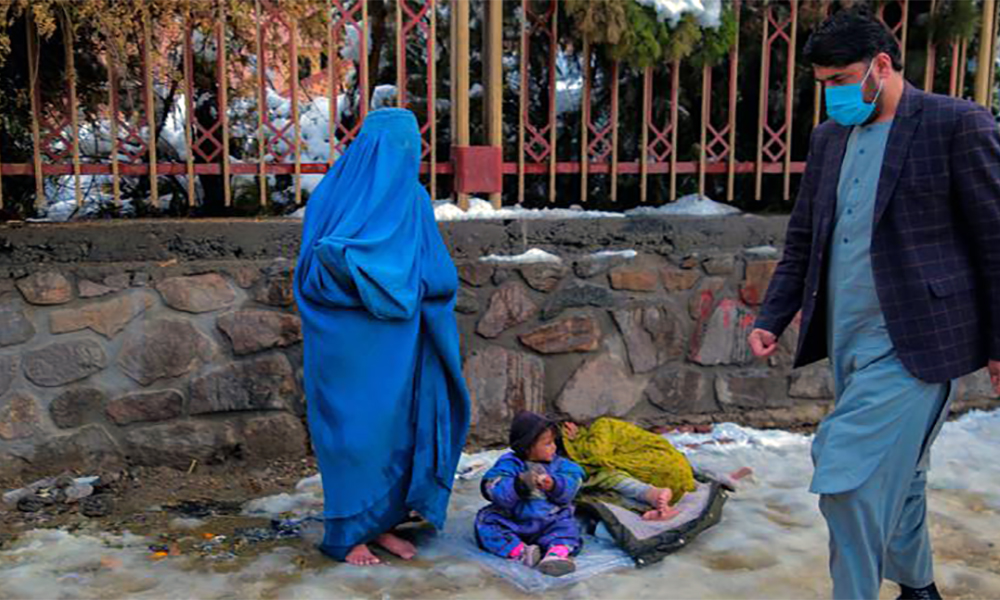
A senior United Nations official said Wednesday people in Afghanistan are today facing a food insecurity and malnutrition crisis of unparalleled proportions and that the rapid increase in those experiencing acute hunger – from 14 million in July 2021 to 23 million in March 2022 – has forced households to resort to desperate measures such as skipping meals or taking on unprecedented debt to ensure there is some food on the table at the end of the day.
Ramiz Alakbarov, the Deputy Special Representative for the Secretary General, Resident Coordinator and Humanitarian Coordinator, on the Continued Food Insecurity and Malnutrition Crisis Facing People in Afghanistan, said in a statement
that these unacceptable trade-offs have caused untold suffering, reduced the quality, quantity, and diversity of food available, led to high levels of wasting in children, and other harmful impacts on the physical and mental wellbeing of women, men, and children.
In Afghanistan, a staggering 95 percent of the population is not eating enough food, with that percentage rising to almost 100 percent for female-headed households. It is a figure so high that it is almost inconceivable. Yet, devastatingly, it is the harsh reality, he said.
“Hospital wards are filled with children suffering from malnutrition: smaller than they should be, many weighing at one year what an infant of six months would weigh in a developed country, and some so weak they are unable to move,” Alakbarov said.
“As Afghanistan continues to grapple with the effects of a terrible drought, the prospect of another bad harvest this year, a banking and financial crisis so severe that it has left more than 80 percent of the population facing debt, and an increase in food and fuel prices, we cannot ignore the reality facing communities. Enormous challenges lie ahead,” he said.
He said he wants to reiterate that the United Nations, alongside its national and international partners, are doing everything possible to support a comprehensive and coordinated effort to alleviate the impacts of hunger and malnutrition, while giving communities the means to protect and sustain their livelihoods in the future.
He said already in 2022, humanitarian partners have supported 8.2 million people with life-saving and life-sustaining food assistance, including emergency food rations, seasonal support, school meals for children, agricultural supplies for farmers such as seeds, fertilizers and animal feed, and nutritious foods and supplements for nursing mothers and their infants.
Over the next few months, the United Nations and humanitarian partners will continue to focus on scaling-up response activities, reaching underserved and remote areas that have been inaccessible in previous years due to insecurity and active conflict.
Alakbarov said acute malnutrition rates in 28 out of 34 provinces are high with more than 3.5 million children in need of nutrition treatment support.
According to the UN, there are over 2,500 nutrition treatment sites spread across all 34 provinces, both urban and rural, reaching 800,000 acutely malnourished children since mid-August and we plan to reach 3.2 million affected children this year.
“We must remain mindful that while the massive humanitarian response mounted since August 2021 has prevented our worst fears from being realized over the winter, food insecurity and malnutrition remain at historic highs and require an immediate, sustained, and large-scale humanitarian response to prevent the loss of more lives and livelihoods,” Alakbarov said.
According to him, on 31 March, the United Nations and the Governments of the United Kingdom, Germany, and Qatar will co-host an international pledging conference in support of the humanitarian response in Afghanistan.
“I urge Member States to dig deep for the people of Afghanistan at this time, and to continue their generous support to these life-saving efforts,” he said.









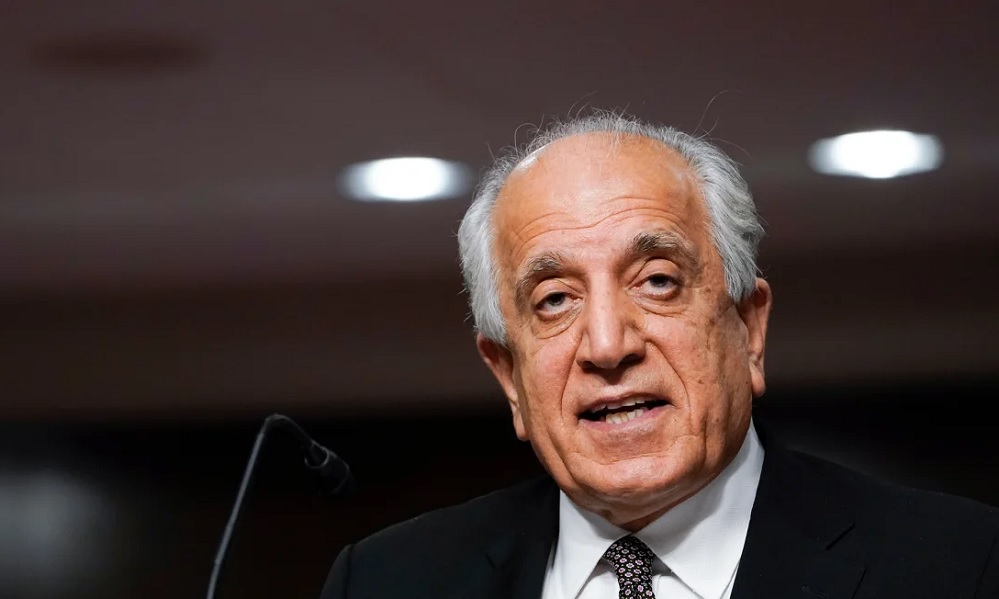
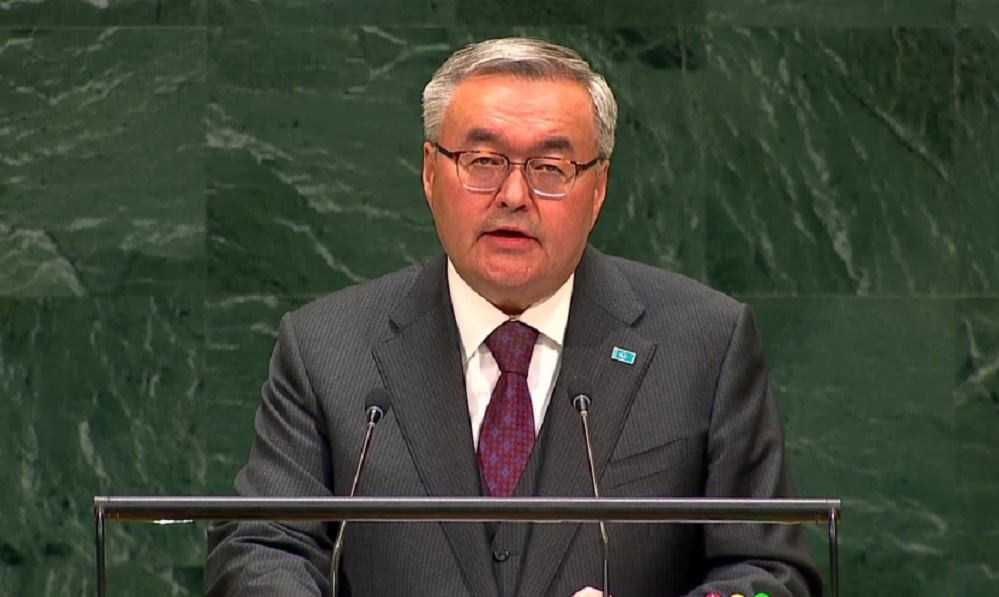
Kazakhstan’s Foreign Minister Mukhtar Tileuberdi has called for pragmatic and coordinated international engagement with Afghanistan, saying the country’s long-term stability is closely linked to the security and sustainable development of Central Asia.
Speaking during the general debate of the 81st session of the United Nations General Assembly in New York on Friday, Tileuberdi said humanitarian assistance to Afghanistan remains essential but alone cannot break the cycle of poverty, displacement and dependency.
He said Kazakhstan supports a “pragmatic, coordinated and step-by-step” approach to international engagement with Afghanistan, with the United Nations playing a central role.
Tileuberdi also said Kazakhstan is working with the UN to operationalize the United Nations Regional Centre for the Sustainable Development Goals for Central Asia and Afghanistan in Almaty.
He said the success of the centre should be measured by the results and assistance it delivers to the region.


Abu Muslim Farah defeat Khurasan Faryab 2-0 in ACL season six

Saar: Concerns over Pakistan’s political crisis discussed

Afghanistan Champions League: Omar Zawak Herat beat Toofan Herat 1-0

Blast in Pakistan’s Dera Ismail Khan kills 11, injures 30

Ariana Afghan Airlines increases Kabul-Delhi cargo flights

Saudi energy group signs major Afghanistan deals covering gas exploration and pipeline plans

Trump floats idea of renaming Atlantic or Pacific Ocean

US hits Egyptian bank branches with Iran sanctions as war marks six months

Nepal flood rescue mission enters critical phase as thousands remain missing

Iranian clubs to face Gulf opponents at neutral venues in Asian Champions League Elite
Saar: Concerns over Pakistan’s political crisis discussed

Exclusive interview with Abdul Latif Mansoor, Minister of MRRD

Tawsia: Overview of Afghanistan’s iron mines

Tahawol: Discussion on fresh Pakistani airstrikes on Afghanistan

Saar: Calls for international support for Afghanistan discussed
-

 World5 days ago
CNN, MS NOW and Politico sue Trump, challenging White House ban
-

 Latest News3 days ago
Ariana Afghan Airlines ranks seventh among 45 Central Asian airlines
-

 Latest News4 days ago
UN reiterates call for respect for international law after Kunar airstrikes
-

 Regional3 days ago
US and Iran hold first talks since June after Trump’s ‘annihilation’ threat
-

 Latest News3 days ago
Silk Road highway in Wakhan corridor now reaches the China border
-

 Latest News4 days ago
Afghan Official: Pakistan’s airstrikes will not go unanswered
-

 Sport4 days ago
Afghan boxing referee heads to China for international festival
-

 Regional5 days ago
G7 foreign ministers call on Iran to stop arming Houthis