
Latest News
Germany pledges 600 million euro in humanitarian aid to Afghanistan

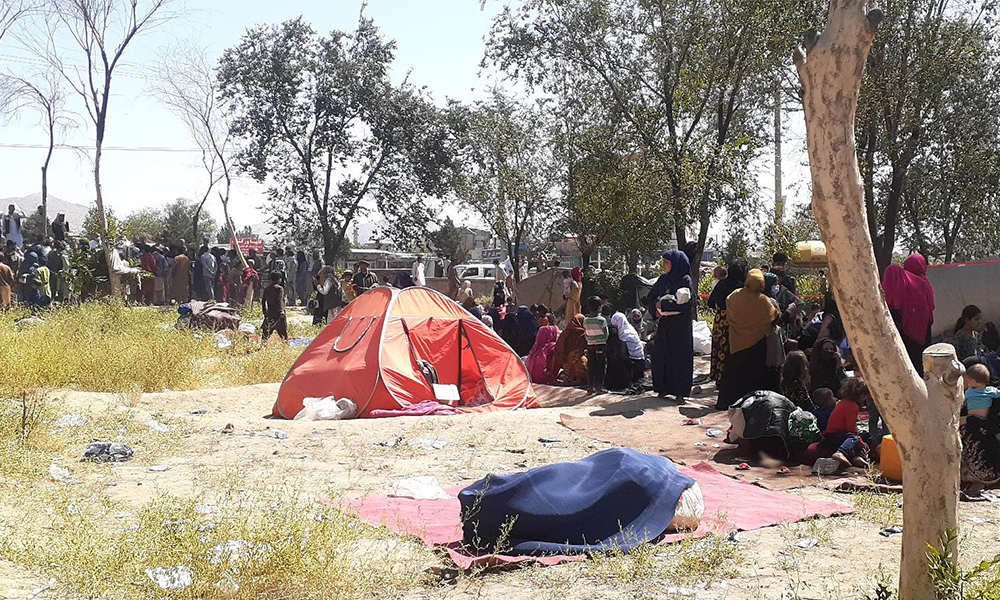
Germany has pledged an additional 600 million euro to increase humanitarian assistance and provide funding for international organizations which support Afghans in need.
German Foreign Ministry said in a statement that this aid will directly benefit people via partner organizations such as the World Food Programme (WFP), and the Office of the UN High Commissioner for Refugees (UNHCR).
This comes as the humanitarian situation in Afghanistan was critical even before the Islamic Emirate of Afghanistan (IEA) seized power, and the situation is continuing to deteriorate, the statement said.
According to the statement, more than half of the Afghan population, 22.8 million people, are at risk of starvation. Some 5.5 million Afghans are internally displaced, while almost as many have fled to neighboring countries or the region at large.
“The already weak economy has slumped further since the Taliban (IEA) took over power. Many people who used to be able to provide for themselves without any problems have lost their work, resulting in them and their families becoming dependent on assistance. At the same time, a severe drought is decimating the harvest yields,” the statement noted.
The statement noted that the German Government is providing this assistance mainly based on the needs calculated by the United Nations and the Red Cross/Red Crescent Movement.
“The relief organizations can use this money to provide quick and efficient assistance for millions of people in need throughout the country.”
“Our partners ensure that the assistance is only used for humanitarian purposes and does not fall into the hands of the Taliban (IEA),” read the statement.
Meanwhile, Germany will also assist vulnerable Afghans in neighboring countries such as Iran and Pakistan.
“The World Food Programme (WFP), for instance, is helping people who had to leave their villages due to the hostilities or the ongoing severe drought and who have lost their livelihood as a result.”
“The WFP is making available food and heating fuel to these people or providing cash so that families can buy their own supplies. This also benefits the local economy, as people can once more buy basic necessities in the markets,” the statement added.
The UNHCR, with Germany’s help, has set up accommodation, sanitary facilities, and medical stations. Here the refugees, including many children, find shelter and receive medical care as well as essential supplies, the statement concluded.
* We Give So They May Live Campaign – Donate Here: www.helpafg.org
Ariana News and Ariana Television fully support the Bayat Foundation’s initiative to raise funds to provide emergency aid to poverty-stricken Afghans. As official media partners we appeal to you to help provide food essentials to as many Afghan families as possible.






Latest News
EU condemns restrictions on women and girls in Afghanistan
IEA spokesperson Zabihullah Mujahid has previously said that education for girls above Grade 6 remains under review and that the government is working to resolve the issue.
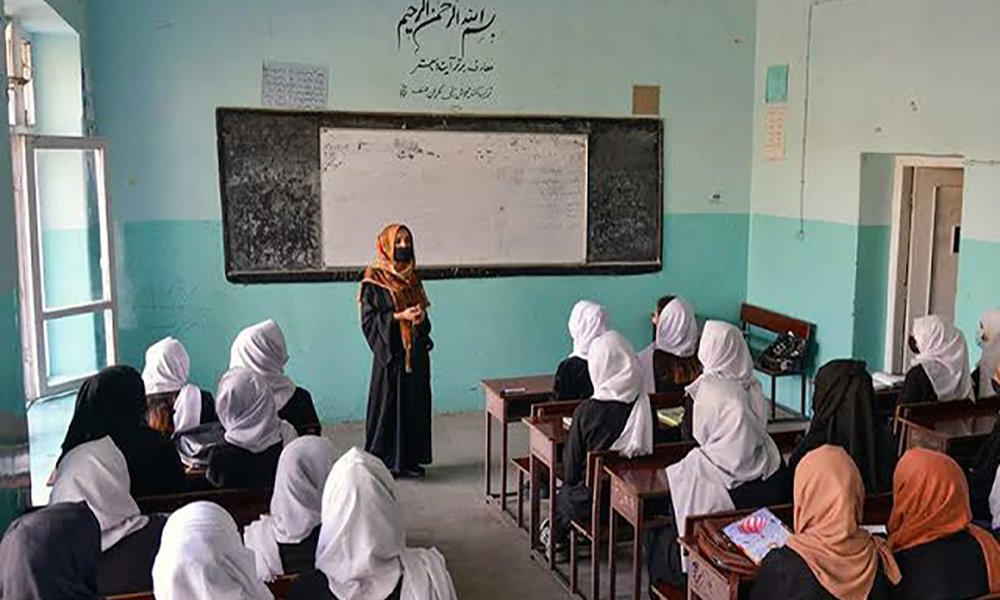
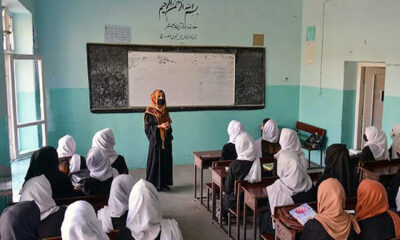
The European Union has condemned human rights violations and gender-based discrimination by the Islamic Emirate of Afghanistan (IEA), calling for an end to restrictions on women and girls, particularly the ban on education beyond Grade 6.
In a statement delivered at UNESCO’s 225th Executive Board meeting on October 19, the EU expressed alarm over the continued deterioration of women’s and girls’ rights in Afghanistan in 2026.
The bloc said Afghanistan remains the only country where girls are prohibited from attending public education beyond Grade 6, a restriction affecting more than 2.2 million girls. It called for the unconditional reversal of the policies.
The EU also welcomed UNESCO’s efforts to provide alternative learning opportunities for Afghan women and girls, while stressing that these initiatives cannot replace formal, inclusive and quality education.
In 2025, the EU and UNESCO launched a €4.7 million partnership aimed at promoting economic empowerment through community-based skills development and literacy training in Afghanistan.
IEA spokesperson Zabihullah Mujahid has previously said that education for girls above Grade 6 remains under review and that the government is working to resolve the issue.
The EU meanwhile also reaffirmed its support for independent Afghan media, civil society organisations and human rights defenders, particularly those working to protect women’s rights, despite the risks and restrictions they face.
It highlighted EU-backed UNESCO initiatives focused on media and information literacy, documentary heritage, freedom of expression and the safety of journalists.
The statement further raised concerns over threats to Afghanistan’s cultural heritage, illegal archaeological excavations, the illicit trafficking of cultural goods and the safety and livelihoods of cultural professionals, particularly women.
The EU commended UNESCO’s work in Afghanistan and welcomed the extension of the United Nations Strategic Framework for Afghanistan until 2030, emphasising the UN’s continued role in the country.
It also reaffirmed its commitment to providing financial support for UNESCO’s activities in Afghanistan, including programmes aimed at education, cultural preservation, media freedom and the protection of fundamental rights.
Latest News
Afghanistan’s economic crisis raises concerns over EU deportations
The growing contacts highlight the tension between Europe’s official policy of non-recognition and its practical efforts to address migration and other issues involving Afghanistan.

European governments are stepping up engagement with Afghanistan’s Islamic Emirate (IEA) authorities over the deportation of migrants, economic assistance and diplomatic representation, despite continuing to withhold formal recognition of the administration, France 24 reports.
The report draws on an investigation by Elian Peltier, The New York Times’ Pakistan and Afghanistan bureau chief, who says European officials are meeting IEA representatives more frequently than is widely known.
The growing contacts highlight the tension between Europe’s official policy of non-recognition and its practical efforts to address migration and other issues involving Afghanistan.
However, the prospect of returning Afghan migrants has raised concerns among United Nations experts and human rights organisations, which have warned about the risks of deportation under IEA rule, particularly given restrictions on fundamental rights.
Afghanistan’s persistent economic crisis adds to these concerns, with limited employment opportunities, widespread hardship and difficulties accessing basic necessities potentially leaving returnees struggling to rebuild their lives.
The developments underscore the challenge facing European governments as they seek to manage migration while weighing humanitarian concerns and the conditions awaiting deportees in Afghanistan.
Latest News
Poland hits back at Hegseth over NATO sacrifices in Afghanistan
According to the report, 43 Polish soldiers and one civilian paramedic were killed, while more than 200 Polish personnel were wounded.
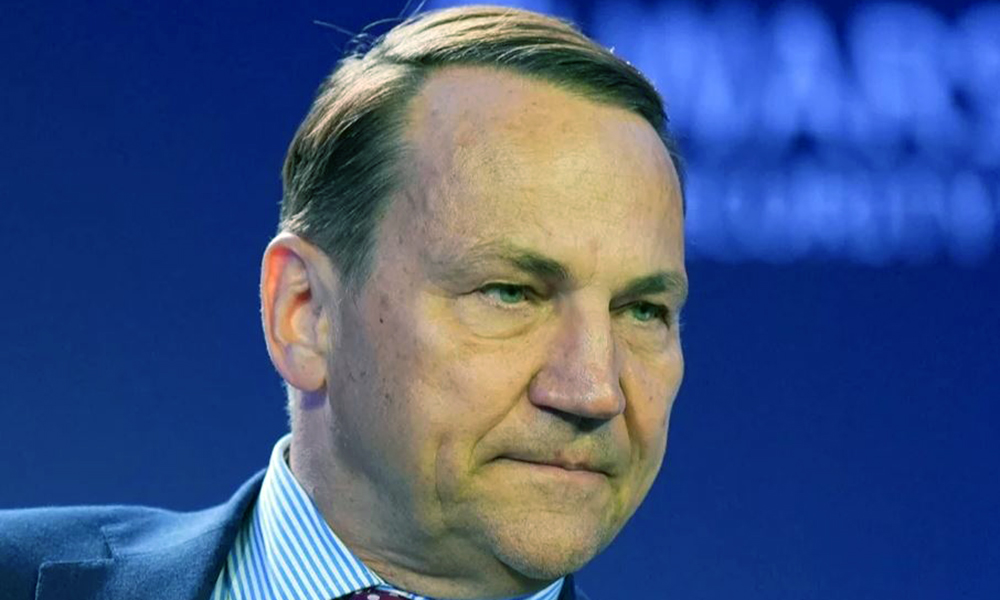
Poland’s Foreign Minister Radosław Sikorski has hit back at US Defence Secretary Pete Hegseth over remarks downplaying NATO allies’ contributions to the Afghanistan war, urging him to remember the Polish personnel who died fighting alongside American forces.
Hegseth recently questioned the extent of allied combat contributions during the Afghanistan mission, suggesting that only a small number of countries had played a significant role. He also joked that ISAF, the International Security Assistance Force, stood for “I Saw Americans Fighting.”
Sikorski responded by challenging Hegseth to repeat his remarks to the families of the 44 Polish personnel killed during the mission, including those who served in Ghazni province.
Jan Grabiec, head of the Polish prime minister’s office, also condemned the comments, saying the sacrifices of allied troops should not be mocked.
Poland took part in the US-led military operation from 2001 until the withdrawal of international forces in 2021.
More than 33,000 Polish soldiers and defence personnel served in Afghanistan over nearly two decades.
According to the report, 43 Polish soldiers and one civilian paramedic were killed, while more than 200 Polish personnel were wounded.
The Afghanistan mission marked the first and only time NATO invoked Article 5, its collective defence clause, following the September 11, 2001, attacks on the United States.
More than 1,000 NATO service members were killed during the mission, including 44 Poles.
The dispute has renewed debate over the contributions and sacrifices of NATO allies during the two-decade conflict, in which forces from across the alliance served alongside the United States.


EU condemns restrictions on women and girls in Afghanistan

Tahawol: US–Iran tensions escalate with mutual threats

Saar: IEA–UNAMA relations: five years under review

Afghanistan’s economic crisis raises concerns over EU deportations

Poland hits back at Hegseth over NATO sacrifices in Afghanistan

Cricket Bonanza: Afghanistan set for packed international schedule

Afghanistan says 28 killed, 32 captured in Nuristan operation

Silk Road highway in Wakhan corridor now reaches the China border

CNN, MS NOW and Politico sue Trump, challenging White House ban

Afghanistan on climate front line as Kabul faces groundwater warning
Tahawol: US–Iran tensions escalate with mutual threats
Saar: IEA–UNAMA relations: five years under review

Violent protests spread across Europe as Albanian PM blames ‘foreign hand’

Tahawol: Afghanistan’s empty seat at OIC Meeting

Saar: Islamic Emirate–Pakistan clashes discussed
-
 Latest News5 days ago
India, Russia hold security talks on Afghanistan and Pakistan amid regional tensions
-
 Latest News5 days ago
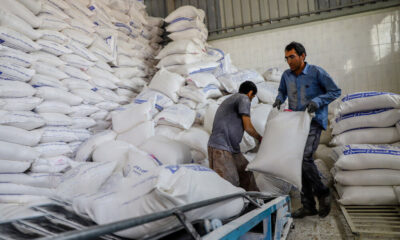
Uzbekistan gains ground in Afghanistan’s flour market as Kazakhstan loses exports
-
 Sport2 days ago
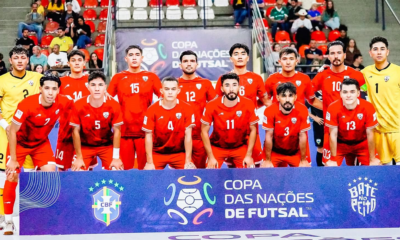
Afghanistan reach Brazil futsal tournament final after beating Cape Verde 4-2
-
 Regional5 days ago
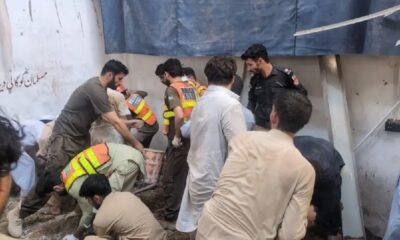
School roof collapse kills teacher, 21 children in NW Pakistan
-
 Latest News5 days ago
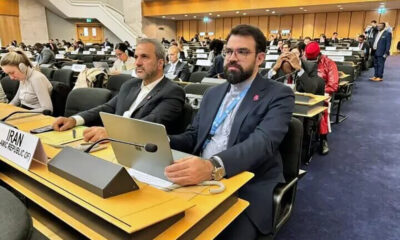
Iran says nearly 60,000 Afghan students attend its universities, urges more refugee aid
-
 Latest News5 days ago
Afghanistan, Saudi Arabia discuss solar and wind energy cooperation
-
 Business4 days ago
Regional partners seek progress on Trans-Afghan corridor and CASA railway
-
 Latest News4 days ago
Nearly 19.2 million Afghans face winter hunger as child malnutrition set to surge, UN agencies warn