
Latest News
I know I am only one bullet away from death: Ghani

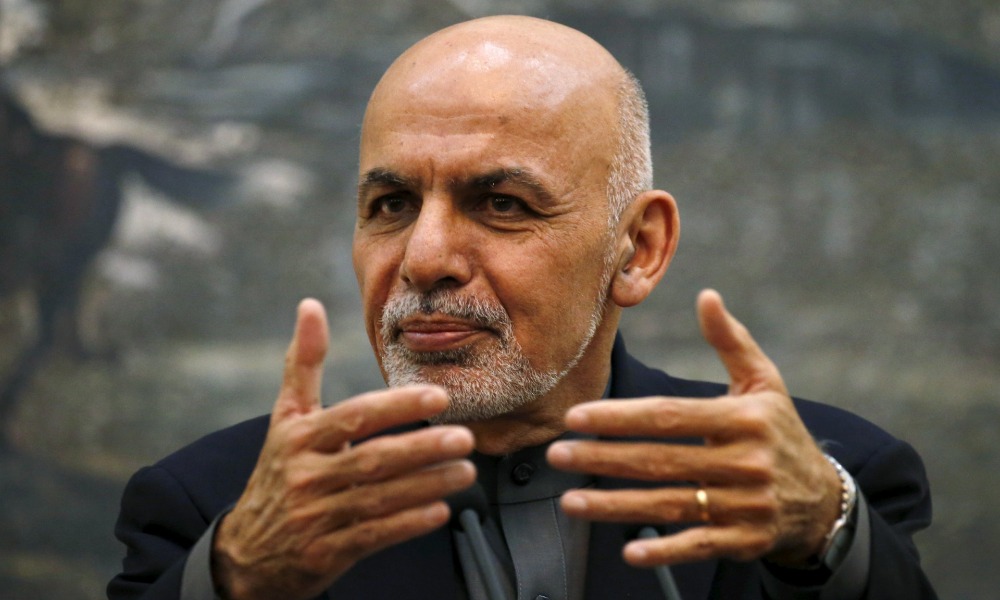
Afghan President Ashraf Ghani said in an interview this week that the narrative being portrayed by the media of “gloom and doom” must stop and instead a more positive spin needs to be put on the country’s future.
In an interview with Der Spiegel, Ghani said: “The more the media talks about these doom-and-gloom scenarios, the more it encourages people to leave. Instead, please describe the opportunities that are available here, even in the most difficult of times, including war.”
He said however that under the current circumstances “the probability of a civil war is there,” but added that it “doesn’t have to come to that.”
“You know, when the combat mission officially ended in 2014 and was modified as a training mission, everybody already saw the demise of the republic coming. But we made it work. Please take into consideration that all of this is also a question of narrative: The more the scenario of destabilization is spread, the more we are confronted with violence here.”
He told Der Spiegel that US President Joe Biden’s administration has made a strategic decision to withdraw its military presence and that he respects this.
“Any expression of anger, resentment or disappointment would not be productive. I myself have never opposed a US withdrawal – nor do I waste my time on regrets. The question now is where our common interests lie in the future and how we will reshape our partnership with the US.”
Ghani also stated the Afghan security forces are well prepared to defend their country after foreign troops leave. “If I did anything, it was to prepare our forces for this situation.”
Ghani confirmed that Afghanistan’s leaders are currently trying to form a state council across all party lines. This is to not only organize the peace process, but also organize resistance against the Taliban.
“The council is actually forming right now. It is emerging, and I am pushing for it with all my might.
“A peace process is a fundamental scenario. Once the Taliban realize that they cannot overthrow the government, they will need to come to peace as the dominant scenario,” he said, adding that “the question of peace or hostility is now in Pakistani hands.”
Ghani explained that “Pakistan operates an organized system of support.
“The Taliban receive logistics there, their finances are there and recruitment is there. The names of the various decision-making bodies of the Taliban are Quetta Shura, Miramshah Shura and Peshawar Shura – named after the Pakistani cities where they are located. There is a deep relationship with the state.”
But he noted that Pakistan’s Army Chief of Staff General Qamar Bajwa assured him on Monday, during his visit to Kabul, that the restoration of a Taliban regime “is not in anybody’s interest in the region, especially Pakistan.”
“However, he said, some of the lower levels in the army still hold the opposite opinion in certain cases. It is primarily a question of political will,” Ghani stated.
He said however that Western diplomacy “should stop coddling” the Taliban.
“The Taliban are criminals. They kill innocent people – as they did just a few days ago, in an attack on a girls’ school in Kabul, in Dasht-e-Barchi, which cost the lives of 85 people. Do not validate these criminals as a shadow government!”
“The Taliban made the environment for these crimes possible – they did not cut their ties with al-Qaeda as they claim to have done. They bear responsibility for this,” he said.
On the issue of the release of a further 7,000 prisoners, Ghani said he would do so “only if it leads to a comprehensive peace agreement.”
In conclusion, Ghani said: “I know I am only one bullet away from death.”
“There have been many attempts on my life. But Afghanistan is not South Vietnam, and I did not come here in a coup. I was elected by the people. I’ve never had an American bodyguard or an American tank protecting me. Before I became president, I lived abroad for 28 years, and had a successful career. But I was not happy. No power in the world could persuade me to now get on a plane and leave this country. It is a country I love, and I will die defending.”












Kazakhstan’s Foreign Minister Mukhtar Tileuberdi has called for pragmatic and coordinated international engagement with Afghanistan, saying the country’s long-term stability is closely linked to the security and sustainable development of Central Asia.
Speaking during the general debate of the 81st session of the United Nations General Assembly in New York on Friday, Tileuberdi said humanitarian assistance to Afghanistan remains essential but alone cannot break the cycle of poverty, displacement and dependency.
He said Kazakhstan supports a “pragmatic, coordinated and step-by-step” approach to international engagement with Afghanistan, with the United Nations playing a central role.
Tileuberdi also said Kazakhstan is working with the UN to operationalize the United Nations Regional Centre for the Sustainable Development Goals for Central Asia and Afghanistan in Almaty.
He said the success of the centre should be measured by the results and assistance it delivers to the region.


Abu Muslim Farah defeat Khurasan Faryab 2-0 in ACL season six

Saar: Concerns over Pakistan’s political crisis discussed

Afghanistan Champions League: Omar Zawak Herat beat Toofan Herat 1-0

Blast in Pakistan’s Dera Ismail Khan kills 11, injures 30

Ariana Afghan Airlines increases Kabul-Delhi cargo flights

Saudi energy group signs major Afghanistan deals covering gas exploration and pipeline plans

Trump floats idea of renaming Atlantic or Pacific Ocean

US hits Egyptian bank branches with Iran sanctions as war marks six months

Nepal flood rescue mission enters critical phase as thousands remain missing

Iranian clubs to face Gulf opponents at neutral venues in Asian Champions League Elite
Saar: Concerns over Pakistan’s political crisis discussed

Exclusive interview with Abdul Latif Mansoor, Minister of MRRD

Tawsia: Overview of Afghanistan’s iron mines

Tahawol: Discussion on fresh Pakistani airstrikes on Afghanistan

Saar: Calls for international support for Afghanistan discussed
-

 World5 days ago
CNN, MS NOW and Politico sue Trump, challenging White House ban
-

 Latest News3 days ago
Ariana Afghan Airlines ranks seventh among 45 Central Asian airlines
-

 Latest News4 days ago
UN reiterates call for respect for international law after Kunar airstrikes
-

 Regional3 days ago
US and Iran hold first talks since June after Trump’s ‘annihilation’ threat
-

 Latest News3 days ago
Silk Road highway in Wakhan corridor now reaches the China border
-

 Latest News5 days ago
Afghan Official: Pakistan’s airstrikes will not go unanswered
-
 Regional5 days ago
G7 foreign ministers call on Iran to stop arming Houthis
-

 Regional3 days ago
Iran airlines cancel flights as US sanctions hit