
Latest News
IEA leader meets with Chinese officials in Qatar, discusses bilateral issues

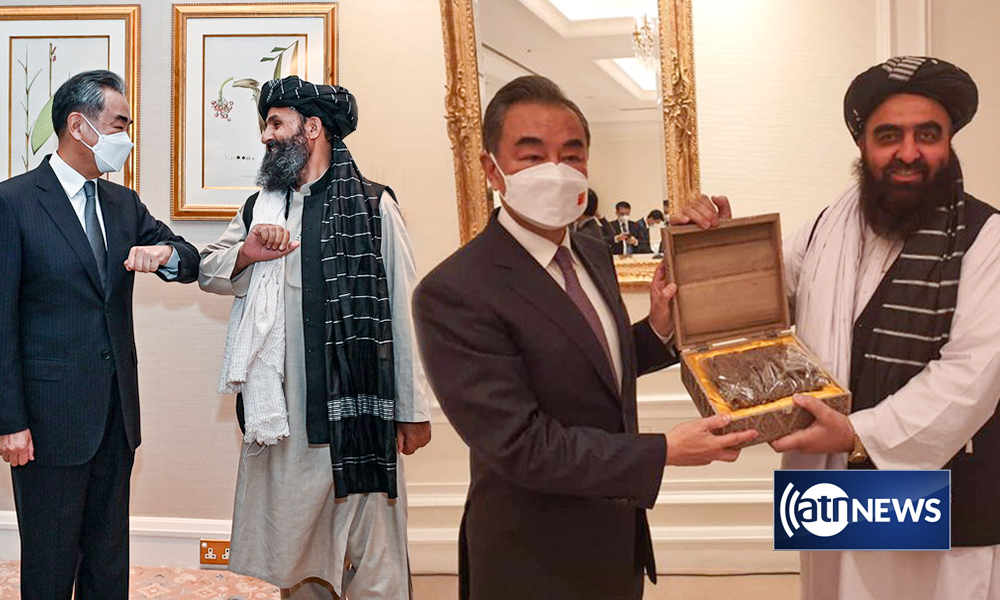
China’s foreign minister Wang Yi has again urged the US to ease sanctions against the Islamic Emirate of Afghanistan (IEA) to help the country overcome a looming humanitarian crisis.
Speaking during the first high-level meeting with the Afghan interim government in Qatar on Monday, Wang emphasized the seriousness of the problem unfolding in Afghanistan.
It was Wang’s first meeting with acting deputy prime minister Mullah Abdul Ghani Baradar since July, when the IEA leader visited Tianjin in northern China shortly before the takeover of Kabul, Hong Kong’s South China Morning Post reported.
“Afghanistan is facing quadruple challenges, namely the humanitarian crisis, economic chaos, terrorist threats and governance difficulties. Overcoming these challenges requires more understanding and support from the international community,” Wang said.
“China urges the Western countries led by the United States as a whole to lift sanctions, and calls on all parties to engage with the Afghan Taliban (IEA) in a rational and pragmatic manner to help Afghanistan embark on a path of sound development.”
Wang also pledged that China would continue to provide humanitarian assistance to Afghanistan.
Beijing announced last month that it would donate 200 million yuan (US$31.3 million) in aid, including food and coronavirus vaccines, to the war-torn nation, SCMP reported.
Meanwhile, a delegation led by Foreign Minister Amir Khan Muttaqi met with a delegation led by Foreign Minister Wang Yi on Tuesday.
The two sides discussed issues including diplomatic relations, bilateral trade, China’s humanitarian assistance to Afghanistan and the creation of higher education opportunities for Afghan students in China, as well as opportunities and challenges in bilateral relations.
The acting minister thanked China for its comprehensive assistance and said that the new Islamic government would ensure that Afghan soil would not be used against any country, including China.
Muttaqi said Afghanistan had a balanced foreign policy based on co-operation and understanding.
“China has an important place in our foreign policy and is an important country in the region,” he added. The whole region, including China, benefits from Afghanistan’s stability.
The Chinese Foreign Minister welcomed the recent positive developments in Afghanistan and noted that Afghanistan and China have historical ties.
He said China would work in the future based on the common interests of both countries and would never interfere in Afghanistan’s internal affairs.
Wang said his country respected Afghanistan’s security, independence and territorial integrity.
The Chinese side also stressed its support for Afghanistan to chart its own course for development.
China is playing its part in Afghanistan’s reconstruction. The Foreign Minister said that his country would continue to provide emergency humanitarian assistance to Afghanistan.
Meanwhile, Islamic Emirate spokesman Zabihullah Mujahid who is accompanying the delegation said that China provided $1 million to Afghanistan and has promised to provide $5 million more in humanitarian aid, especially medicine and food.












Kazakhstan’s Foreign Minister Mukhtar Tileuberdi has called for pragmatic and coordinated international engagement with Afghanistan, saying the country’s long-term stability is closely linked to the security and sustainable development of Central Asia.
Speaking during the general debate of the 81st session of the United Nations General Assembly in New York on Friday, Tileuberdi said humanitarian assistance to Afghanistan remains essential but alone cannot break the cycle of poverty, displacement and dependency.
He said Kazakhstan supports a “pragmatic, coordinated and step-by-step” approach to international engagement with Afghanistan, with the United Nations playing a central role.
Tileuberdi also said Kazakhstan is working with the UN to operationalize the United Nations Regional Centre for the Sustainable Development Goals for Central Asia and Afghanistan in Almaty.
He said the success of the centre should be measured by the results and assistance it delivers to the region.


Abu Muslim Farah defeat Khurasan Faryab 2-0 in ACL season six

Saar: Concerns over Pakistan’s political crisis discussed

Afghanistan Champions League: Omar Zawak Herat beat Toofan Herat 1-0

Blast in Pakistan’s Dera Ismail Khan kills 11, injures 30

Ariana Afghan Airlines increases Kabul-Delhi cargo flights

Saudi energy group signs major Afghanistan deals covering gas exploration and pipeline plans

Trump floats idea of renaming Atlantic or Pacific Ocean

US hits Egyptian bank branches with Iran sanctions as war marks six months

Nepal flood rescue mission enters critical phase as thousands remain missing

Iranian clubs to face Gulf opponents at neutral venues in Asian Champions League Elite
Saar: Concerns over Pakistan’s political crisis discussed

Exclusive interview with Abdul Latif Mansoor, Minister of MRRD

Tawsia: Overview of Afghanistan’s iron mines

Tahawol: Discussion on fresh Pakistani airstrikes on Afghanistan

Saar: Calls for international support for Afghanistan discussed
-

 World5 days ago
CNN, MS NOW and Politico sue Trump, challenging White House ban
-

 Latest News3 days ago
Ariana Afghan Airlines ranks seventh among 45 Central Asian airlines
-

 Latest News4 days ago
UN reiterates call for respect for international law after Kunar airstrikes
-

 Regional3 days ago
US and Iran hold first talks since June after Trump’s ‘annihilation’ threat
-

 Latest News3 days ago
Silk Road highway in Wakhan corridor now reaches the China border
-

 Latest News4 days ago
Afghan Official: Pakistan’s airstrikes will not go unanswered
-

 Sport4 days ago
Afghan boxing referee heads to China for international festival
-
 Regional5 days ago
G7 foreign ministers call on Iran to stop arming Houthis