
Regional
Iran targets US bases in Jordan and the Gulf after Trump orders strikes near Hormuz

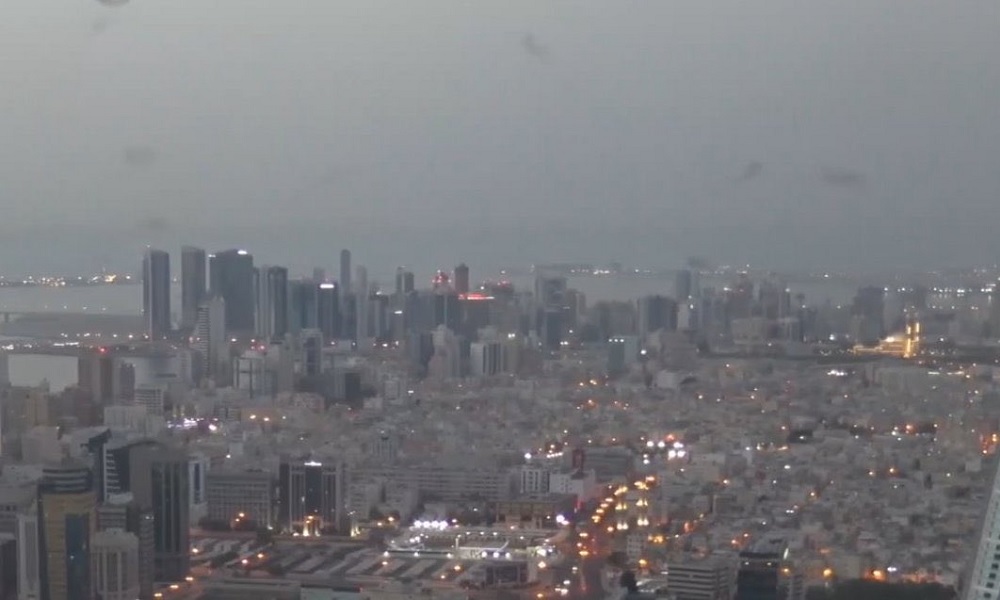
Iran’s Revolutionary Guards said they had carried out attacks against a U.S. base in Jordan and 21 other targets in the Gulf on Wednesday in retaliation for American strikes around the Strait of Hormuz, Iranian media reported.
The clashes mark one of the biggest exchanges in hostilities since the two countries agreed to a ceasefire in April, Reuters reported.
The Iranian strikes, which included attacks in Kuwait and Bahrain, came after the U.S. military said on X it had targeted Iranian air defence, ground control stations and surveillance radar sites near the strait in response to what U.S. President Donald Trump said was the downing of a U.S. Apache helicopter on Tuesday.
“I believe the response should be very strong, very powerful, and that’s what this one is,” Trump told ABC News on Tuesday.
The escalation in violence deepens doubts about the prospects for a deal to end the war that started on February 28 with joint U.S.-Israeli strikes against Iran. Tehran responded by firing on Gulf neighbours that host U.S. bases and all but choked off the Strait of Hormuz, a vital conduit for oil and gas.
The latest U.S. strikes lasted around four hours before the U.S. Central Command posted just before 9 p.m. ET (0100 GMT Wednesday) that they had ended. A U.S. official said almost 20 Iranian targets had been struck.
Iran’s state media reported that Qeshm island and the port city of Sirik in the Strait of Hormuz were attacked.
Sounds of explosions were heard in nearby Bandar Abbas, and later in the vicinity of Jask, near the entrance to the strait, Iranian media reported, citing local sources and residents.
Iran’s Revolutionary Guards said in response they had targeted four sites at the U.S. al-Azraq base in Jordan using long-range missiles, Iranian media reported.
The Guards said the targets included F-35 fighter jet hangars and a command-and-control centre, and warned they were ready to deliver a “crushing and decisive” response to any further U.S. attack.
Jordanian armed forces said on Wednesday they had intercepted and shot down five missiles launched from Iran toward al-Azraq. The military added that debris from the interception operation fell on Jordanian territory but caused no injuries or material damage.
The Kuwaiti army said its air defence systems were engaging hostile aerial targets and urged the public to follow official safety instructions, after Iran’s Revolutionary Guards said they had targeted the Ali Al Salem base in Kuwait with drones.
Iran’s Revolutionary Guards said earlier they attacked the U.S. Fifth Fleet in Bahrain with drones and threatened “more severe responses” if hostilities continued, according to media.
Bahrain’s Interior Ministry said a warning siren had been sounded and urged the public to head to safety. Air defences had repelled Iranian attacks, a media adviser to Bahrain’s king said soon after in a post on X.
A U.S. official, speaking on condition of anonymity, said initial assessments showed nearly all missiles and drones launched by Iran were intercepted and they were not immediately aware of any reports of harm to U.S. personnel or damage to U.S. locations.
The Pentagon did not immediately respond to a request for comment. Reuters could not immediately verify the battlefield reports.
Oil prices climbed about 1% in early Asian trade on Wednesday following the escalation in hostilities.
NOT A BIG DEAL?
On Tuesday, a U.S. Apache helicopter was brought down by a one-way Iranian attack drone, according to a U.S. official who spoke on condition of anonymity. Two U.S. pilots involved in the helicopter incident were uninjured, Trump said.
Iran’s state media cited a military source as saying that no offensive air military operations had been conducted in the Strait of Hormuz in the previous 24 hours.
A U.S. Navy surface drone found and rescued the two crew, the U.S. military said, after the U.S. Army attack helicopter went down in waters near Oman’s coast while on patrol at around 3 a.m. on Tuesday (2300 GMT on Monday).
The U.S. military’s Central Command gave no reason for the crash. It said the two crew were rescued after two hours and said they were in stable condition – a more cautious assessment than Trump’s description.
Iran’s Foreign Minister Abbas Araqchi did not directly address the helicopter incident, but said in a post on X that foreign forces in the region risked being involved in accidents or crossfire.
“To reduce risk, best solution is for them to leave,” he wrote.
Trump told The Wall Street Journal during a phone call on Tuesday that the helicopter incident “wasn’t a big deal” and stressed that “the pilot is fine.”
However, the episode could well add further strain to efforts to broker a peace deal to end the wider Middle East war and reopen Hormuz.
Trump has repeatedly said Iran and the United States are close to an agreement, though there have been few signs of progress since a tenuous ceasefire took effect in early April.
Fighting between Israel and Iran-backed Hezbollah militants in Lebanon has continued, and Tehran has maintained its restrictions on most shipping through the Strait of Hormuz, which before the war carried a fifth of the world’s crude oil and liquefied natural gas. Washington has imposed its own blockade of Iranian ports.
U.S. Energy Secretary Chris Wright said on Tuesday that ship traffic through Hormuz is rising “very meaningfully,” but added it would take many months to get back to normal flows of energy once the war is over.
Trump has said any peace deal must ensure Iran cannot develop a nuclear weapon. Iran denies any such ambitions.
Iran’s demands include the lifting of international sanctions, the release of billions of dollars in frozen assets and recognition of its control of the strait.






Regional
Syria president tells Al Jazeera his country seeks security deal with Israel
Sharaa’s comments coincided with U.N. Secretary-General Antonio Guterres visiting Syria, the first trip by a United Nations chief to the country since 2009.
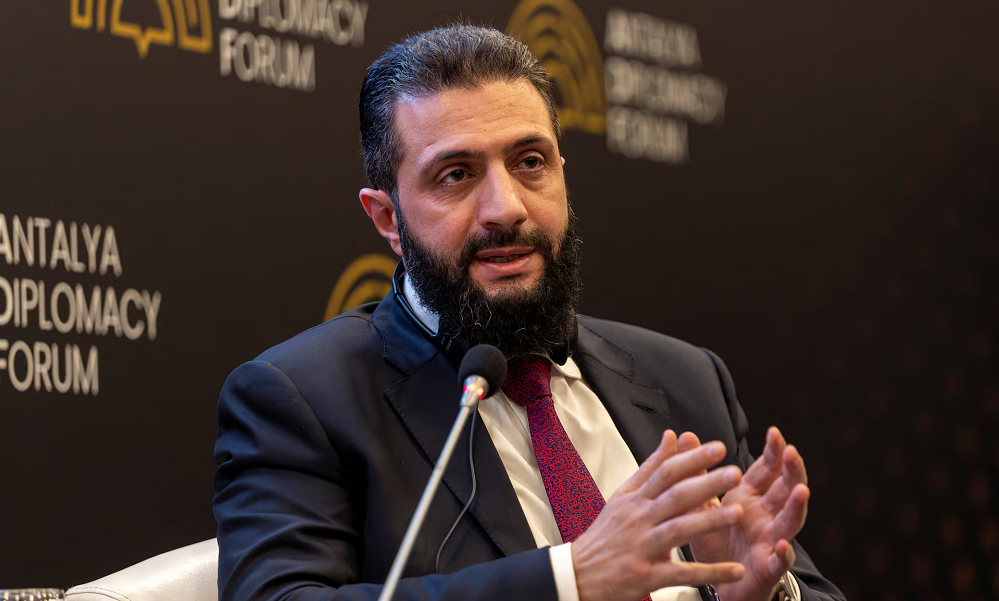
Syria is seeking to reach a security agreement with Israel, Syrian President Ahmed al-Sharaa said in an interview with Al Jazeera on Sunday.
He said a deal could pave the way for comprehensive peace between the two countries without compromising Syria’s right to the Golan Heights, an area that Israel captured from Syria in the 1967 Six-Day War and annexed in 1981.
“We are avoiding getting into confrontations,” he added.
Soon after former Syrian President Bashar Al Assad fell to rebel forces advancing under Sharaa’s leadership in December 2024, Israeli troops pushed into Syria and seized strategic territories. Israeli troops moved into a demilitarized zone inside Syria, including the Syrian side of Mount Hermon, which overlooks the capital Damascus.
Since then, the Israeli military has launched strikes on Syria and detained individuals from within the country. Israel has also intervened in what it calls missions to protect ethnic minority Druze in southwestern Syria.
On Sunday, Israeli forces shelled areas in Syria and destroyed an electrical transformer in the village of Maariyah, depriving homes of power, Syria’s state news agency SANA said.
Sharaa’s comments coincided with U.N. Secretary-General Antonio Guterres visiting Syria, the first trip by a United Nations chief to the country since 2009.
In a statement on X on Sunday, Guterres called for respect for Syria’s sovereignty, independence, unity and territorial integrity.
“Violations by Israel of the 1974 Disengagement of Forces Agreement are unacceptable & must stop,” Guterres said.
Last year, Sharaa, who is trying to rehabilitate Syria’s image, became the first Syrian president since 1967 to take part in the U.N. General Assembly in New York. His government is seeking to rebuild international ties and the local economy after nearly 14 years of war and decades of isolation and death under Assad family rule.
Sharaa also said his government is “not considering military interventions” in Lebanon. The Iran-backed Shiite Lebanese militant group Hezbollah and Sharaa fought on opposing sides of the Syrian civil war.
Earlier this year, U.S. President Donald Trump said he had spoken to Sharaa about combating Hezbollah, after criticizing Israel for killing too many civilians in Lebanon.
Regional
US pauses strikes on Iran as diplomatic efforts gather pace amid regional tensions
Despite the diplomatic push, violence has spread beyond the Gulf.
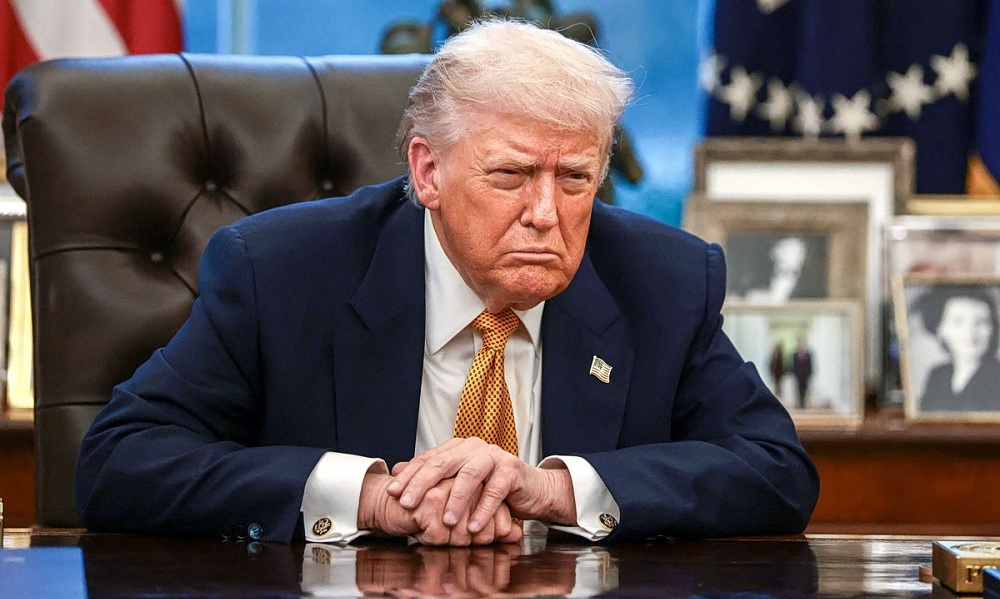
The United States has paused military strikes on Iran as diplomatic efforts to prevent a wider regional conflict gain momentum, although tensions remain high across the Middle East.
U.S. President Donald Trump said Washington is continuing talks with Tehran and expressed optimism that Iranian officials are becoming “more serious” about negotiations after weeks of escalating hostilities.
The pause in military action follows nearly two weeks of intensified fighting that raised fears of a broader regional war. According to reports, the White House opted to prioritize diplomacy while maintaining military pressure through a continued U.S. naval presence in the region.
Despite the diplomatic push, violence has spread beyond the Gulf.
Yemen’s Houthi movement has launched attacks on Saudi oil facilities along the Red Sea coast, threatening key energy infrastructure and increasing concerns over the security of international shipping routes. The renewed attacks have also raised fears of further disruption to global oil supplies.
Meanwhile, Iran has accused Ukraine of carrying out an attack on one of its commercial vessels in the Caspian Sea and has summoned Ukrainian diplomats to protest the incident, adding another layer of tension to the already volatile regional situation.
Diplomatic efforts are continuing through regional mediators as both Washington and Tehran seek to avoid a return to full-scale conflict. However, analysts warn that the situation remains fragile, with any new military incident capable of derailing negotiations.
The conflict has already affected global energy markets, with continued uncertainty surrounding shipping through the Strait of Hormuz—one of the world’s most important oil transit routes—keeping governments and investors on alert.
Regional
Modi’s education minister resigns in major win for Indian youth protesters
The minister announced his resignation on X just as police fired tear gas to scatter young protesters in New Delhi, hours before their leaders were set to hold another round of talks with ministers.
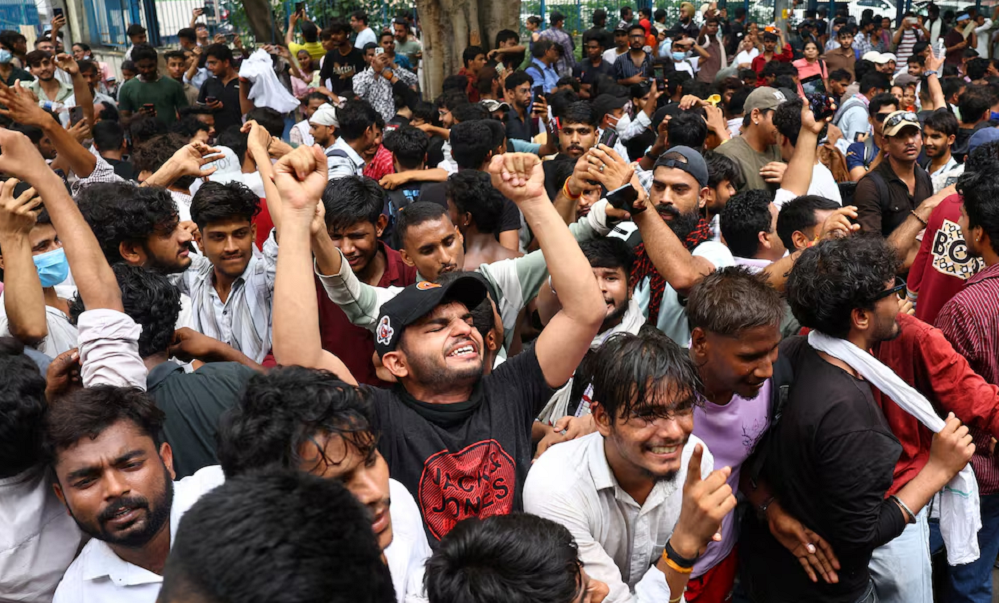
India’s education minister resigned on Saturday, handing a major victory to youth protesters who had demanded he quit to take responsibility for examination paper leaks, and who erupted in celebration on news of his departure.
“We have done it,” said Abhijeet Dipke, founder of the Cockroach Janta Party that led the protests, to loud cheers at the Jantar Mantar protest site in New Delhi, Reuters reported.
“Considering the situation that has arisen at Jantar Mantar and across the country, so that anti-national forces do not take advantage of this situation … I have sent my resignation letter to the Prime Minister,” Education Minister Dharmendra Pradhan wrote in his post.
“I deeply respect the aspirations, feelings, and legitimate expectations of the country’s youth.”
The minister announced his resignation on X just as police fired tear gas to scatter young protesters in New Delhi, hours before their leaders were set to hold another round of talks with ministers.
Pradhan, 57, is a senior leader of Modi’s Bharatiya Janata Party and has been regarded as a rising figure, and even mentioned in the past as a potential BJP leader.
A minister since Modi first took office in 2014, he has held the petroleum and natural gas, steel, skill development and education portfolios, becoming education minister in 2021. His father was a veteran BJP leader and served as a junior federal minister between 1998 and 2004.
Pradhan’s resignation is “a victory of peace, patience & perseverance,” activist Sonam Wangchuk, who was on a hunger strike for 26 days to support the youngster’s movement, wrote on X.
CELEBRATIONS AT PROTEST SITE
Youngsters at the Jantar Mantar site shouted “Jai Hind”, a patriotic slogan meaning “Victory to India”, as the national anthem played on loud speakers and sweets were distributed among the crowd. At least 1,000 police officials stood nearby guarding the area, according to Reuters journalists at the site.
The leak of the high-profile medical college entrance test paper in May, which led to the cancellation of results and the government ordering a retest, affected 2 million young people.
Supporters of India’s youth-led “cockroach” movement had been protesting since June, but anger boiled over since police on Monday injured dozens of students, launching baton charges and firing tear gas to deter crowds of protesters marching on parliament.
The protests also reflect anger over job scarcity, corruption and government accountability.
“Young generation is here. This is win for the constitution,” protester Tluanga Ralte said, walking with a copy of the Indian constitution at the protest site after the minister’s resignation. “We are not a lazy generation.”
Federal authorities even on Saturday restricted access to the internet and to 18 metro stations to try to limit the protest in the capital, the latest day of such restrictions.
Pradhan is only the second minister to resign following a scandal since Modi came to power in 2014. M.J. Akbar resigned as junior foreign minister in October 2018 to fight allegations of sexual harassment made by more than a dozen women during India’s #MeToo movement.
Students, youth activists and opposition supporters had in recent days staged protests in the states of West Bengal, Telangana, Karnataka and Tamil Nadu, holding placards demanding Pradhan’s resignation and boycotting classes in some places.


Tahawol: Iran–US relations amid recent developments

Saar: Attack in Pakistan-controlled Chitral

Qosh Tepa and Akhawat to face off in AWPL final

Muttaqi discusses development projects with new UNDP envoy in Afghanistan

Naeem, Japanese ambassador discuss continued Kabul-Tokyo cooperation

India offers 1,000 online scholarships for Afghan students for 2026-27 academic year

Cricket world pays tribute to Afghanistan fast bowler Shapoor Zadran

Turkey spent over $120 million to prepare airport for Qatar-donated U.S. presidential aircraft

Thousands pay final respects as Afghan cricketer Shapoor Zadran buried in Kabul

Afghanistan U-15 team qualifies for FIFA U-15 World Cup
Tahawol: Iran–US relations amid recent developments
Saar: Attack in Pakistan-controlled Chitral

Tahawol: Afghanistan–Uzbekistan Economic Cooperation Enters New Phase

Saar: Growing Criticism in Pakistan Over Islamabad’s Afghanistan Policy

Tahawol: Trump halting major Iran escalation
-
 Latest News3 days ago
Badakhshan Governor, Army Chief reaffirm commitment to Afghanistan’s security
-
 Latest News5 days ago
Five armed men killed while attempting to cross Durand Line into Badakhshan
-
 Latest News4 days ago
U.S. government plan to interview Afghan refugees raises deportation concerns
-
 Latest News5 days ago
Iran reiterates call for inclusive government in Afghanistan
-
 Latest News4 days ago
Afghanistan, Turkey discuss expanding agricultural cooperation
-
 Regional3 days ago
US pauses strikes on Iran as diplomatic efforts gather pace amid regional tensions
-
 Business5 days ago
Over 205,000 Afghans visit Uzbekistan for trade and business in six months
-
 Latest News3 days ago
Uzbekistan delegation arrives in Kabul to attend trade forum