
Latest News
Our country has no problem with any religion: Macron

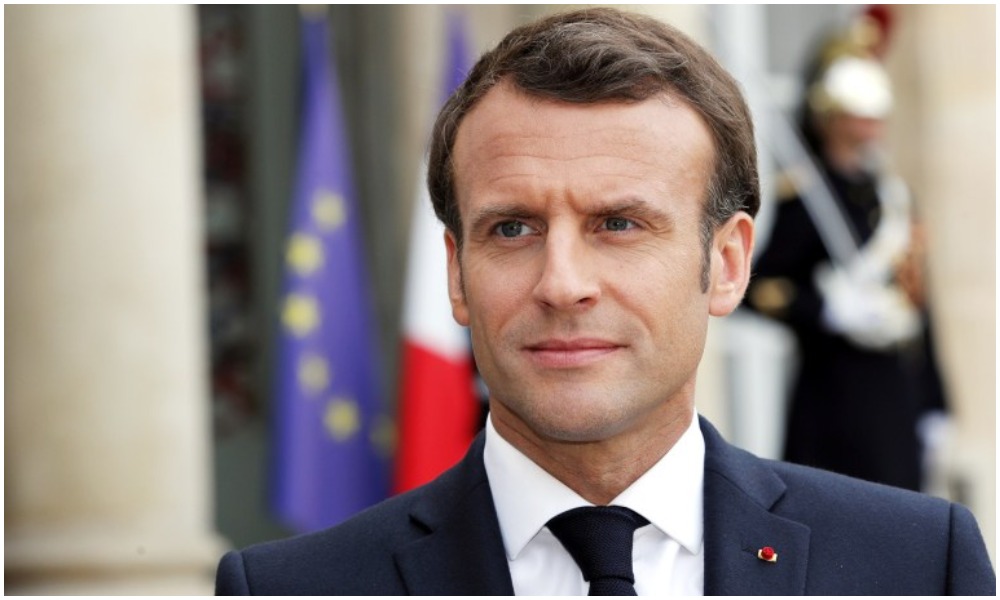
French President Emmanuel Macron said Sunday that his country has no problem with any religion, the French embassy in Kabul tweeted.
“All religions are freely active in this land. Space is free from the label of shame & disgrace.” the embassy quoted Macron as saying.
Macron also said that France is interested in and dependent on peace and coexistence.
The embassy’s tweet comes after Kabul residents took to the streets of Kabul on Wednesday in protest against Macron’s controversial remarks about Islam.
The protest, outside the French Cultural Center in Kabul city drew cries such as “death to France” and “death to Macron”.
Kabul high school students also protested against Macron’s remarks.
Wednesday’s demonstration came amid a standoff between France and Muslim countries after Macron reacted to the beheading of a French schoolteacher who had shown his class cartoons of the Prophet Mohammed during a lesson about freedom of speech.
In addition to Wednesday’s protest in Kabul, Gulbuddin Hekmatyar, leader of Hizb-i-Islami held a press conference and called on the Afghan government to cut all diplomatic ties with France and boycott French goods.
Despite the outcry by Muslim nations around the world over Macron’s remarks, the French president accused Muslims of separatism and vowed not to censor freedom of speech.
French goods have, however, already been pulled from supermarket shelves in Qatar and Kuwait, among other Gulf states, and in Syria people have burned pictures of Macron and French flags have been torched in the Libyan capital Tripoli.
Pakistan Prime Minister Imran Khan also weighed in last week and wrote to Facebook CEO Mark Zuckerberg requesting that the social media company ban Islamophobic content on its platform, similar to that in place for the Holocaust.
After Khan, Turkish President Recep Tayyip Erdogan also called on the nation to boycott French goods.
Speaking in a televised speech in Ankara Erdogan said: “Never give credit to French-labelled goods, don’t buy them.”











Kazakhstan’s Foreign Minister Mukhtar Tileuberdi has called for pragmatic and coordinated international engagement with Afghanistan, saying the country’s long-term stability is closely linked to the security and sustainable development of Central Asia.
Speaking during the general debate of the 81st session of the United Nations General Assembly in New York on Friday, Tileuberdi said humanitarian assistance to Afghanistan remains essential but alone cannot break the cycle of poverty, displacement and dependency.
He said Kazakhstan supports a “pragmatic, coordinated and step-by-step” approach to international engagement with Afghanistan, with the United Nations playing a central role.
Tileuberdi also said Kazakhstan is working with the UN to operationalize the United Nations Regional Centre for the Sustainable Development Goals for Central Asia and Afghanistan in Almaty.
He said the success of the centre should be measured by the results and assistance it delivers to the region.


Abu Muslim Farah defeat Khurasan Faryab 2-0 in ACL season six

Saar: Concerns over Pakistan’s political crisis discussed

Afghanistan Champions League: Omar Zawak Herat beat Toofan Herat 1-0

Blast in Pakistan’s Dera Ismail Khan kills 11, injures 30

Ariana Afghan Airlines increases Kabul-Delhi cargo flights

Saudi energy group signs major Afghanistan deals covering gas exploration and pipeline plans

Trump floats idea of renaming Atlantic or Pacific Ocean

US hits Egyptian bank branches with Iran sanctions as war marks six months

Nepal flood rescue mission enters critical phase as thousands remain missing

Iranian clubs to face Gulf opponents at neutral venues in Asian Champions League Elite
Saar: Concerns over Pakistan’s political crisis discussed

Exclusive interview with Abdul Latif Mansoor, Minister of MRRD

Tawsia: Overview of Afghanistan’s iron mines

Tahawol: Discussion on fresh Pakistani airstrikes on Afghanistan

Saar: Calls for international support for Afghanistan discussed
-

 World5 days ago
CNN, MS NOW and Politico sue Trump, challenging White House ban
-

 Latest News4 days ago
Ariana Afghan Airlines ranks seventh among 45 Central Asian airlines
-

 Latest News5 days ago
UN reiterates call for respect for international law after Kunar airstrikes
-

 Regional4 days ago
US and Iran hold first talks since June after Trump’s ‘annihilation’ threat
-

 Latest News4 days ago
Silk Road highway in Wakhan corridor now reaches the China border
-

 Regional3 days ago
Iran airlines cancel flights as US sanctions hit
-

 Latest News5 days ago
Afghan Official: Pakistan’s airstrikes will not go unanswered
-
 Regional5 days ago
G7 foreign ministers call on Iran to stop arming Houthis