
Latest News
Pompeo pushes for ceasefire during Doha meeting

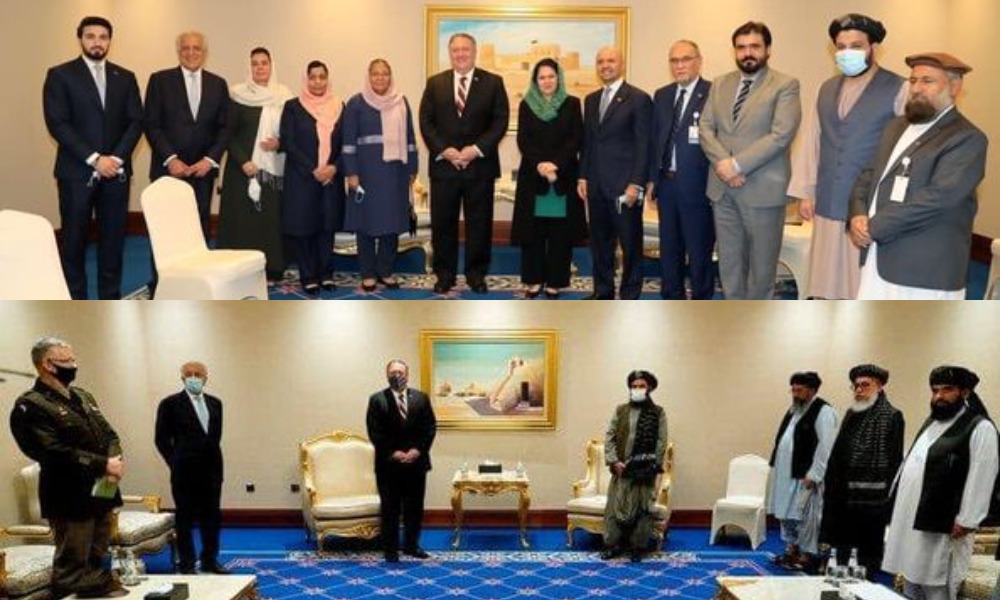
US Secretary of State Michael Pompeo met with both the Afghanistan Republic and the Taliban’s negotiating teams in Doha, Qatar on Saturday to discuss issues around the peace process and a ceasefire, his office confirmed overnight in a statement.
According to the US State Department’s Principal Deputy Spokesperson Cale Brown, Pompeo “commended both sides for continuing to negotiate and for the progress they have made.
“Secretary Pompeo and the negotiators discussed ways to reduce violence, and he encouraged expedited discussions on a political roadmap and a permanent and comprehensive ceasefire,” Brown said in a statement.
“Secretary Pompeo reiterated that the people of Afghanistan expect and deserve to live in peace and security after 40 years of war and bloodshed,” Brown added.
US Special Representative for Afghanistan Reconciliation Zalmay Khalilzad was also present at the meetings.
The Afghan negotiating team said tweeted late Saturday night that “during the meeting, Sayed Sadat Mansoor Naderi, Minister of State for Peace Affairs and a member of the negotiating team thanked the United States for its continued support to Afghanistan over the years.”
Naderi also called on the US to continue supporting Afghanistan even once a peace agreement has been signed.
“The members of the negotiating team said that the people of Afghanistan want to preserve the achievements of the last two decades in the country. They also said that the escalation of violence after the release of 5,000 Afghan prisoners was unacceptable and in conflict with the Doha Agreement,” the negotiating team tweeted.
The Afghan talks team told Pompeo that the Afghan people want a permanent ceasefire.
“During the meeting, the members of the negotiating team said that the ongoing war in Afghanistan is against Islam and its continuation is unacceptable to the international community,” the Afghan talks team tweeted.
“During the meeting, Mike Pompeo, referring to US support for the peace process, said that lasting peace is a common goal of both countries. The country’s support for lasting peace in Afghanistan will continue, as well as long-term commitments to the Afghan people,” the team stated.
The Taliban’s spokesman in Doha, Naeem Mohammed also issued a series of tweets late Saturday night, after the meetings.
He said: “The political deputy and head of the political office Mullah Abdul Ghani Baradar and the head of negotiating team Sheikh Mawlawi Abdulhakeem and the delegation accompanying them met with Secretary of State Mike Pompeo and his team.
“During the meeting, the importance of the agreement signed between the two sides and commitment to it were discussed.
“Likewise, the removal [of Taliban] from Blacklist, the liberation of remaining prisoners and the topics related to Intra-Afghan negotiations were talked about,” Naeem tweeted.
Pompeo met with talks team negotiators after recent indications point towards some headway having been made in talks, which started in September but soon hit a deadlock.





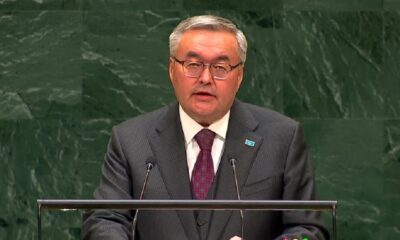




Kazakhstan’s Foreign Minister Mukhtar Tileuberdi has called for pragmatic and coordinated international engagement with Afghanistan, saying the country’s long-term stability is closely linked to the security and sustainable development of Central Asia.
Speaking during the general debate of the 81st session of the United Nations General Assembly in New York on Friday, Tileuberdi said humanitarian assistance to Afghanistan remains essential but alone cannot break the cycle of poverty, displacement and dependency.
He said Kazakhstan supports a “pragmatic, coordinated and step-by-step” approach to international engagement with Afghanistan, with the United Nations playing a central role.
Tileuberdi also said Kazakhstan is working with the UN to operationalize the United Nations Regional Centre for the Sustainable Development Goals for Central Asia and Afghanistan in Almaty.
He said the success of the centre should be measured by the results and assistance it delivers to the region.


Blast in Pakistan’s Dera Ismail Khan kills 11, injures 30

Ariana Afghan Airlines increases Kabul-Delhi cargo flights

Khalilzad questions Pakistan’s commitment to Afghan welfare

India, UN envoy discuss Afghanistan’s humanitarian needs

Kazakhstan calls for coordinated international engagement with Afghanistan

Saudi energy group signs major Afghanistan deals covering gas exploration and pipeline plans

Trump floats idea of renaming Atlantic or Pacific Ocean

US hits Egyptian bank branches with Iran sanctions as war marks six months

Nepal flood rescue mission enters critical phase as thousands remain missing

Iranian clubs to face Gulf opponents at neutral venues in Asian Champions League Elite

Exclusive interview with Abdul Latif Mansoor, Minister of MRRD

Tawsia: Overview of Afghanistan’s iron mines

Tahawol: Discussion on fresh Pakistani airstrikes on Afghanistan

Saar: Calls for international support for Afghanistan discussed

Tahawol: Opening of the 81st UN General Assembly Session
-

 World4 days ago
CNN, MS NOW and Politico sue Trump, challenging White House ban
-

 Latest News3 days ago
Ariana Afghan Airlines ranks seventh among 45 Central Asian airlines
-

 Latest News4 days ago
UN reiterates call for respect for international law after Kunar airstrikes
-
 Latest News5 days ago
Khalilzad condemns Pakistan airstrikes, says current strategy is not working
-

 Regional3 days ago
US and Iran hold first talks since June after Trump’s ‘annihilation’ threat
-

 Latest News3 days ago
Silk Road highway in Wakhan corridor now reaches the China border
-

 Latest News4 days ago
Afghan Official: Pakistan’s airstrikes will not go unanswered
-

 Sport4 days ago
Afghan boxing referee heads to China for international festival