
World
SpaceX IPO propels Elon Musk to become world’s first trillionaire


SpaceX’s record-breaking initial public offering (IPO) has propelled Elon Musk to become the world’s first trillionaire, marking a historic milestone in global wealth rankings.
The company raised a record $75 billion in its IPO on Thursday, underscoring strong investor confidence in Musk’s business empire. Prior to the share sale, Forbes estimated Musk’s net worth at around $780 billion, already placing him far ahead of other billionaires.
According to Reuters calculations based on company filings, Musk’s stake in SpaceX is now valued at roughly $866 billion, pushing his total net worth above $1.1 trillion as trading begins on Friday.
Analysts say the unprecedented surge places Musk well ahead of other wealthy figures, with the second-richest individuals remaining far below the trillion-dollar mark. Forbes Wealth Deputy Editor Matt Durot noted that no other billionaire has come close to Musk’s projected valuation.
Musk, who built his fortune through Tesla, Inc. and SpaceX, expanded his influence further after acquiring social media platform X Corp. in 2022 for $44 billion.
Despite criticism over his growing political involvement and corporate governance controversies, investors continue to back Musk’s ventures, cementing his position as one of the world’s most influential business figures.
The 54-year-old entrepreneur, born in Pretoria, has transformed industries ranging from electric vehicles to space technology, with Tesla’s success accelerating the global shift toward electric transportation.







Myanmar’s military has sharply escalated attacks on civilians since a new administration took office in the war-torn country, a conflict monitor said on Monday, even as regional governments ramp up diplomatic engagement.
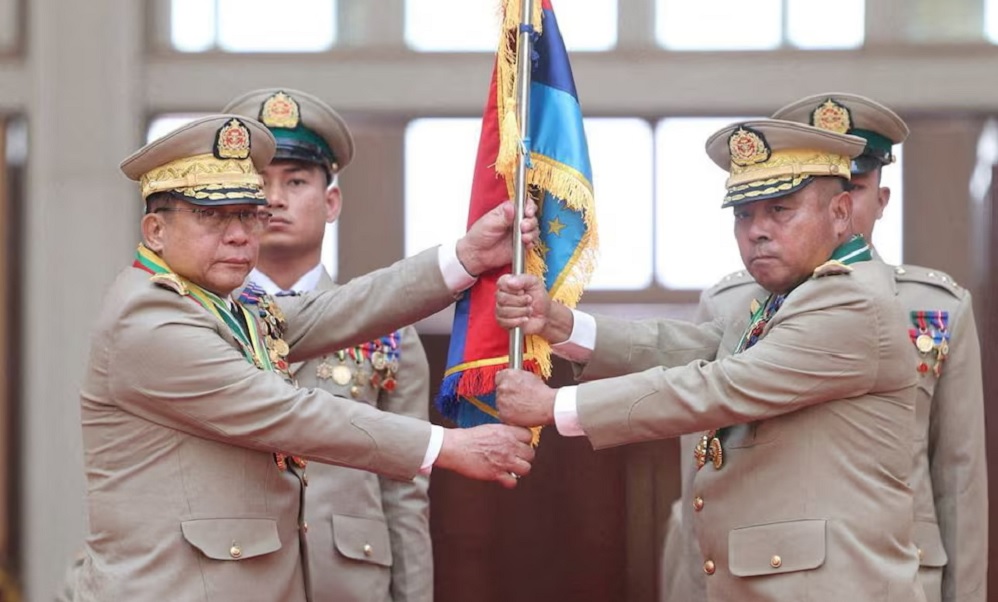
The Armed Conflict Location & Event Data Project (ACLED) said the onslaught was a result of the tactics deployed by Myanmar’s new military chief who took over in late March as his predecessor prepared to become the country’s president, Reuters reported.
“Since the ruling junta in Myanmar reconfigured its military command structure in March, civilians have been subject to the military’s worsening repression and intensified aerial bombing campaign,” ACLED said.
“These adjustments included the regular deployment of specialised groups of two to five jet fighters executing sustained airstrikes against single targets.”
A Myanmar government spokesperson did not immediately respond to questions from Reuters.
ACLED gathers data on Myanmar’s ongoing conflict from media reports and local partners, as well as reports by the UN, international monitoring groups and local human rights organisations.
Myanmar was plunged into turmoil after the military ousted Aung San Suu Kyi’s elected government in February 2021, sparking a civil war that has killed some 100,000 people and displaced millions.
Days before becoming president after an election that banned most opposition, Min Aung Hlaing appointed long-time loyalist and former spymaster Ye Win Oo as the military’s new commander-in-chief.
Under his command, the military has launched renewed offensives into several border regions, including a frontier area with critical rare earth deposits and other vital trade routes.
“Reprieve for civilians is unlikely as the junta focuses its efforts on consolidating control following coup leader Min Aung Hlaing’s transition from commander of the military to civilian president in April,” ACLED said.
MASS KILLINGS
During the first half of 2026, ACLED said it recorded more than a dozen mass killings, resulting in over 450 civilian fatalities, around 40% of them in Myanmar’s central dry zone known as the Anyar region.
In May, hundreds of junta troops swept through parts of Myit Chay township, across the river from the ancient temples of Bagan, killing at least 40 people, three residents of the area told Reuters.
“About 700 soldiers came into the town, grabbed the belongings of the people here and then beat them and killed them,” said Ye Naung, 35.
Reuters could not independently verify accounts of the incident at Myit Chay, which is part of ACLED’s event database with at least five fatalities and was reported by local media.
“The military’s tactics in 2026 so far show merely shifting modalities of civilian repression rather than any reduction in its severity,” ACLED said.
The political transition in Myanmar has triggered a flurry of diplomacy, with Min Aung Hlaing travelling to key neighbours India and China.
There has also been tentative re-engagement with the 11-member Association of Southeast Asian Nations bloc, which barred Myanmar’s ruling generals from its summits after the coup.
Min Aung Hlaing will make an official visit to Thailand on August 6 to 7, as he pushes for further legitimacy.
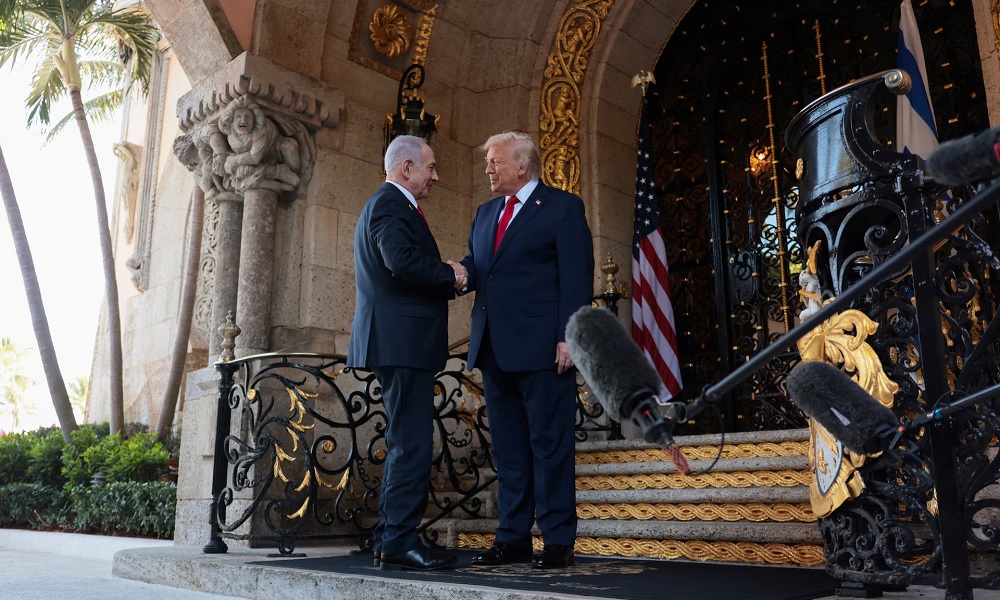
President Donald Trump said on Friday that Israeli Prime Minister Benjamin Netanyahu will visit the U.S. next week.
Trump’s comments came in his speech at the White House Correspondents’ Association Dinner on Friday, while he was falsely casting U.S. Senator Chuck Schumer as Palestinian, Reuters reported.
“I am going to send him (Schumer) a beautiful Palestinian outfit tomorrow, so he can greet Bibi Netanyahu when he comes to town next week,” Trump said.
“He turned Palestinian,” Trump said of Schumer, who is Jewish, while also joking that sharia law was Schumer’s “new founding.”
U.S. Muslim and Jewish advocacy groups have previously criticized Trump for calling Schumer, the top Senate Democrat, a Palestinian, with the rights groups saying Trump uses the term disrepectfully as a slur and as an insult.
Netanyahu’s office said earlier that he will travel to Washington on Monday and will meet with Trump on Tuesday. Netanyahu will also attend deceased U.S. Senator Lindsey Graham’s funeral, his office said.
The Trump-Netanyahu meeting will come as the U.S.-Israeli war on Iran completes five months.
World
Trump vows to punish Iran for Houthi attacks in Red Sea; oil surges over $100
After the Houthis said they had struck the two tankers on Thursday, Trump said he would hold Iran accountable for any further attacks by the fighters.
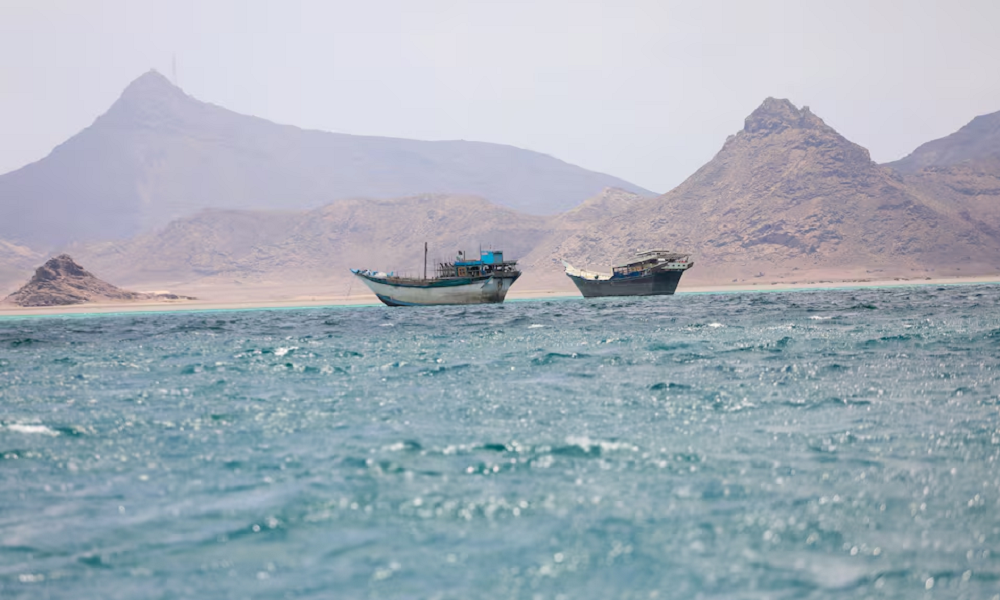
U.S. President Donald Trump promised “major military punishment” for Iran and its Houthi allies on Thursday after the Yemeni fighters struck two Saudi oil tankers in the Red Sea, extending the Middle East war to a second major shipping chokepoint.
Fears that disruption could widen further to block another sea route sent global oil prices surging in one of the steepest rises of the war. Brent crude rose more than 6%, breaking through $100 a barrel for the first time since May, Reuters reported.
Two weeks since the effective collapse of an interim truce meant to end the war, the U.S. military launched air strikes on Iran overnight into Thursday, prompting Iran to fire at neighbouring Arab countries that host U.S. bases. The U.S. military fired another round of missiles at Iran late Thursday and early Friday in the 13th consecutive night of attacks.
Iranian state media said on both nights that missiles struck Qeshm Island on the Strait of Hormuz, the virtually closed waterway that has become the focal point in a war well into its fifth month that has already killed thousands and raised fears of a global economic downturn.
TRUMP: IRAN HASN’T ‘RECEIVED ENOUGH PAIN YET’
After the Houthis said they had struck the two tankers on Thursday, Trump said he would hold Iran accountable for any further attacks by the fighters.
The Houthis, who control northern and western Yemen, said this week they were imposing a naval blockade on Saudi Arabia, which has diverted millions of barrels of oil per day by pipeline to the Red Sea to get around Iran’s blockade of Gulf oil through the Strait of Hormuz.
“If they do this again, the U.S. will hold Iran responsible, in that the Houthis are a Surrogate and/or Proxy of Iran, and major military punishment will be inflicted upon Iran and, of course, the Houthis, themselves,” Trump wrote on social media.
He told news outlet Axios he was considering relaunching major combat operations in Iran and was close to a decision. “They haven’t received enough pain yet,” Axios quoted Trump as saying.
On Thursday evening, Trump said on social media that “any and all damages done” to cargo ships would be paid for with “Iranian Money,” referring to frozen Iranian assets held by the U.S., but he did not say how this would work.
Sources in Iran and Yemen told Reuters that Iran had flown Revolutionary Guard commanders, military advisers and missile- and drone-related equipment into Yemen days before the Houthis announced their blockade. The Houthis dismissed the report.
The Houthis said their forces had carried out missile and drone strikes on Saudi oil tankers, the Encelia and the Layla.
A maritime security source said the Encelia had transmitted a distress call reporting it had been struck by a missile near the Saudi port of Jizan in the Red Sea just north of Yemen late on Wednesday. Saudi state news agency SPA said the strike had caused a fire at the bow.
Reuters could not immediately confirm the attack on the Layla, or other battlefield accounts, but Trump mentioned two attacks on Saudi tankers.
The insurance cost of shipping goods through the southern Red Sea doubled for some companies on Thursday, after the reported attacks, sources said.
Houthi attacks could close the strait known as the Bab el-Mandeb or “Gate of Tears” which controls access from the Red Sea to the Indian Ocean, the second most important route for energy shipments after the Strait of Hormuz at the mouth of the Gulf.
In the days since they announced their blockade in the Red Sea, several tankers have changed course to avoid the Bab el-Mandeb, heading north instead through the Suez Canal, potentially using a much longer and more expensive route to reach Asian customers by sailing around Africa.
IRAN REPORTS STRIKES ON JORDAN, KUWAIT
Iran said it attacked U.S. missile systems, weapons and fuel storage sites in Jordan, as well as U.S. military posts in Kuwait.
Jordan’s army said it engaged four Iranian missiles and six drones in the past day, intercepting all but one missile, which fell in an uninhabited area.
Iran’s Revolutionary Guards said it struck a U.S. electronic warfare unit at Al-Adiri base in Kuwait, causing unspecified casualties, in response to an overnight strike on Iran’s Shalamcheh border crossing with Iraq.
Neither the U.S. nor Kuwait has reported casualties at the base.
Iranian military spokesperson Brigadier General Mohammad Akraminia said Iran would keep retaliating as long as the U.S. continued to attack its infrastructure and coastal areas, Iranian state TV reported.
Since the U.S. and Israel began the war in February, Iran has demonstrated that it can hit U.S. targets in the region, despite Trump having said early on that the U.S. had wiped out Iranian military capabilities.
Four people familiar with U.S. intelligence said Iranian strikes on CIA targets in the Gulf earlier in the war had prompted U.S. intelligence to investigate whether Russia was assisting Iran with targeting information or drone technology.
CONGRESS
High oil prices are stoking inflation globally, and have put Trump’s Republican allies under pressure ahead of congressional elections in November.
The Republican-led U.S. House of Representatives backed legislation on Thursday directing Trump to halt U.S. military action against Iran, the latest rebuke of the Republican president from Congress, which the U.S. Constitution grants the exclusive power to “declare War.”
Lawmakers have passed similar resolutions repeatedly in recent months, but they have not led to cessation of the war. The Senate voted hours later to block a separate, similar measure.


Tahawol: Afghanistan–Uzbekistan Economic Cooperation Enters New Phase

Islamic Emirate launches media initiative, says Badakhshan security situation under control

Saar: Growing Criticism in Pakistan Over Islamabad’s Afghanistan Policy

FIFA Fan Festival attracts more than nine million visitors during World Cup 2026

Youth teams take centre stage in Afghanistan Under-17 Champions League

India offers 1,000 online scholarships for Afghan students for 2026-27 academic year

Afghanistan eyes direct Basmati rice imports from India amid tensions with Pakistan

Cricket world pays tribute to Afghanistan fast bowler Shapoor Zadran

Turkey spent over $120 million to prepare airport for Qatar-donated U.S. presidential aircraft

Afghanistan, Uzbekistan set for friendly cricket clash in Khost
Tahawol: Afghanistan–Uzbekistan Economic Cooperation Enters New Phase
Saar: Growing Criticism in Pakistan Over Islamabad’s Afghanistan Policy

Tahawol: Trump halting major Iran escalation

Saar: Afghanistan-Uzbekistan economic ties

Tahawol: New developments ahead in the Middle East discussed
-
 Business5 days ago
Pakistan’s trade deficit with neighbours surges to nearly $16 billion as exports to Afghanistan plunge
-
 Latest News3 days ago
Five armed men killed while attempting to cross Durand Line into Badakhshan
-
 Latest News3 days ago
U.S. government plan to interview Afghan refugees raises deportation concerns
-

 World5 days ago
Trump: US will attack Iranian bridge, power plant for every ship targeted in Hormuz
-
 Latest News1 day ago
Badakhshan Governor, Army Chief reaffirm commitment to Afghanistan’s security
-
 Regional5 days ago
US says it reaches nuclear power deal with Saudi Arabia
-

 Latest News4 days ago
Afghanistan seeks stronger ties with Bangladesh, presents investment opportunities
-
 Latest News3 days ago
Iran reiterates call for inclusive government in Afghanistan