
Latest News
UN rights session hears Afghan conflict still one of the world’s deadliest

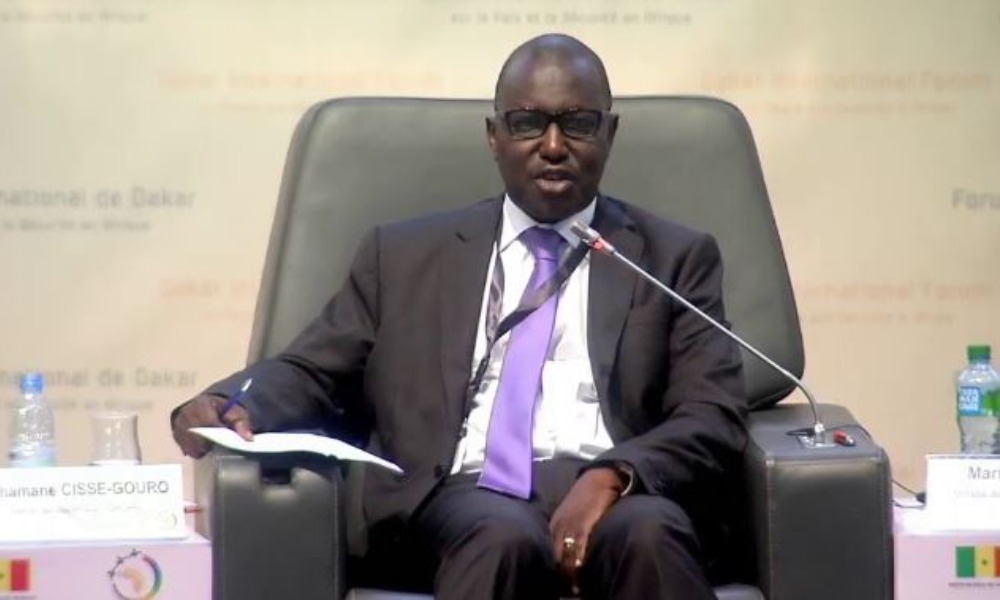
Mahamane Cissé-Gouro, Officer-in-Charge of the Field Operations and Technical Cooperation Division of the Office of the High Commissioner for Human Rights said on Monday that while Afghanistan should have moved closer towards peace, civilians continued to suffer and lose their lives due to increased violence.
Delivering the high commissioner’s report to the UN Human Rights Commission’s 46th session on Monday, Cissé-Gouro noted the conflict in Afghanistan remained among the deadliest in the world.
He stated the best way to protect civilians was to stop fighting.
According to the report the deliberate killing of human rights defenders and journalists had been particularly shocking in the last few months and since the start of the Afghanistan peace negotiations.
Civil society and media had an important role to play, the Afghan people needed their voices and opinions, and the government needed to provide them with space to operate, while anti-government forces must stop targeting them, the report stated.
Speakers expressed concern that since the start of the Afghan peace negotiations, civilians continued to bear the brunt of the armed conflict, with almost half of the casualties being women and children.
Cissé-Gouro also stated Afghanistan was at a critical point which was particularly crucial for Afghan women. He said their meaningful participation in the peace process must be ensured.
In addition, it was noted that the Afghan Independent Human Rights Commission (AIHRC) played a crucial role despite their staff being directly targeted.
In turn, Afghanistan Independent Human Rights Commission (AIHRC) Chairperson Shaharzad Akbar’s said in a video message to the session that for the peace process to be seen as credible by all Afghans, there needs to be a ceasefire, a real possibility of public engagement, and protection of the civic space.
In her message Akbar said according to AIHRC figures, targeted killings were the second leading cause of civilian casualties in Afghanistan in 2020. This she said was a “threefold increase compared to 2019.”
These attacks targeted human rights defenders, journalists, media workers and activists, prosecutors and judges, including female journalists, judges and activists.
“Prominent activists are either being killed or forced to leave the country. Most attacks remain unclaimed and investigations are slow.
“While those who can, are leaving the country, many across Afghanistan felt silenced by fear and are constrained in their activism. This unimaginable attack on Afghanistan’s civic space is ongoing and the world is not doing enough to stop it.
“Meanwhile the Afghan negotiations in Doha are paused,” she said.
“Afghans are desperate for peace but what will peace look like in absence of one of Afghanistan’s most important gains, its vibrant civil society and human rights community? If this deadly trend continues, it will be even harder to protect human rights gains of Afghanistan during and after the peace talks.
“We need the United Nations and the global human rights community to stand with Afghans and urge both parties to stop the violence, and continue engaging in talks.
“For the peace process to be seen as credible by all Afghans, we need a ceasefire, a real possibility of public engagement and protection of the civic space,” she said.
Cissé-Gouro stated in his report that the Afghanistan peace negotiations were an historic opportunity for parties to the conflict to consider the irreversible loss the war had had on the people. New thinking could save thousands of families from suffering.
The report meanwhile stated that Afghanistan, speaking as a country concerned, noted that the conflict in Afghanistan continued to take a heavy toll on the nation and undermined social and economic progress.
The COVID-19 pandemic had also further aggravated these challenges.












Kazakhstan’s Foreign Minister Mukhtar Tileuberdi has called for pragmatic and coordinated international engagement with Afghanistan, saying the country’s long-term stability is closely linked to the security and sustainable development of Central Asia.
Speaking during the general debate of the 81st session of the United Nations General Assembly in New York on Friday, Tileuberdi said humanitarian assistance to Afghanistan remains essential but alone cannot break the cycle of poverty, displacement and dependency.
He said Kazakhstan supports a “pragmatic, coordinated and step-by-step” approach to international engagement with Afghanistan, with the United Nations playing a central role.
Tileuberdi also said Kazakhstan is working with the UN to operationalize the United Nations Regional Centre for the Sustainable Development Goals for Central Asia and Afghanistan in Almaty.
He said the success of the centre should be measured by the results and assistance it delivers to the region.


Abu Muslim Farah defeat Khurasan Faryab 2-0 in ACL season six

Saar: Concerns over Pakistan’s political crisis discussed

Afghanistan Champions League: Omar Zawak Herat beat Toofan Herat 1-0

Blast in Pakistan’s Dera Ismail Khan kills 11, injures 30

Ariana Afghan Airlines increases Kabul-Delhi cargo flights

Saudi energy group signs major Afghanistan deals covering gas exploration and pipeline plans

Trump floats idea of renaming Atlantic or Pacific Ocean

US hits Egyptian bank branches with Iran sanctions as war marks six months

Nepal flood rescue mission enters critical phase as thousands remain missing

Iranian clubs to face Gulf opponents at neutral venues in Asian Champions League Elite
Saar: Concerns over Pakistan’s political crisis discussed

Exclusive interview with Abdul Latif Mansoor, Minister of MRRD

Tawsia: Overview of Afghanistan’s iron mines

Tahawol: Discussion on fresh Pakistani airstrikes on Afghanistan

Saar: Calls for international support for Afghanistan discussed
-

 World5 days ago
CNN, MS NOW and Politico sue Trump, challenging White House ban
-

 Latest News4 days ago
Ariana Afghan Airlines ranks seventh among 45 Central Asian airlines
-

 Latest News5 days ago
UN reiterates call for respect for international law after Kunar airstrikes
-

 Regional4 days ago
US and Iran hold first talks since June after Trump’s ‘annihilation’ threat
-

 Latest News4 days ago
Silk Road highway in Wakhan corridor now reaches the China border
-

 Regional3 days ago
Iran airlines cancel flights as US sanctions hit
-

 Latest News5 days ago
Afghan Official: Pakistan’s airstrikes will not go unanswered
-
 Regional5 days ago
G7 foreign ministers call on Iran to stop arming Houthis