
Latest News
US ‘Martyred’ Osama bin Laden: Imran Khan

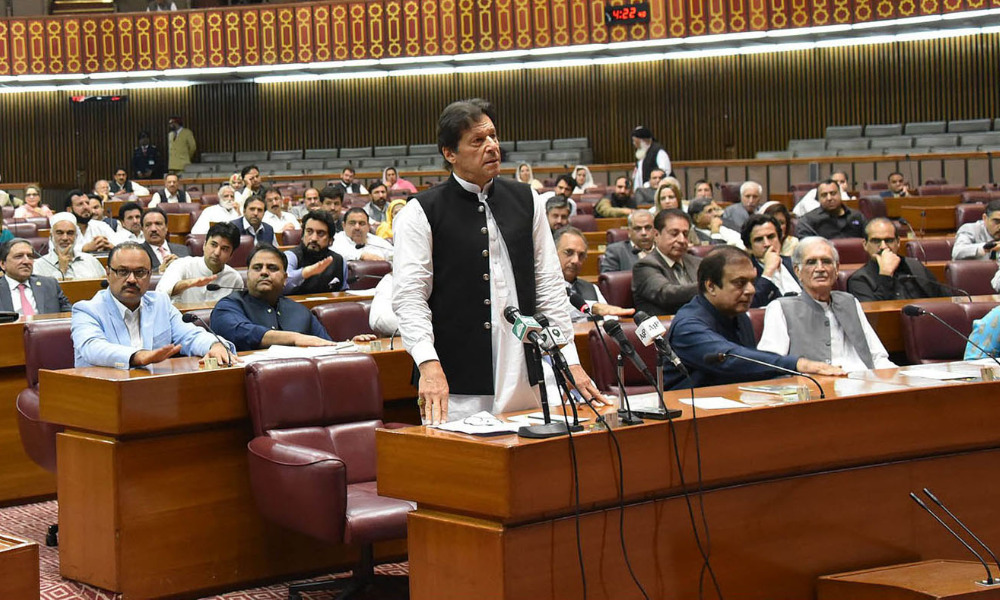
Pakistan’s Prime Minister Imran Khan said Thursday that the former Al-Qaida leader Osama bin Laden had been “martyred” by US forces in 2011, a term that reflected a subtle stab at the US as it’s mainly used for honorable figures slain in battle.
Khan used the word during a rambling budget speech in parliament, attacking his predecessors’ foreign policies and saying that Pakistan’s partnership with the United States in the war on terror was a mistake, Pakistani news agencies reported.
Khan also said that the US used abusive language against Pakistan, blaming Islamabad for its failures in neighboring Afghanistan and most of all — refused to tell Islamabad of its operation against bin Laden in 2011 before carrying out the Navy SEALs nighttime raid.
The special operations force swooped into Pakistan’s military garrison town of Abbottabad in the middle of the night on May 2, 2011, killing bin Laden and several of his operatives.
“We sided with the U.S. in the War on Terror but they came here and killed him, martyred him and … used abusive language against us (and) did not inform us (of the raid), despite the fact that we lost 70,000 people in war on terror,” Khan told Parliament.
“The way we supported America in the war on terror, and the insults we had to face in return… They blamed us for every failure in Afghanistan. They openly held us responsible because they did not succeed in Afghanistan,” he added.
It comes as the US has repeatedly accused Pakistan of harboring the “ regionally focused terrorist groups.”
“It (Pakistan) allowed groups targeting Afghanistan, including the Afghan Taliban and affiliated Haqqani Network, as well as groups targeting India, including Lashkar e-Tayyiba and its affiliated front organizations, and Jaish-e-Mohammed (JeM), to operate from its territory,” the US State Department said in a report.
Pakistan, Saudi Arabia, and the United Arab Emirates were the only countries to recognize the Taliban government, which had harbored bin Laden as he planned terrorist attacks against the U.S. After the 9/11 attacks, Pakistan turned and became an ally of the United States.









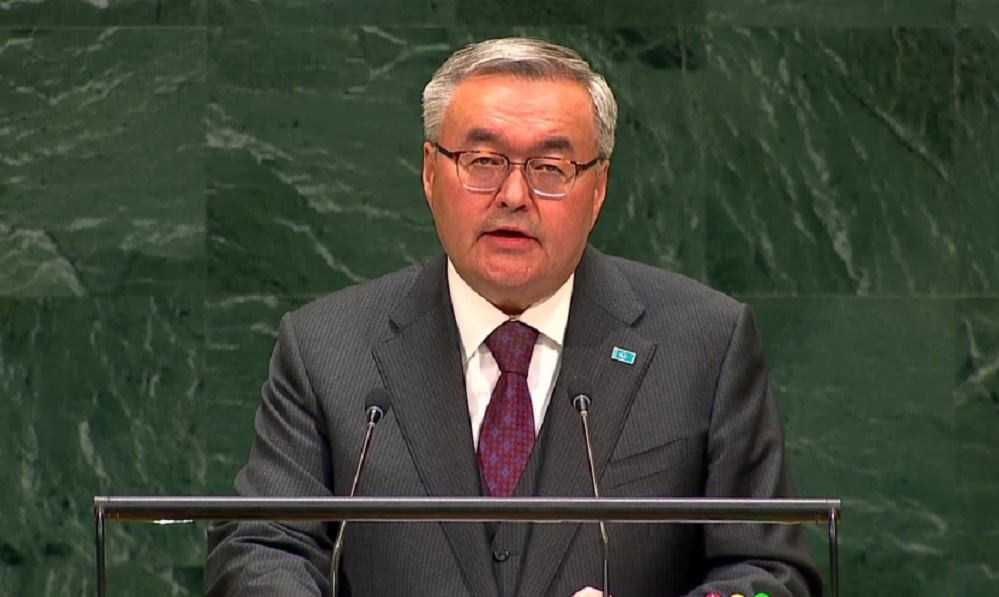
Kazakhstan’s Foreign Minister Mukhtar Tileuberdi has called for pragmatic and coordinated international engagement with Afghanistan, saying the country’s long-term stability is closely linked to the security and sustainable development of Central Asia.
Speaking during the general debate of the 81st session of the United Nations General Assembly in New York on Friday, Tileuberdi said humanitarian assistance to Afghanistan remains essential but alone cannot break the cycle of poverty, displacement and dependency.
He said Kazakhstan supports a “pragmatic, coordinated and step-by-step” approach to international engagement with Afghanistan, with the United Nations playing a central role.
Tileuberdi also said Kazakhstan is working with the UN to operationalize the United Nations Regional Centre for the Sustainable Development Goals for Central Asia and Afghanistan in Almaty.
He said the success of the centre should be measured by the results and assistance it delivers to the region.


Abu Muslim Farah defeat Khurasan Faryab 2-0 in ACL season six

Saar: Concerns over Pakistan’s political crisis discussed

Afghanistan Champions League: Omar Zawak Herat beat Toofan Herat 1-0

Blast in Pakistan’s Dera Ismail Khan kills 11, injures 30

Ariana Afghan Airlines increases Kabul-Delhi cargo flights

Saudi energy group signs major Afghanistan deals covering gas exploration and pipeline plans

Trump floats idea of renaming Atlantic or Pacific Ocean

US hits Egyptian bank branches with Iran sanctions as war marks six months

Nepal flood rescue mission enters critical phase as thousands remain missing

Iranian clubs to face Gulf opponents at neutral venues in Asian Champions League Elite
Saar: Concerns over Pakistan’s political crisis discussed

Exclusive interview with Abdul Latif Mansoor, Minister of MRRD

Tawsia: Overview of Afghanistan’s iron mines

Tahawol: Discussion on fresh Pakistani airstrikes on Afghanistan

Saar: Calls for international support for Afghanistan discussed
-

 World5 days ago
CNN, MS NOW and Politico sue Trump, challenging White House ban
-

 Latest News3 days ago
Ariana Afghan Airlines ranks seventh among 45 Central Asian airlines
-

 Latest News5 days ago
UN reiterates call for respect for international law after Kunar airstrikes
-

 Regional4 days ago
US and Iran hold first talks since June after Trump’s ‘annihilation’ threat
-

 Latest News4 days ago
Silk Road highway in Wakhan corridor now reaches the China border
-

 Regional3 days ago
Iran airlines cancel flights as US sanctions hit
-

 Latest News5 days ago
Afghan Official: Pakistan’s airstrikes will not go unanswered
-
 Regional5 days ago
G7 foreign ministers call on Iran to stop arming Houthis