
World
US Vice President Vance emerges as key figure in Iran peace efforts: Report

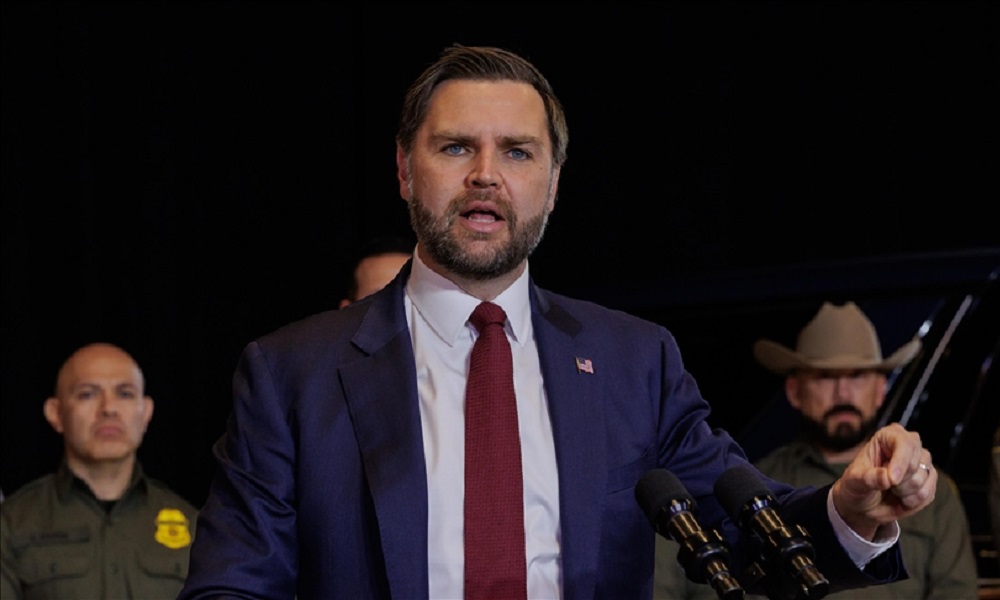
US Vice President JD Vance has taken a leading role in Washington’s efforts to broker peace with Iran, nearly a month into the ongoing conflict, according to US media reports on Friday.
An Axios report says Vance has been actively engaged in behind-the-scenes diplomacy, holding multiple discussions with Israeli Prime Minister Benjamin Netanyahu and coordinating with Gulf allies, while maintaining indirect communication channels with Iranian officials.
The White House reportedly views Vance as a central negotiator due to his senior position and his skepticism toward prolonged military engagements, making him a suitable envoy for sensitive negotiations.
Vance’s efforts include coordination with countries such as the United Arab Emirates and Qatar, focusing on de-escalation, potential peace talks, and regional security.
US President Donald Trump formally confirmed Vance’s role on Thursday, noting that he is working alongside Middle East Envoy Steve Witkoff and Jared Kushner on ongoing negotiations and will brief officials on developments regarding Iran.
White House officials told Axios that Vance’s seniority and opposition to extended foreign conflicts make him a more appealing interlocutor for Iran than other envoys, with Witkoff recommending him as the lead negotiator. “If the Iranians can’t strike a deal with Vance, they don’t get a deal. He’s the best they’re gonna get,” a senior administration official said.
While Vance assumes a larger diplomatic role, Witkoff and Kushner continue handling negotiations. Reports of a confrontation between Vance and Netanyahu were dismissed by US and Israeli sources as inaccurate.
According to the report, Vance initially expressed skepticism about the war’s duration, objectives, and resource impact but supported a strategy of overwhelming force once Trump decided to proceed. Vance remains aligned with Israel while carefully navigating differences between US and Israeli objectives, advisers said.
“He has his own views, but he is going to work according to Trump’s instructions and try to achieve an outcome that the president likes,” a source close to Vance added.




World
One dead in new attack on Saudi airport, a day after Houthi strike kills 13
US aviation authorities issued a notice to US airlines to use caution while flying to or over the kingdom, Reuters reported.

One person was killed and nearly a dozen hurt in a new attack Riyadh’s international airport on Sunday, Saudi authorities reported, a day after a strike claimed by Yemen’s Iran-aligned Houthis that killed 13 people and wounded more than 300, Reuters reported.
Saudi-led coalition forces in Yemen said an unidentified projectile had targeted Riyadh’s international airport Terminal 4 on Sunday, causing a fire. Eleven people were wounded in addition to the fatality, the Saudi civil aviation authority said.
Coalition forces also said Saudi air defences had intercepted a cruise missile in the vicinity of King Khalid International Airport. They later added that a drone had been intercepted and destroyed in the country’s Eastern Province, and a ballistic missile launched towards Khamis Mushait had been intercepted. Emergency alerts were also issued in Abha, in the south, early on Monday but the danger had since passed, the Saudi Civil Defense said.
The strikes have exposed vulnerabilities in Saudi defence capabilities as the kingdom wages an air campaign against the Houthis, who are fighting a ground war in Yemen against the Saudi-backed Yemeni government.
Footage released by Saudi state television of the Saturday attack on the Riyadh airport showed scores of religious pilgrims lined up at a gate as they prepared to travel to Islam’s two holiest sites. A bright orange flash sent people running in panic, while parts of the roof appeared to cave in, read the report.
The airport was closed after the attack, the deadliest in the kingdom in more than a decade.
In a televised speech on Sunday, Houthi military spokesperson Yahya Saree claimed responsibility for Saturday’s attack and said the group had also struck the airport in Dammam in Saudi Arabia’s Eastern Province and two facilities of Saudi oil giant Saudi Aramco.
The Saudi government’s media office and Aramco did not respond to requests for comment.
The Saudi civil aviation authority confirmed the strike on Dammam’s King Fahd International Airport late on Sunday, adding that “damage assessments and safety inspections of airport facilities are under way.”
An eyewitness aboard a taxiing aircraft at Dammam told Reuters that around 8:30 p.m. (1730 GMT) on Sunday, they saw a projectile strike the tarmac beside several parked aircraft, causing a fire. The witness said the aircraft returned to the gate. Passengers disembarked and were told to leave.
Flight-tracking website Flightradar24 showed several delays and cancellations on Sunday for arrivals and departures at Dammam airport, the kingdom’s third-largest.
The Houthis earlier on Sunday had renewed their warning against using Saudi airports. “We urge everyone to take our warnings seriously, and Saudi Arabia bears responsibility for any failed interceptions,” the group said.
Britain’s embassy in Saudi Arabia in a post on X advised British citizens against all but essential travel to Jeddah, Dammam and all airports in the kingdom except the airport in Medina.
US aviation authorities issued a notice to US airlines to use caution while flying to or over the kingdom, Reuters reported.
Saudi Arabia has recently stepped up its military involvement in Yemen, launching strikes against the Houthis and backing a government counteroffensive after the Houthis seized strategic territory along the Red Sea coast last month.
The Houthis said on Sunday that Saudi Arabia carried out 124 air strikes in Yemen in the past 24 hours. “Unless the Saudi enemy stops its aggression and interference in Yemen, worse is yet to come, God willing,” Yemen’s Houthi-run foreign ministry said in statements carried by Al Masirah television.
US President Donald Trump said on Saturday the United States was considering joining Saudi strikes on the Houthis in the conflict, a spillover from the wider war with Iran that the US and Israel launched in February.
In a post on Telegram, Iran’s foreign minister Abbas Araqchi said he told his Saudi counterpart that Tehran was ready to help facilitate dialogue between Saudi Arabia and Yemen.
A five-day conference of international energy organization WPC Energy opened as planned on Sunday at a convention centre about 10 km (6 miles) from the Riyadh airport, the Saudi energy ministry said.
A ministerial meeting of the International Energy Forum also went ahead, according to a media advisory from the ministry. It was not clear which ministers attended.
Italy’s energy minister, Gilberto Pichetto Fratin, whose country was co-hosting, had said on Friday he would participate remotely via video link.
German officials were trying to organise a return flight for economy minister Katherina Reiche, read the report.
She was supposed to return to Berlin from Riyadh on Monday but the ministry said it appeared likely her flight would be unable to take off.
Separately, Saudi authorities announced that in-person classes at schools in Riyadh would be shifted to remote learning from Sunday until Thursday.
Sunday’s attack brought the death toll in attacks on Riyadh’s airport to 18 for the week. In Saturday’s attack, the dead included four Saudis while the remainder were foreign nationals, Saudi authorities said.
World
14 killed in two separate mass shootings across the United States
Pennsylvania Governor Josh Shapiro expressed his support for the affected community, describing the incident as a tragic loss of life.
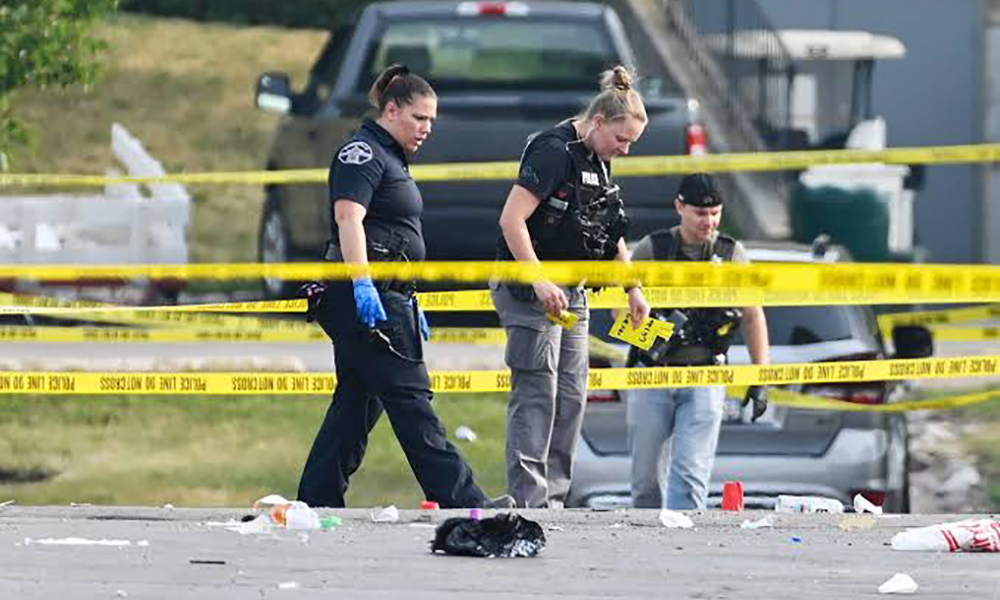
At least 14 people have been killed in two separate mass shootings in the United States within hours of each other, according to local authorities.
Five people were shot dead at a home in Douglas, Georgia, on Friday evening, police said.
In a separate incident in Erie, Pennsylvania, nine people were killed, including two children and a pregnant woman. Authorities confirmed that the suspected assailant was also among the dead.
Erie Police Chief Rick Lorah described the scene as one of the most devastating incidents of his career, saying the motive for the shooting had not yet been established.
Pennsylvania Governor Josh Shapiro expressed his support for the affected community, describing the incident as a tragic loss of life.
Authorities are continuing to investigate the circumstances surrounding both shootings.
World
Zelenskiy says letting Russia sell diesel to US is ‘investment in war’
“Gifts to Putin will not bring peace or any benefit to the civilised world,” Zelenskiy wrote on the X social media platform.
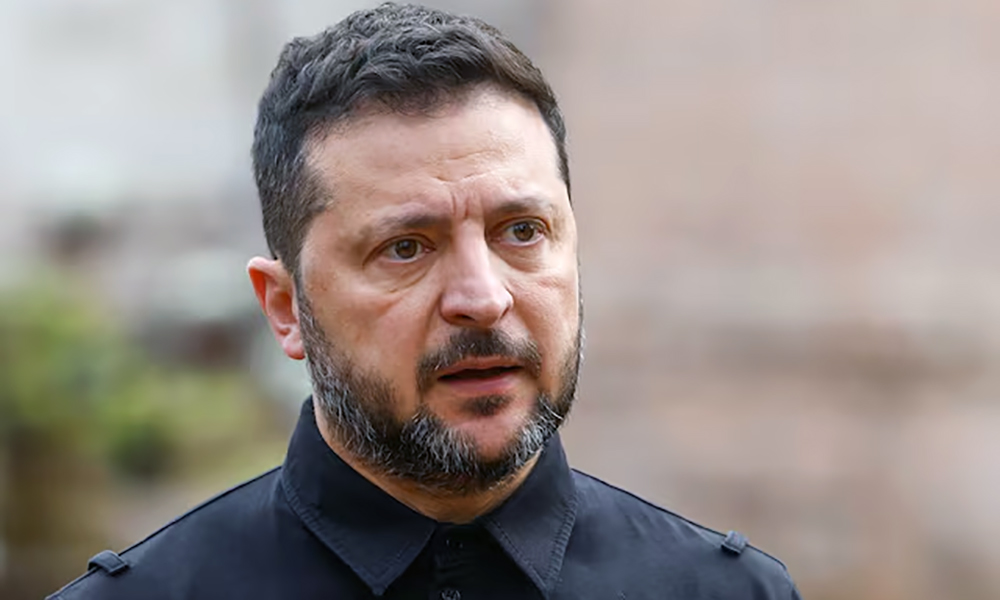
Ukrainian President Volodymyr Zelenskiy criticised an accord on Friday between the US and Russia allowing Moscow to provide the US with diesel, calling it “an investment in a war that must be ended.”
He dismissed the accord, which was announced while a Ukrainian delegation was in the US to discuss how to seek a resolution of the war with Russia, as “a weak decision on the part of strong partners”.
“Gifts to Putin will not bring peace or any benefit to the civilised world,” Zelenskiy wrote on the X social media platform.
“Russia will ‘repay’ the diesel with further terror and perfidy. Allowing Russia to sell petroleum products is an investment in a war that must be ended, not prolonged. What is needed is real de-escalation with Russia on a reciprocal basis,” Zelenskiy said.
Trump said in a post on social media that he had agreed in a call with Russian President Vladimir Putin that Russia would immediately supply diesel to the US and global marketplace. Trump said lower prices for Americans “is my Greatest Priority”.
Zelenskiy, speaking to reporters later on WhatsApp, said the accord would provide Moscow with additional funds to wage war and undermine any attempts to work towards a settlement.
“I believe our team is simply being used as a front. And that is certainly not fair, nor is it how partners should treat each other,” he said. “In my view, it is a weak decision on the part of strong partners.”


Tahawol: Warnings over worsening insecurity in Pakistan discussed

Saar: Concerns over potential return of US military bases to Afghanistan discussed

Afghanistan hold Bangladesh to dramatic draw in Abu Dhabi Test

Muttaqi and Qatar’s envoy discuss Afghanistan’s ties with international community

Afghanistan and Iran stress expanding industrial and mining cooperation

Cricket Bonanza: Afghanistan set for packed international schedule

New warnings reignite debate over AI threat to humanity

UN warns of mounting humanitarian and human rights pressures in Afghanistan

Afghanistan says 28 killed, 32 captured in Nuristan operation

CNN, MS NOW and Politico sue Trump, challenging White House ban
Tahawol: Warnings over worsening insecurity in Pakistan discussed
Saar: Concerns over potential return of US military bases to Afghanistan discussed

Tahawol: Kabul’s criticism of Islamabad’s policy toward Afghanistan

Saar: Pakistan deploying army in KP

Tahawol: EU appointing new envoy for Afghanistan
-

 Regional5 days ago
Trump says US will not attack Iran before midterm elections in November
-
 Latest News4 days ago
Pakistan issues new directives for Afghan medical students and doctors
-
 World5 days ago
Witkoff, Kushner to meet Ukrainians for talks on the war, says US source
-
 Latest News4 days ago
Iranian lawmaker praises Afghanistan’s support, accuses Pakistan of ‘hypocrisy’
-
 Latest News5 days ago
US senator cites Afghanistan visits in Pentagon ‘cover-up’ allegations over Iran war
-
 World4 days ago
US imposes sanctions on ICC amid dispute over international prosecutions
-

 Sport4 days ago
Bangladesh reach 317/8 on Day One against Afghanistan in Test match
-
 Business5 days ago
Iran allocates over 110 hectares in Chabahar for Afghan economic activities