
Latest News
Herat wins Women’s Football Premier League

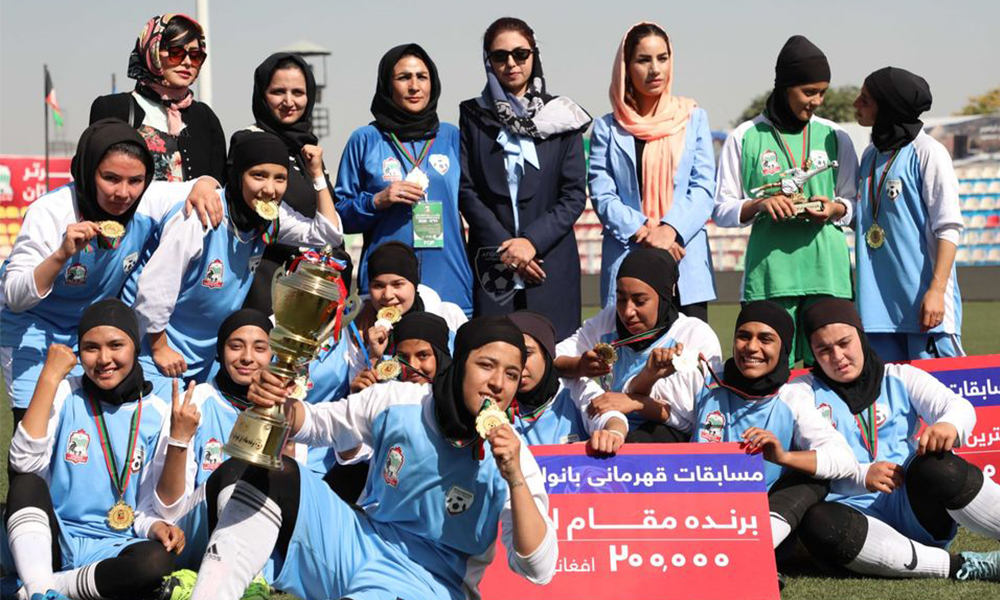
The Herat Team has won the title for Women’s Football Premier League in Kabul on Friday.
Herat Team defeated Kabul 3-2 in the final of the match of season four of the League.
Fatima Haidari, Herat’s player, scored the first goal for her team in the first half and Manizha Noori scored the first goal of the Kabul team from a free kick in the second half.
The match went to extra time but ended with a 1-1 draw.
Herat beat Kabul in a penalties shootout to win the match
Razia Rezai was selected as the best player in the final match.
Manizha Noori from Kabul was selected as the best player of the Women’s Football Premier League season four.
Fatima Haidari from Herat was selected as the best goal scorer of the League.
Elaha Safdari from Herat was selected as the best goalkeeper of the League.
The Bamyan Team won the Ethics Cup of the fourth season of the Women’s Premier League.
Six provinces, including Kabul, Herat, Balkh, Ghor, Jawzjan, and Bamiyan, had participated in the League.






Latest News
Afghan powerlifting team wins six medals at World Cup series in Belarus
A total of six Afghan athletes and one coach represented the country in the tournament, which featured competitors from ten nations.

The General Directorate of Physical Education and Sport of Afghanistan says Afghan powerlifting athletes secured six medals at the “Powerlifting World Cup Series 2026” held in Belarus.
According to the directorate, Afghan athletes won four gold medals, one silver medal, and one bronze medal during the international competition.
Fawad Sherin Sokhan, Jabar Sherin Sokhan, Noor Ahmad Sakhi Zada, and Mirwais Rafi Zada each claimed gold medals, while Rohullah Khairandesh won silver and Hamidullah Hakimi earned bronze for Afghanistan.
A total of six Afghan athletes and one coach represented the country in the tournament, which featured competitors from ten nations.
The competition began on May 6 and concluded on May 10 in Belarus, showcasing strong performances from Afghan athletes on the international stage.
Latest News
Afghanistan seeks closer trade cooperation with Uzbekistan
Uzbek officials also unveiled plans to open trade chambers in Russia, Kazakhstan, and Kyrgyzstan to help boost exports and improve market access for regional products.
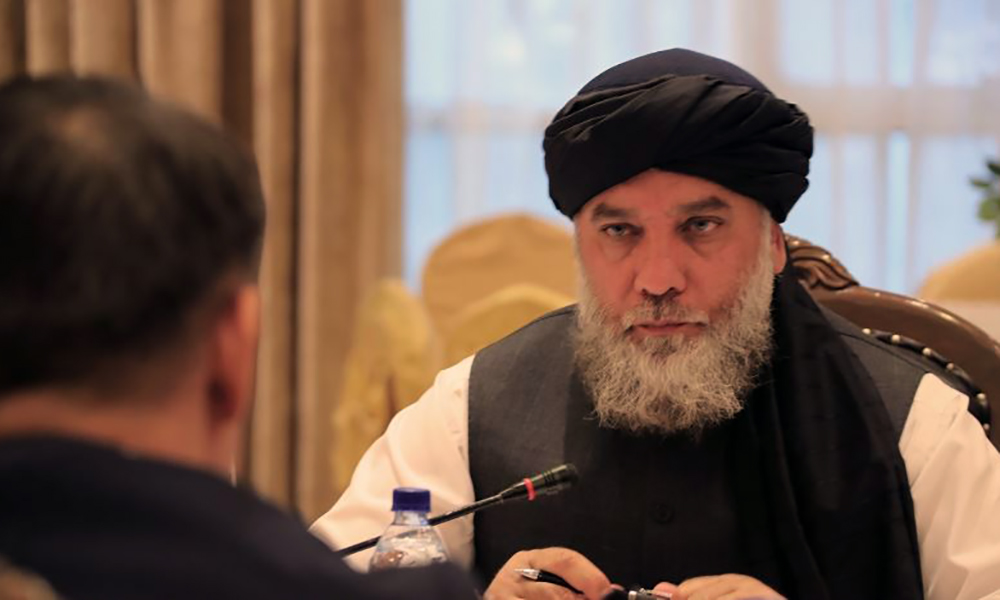
Afghanistan has called on Uzbekistan to establish a coordination and liaison office at the Termez border market to strengthen direct business ties between the private sectors of the two countries.
The proposal was discussed during a meeting in Mazar-i-Sharif between Nooruddin Azizi, Afghanistan’s Minister of Industry and Commerce, and Amanbai Orynbaev, Chairman of the Supreme Council of Uzbekistan’s Karakalpakstan region.
During the talks, both sides explored opportunities to expand cooperation in the export of Afghan cotton, coal, fresh and dried fruits, as well as joint projects in food production, construction materials, tourism, pharmaceutical manufacturing, mineral processing, and investment in key economic sectors.
Uzbek officials also unveiled plans to open trade chambers in Russia, Kazakhstan, and Kyrgyzstan to help boost exports and improve market access for regional products.
As part of the visit, the Uzbek delegation inaugurated an expo of national products in Mazar-i-Sharif aimed at promoting trade and economic cooperation between the two neighbouring countries.
The Embassy of Japan in Afghanistan has announced scholarship opportunities for Afghan students under the Japanese Government (MEXT) Scholarship Program for the 2027 academic year.
According to the embassy, the Ministry of Education, Culture, Sports, Science and Technology (MEXT) of Japan is offering scholarships for graduate-level study at Japanese universities under the research student category, including both regular and non-regular students.
Interested and eligible applicants can download the application guidelines and forms from the official Study in Japan website and are advised to carefully review all requirements before applying.
Applicants who meet the eligibility criteria and have prepared all required documents must submit their applications by 25 May 2026. The embassy said late or incomplete submissions will not be accepted.
The first screening process will include a written examination in Kabul on 18 June 2026, followed by interviews scheduled for July 2026 (date to be confirmed).
The Embassy of Japan noted that the Aga Khan Foundation Afghanistan will assist in collecting applications and facilitating written examinations, but will not be involved in the selection process.
It further emphasized that the selection will be conducted independently by the embassy and the Japanese government, based on academic merit, quality of application documents, and performance in written and interview examinations, without consideration of religious, linguistic, or ethnic background.
The scholarship program is fully funded and free of charge. The embassy warned applicants to remain cautious against scams, stressing that no financial contributions are required at any stage of the application process.


Tahawol: Fresh Remarks About Ending the Ukraine War

Saar: US and Iran Negotiations Discussed

Afghan powerlifting team wins six medals at World Cup series in Belarus

Afghanistan seeks closer trade cooperation with Uzbekistan

Japan announces MEXT scholarships for Afghan students for 2027 academic year

Bayat Power extends gas supply deal with Afghan Gas

New Afghanistan-China transport corridor launched via Turkmenistan

Afghanistan moves toward self-sufficiency in car battery production

Germany to launch online visa system for Afghan study and work applicants in Pakistan

War driving hidden climate crisis in Middle East, think tank warns
Tahawol: Fresh Remarks About Ending the Ukraine War
Saar: US and Iran Negotiations Discussed

Tahawol: Afghanistan and Uzbekistan’s growing economic ties discussed

Saar: Afghanistan’s relations with the world discussed

Tahawol: Discussion on unknown fate of Middle East crisis
-
 Business4 days ago
New Afghanistan-China transport corridor launched via Turkmenistan
-

 Sport3 days ago
Canada to host opening ceremony for FIFA World Cup 2026 in Toronto
-
 Latest News3 days ago
SAARC failure pushes Pakistan toward trilateral ties with Afghanistan, China, Bangladesh: Dar
-

 Science & Technology3 days ago
James Webb Telescope captures clearest-ever view of exoplanet’s surface
-
 Regional5 days ago
US and Iran closing in on one-page memo to end war, Axios reports
-

 Sport3 days ago
Afghanistan rises 7 places to 21st in FIFA Futsal World Rankings
-

 Sport3 days ago
Los Angeles to welcome the world with historic FIFA World Cup 2026 opening event
-
 Business2 days ago
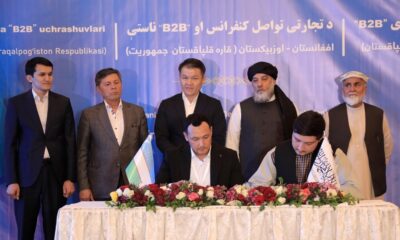
Afghanistan, Uzbekistan sign 13 trade MoUs worth over $100 million