
Latest News
McMaster warns an ‘end to the war could be catastropic’

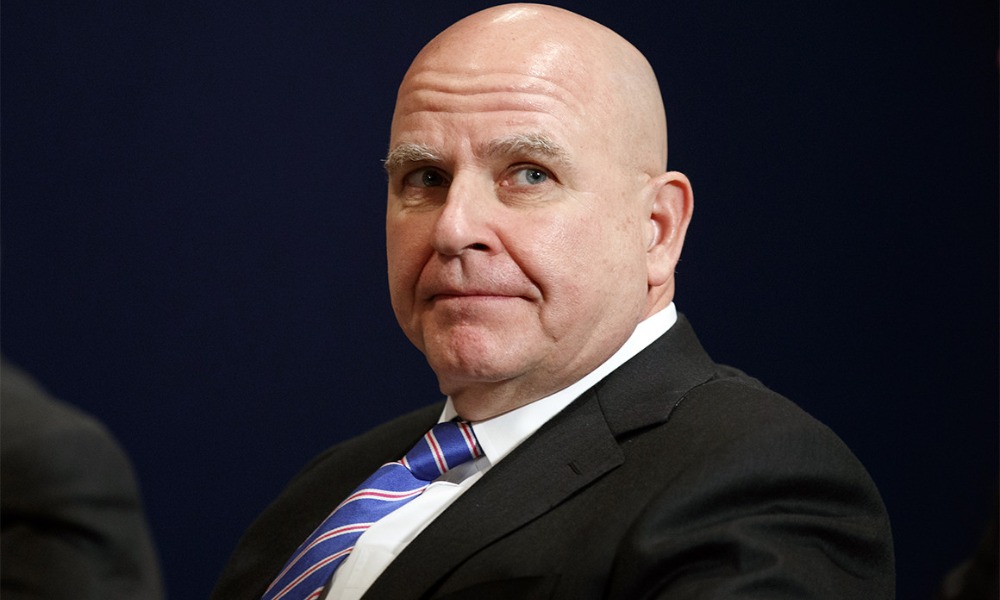
Former US National Security Advisor HR McMaster said on Wednesday night he is very concerned about the withdrawal of troops from Afghanistan and felt it could result in a “catastrophe” for the Afghan people and for the region.
Speaking at a Hoover Institute debate, McMaster said this “so-called responsible end of the war in Afghanistan, which I think could be catastrophic not only for the Afghan people but for the people of the region, for Europe; and also result in increased risk from Jihadist terrorist organizations”.
McMaster said he would like to ask President Joe Biden about the “resurrection of the language of responsible end of the war”. He said this term was last used in 2011 regarding the Iraq withdrawal.
“Of course we know what happened a couple of years later with the rise of ISIS there,” he said adding whether Biden was, as such, concerned “about replicating that experience in Afghanistan in a way that creates a humanitarian catastrophe.”
McMaster has been a vehement critic of former President Donald Trump’s deal with the Taliban and said six months ago in an interview with CNN that the Trump administration had been “absolutely wrong” in its negotiations with the Taliban.
“I think that the Trump administration policy has been absolutely wrong since the negotiations began with the Taliban,” McMaster said.
“What I think is paradoxical about this, regrettable about it, is the Trump administration has replicated almost precisely the fundamental flaws in the Obama administration approach to Afghanistan,” he said, “and that is this flawed assumption, this belief, that there’s this bold line between the Taliban and al-Qaeda.”
There is a tendency, he said, toward “strategic narcissism — defining the world as we would like it to be and then assuming what we do is decisive to the outcome, and in this case, creating the enemy we would prefer.”
McMaster said what worries him is what “power-sharing with the Taliban” looks like?
“Is that mass executions in the soccer stadium every other Saturday? Is that every other girls’ school bulldozed?” he said. “So I’m very concerned that this negotiation process made too many concessions.”
“Forcing the Afghan government to release 5,000 of the most heinous people on earth who could form the backbone of a rejuvenated terrorist infrastructure as well as cutting a deal,” saying simply “just don’t plot against the United States,” he said.
During the CNN interview he said there are brave Afghans fighting daily to preserve the freedoms that they have achieved since the end of the Taliban regime in 2001, implying Trump’s policy was going against everything the Afghan nation has been fighting for.
“About 30 Afghan soldiers and police give their lives every day” to protect the Afghan population against “these terrorists who commit mass murder of innocent people as their principle tactic in a war against all humanity.”
He said the Trump administration’s policy towards the Taliban “is a disaster” and “it’s something I hope can be reversed.”
Six months down the line, the May 1 deadline for troop withdrawal looms but the deal, while under review, is still in place.
On Monday, US Secretary of State Antony Blinken confirmed this during a joint press conference with NATO Secretary General Jens Stoltenberg in Brussels.
Blinken said he was at the Foreign Ministers meeting, held this week, to listen, learn and consult on what the next step would be in terms of withdrawing troops or extending their stay.












Kazakhstan’s Foreign Minister Mukhtar Tileuberdi has called for pragmatic and coordinated international engagement with Afghanistan, saying the country’s long-term stability is closely linked to the security and sustainable development of Central Asia.
Speaking during the general debate of the 81st session of the United Nations General Assembly in New York on Friday, Tileuberdi said humanitarian assistance to Afghanistan remains essential but alone cannot break the cycle of poverty, displacement and dependency.
He said Kazakhstan supports a “pragmatic, coordinated and step-by-step” approach to international engagement with Afghanistan, with the United Nations playing a central role.
Tileuberdi also said Kazakhstan is working with the UN to operationalize the United Nations Regional Centre for the Sustainable Development Goals for Central Asia and Afghanistan in Almaty.
He said the success of the centre should be measured by the results and assistance it delivers to the region.


Abu Muslim Farah defeat Khurasan Faryab 2-0 in ACL season six

Saar: Concerns over Pakistan’s political crisis discussed

Afghanistan Champions League: Omar Zawak Herat beat Toofan Herat 1-0

Blast in Pakistan’s Dera Ismail Khan kills 11, injures 30

Ariana Afghan Airlines increases Kabul-Delhi cargo flights

Saudi energy group signs major Afghanistan deals covering gas exploration and pipeline plans

Trump floats idea of renaming Atlantic or Pacific Ocean

US hits Egyptian bank branches with Iran sanctions as war marks six months

Nepal flood rescue mission enters critical phase as thousands remain missing

Iranian clubs to face Gulf opponents at neutral venues in Asian Champions League Elite
Saar: Concerns over Pakistan’s political crisis discussed

Exclusive interview with Abdul Latif Mansoor, Minister of MRRD

Tawsia: Overview of Afghanistan’s iron mines

Tahawol: Discussion on fresh Pakistani airstrikes on Afghanistan

Saar: Calls for international support for Afghanistan discussed
-

 World5 days ago
CNN, MS NOW and Politico sue Trump, challenging White House ban
-

 Latest News3 days ago
Ariana Afghan Airlines ranks seventh among 45 Central Asian airlines
-

 Latest News5 days ago
UN reiterates call for respect for international law after Kunar airstrikes
-

 Regional4 days ago
US and Iran hold first talks since June after Trump’s ‘annihilation’ threat
-

 Latest News3 days ago
Silk Road highway in Wakhan corridor now reaches the China border
-

 Latest News5 days ago
Afghan Official: Pakistan’s airstrikes will not go unanswered
-

 Regional3 days ago
Iran airlines cancel flights as US sanctions hit
-

 Sport5 days ago
Afghan boxing referee heads to China for international festival