
Latest News
Pakistan urges Taliban to stay engaged in Afghan peace process

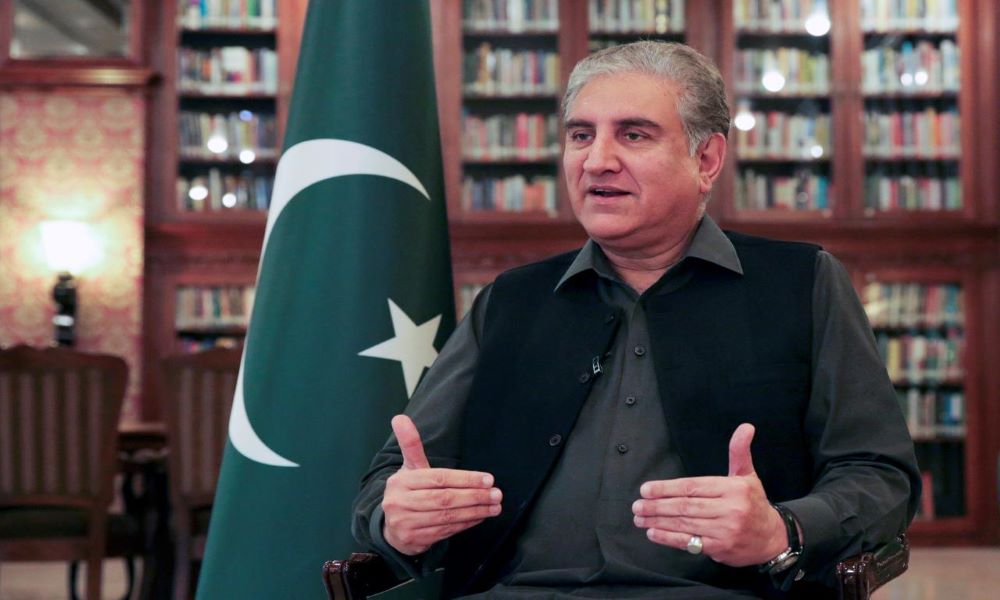
Pakistan on Monday urged the Taliban to remain engaged in the Afghan peace process after the armed group said it would now shun summits about Afghanistan until all foreign forces had left.
The decision was taken after the United States said last week it would withdraw all troops by Sept. 11 this year, later than a May 1 deadline set out by the previous administration.
“They take their own decisions but we will do whatever we can to convince them that it is in their national interest to remain engaged,” Pakistani Foreign Minister Shah Mahmood Qureshi said of the Taliban in an interview with Reuters in Abu Dhabi.
The refusal has thrown the peace process into disarray with Turkey scheduled to host a summit this Saturday, which diplomats had hoped would create new momentum towards a political settlement between the Taliban and Afghan government.
The Taliban ruled Afghanistan from 1996 to 2001 when they were ousted by U.S.-led forces, but they still control wide areas.
Qureshi said delays to the withdrawal were always a possibility due to logistics but that the Taliban had largely succeeded in their objective for foreign troops to withdraw and so should show flexibility towards the new Sept. 11 deadline.
“The troops will be out and a date has been given and the process starts on the 1st of May and goes on until the 11th of September so there is a definite time frame,” Qureshi said.
He also said he had no contact with the Taliban but that he believed the insurgent group would benefit by remaining engaged in the process, suggesting that they show patience and perseverance.
Pakistan, which helped facilitate U.S.-Taliban negotiations in Doha that resulted in the initial May 1 withdrawal deal, wields considerable influence with the Taliban.
The insurgents have sanctuaries in Pakistan, whose main military-run intelligence service gives them support, according to U.S. and Afghan officials. Pakistan denies the allegation.
Qureshi said he fears violence could escalate if the peace process remains deadlocked, plunging Afghanistan into civil war and leading to an exodus of Afghans.
Pakistan, which hosts close to 3 million Afghan refugees and economic migrants, has built 90% of a fence along its disputed 2,500 km (1,500 mile) border with Afghanistan and would hopefully be completed by September, he said.
He also said Pakistan was ready to engage in direct dialogue with arch-rival India once Jammu and Kashmir statehood was restored, which New Delhi in 2019 split into territories.
“We are two atomic powers that cannot, should not go into a direct conflict. It would be suicidal,” Qureshi said.
But he said he had no plans to meet with his Indian counterpart is also in the United Arab Emirates this week.
Top intelligence officers from India and Pakistan held secret talks in Dubai in January in a new effort to calm military tension over the disputed Himalayan region of Kashmir, sources have told Reuters









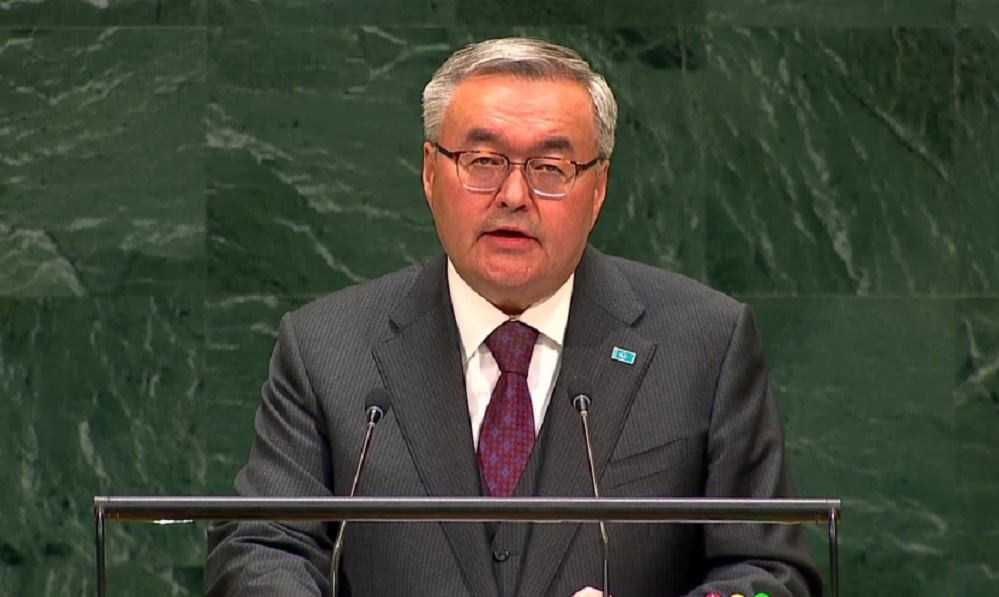
Kazakhstan’s Foreign Minister Mukhtar Tileuberdi has called for pragmatic and coordinated international engagement with Afghanistan, saying the country’s long-term stability is closely linked to the security and sustainable development of Central Asia.
Speaking during the general debate of the 81st session of the United Nations General Assembly in New York on Friday, Tileuberdi said humanitarian assistance to Afghanistan remains essential but alone cannot break the cycle of poverty, displacement and dependency.
He said Kazakhstan supports a “pragmatic, coordinated and step-by-step” approach to international engagement with Afghanistan, with the United Nations playing a central role.
Tileuberdi also said Kazakhstan is working with the UN to operationalize the United Nations Regional Centre for the Sustainable Development Goals for Central Asia and Afghanistan in Almaty.
He said the success of the centre should be measured by the results and assistance it delivers to the region.


Abu Muslim Farah defeat Khurasan Faryab 2-0 in ACL season six

Saar: Concerns over Pakistan’s political crisis discussed

Afghanistan Champions League: Omar Zawak Herat beat Toofan Herat 1-0

Blast in Pakistan’s Dera Ismail Khan kills 11, injures 30

Ariana Afghan Airlines increases Kabul-Delhi cargo flights

Saudi energy group signs major Afghanistan deals covering gas exploration and pipeline plans

Trump floats idea of renaming Atlantic or Pacific Ocean

US hits Egyptian bank branches with Iran sanctions as war marks six months

Nepal flood rescue mission enters critical phase as thousands remain missing

Iranian clubs to face Gulf opponents at neutral venues in Asian Champions League Elite
Saar: Concerns over Pakistan’s political crisis discussed

Exclusive interview with Abdul Latif Mansoor, Minister of MRRD

Tawsia: Overview of Afghanistan’s iron mines

Tahawol: Discussion on fresh Pakistani airstrikes on Afghanistan

Saar: Calls for international support for Afghanistan discussed
-

 World5 days ago
CNN, MS NOW and Politico sue Trump, challenging White House ban
-

 Latest News3 days ago
Ariana Afghan Airlines ranks seventh among 45 Central Asian airlines
-

 Latest News5 days ago
UN reiterates call for respect for international law after Kunar airstrikes
-

 Regional4 days ago
US and Iran hold first talks since June after Trump’s ‘annihilation’ threat
-

 Latest News3 days ago
Silk Road highway in Wakhan corridor now reaches the China border
-

 Regional3 days ago
Iran airlines cancel flights as US sanctions hit
-

 Latest News5 days ago
Afghan Official: Pakistan’s airstrikes will not go unanswered
-

 Sport5 days ago
Afghan boxing referee heads to China for international festival