
Latest News
IEA imposes strict dress codes on the few girls schools still open

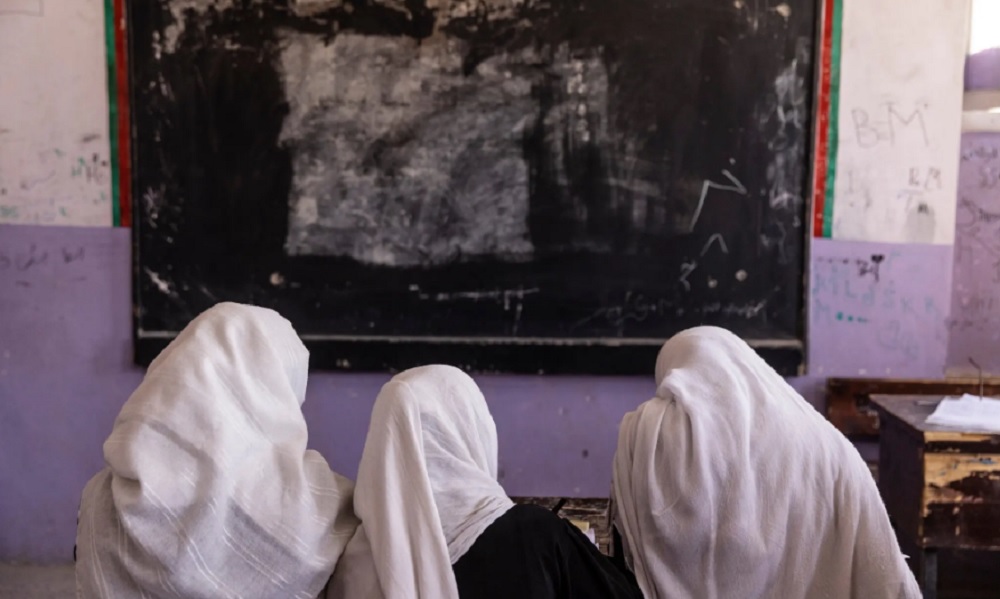
Despite the Islamic Emirate of Afghanistan’s (IEA) decision to suspend schooling for teenage girls, Human Rights Watch found that a number of girls’ schools, mostly in Balkh province, are still open but have strict dress codes in place.
According to the watchdog, many girls’ secondary schools have remained open in the province since the IEA took power but that they have been threatened with closure if they refuse to comply with the rules.
HRH stated in a report that one Balkh school was closed for several days after some students had their faces uncovered, while another school now has a teacher assigned to “prevent vice and promote virtue.”
“The requirements on hijab are getting tougher day by day,” said a teacher.
“They have spies to record and report.… If students or teachers don’t follow their strict hijab rules, without any discussion they fire the teachers and expel the students,” the teacher said.
She shared a photo with HRW of her school’s assembly; students and teachers all wore uniforms allowing only their eyes to show.
A student at another school explained: “We are not allowed to wear belts. Our sleeves should be large to hide our elbows and the shape of our arms. But then we were reprimanded because when we write on the board, our sleeves roll back and our arms are revealed.… One day we are asked to have loose sleeves, and the next day we are admonished for it.”
The latest order, she said, was to wear loose sleeves but pin them at the wrist.
“All the girls in my school believe the Taliban (IEA) authorities want to make it so harsh and strict on us that we give up on education on our own,” the student said, adding that she and her classmates are still determined to study.
Following these demands, the US Representative for Women in Afghanistan reiterated that the issue of girls’ schools should be taken seriously by the Islamic Emirate.
In an interview with VOA, Rina Amiri said that the closure of girls’ schools puts not only girls and women but the entire population at risk of poverty; it creates widespread hardship and instability
“It is not possible to deprive 50% of the population of their rights altogether and expect that this action will have better results, any measure that continues in this way and is not taken seriously by the Taliban, the country will suffer catastrophic consequences,” said Amiri.









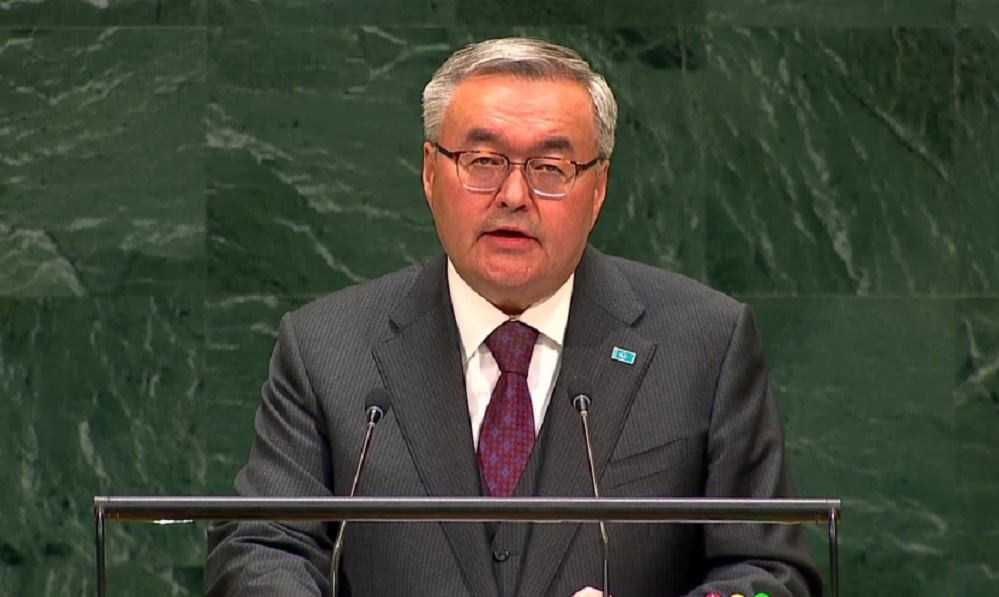
Kazakhstan’s Foreign Minister Mukhtar Tileuberdi has called for pragmatic and coordinated international engagement with Afghanistan, saying the country’s long-term stability is closely linked to the security and sustainable development of Central Asia.
Speaking during the general debate of the 81st session of the United Nations General Assembly in New York on Friday, Tileuberdi said humanitarian assistance to Afghanistan remains essential but alone cannot break the cycle of poverty, displacement and dependency.
He said Kazakhstan supports a “pragmatic, coordinated and step-by-step” approach to international engagement with Afghanistan, with the United Nations playing a central role.
Tileuberdi also said Kazakhstan is working with the UN to operationalize the United Nations Regional Centre for the Sustainable Development Goals for Central Asia and Afghanistan in Almaty.
He said the success of the centre should be measured by the results and assistance it delivers to the region.


Abu Muslim Farah defeat Khurasan Faryab 2-0 in ACL season six

Saar: Concerns over Pakistan’s political crisis discussed

Afghanistan Champions League: Omar Zawak Herat beat Toofan Herat 1-0

Blast in Pakistan’s Dera Ismail Khan kills 11, injures 30

Ariana Afghan Airlines increases Kabul-Delhi cargo flights

Saudi energy group signs major Afghanistan deals covering gas exploration and pipeline plans

Trump floats idea of renaming Atlantic or Pacific Ocean

US hits Egyptian bank branches with Iran sanctions as war marks six months

Nepal flood rescue mission enters critical phase as thousands remain missing

Iranian clubs to face Gulf opponents at neutral venues in Asian Champions League Elite
Saar: Concerns over Pakistan’s political crisis discussed

Exclusive interview with Abdul Latif Mansoor, Minister of MRRD

Tawsia: Overview of Afghanistan’s iron mines

Tahawol: Discussion on fresh Pakistani airstrikes on Afghanistan

Saar: Calls for international support for Afghanistan discussed
-

 World5 days ago
CNN, MS NOW and Politico sue Trump, challenging White House ban
-

 Latest News3 days ago
Ariana Afghan Airlines ranks seventh among 45 Central Asian airlines
-

 Latest News5 days ago
UN reiterates call for respect for international law after Kunar airstrikes
-

 Regional4 days ago
US and Iran hold first talks since June after Trump’s ‘annihilation’ threat
-

 Latest News3 days ago
Silk Road highway in Wakhan corridor now reaches the China border
-

 Regional3 days ago
Iran airlines cancel flights as US sanctions hit
-

 Latest News5 days ago
Afghan Official: Pakistan’s airstrikes will not go unanswered
-
 Sport5 days ago
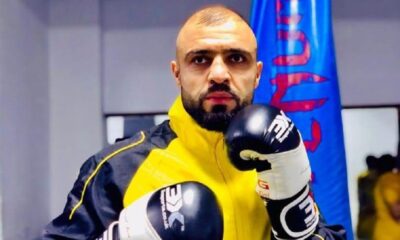
Afghan boxing referee heads to China for international festival