
Latest News
Terrorism resurgent in Afghanistan, says Guterres at UN meeting

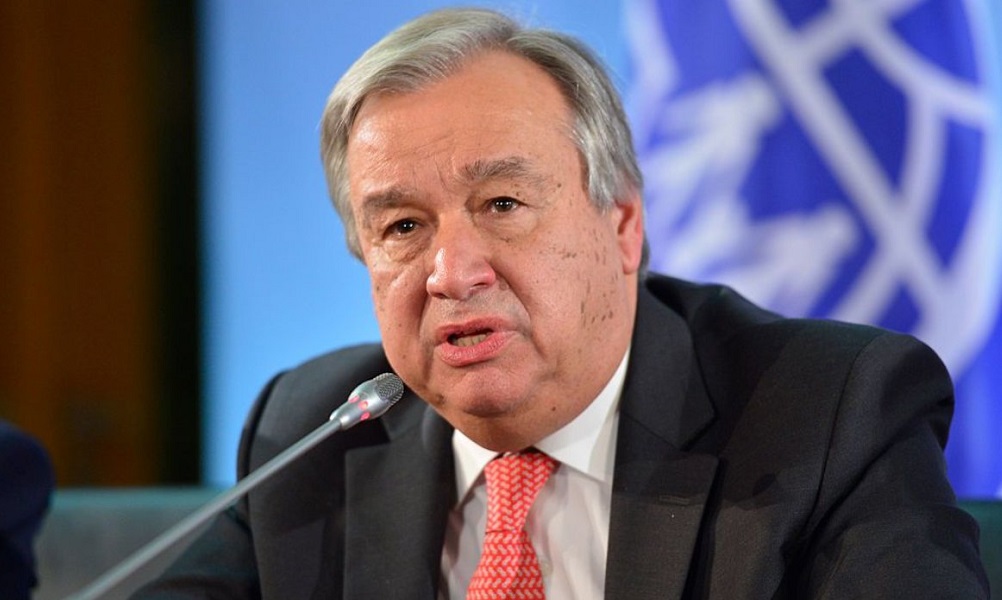
United Nations Secretary-General Antonio Guterres has warned that the continued expansion of Daesh and Al-Qaeda in Africa and resurgent terrorism in Afghanistan pose a growing threat to global peace and security.
Addressing a UN-backed counter-terrorism meeting in Malaga, Spain, this week he said: “Responses to terrorism must be anchored in the rule of law, human rights, and gender equality to ensure their effectiveness.”
“As a moral duty, let’s put human rights where they belong: front and centre in the fight against terror,” the secretary-general said in a video message to the high-level international conference on human rights and counter-terrorism meeting.
The two-day event, saw governments, international organizations, civil society and human rights defenders examine how to formulate terrorism responses that comply with human rights and the rule of law and ensure meaningful participation of civil society in counter-terrorism efforts.
“This gathering reflects a central truth. Terrorism is not only an attack on innocent people. It represents an all-out assault on human rights,” the secretary-general said.
“The threat is growing and global,” he said. “Daesh and Al-Qaeda continue to expand into Africa. Terrorism is resurgent in Afghanistan. Extremist groups target women and girls with gender-based violence, including sexual violence.”
Terrorists, he said, were also using technology to “spread and export lies, hatred and division at the touch of a button”.
He also said, xenophobia, racism and cultural and religious intolerance were accelerating. Guterres warned that at the same time, global responses to terrorism could make things worse.
“In the name of security, humanitarian aid is often blocked – increasing human suffering. Civil society and human rights defenders are silenced – particularly women. And survivors of terrorism and violence are left without the support and access to justice they need to rebuild their lives,” he said.
The secretary-general called for reaffirming commitment to core values, including investing in health, education, protection, gender equality, and justice systems that were accessible to all people.
“This must also include safeguarding humanitarian action, respecting international law and opening the door to civil society – and especially women – to meaningfully engage with counter-terrorism efforts.”
The high-level conference is jointly organized by the UN Office of Counter-Terrorism (UNOCT) and Spain.

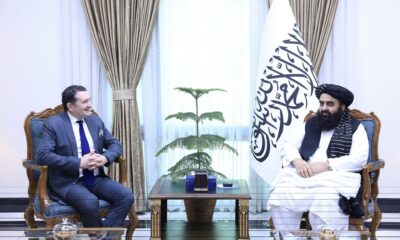



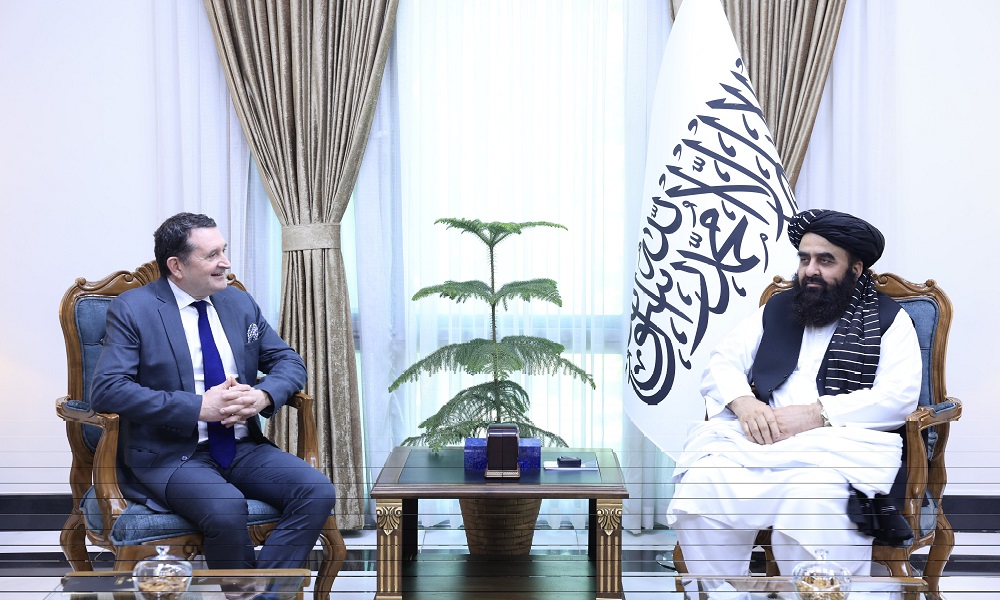
The Islamic Emirate’s Foreign Minister Amir Khan Muttaqi has held talks with Bjørn Johansen, Norway’s newly appointed Special Representative for Afghanistan, focusing on political and regional developments.
In the meeting, Johansen said Norway maintains historic ties with Afghanistan and has consistently sought to play a constructive role in supporting stability in the country, Afghan foreign ministry said in a statement on Tuesday.
He noted what he described as noticeable progress in Afghanistan in areas including security, counter-narcotics efforts, and other sectors, adding that further cooperation should be expanded through the normalization of relations with the international community.
Muttaqi, welcomed Norway’s continued engagement and cooperation with the Islamic Emirate, saying that the current stability in Afghanistan should be utilized effectively. He also emphasized that progress made by the Afghan authorities could help broaden future cooperation.
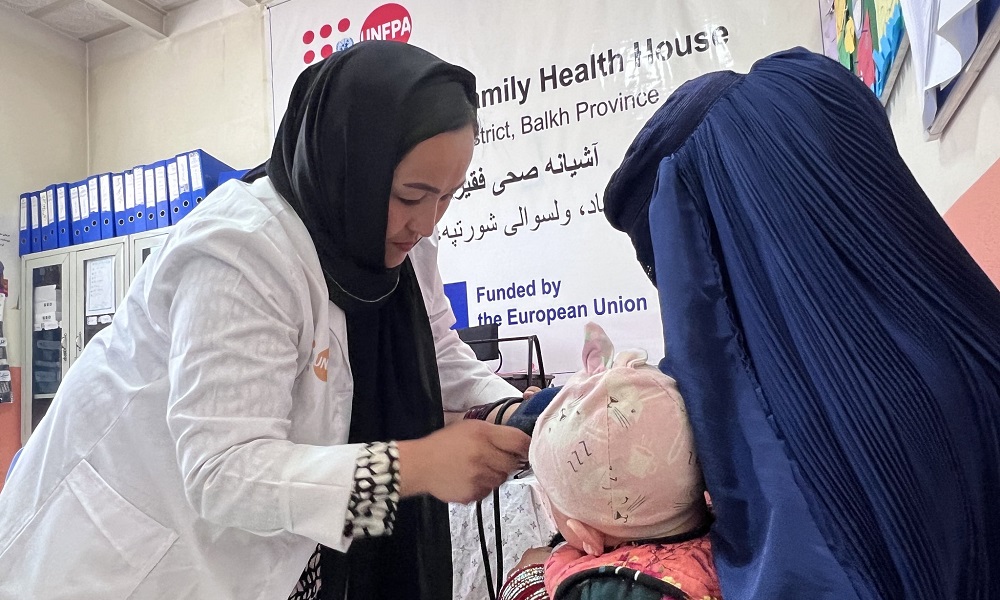
The Government of Slovenia has contributed €200,000 to the United Nations Population Fund (UNFPA) to support humanitarian work in Afghanistan, focusing on reproductive health and protection services for women and girls.
According to UNFPA, the funding will help expand access to essential maternal and reproductive health care across the country, particularly in areas where services remain limited and humanitarian needs are high.
UNFPA said the support will be used to reach vulnerable women and girls with life-saving health assistance and protection services as part of its ongoing response in Afghanistan.
The contribution comes as international aid agencies continue efforts to sustain basic health services amid ongoing economic and humanitarian challenges in the country.
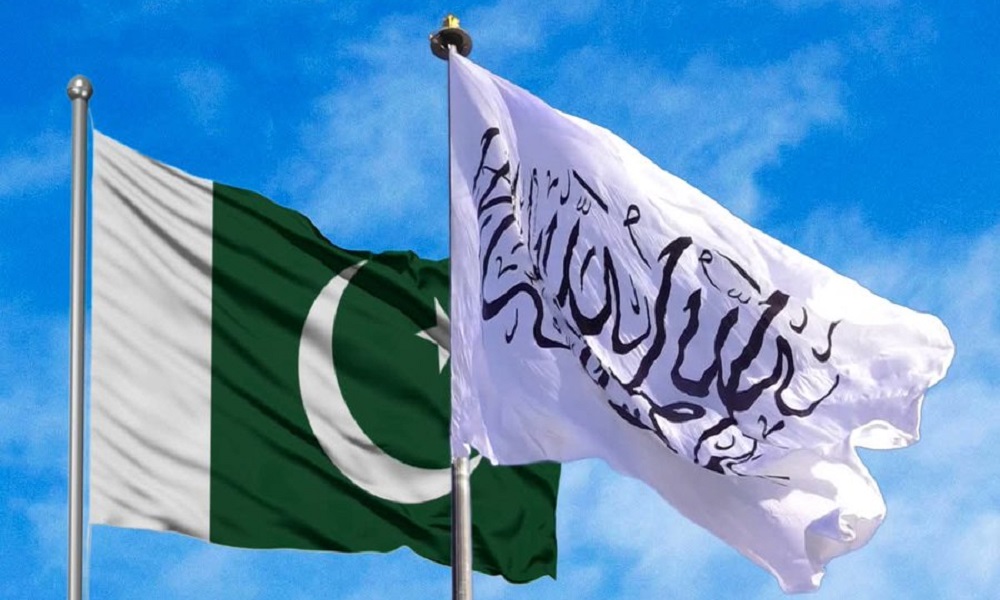
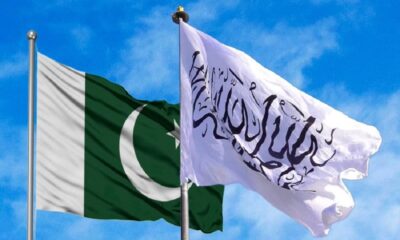
The Islamic Emirate of Afghanistan has rejected recent accusations by Pakistani officials claiming that attacks inside Pakistan were planned from Afghan territory, describing the allegations as “baseless.”
Hamdullah Fitrat, Deputy Spokesperson of the Islamic Emirate, said Afghanistan believes regional issues should be addressed through dialogue, mutual respect, and genuine cooperation rather than accusations, emotional rhetoric, or threats.
He reaffirmed that Afghan territory would not be used against any country and stressed that no group or individual would be allowed to carry out activities that threaten regional peace and stability.
The remarks came after Pakistan’s Foreign Ministry reportedly summoned Afghanistan’s Chargé d’Affaires in Islamabad on Monday and handed over a formal protest note regarding an attack on a police post in Bannu district of Khyber Pakhtunkhwa province.
Pakistani authorities alleged that the attack had been planned from inside Afghanistan.
According to reports, the explosion occurred on Saturday evening in the Fathkhel area of Bannu, killing 15 police officers and injuring four others, including one civilian.


Saar: IEA high-ranking delegation’s visit to Kazan discussed

Muttaqi meets Norway’s new special envoy, discusses political and regional cooperation

UNICEF reports 70 children killed in West Bank and East Jerusalem since 2025

Slovenia contributes €200,000 to support UNFPA humanitarian work in Afghanistan

Afghanistan rejects Pakistan’s allegations as ‘baseless’

Bayat Power extends gas supply deal with Afghan Gas

New Afghanistan-China transport corridor launched via Turkmenistan

Germany to launch online visa system for Afghan study and work applicants in Pakistan

Afghanistan moves toward self-sufficiency in car battery production

War driving hidden climate crisis in Middle East, think tank warns
Saar: IEA high-ranking delegation’s visit to Kazan discussed

Tahawol: Fresh Remarks About Ending the Ukraine War

Saar: US and Iran Negotiations Discussed

Tahawol: Afghanistan and Uzbekistan’s growing economic ties discussed

Saar: Afghanistan’s relations with the world discussed
-
 Business4 days ago
New Afghanistan-China transport corridor launched via Turkmenistan
-

 Sport3 days ago
Canada to host opening ceremony for FIFA World Cup 2026 in Toronto
-
 Latest News3 days ago
SAARC failure pushes Pakistan toward trilateral ties with Afghanistan, China, Bangladesh: Dar
-

 Science & Technology4 days ago
James Webb Telescope captures clearest-ever view of exoplanet’s surface
-

 Sport3 days ago
Afghanistan rises 7 places to 21st in FIFA Futsal World Rankings
-
 Business2 days ago
Afghanistan, Uzbekistan sign 13 trade MoUs worth over $100 million
-
 Latest News1 day ago
Japan announces MEXT scholarships for Afghan students for 2027 academic year
-

 Sport3 days ago
Los Angeles to welcome the world with historic FIFA World Cup 2026 opening event