
World
Russian oligarch dies ‘suddenly’ as list of Putin’s wealthy critics dying keeps growing

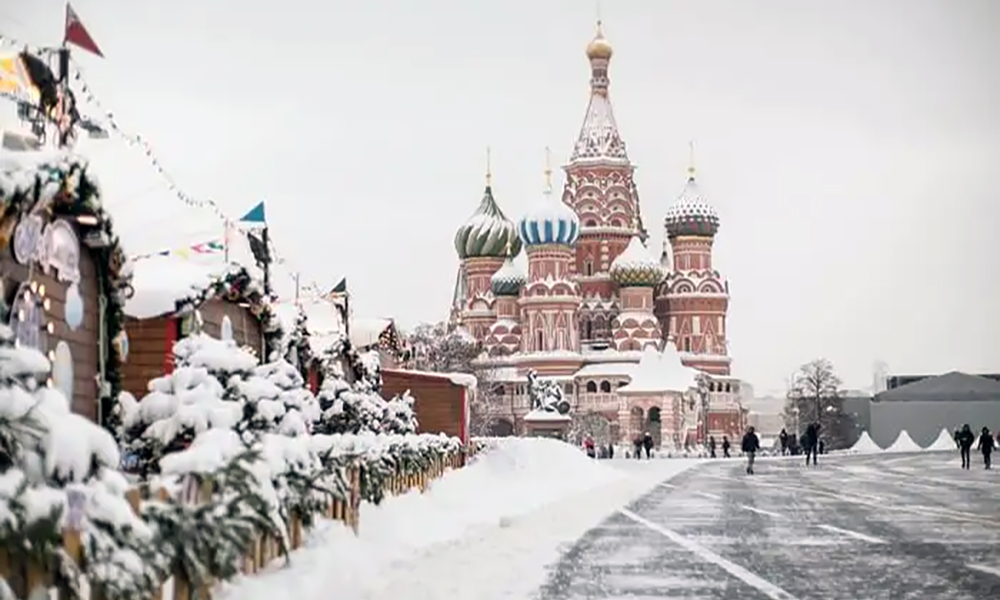
So far, at least 23 wealthy Russians, critical of Vladimir Putin’s war on Ukraine, have died in suspicious circumstances since the start of the invasion.
A former Russian army chief, Alexei Maslov, with longstanding ties to Ukraine is the latest to die “suddenly”. He worked for the Uralvagonzavod machine-building company, the largest tank manufacturer in the world.
Maslov, who was commander-in-chief of the Russian Ground Forces from 2004 to 2008, passed away on Sunday in a Moscow military hospital, the company said.
The former military leader, originally from a Russian region bordering Ukraine, had close ties to the country that Russia invaded in February. Maslov’s military career began in Soviet Ukraine, where he studied at a high school for military commanders in Kharkiv, the UK’s Express reported.
Meanwhile, to keep track of all suspicious deaths in Putin’s circles since the start of the war, Wikipedia has created a specific page – 2022 Russian businessmen mystery deaths – where the name, date of death, place, circumstances and role are written.
In some instances the families, including wives and children, of the businessmen have also died.
On Sunday, another wealthy Russian businessman and United Russia MP, Pavel Antonov, who criticized the war in Ukraine, was found dead after a fall from the third floor of a hotel in Rayagada, in India.
Tass news agency reported that Antov “committed suicide because he was depressed by the death two days earlier, apparently of a heart attack, of a Russian friend, Vladimir Budanov, who was part of a group of four tourists who arrived in the hotel a few days before.”
According to the New Indian Express, Antov was “visibly upset” after attending Budanov’s funeral.
On June 3, 2022, the Dutch news network NOS described the phenomenon as “a grim series of Russian billionaires, many from the oil and gas industries, who have been found dead in unusual circumstances since the beginning of this year”.
The first was on January 30, when 60-year-old Leonid Shulman, head of transport at Russian energy giant Gazprom, was found dead in the bathroom of his country house in the Leningrad region.
On July 6, 2022, CNN described the group as “millionaires with direct or indirect ties to the Kremlin found dead in mysterious scenarios since the beginning of the year”.
Between January 30 and September 21 this year, 12 wealthy businessmen died.
On September 12, Ivan Pechorin, a top manager of the Corporation for the Development of the Far East and the Arctic, was found dead in Vladivostok after falling off his luxury yacht and drowning near Cape Ignatyev in the Sea of Japan.
So far this month, December 2022, there have been six suspicious deaths, as listed by Wikipedia.




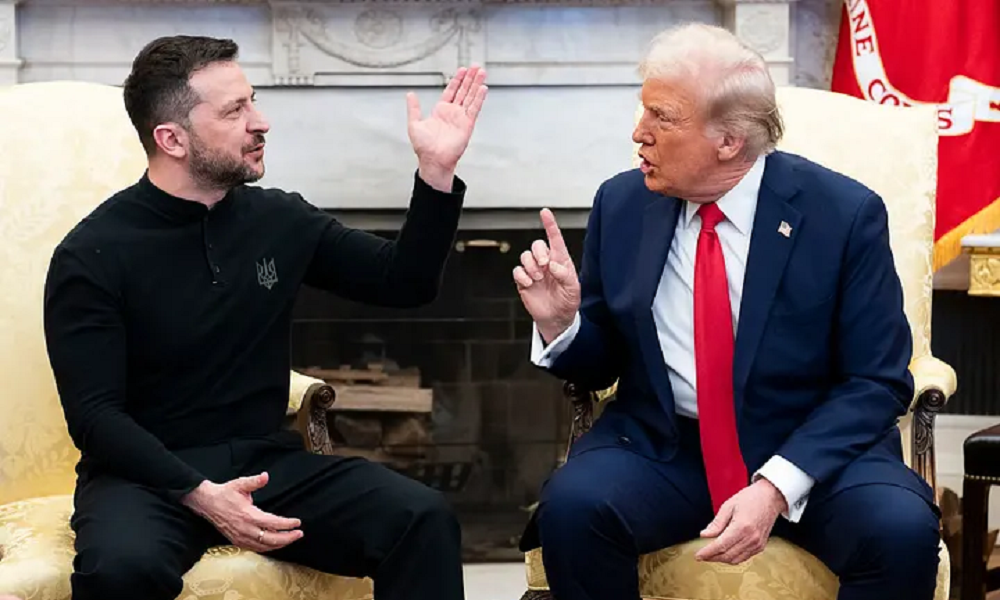
Ukrainian President Volodymyr Zelenskiy said in an interview on Wednesday that it was “painful” when Donald Trump took another side in Ukraine’s ongoing war with Russia, after the US President said Zelenskiy should be replaced.
Zelenskiy told Piers Morgan Uncensored: “It’s painful when President Trump chooses one side, not our side.”
He also said that he was OK with Trump being in the middle of Ukraine and Russia, but added: “If you are in the middle, you have to stay in the middle.”
Asked if he felt betrayed by Trump, who at the weekend called for Ukraine to get a new president having agreed to lift sanctions on Russian diesel exports, Zelenskiy replied: “Really, yes … but it’s a little bit more complicated than just my emotions or my feelings.”
“It’s a pity we are losing (a) strong partner,” he added.
Zelenskiy also said: “We are not selling our country … it’s not about business for us, it’s just our life and this is our country.”
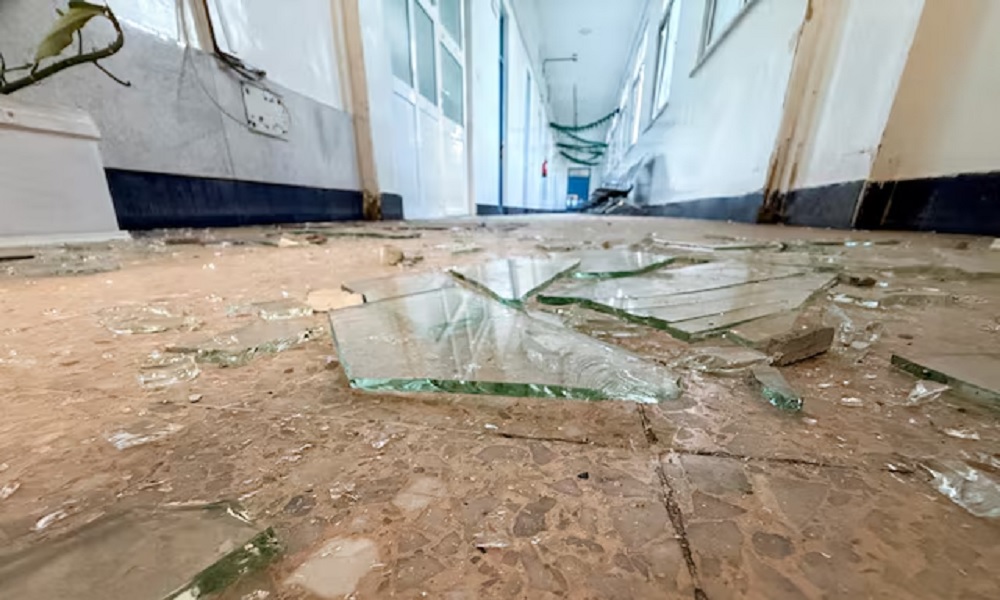
Hospitals across Yemen are struggling to cope with a sharp rise in war casualties as intensified fighting along multiple front lines strains its already fragile health system, the Red Cross said on Wednesday.
Front-line hospitals in areas including Marib, Taiz and Yemen’s Red Sea coast were seeing unprecedented numbers of weapon-wounded patients, with some facilities admitting more than 700 casualties in a single week, according to the humanitarian agency, Reuters reported.
More than 200,000 people have been displaced from their homes since fighting in the country began in recent weeks, sparked by renewed fighting between the Iran-backed Houthi group and Saudi-backed government forces in Yemen, according to the United Nations’ International Organization for Migration.
“Trauma care staff are under enormous pressure,” ICRC health coordinator Feras Abusamra said in a statement. Only a small proportion of Yemen’s functioning health facilities are capable of providing comprehensive trauma care, he said, while hospitals face large numbers of wounded people amid shortages of surgical supplies, anesthesia, oxygen and medicines.
Yemen’s health services, battered by more than a decade of conflict, economic crisis, displacement and disease outbreaks, may have limited capacity to absorb a new surge in mass casualties if fighting intensifies further, the ICRC warned.
World
One dead in new attack on Saudi airport, a day after Houthi strike kills 13
US aviation authorities issued a notice to US airlines to use caution while flying to or over the kingdom, Reuters reported.

One person was killed and nearly a dozen hurt in a new attack Riyadh’s international airport on Sunday, Saudi authorities reported, a day after a strike claimed by Yemen’s Iran-aligned Houthis that killed 13 people and wounded more than 300, Reuters reported.
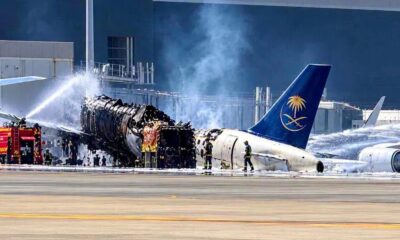
Saudi-led coalition forces in Yemen said an unidentified projectile had targeted Riyadh’s international airport Terminal 4 on Sunday, causing a fire. Eleven people were wounded in addition to the fatality, the Saudi civil aviation authority said.
Coalition forces also said Saudi air defences had intercepted a cruise missile in the vicinity of King Khalid International Airport. They later added that a drone had been intercepted and destroyed in the country’s Eastern Province, and a ballistic missile launched towards Khamis Mushait had been intercepted. Emergency alerts were also issued in Abha, in the south, early on Monday but the danger had since passed, the Saudi Civil Defense said.
The strikes have exposed vulnerabilities in Saudi defence capabilities as the kingdom wages an air campaign against the Houthis, who are fighting a ground war in Yemen against the Saudi-backed Yemeni government.
Footage released by Saudi state television of the Saturday attack on the Riyadh airport showed scores of religious pilgrims lined up at a gate as they prepared to travel to Islam’s two holiest sites. A bright orange flash sent people running in panic, while parts of the roof appeared to cave in, read the report.
The airport was closed after the attack, the deadliest in the kingdom in more than a decade.
In a televised speech on Sunday, Houthi military spokesperson Yahya Saree claimed responsibility for Saturday’s attack and said the group had also struck the airport in Dammam in Saudi Arabia’s Eastern Province and two facilities of Saudi oil giant Saudi Aramco.
The Saudi government’s media office and Aramco did not respond to requests for comment.
The Saudi civil aviation authority confirmed the strike on Dammam’s King Fahd International Airport late on Sunday, adding that “damage assessments and safety inspections of airport facilities are under way.”
An eyewitness aboard a taxiing aircraft at Dammam told Reuters that around 8:30 p.m. (1730 GMT) on Sunday, they saw a projectile strike the tarmac beside several parked aircraft, causing a fire. The witness said the aircraft returned to the gate. Passengers disembarked and were told to leave.
Flight-tracking website Flightradar24 showed several delays and cancellations on Sunday for arrivals and departures at Dammam airport, the kingdom’s third-largest.
The Houthis earlier on Sunday had renewed their warning against using Saudi airports. “We urge everyone to take our warnings seriously, and Saudi Arabia bears responsibility for any failed interceptions,” the group said.
Britain’s embassy in Saudi Arabia in a post on X advised British citizens against all but essential travel to Jeddah, Dammam and all airports in the kingdom except the airport in Medina.
US aviation authorities issued a notice to US airlines to use caution while flying to or over the kingdom, Reuters reported.
Saudi Arabia has recently stepped up its military involvement in Yemen, launching strikes against the Houthis and backing a government counteroffensive after the Houthis seized strategic territory along the Red Sea coast last month.
The Houthis said on Sunday that Saudi Arabia carried out 124 air strikes in Yemen in the past 24 hours. “Unless the Saudi enemy stops its aggression and interference in Yemen, worse is yet to come, God willing,” Yemen’s Houthi-run foreign ministry said in statements carried by Al Masirah television.
US President Donald Trump said on Saturday the United States was considering joining Saudi strikes on the Houthis in the conflict, a spillover from the wider war with Iran that the US and Israel launched in February.
In a post on Telegram, Iran’s foreign minister Abbas Araqchi said he told his Saudi counterpart that Tehran was ready to help facilitate dialogue between Saudi Arabia and Yemen.
A five-day conference of international energy organization WPC Energy opened as planned on Sunday at a convention centre about 10 km (6 miles) from the Riyadh airport, the Saudi energy ministry said.
A ministerial meeting of the International Energy Forum also went ahead, according to a media advisory from the ministry. It was not clear which ministers attended.
Italy’s energy minister, Gilberto Pichetto Fratin, whose country was co-hosting, had said on Friday he would participate remotely via video link.
German officials were trying to organise a return flight for economy minister Katherina Reiche, read the report.
She was supposed to return to Berlin from Riyadh on Monday but the ministry said it appeared likely her flight would be unable to take off.
Separately, Saudi authorities announced that in-person classes at schools in Riyadh would be shifted to remote learning from Sunday until Thursday.
Sunday’s attack brought the death toll in attacks on Riyadh’s airport to 18 for the week. In Saturday’s attack, the dead included four Saudis while the remainder were foreign nationals, Saudi authorities said.


Iran says nearly 60,000 Afghan students attend its universities, urges more refugee aid

School roof collapse kills teacher, 21 children in NW Pakistan

Uzbekistan gains ground in Afghanistan’s flour market as Kazakhstan loses exports

IsDB urges MENAP countries to boost economic resilience and private investment

Afghanistan, Saudi Arabia discuss solar and wind energy cooperation

Cricket Bonanza: Afghanistan set for packed international schedule

UN warns of mounting humanitarian and human rights pressures in Afghanistan

Afghanistan says 28 killed, 32 captured in Nuristan operation

CNN, MS NOW and Politico sue Trump, challenging White House ban

Silk Road highway in Wakhan corridor now reaches the China border

Tahawol: Kyrgyzstan’s rejection of Afghan refugees discussed

Saar: Central Asia’s trade alternative to Pakistan discussed

Tahawol: Warnings over worsening insecurity in Pakistan discussed

Saar: Concerns over potential return of US military bases to Afghanistan discussed

Tahawol: Kabul’s criticism of Islamabad’s policy toward Afghanistan
-
 Latest News5 days ago
Iranian lawmaker praises Afghanistan’s support, accuses Pakistan of ‘hypocrisy’
-
 Regional4 days ago
Houthis warn airlines to avoid Saudi airports after deadly Riyadh attack
-

 World3 days ago
One dead in new attack on Saudi airport, a day after Houthi strike kills 13
-
 Business5 days ago
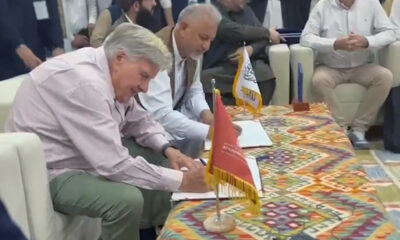
Afghan-Austrian partnership aims to boost carpet exports to European markets
-

 Sport4 days ago
Afghanistan Champions League second half to kick off on October 16
-

 World4 days ago
14 killed in two separate mass shootings across the United States
-
 Regional3 days ago
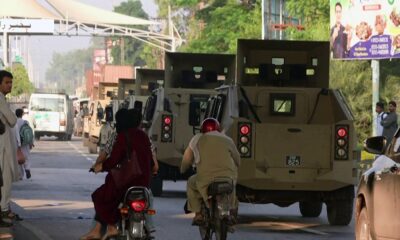
Pakistan deploys military to Peshawar after emergency rule declared
-
 World5 days ago
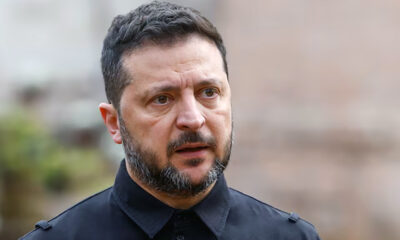
Zelenskiy says letting Russia sell diesel to US is ‘investment in war’