Latest News
Passport distribution process resumes across the country
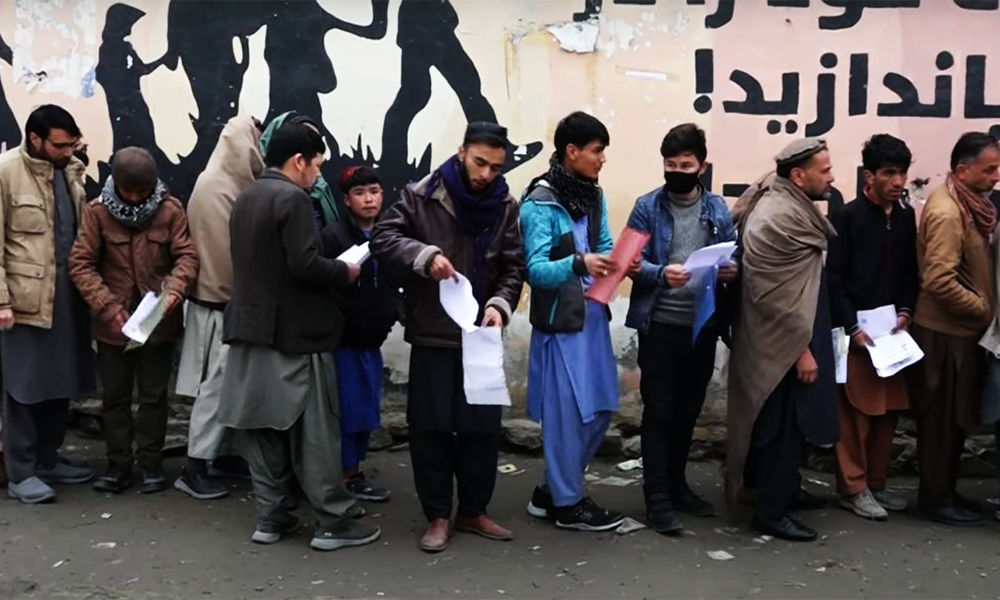
The General Directorate of Passports confirmed Wednesday that the passport distribution process has resumed in Kabul and in provinces around the country.
This comes after the directorate suspended operations months ago due to technical issues.
On Wednesday, the directorate’s spokesman said from now on 5,000 passports will be distributed daily and priority will be given to those who have already applied for the travel document.
Applicants have welcomed the reopening of offices and said they hope there will be no problems going forward.
“Today, the process of distributing passports has resumed throughout the country, and priority is given to those who have already registered and whose documents have been processed,” said Noorullah Patman, the directorate’s spokesperson.
The process of distributing passports was suspended more than four months ago. In addition to technical problems, there was also a shortage of passport booklets. The directorate says however, that these issues have now been resolved.

Latest News
Russia, China and UK urge Afghanistan and Pakistan to resolve issues through dialogue
Members of the United Nations Security Council have voiced concern over rising clashes between Afghanistan and Pakistan, calling on both countries to reduce tensions and resolve their disputes through dialogue.
Speaking during a Security Council meeting on Monday, Russia’s ambassador to the United Nations, Vassily Nebenzia, said Moscow was alarmed by the recent escalation in armed confrontations along the disputed Durand Line frontier between Afghanistan and Pakistan.
Nebenzia described both countries as partners of Russia and stressed the need to shift the situation back to diplomatic and political channels. He said Moscow was ready to support efforts aimed at easing tensions if requested by the two sides.
The Russian envoy also expressed hope that Afghanistan and Pakistan would resume constructive cooperation on regional security issues, particularly counterterrorism.
He added that Russia continues to monitor developments inside Afghanistan, including the protection of human rights and fundamental freedoms, emphasizing the importance of ensuring access to education and employment for all Afghans regardless of ethnicity, religion, or gender.
Nebenzia further noted that Moscow is closely observing progress toward the formation of an inclusive political system in Afghanistan that includes participation from all ethnic and political groups.
China’s ambassador to the United Nations, Fu Cong, also expressed concern over the growing violence between the two neighbors. He said the clashes had resulted in significant casualties and called on both sides to exercise restraint.
Fu urged Kabul and Islamabad to quickly move toward a ceasefire and resolve their disputes through dialogue and negotiation. He added that China has been actively using diplomatic channels to help reduce tensions and remains willing to play a constructive role in mediating between the two countries.
The Chinese envoy also raised broader economic issues affecting Afghanistan, stressing that Afghan central bank assets frozen abroad belong to the Afghan people and should be returned. He also called for the lifting of unilateral sanctions imposed on the country.
Meanwhile, the United Kingdom’s Minister of State for Skills, Jacqui Smith, said United Kingdom is deeply concerned about the escalating tensions between Afghanistan and Pakistan.
She called for immediate de-escalation and urged both sides to re-engage in mediated dialogue in order to prevent further instability in an already fragile region.
The statements come amid rising tensions between Afghanistan and Pakistan, which have led to recent clashes along the disputed Durand Line and raised fears of broader regional instability. Diplomatic efforts by international actors are increasingly focused on preventing further escalation between the two neighboring countries.
Latest News
US says UN aid to Afghanistan needs evaluation
Despite what it called a humanitarian “disaster” in Afghanistan, the U.S. said on Monday international assistance to the country should be evaluated, given IEA “intransigence” and its exclusion of the female population from basic rights.
Speaking to a U.N. Security Council meeting on Afghanistan, the U.S. ambassador to the United Nations, Mike Waltz, noted that the budget for the United Nations Assistance Mission in Afghanistan (UNAMA), the mandate of which is up for renewal next week, is the largest of any special U.N. mission in the world.
“In light of the Taliban’s (IEA) intransigence, we must carefully evaluate the utility of international assistance and engagement in Afghanistan,” Waltz said, even as he highlighted an ongoing “humanitarian disaster” there.
“This council must consider carefully the funds we collectively provide for this mission’s budget, when the mission’s female national staff are not even able to go into the office to work,” he added.
The Islamic Emirate has previously said that its policies on women are based on the Islamic law.
Afghanistan faces one of the world’s most pressing humanitarian crises.
According to the U.N. World Food Programme, more than 17 million Afghans – or one-third of the population – are facing acute food shortages, including 4.7 million facing emergency levels of hunger.
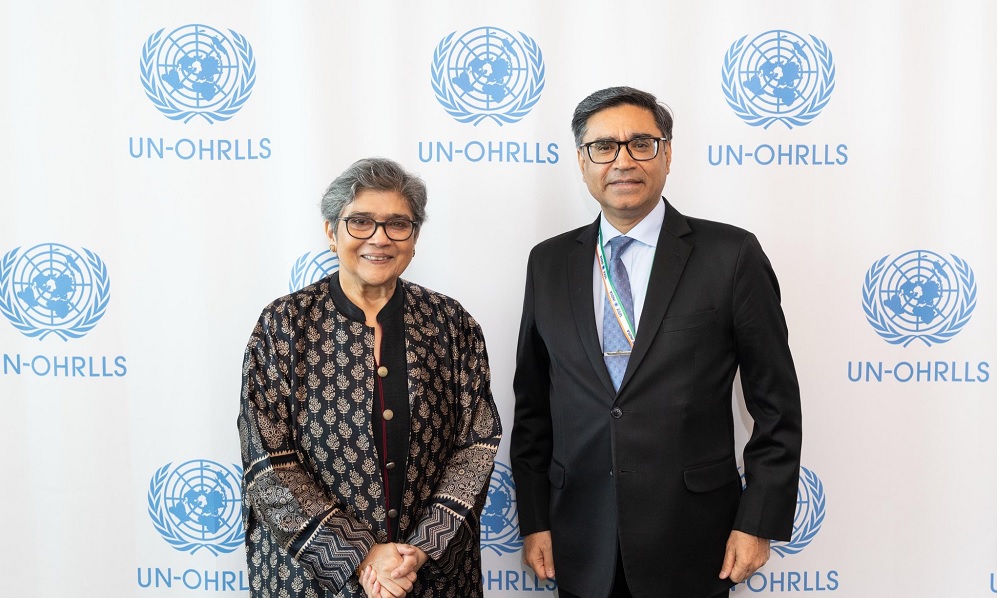
The temporary head of UNAMA, Georgette Gagnon, told the meeting Afghanistan had “urgent” humanitarian needs and the humanitarian crisis there had worsened due to funding cuts. She said humanitarian agencies aimed to assist 17.5 million Afghans in 2026 through an appeal for $1.71 billion, but this was currently only 10% funded.
Gagnon said Afghanistan’s nearly two-week conflict with Pakistan had had “punishing human and economic costs” and the Iran war on its other border was causing prices of basic commodities to rise.
She said some positive developments showed the value of international engagement, including the IEA ban on opium poppy cultivation. She warned that if rights and humanitarian issues were not dealt with, Afghanistan could “once again become a driver of regional and global instability in the form of outmigration, terrorism, narcotics and more.”
Latest News
UN warns of possible surge in Afghan returnees from Iran
Deputy UNHCR spokesperson Faramarz Barzin said the organization is closely monitoring the situation while prioritizing the protection of vulnerable returnees.
The United Nations has expressed concern over a potential increase in Afghan migrants returning from Iran, warning that many could face heightened vulnerability upon arrival in Afghanistan.
The United Nations High Commissioner for Refugees (UNHCR) said its primary concern remains the safety and protection of Afghan returnees, particularly as regional tensions continue to affect migrant communities.
According to the agency, there has not yet been a significant rise in the number of Afghans returning from Iran despite ongoing instability and conflict in the wider region. However, UNHCR said it is preparing for the possibility of a sudden influx.
The agency noted that contingency measures are already being put in place at key border crossings, including Islam Qala, to ensure that humanitarian assistance can be delivered quickly if return numbers increase.
UNHCR said it is currently providing a range of support services for Afghans returning from Iran, including cash assistance, protection services, temporary shelter, healthcare and registration.
Deputy UNHCR spokesperson Faramarz Barzin said the organization is closely monitoring the situation while prioritizing the protection of vulnerable returnees.
“Our primary concern continues to be the safety and protection of Afghan returnees, who are particularly vulnerable under the current circumstances,” Barzin said.
“Although we have not yet observed a significant increase in returns from Iran, UNHCR is actively preparing for the possibility of a rise in arrivals.”
He added that precautionary measures are already underway at major border crossings, particularly at Islam Qala, to ensure rapid assistance if the number of returnees grows.
The warning comes as humanitarian organizations report continued forced or pressured returns of Afghan migrants from both Iran and Pakistan, a trend that could further strain Afghanistan’s already fragile humanitarian situation.
UNHCR said it is working closely with international partners to monitor developments and adapt its response to meet the needs of vulnerable groups, including women, children and people at heightened risk.
Many Afghan migrants return under pressure from host countries or due to fears linked to regional tensions. Once back in Afghanistan, many face significant challenges, including poverty, unemployment and a lack of adequate housing.
-
Latest News3 days agoProminent Muslim scholar issues fatwa calling for Afghanistan-Pakistan ceasefire
-
Business3 days agoAfghanistan steps in to replace Iran in supplying fruits and vegetables to Russia
-
Business5 days agoMinistry of Public Works: Railway transport operating smoothly across all ports
-
Latest News2 days agoInternational Women’s Day: Khalilzad urges IEA to allow girls’ education
-
Sport5 days agoACB names squads for white-ball series against Sri Lanka; Ibrahim Zadran appointed T20I captain
-
Latest News2 days agoAfghanistan’s Virtue Ministry: Over 3,400 women’s rights complaints addressed in 10 months
-
Latest News4 days agoAirstrikes and clashes displace thousands as Afghanistan–Pakistan tensions escalate: UN
-
Latest News4 days agoAfghanistan says 327 Pakistani soldiers killed in ‘Radd-ul-Zulm’ operation