
Latest News
IEA calls Palestinian resistance ‘legitimate right to achieve freedom’

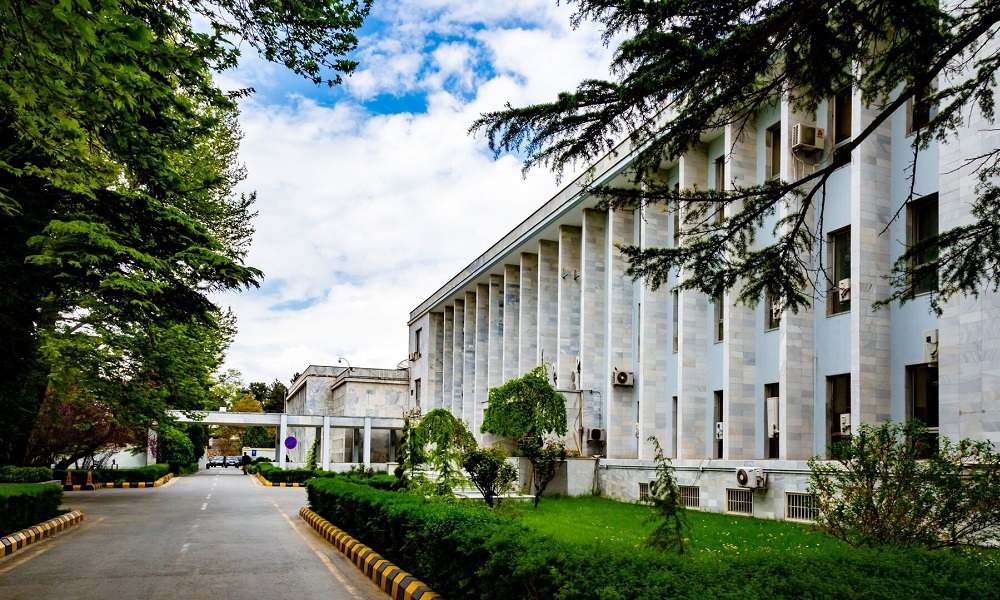
The Islamic Emirate’s Foreign Ministry called the Palestinian resistance “the legitimate right of the Palestinians to achieve freedom”.
This was in reference to Saturday’s developments between Palestine and Israel.
Palestine’s Hamas group took Israel by surprise on Saturday with the biggest attack for decades, a sudden assault by gunmen who crossed into Israeli villages, killed dozens of people and brought hostages back into the Gaza Strip.
Hamas also fired off an estimated 2,500 rockets at Israel, which was met with massive air strikes deep inside the coastal enclave by Israel.
“Our enemy will pay a price the type of which it has never known,” Prime Minister Benjamin Netanyahu said. “We are in a war and we will win it”.
Hamas leader Ismail Haniyeh said the assault that had begun in Gaza would spread to the West Bank and Jerusalem.
“This was the morning of defeat and humiliation upon our enemy, its soldiers and its settlers,” he said. “What happened reveals the greatness of our preparation. What happened today reveals the weakness of the enemy.”
The IEA meanwhile said on X, formerly Twitter, that the Islamic Emirate supports the Palestinian people’s legitimate, historical, and legal right to have an independent state in the land of the Palestinians.
The IEA’s foreign ministry asked Islamic countries, the Organization of Islamic Cooperation (OIC), and the international community, especially influential countries in the region, to stop the violence of the Israeli occupying forces against the innocent people of Palestine.
Hundreds of people were reportedly killed in Saturday’s incursion.
Reuters reports that in southern Israel near Gaza, bodies of Israeli civilians lay strewn across a highway in Sderot, surrounded by broken glass. A woman and a man were sprawled out dead across the front seats of a car. A military vehicle drove past the bodies of another woman and a man in a pool of blood behind another car.
Israel’s N12 News reported that at least 100 Israelis were killed. Israeli security forces said there were 21 active scenes of gun battles with infiltrators, and its navy had killed dozens more Palestinians attempting to infiltrate by sea.
In Gaza, black smoke and orange flames billowed into the evening sky from a high rise tower hit by an Israeli retaliatory strike. Crowds of mourners carried the bodies of freshly killed militants through the streets, wrapped in green Hamas flags.
Gaza health officials said at least 198 Palestinians had been killed and more than 1,600 had been wounded, carried into crumbling and overcrowded hospitals with severe shortages of medical supplies and equipment.
Hamas deputy chief Saleh al-Arouri told Al Jazeera that the group was holding a big number of Israeli captives, including senior officials. He said Hamas had enough captives to make Israel free all Palestinians in its jails.
The Israeli military confirmed Israelis were being held captive in Gaza and soldiers and officers had been killed. A military spokesman said Israel could mobilize up to hundreds of thousands of reservists and was also prepared for war on its northern front against Lebanon’s Hezbollah group.
Hamas, which advocates Israel’s destruction, said the attack was driven by what it said were Israel’s escalated attacks on Palestinians in the West Bank, Jerusalem and against Palestinians in Israeli prisons.
“This is the day of the greatest battle to end the last occupation on earth,” Hamas military commander Mohammad Deif said, announcing the start of the operation in a broadcast on Hamas media and calling on Palestinians everywhere to fight.
Hamas, which seized control of Gaza in 2007, has since fought four wars against Israel. But the scenes of violence inside Israel itself were unlike anything seen since the suicide bombings of the Palestinian Intafada uprising two decades ago.
That the attack came as a surprise to Israel’s security forces makes it one of the worst intelligence failures in the country’s history, a shock in a nation proud of its intensive infiltration and monitoring of militant groups.










Kazakhstan’s Foreign Minister Mukhtar Tileuberdi has called for pragmatic and coordinated international engagement with Afghanistan, saying the country’s long-term stability is closely linked to the security and sustainable development of Central Asia.
Speaking during the general debate of the 81st session of the United Nations General Assembly in New York on Friday, Tileuberdi said humanitarian assistance to Afghanistan remains essential but alone cannot break the cycle of poverty, displacement and dependency.
He said Kazakhstan supports a “pragmatic, coordinated and step-by-step” approach to international engagement with Afghanistan, with the United Nations playing a central role.
Tileuberdi also said Kazakhstan is working with the UN to operationalize the United Nations Regional Centre for the Sustainable Development Goals for Central Asia and Afghanistan in Almaty.
He said the success of the centre should be measured by the results and assistance it delivers to the region.


Abu Muslim Farah defeat Khurasan Faryab 2-0 in ACL season six

Saar: Concerns over Pakistan’s political crisis discussed

Afghanistan Champions League: Omar Zawak Herat beat Toofan Herat 1-0

Blast in Pakistan’s Dera Ismail Khan kills 11, injures 30

Ariana Afghan Airlines increases Kabul-Delhi cargo flights

Saudi energy group signs major Afghanistan deals covering gas exploration and pipeline plans

Trump floats idea of renaming Atlantic or Pacific Ocean

US hits Egyptian bank branches with Iran sanctions as war marks six months

Nepal flood rescue mission enters critical phase as thousands remain missing

Iranian clubs to face Gulf opponents at neutral venues in Asian Champions League Elite
Saar: Concerns over Pakistan’s political crisis discussed

Exclusive interview with Abdul Latif Mansoor, Minister of MRRD

Tawsia: Overview of Afghanistan’s iron mines

Tahawol: Discussion on fresh Pakistani airstrikes on Afghanistan

Saar: Calls for international support for Afghanistan discussed
-

 World5 days ago
CNN, MS NOW and Politico sue Trump, challenging White House ban
-

 Latest News3 days ago
Ariana Afghan Airlines ranks seventh among 45 Central Asian airlines
-

 Latest News5 days ago
UN reiterates call for respect for international law after Kunar airstrikes
-

 Regional4 days ago
US and Iran hold first talks since June after Trump’s ‘annihilation’ threat
-

 Latest News4 days ago
Silk Road highway in Wakhan corridor now reaches the China border
-

 Regional3 days ago
Iran airlines cancel flights as US sanctions hit
-

 Latest News5 days ago
Afghan Official: Pakistan’s airstrikes will not go unanswered
-

 Sport5 days ago
Afghan boxing referee heads to China for international festival