
Latest News
Afghanistan Humanitarian Trust Fund report highlights problems tackled

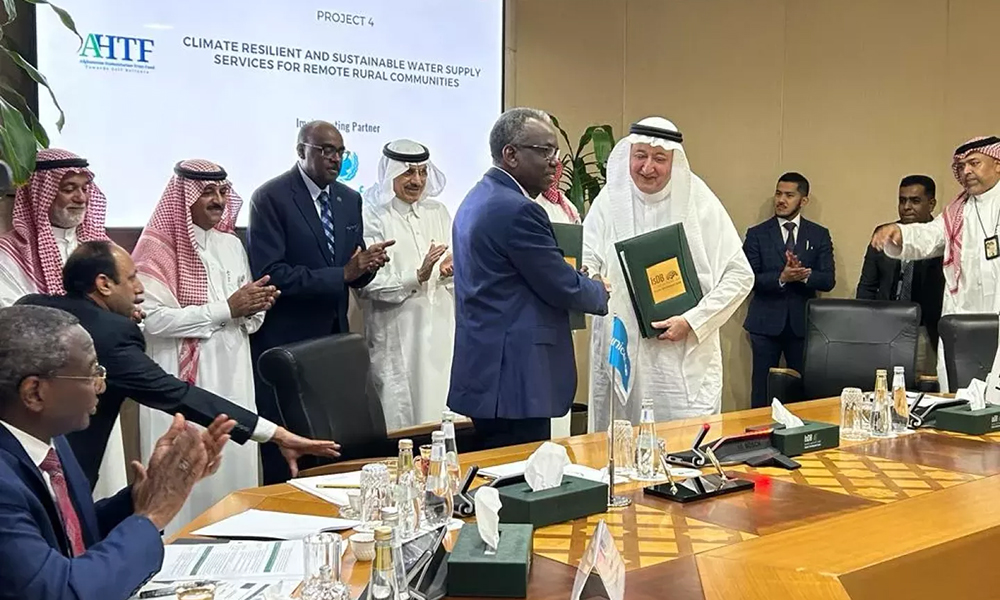
Mohammad Jamal Alsaati, Special Advisor to IsDB President and IsDB Coordinator for Afghanistan Humanitarian Trust Fund (AHTF), said this week that 14 projects, signed in 2023, have materialized at a total cost of $35.35 million.
He said in a statement issued Sunday that of this, $24.14 was from contributions from AHTF with a further $12.21 million provided by implementing partners and other international organizations.
Alsaati said all the services provided have created job and capacity building opportunities for the people of Afghanistan and that as of March 2024, pledges to the fund totaled almost $35 million, with more funding expected.
Alsaati’s comments were in a statement issued by the Islamic Development Bank, (IsDB), after it released the first comprehensive report on the achievements of the AHTF.
The report highlights the coordinated efforts by the IsDB, its partners, and stakeholders towards “Promoting Self Reliance and Resilience” in Afghanistan.
The AHTF’s mission is to provide initial humanitarian aid but then to prioritize development and self-reliance to move beyond emergency assistance – promoting reconstruction, empowerment and sustainable development.
IsDB President and Group Chairman, Muhammad Al Jasser meanwhile said following the release of the report that after receiving generous contributions, the AHTF “sprung into action, delivering essential aid to Afghanistan’s most vulnerable communities.”
He said the fund was able to tackle food insecurity, offer child nutrition programs, provide healthcare, innovative education, clean water, sanitation and hygiene services.
“Our projects are making a tangible difference on the ground,” Jasser said.
The Secretary General of the Organization of Islamic Cooperation (OIC), Hissein Brahim Taha also reacted to the report and said: “We are very pleased to see several humanitarian and development-focused projects are underway in Afghanistan – driven by the IsDB in collaboration with its regional and global partners.
“But much work still lies ahead, so we look forward to further help and support from our Member States, in addition to continued financial assistance for the AHTF from international aid and relief agencies,” said Taha.
The fund was established at a Council of Foreign Ministers of the OIC on 19th December 2021.












Kazakhstan’s Foreign Minister Mukhtar Tileuberdi has called for pragmatic and coordinated international engagement with Afghanistan, saying the country’s long-term stability is closely linked to the security and sustainable development of Central Asia.
Speaking during the general debate of the 81st session of the United Nations General Assembly in New York on Friday, Tileuberdi said humanitarian assistance to Afghanistan remains essential but alone cannot break the cycle of poverty, displacement and dependency.
He said Kazakhstan supports a “pragmatic, coordinated and step-by-step” approach to international engagement with Afghanistan, with the United Nations playing a central role.
Tileuberdi also said Kazakhstan is working with the UN to operationalize the United Nations Regional Centre for the Sustainable Development Goals for Central Asia and Afghanistan in Almaty.
He said the success of the centre should be measured by the results and assistance it delivers to the region.


Abu Muslim Farah defeat Khurasan Faryab 2-0 in ACL season six

Saar: Concerns over Pakistan’s political crisis discussed

Afghanistan Champions League: Omar Zawak Herat beat Toofan Herat 1-0

Blast in Pakistan’s Dera Ismail Khan kills 11, injures 30

Ariana Afghan Airlines increases Kabul-Delhi cargo flights

Saudi energy group signs major Afghanistan deals covering gas exploration and pipeline plans

Trump floats idea of renaming Atlantic or Pacific Ocean

US hits Egyptian bank branches with Iran sanctions as war marks six months

Nepal flood rescue mission enters critical phase as thousands remain missing

Iranian clubs to face Gulf opponents at neutral venues in Asian Champions League Elite
Saar: Concerns over Pakistan’s political crisis discussed

Exclusive interview with Abdul Latif Mansoor, Minister of MRRD

Tawsia: Overview of Afghanistan’s iron mines

Tahawol: Discussion on fresh Pakistani airstrikes on Afghanistan

Saar: Calls for international support for Afghanistan discussed
-

 World5 days ago
CNN, MS NOW and Politico sue Trump, challenging White House ban
-

 Latest News3 days ago
Ariana Afghan Airlines ranks seventh among 45 Central Asian airlines
-

 Latest News4 days ago
UN reiterates call for respect for international law after Kunar airstrikes
-

 Regional3 days ago
US and Iran hold first talks since June after Trump’s ‘annihilation’ threat
-

 Latest News3 days ago
Silk Road highway in Wakhan corridor now reaches the China border
-

 Latest News4 days ago
Afghan Official: Pakistan’s airstrikes will not go unanswered
-

 Sport4 days ago
Afghan boxing referee heads to China for international festival
-
 Regional5 days ago
G7 foreign ministers call on Iran to stop arming Houthis