
Climate Change
Gaza conflict has caused major environmental damage, UN says
Gaza’s environment was already suffering from recurring conflicts, rapid urban growth, and high population density, before the most recent conflict began on Oct. 7.

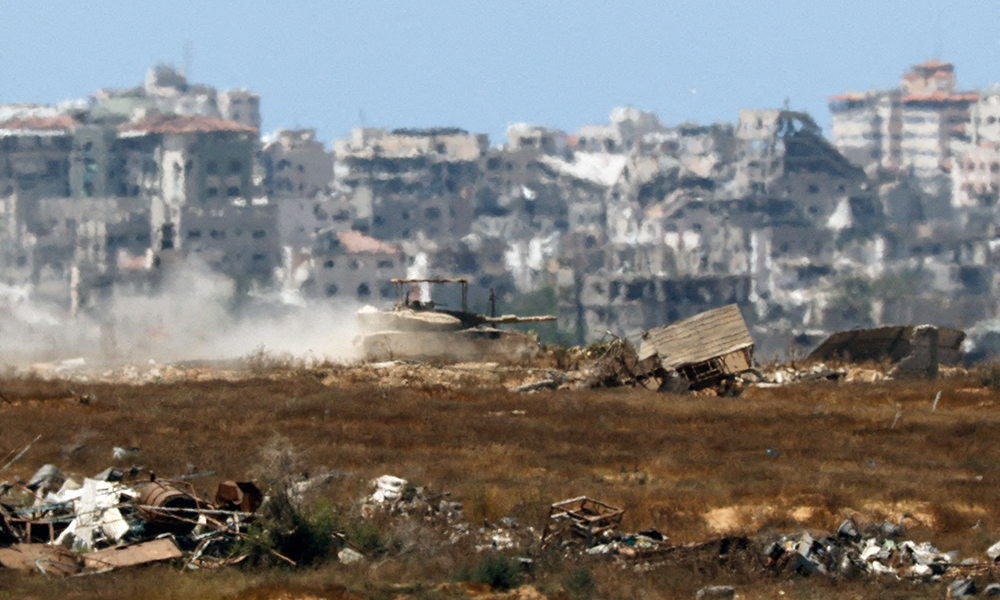
The conflict in Gaza has created unprecedented soil, water and air pollution in the region, destroying sanitation systems and leaving tons of debris from explosive devices, a United Nations report on the environmental impact of the war said on Tuesday.
The war between Israel and Hamas, the Islamist movement that controls the Gaza Strip, has swiftly reversed limited progress in improving the region’s water desalination and wastewater treatment facilities, restoring the Wadi Gaza coastal wetland, and investments in solar power installations, according to a preliminary assessment, opens new tab from the U.N. Environment Programme (UNEP).
Explosive weapons have generated some 39 million tons of debris, the report said. Each square metre of the Gaza Strip is now littered with more than 107 kilograms (236 lbs) of debris. That is more than five times the debris generated during the battle for Mosul, Iraq, in 2017, the report said.
“All of this is deeply harming people’s health, food security and Gaza’s resilience,” said UNEP Executive Director Inger Andersen.
Gaza’s environment was already suffering from recurring conflicts, rapid urban growth, and high population density, before the most recent conflict began on Oct. 7.
The U.N. assessment adds to concerns about the unfolding humanitarian crisis and the environmental costs of war, with Ukraine also recording widespread ecological damage over the past two years.
“Understanding the environmental impacts of war is a grand challenge of our time,” said Eoghan Darbyshire, a senior researcher at the UK-based nonprofit Conflict and Environment Observatory. “The impacts will not only be felt locally where the fighting is taking place, but may be displaced or even felt at the global scale via greenhouse gas emissions.”
BASIC SANITATION SYSTEMS DESTROYED
The U.N. assessment stems from a December 2023 request from the Palestinian Environment Quality Authority for UNEP to take stock of environmental damages. UNEP is mandated to assist countries with pollution mitigation and control in areas affected by armed conflict or terrorism.
Due to security concerns and access restrictions, the U.N. used remote sensing surveys and data from Palestinian technical entities, as well as damage assessments from the World Bank, in their report. Ground measurements, however, would be critical to understand the extent of soil and water pollution, Darbyshire said.
Water, sanitation, and hygiene systems are now almost entirely defunct, the report found, with Gaza’s five wastewater treatment plants shut down. Israel’s long-term occupation had already posed major environmental challenges in the Palestinian territories with regards to water quality and availability, according to a 2020 report by the U.N. Development Programme.
Over 92% of water in the Gaza Strip was then deemed unfit for human consumption.
The Gaza Strip had one of the highest densities of rooftop solar panels in the world, with the U.S.-based Centre for Strategic and International Studies estimating in 2023 some 12,400 rooftop solar systems. But
Israel has since destroyed a large proportion of Gaza’s burgeoning solar infrastructure, and broken panels can leak lead and heavy metal contaminants into the soil.
Since a week-long truce in November, repeated attempts to arrange a ceasefire have failed, with Hamas insisting on a permanent end to the war and full Israeli withdrawal from Gaza. Israeli Prime Minister Benjamin Netanyahu refuses to end the war before Hamas is eradicated and the hostages seized by Hamas militants during the Oct. 7 attack on southern Israel that triggered the war are freed.
Looking at the scale of environmental destruction, “it is my opinion that large areas of Gaza will not be recovered to a safe state within a generation, even with limitless finance and will,” said Darbyshire. – Reuters.
Related Stories:
Israeli forces rescue four live hostages from Gaza, military says

UNSC’s ceasefire resolution an ‘initial step’ to ending Palestinian ‘genocide’: IEA








Climate Change
Afghanistan on climate front line as Kabul faces groundwater warning
Participants also highlighted growing pressure on already limited water and other community resources following the return of large numbers of Afghan migrants.
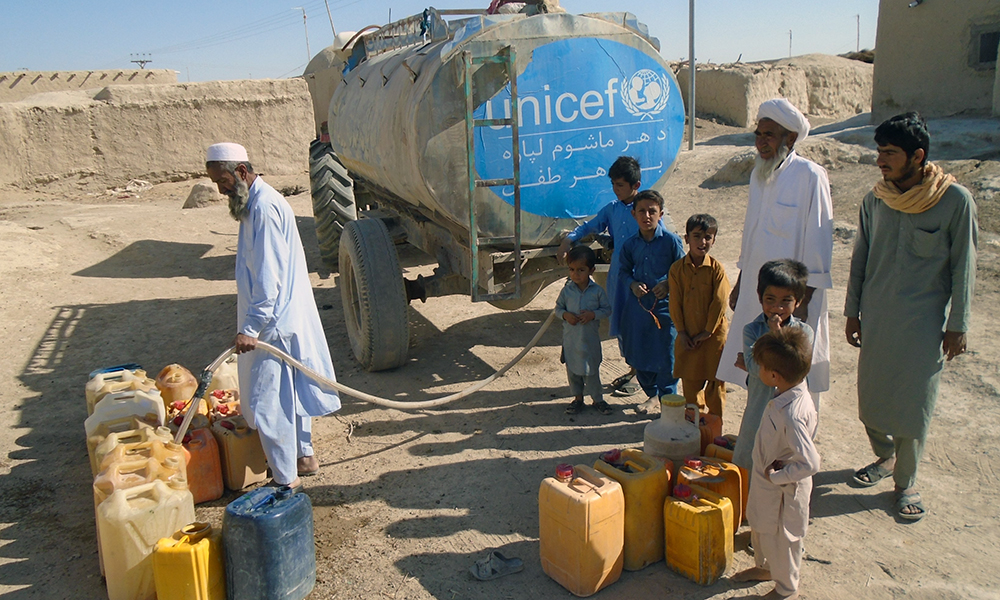
Afghanistan is among the countries most vulnerable to climate change despite contributing less than 0.1 percent of global greenhouse gas emissions, UN officials and experts said at a meeting on the sidelines of the United Nations General Assembly in New York.
The meeting, titled “Afghanistan on the Front Line of Climate and Migration Pressures,” brought together UN representatives, experts and Afghan activists to discuss the country’s worsening water crisis, drought, floods, displacement and the impact of climate change.
Selwin Hart, Adviser to the UN Secretary-General on Climate Action, said Afghanistan faces severe climate vulnerability, environmental degradation, economic fragility and limited institutional capacity.
“Afghanistan accounts for less than 0.1 percent of global greenhouse gas emissions, but faces severe climate vulnerability, environmental degradation, economic fragility and limited institutional capacity,” Hart said.
He said drought had severely affected Afghan communities for four consecutive years between 2021 and 2024, while flash floods this spring affected more than 73,000 people.
Participants also highlighted growing pressure on already limited water and other community resources following the return of large numbers of Afghan migrants.
Najibullah Sadid, a water resources and climate change expert, warned that Kabul could become the first capital in the world to face severe groundwater shortages by 2030.
Kabul’s groundwater resources have been declining amid growing demand, with the city’s population estimated at around seven million. Experts have warned that continued overuse and reduced water availability could put the capital under severe water stress in the coming years.
Switzerland’s representative to the United Nations said his country supports Afghanistan’s efforts to address climate change and water security and is working through various channels to strengthen capacity in these areas.
He said Switzerland supports initiatives including the UN Regional Centre for Preventive Diplomacy in Central Asia and the Global Network of Women in Water Diplomacy, as well as the network’s activities in Central Asia and Afghanistan.
Participants called for Afghanistan’s climate crisis to be addressed through greater international cooperation and responsibility. They also urged improved access for Afghanistan and local institutions to financial resources for climate adaptation and compensation for climate-related losses.
Climate Change
El Niño likely to intensify, may become strongest ever recorded, WMO says
A very strong El Niño can significantly shift rainfall and temperature patterns worldwide, and fuel extreme weather, like typhoons.
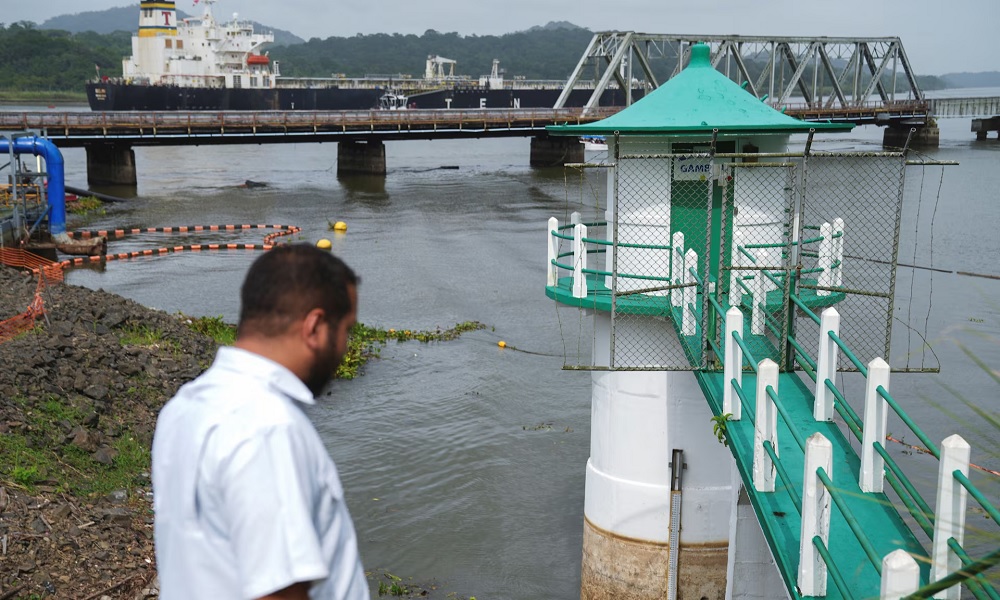
The El Niño weather phenomenon is set to intensify further into 2027 and could be the strongest ever, raising risks of extreme weather into next year, the World Meteorological Organization said on Thursday.
“If this trajectory continues, it may be stronger than anything since our monitoring began. So literally off the charts we have used for the past four decades,” WMO Secretary-General Celeste Saulo told a Geneva press conference, Reuters reported.
The U.N. weather agency said its forecasts showed a near 100% likelihood that El Niño will persist through February 2027, fuelled by exceptionally warm Pacific Ocean temperatures. This is the first time it has expressed such a degree of certainty, the WMO said.
A very strong El Niño can significantly shift rainfall and temperature patterns worldwide, and fuel extreme weather, like typhoons.
“El Niño is being supersized before our eyes. The science leaves no room for doubt: The planet is in uncharted waters, and those waters are heating up,” said United Nations Secretary-General Antonio Guterres.
El Niño is a periodic warming of sea surface temperatures in the eastern Pacific caused by weakening trade winds. It occurs naturally every two to seven years and tends to last up to 12 months, causing intense rains and droughts across Latin America.
This year’s phenomenon has already had an impact on soft commodities in tropical areas, causing a severe food crisis across Central America’s Dry Corridor.
It is set to peak towards the end of this year, the WMO said in a statement. But its effects will continue into 2027 and are set to leave higher global temperatures next year in its wake, Saulo said.
Saulo said the WMO was stepping up preparedness and early warning efforts in preparation.
“WMO is committed to working closely with partners across the United Nations and humanitarian system to provide the climate intelligence and insights needed to support disaster management and climate-sensitive sectors like agriculture, health, energy and water resources,” she said.
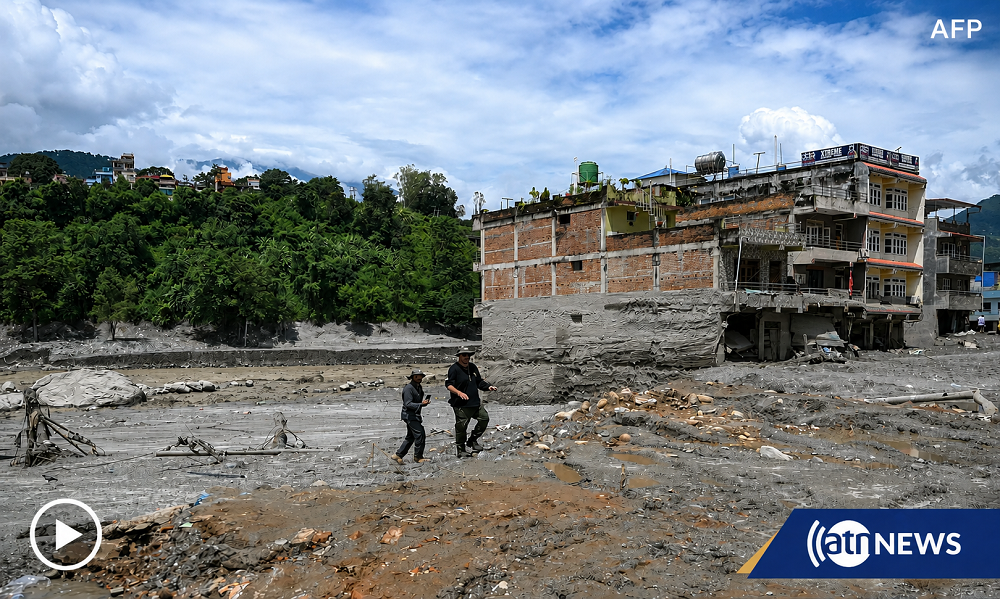
Nepal’s search, rescue and recovery operation has entered a critical phase after devastating flash floods swept through communities along the Bhotekoshi and Trishuli river systems, leaving hundreds dead and thousands of people still unaccounted for.
The latest figures put the death toll at 734, with 2,498 people still missing. More than 8,000 people have been rescued or evacuated, including foreign nationals.
The disaster struck on August 26 when a massive surge of water and debris tore through communities in northern and central Nepal. The precise cause remains under investigation, although the catastrophe has been linked to a glacier collapse or ice-and-rock avalanche in the Himalayan region.
Rescue teams race to reach trapped workers
Among the most urgent rescue operations is the search for workers believed to be trapped inside hydropower tunnels along the Trishuli corridor.
Authorities say 933 hydropower workers are among those reported missing. At the Trishuli 3A hydropower project, rescuers have inserted a pipe into a tunnel and begun pumping air inside as teams work to reach people who may still be alive.
Specialist teams from neighbouring India and China are assisting with the difficult tunnel operations. Access remains extremely challenging, with roads and bridges destroyed, tunnel entrances buried and sections of infrastructure cut off by mud and floodwater.
Helicopters remain vital
With large sections of the affected region inaccessible by road, helicopters have become a crucial part of the rescue effort.
Military and other rescue aircraft are being used to evacuate survivors, transport food and medical supplies and reach communities cut off by the destruction. Poor weather, mountainous terrain and rising river levels, however, continue to hamper operations.
Authorities have also warned residents to remain vigilant as water levels rise in some rivers and new landslides create additional risks.
Search turns to recovery
As hopes of finding survivors continue, rescue teams are also facing the grim task of recovering and identifying victims.
Hundreds of bodies and human remains have been recovered from flood-affected districts, with some carried considerable distances downstream. The scale of the disaster has placed enormous pressure on local identification facilities, while additional forensic and DNA-testing support is being sought.
Families of missing people have gathered at hospitals, rescue centres and military bases, searching lists of survivors and recovered victims for information about relatives who remain unaccounted for.
International assistance grows
International support is also arriving as Nepal begins the enormous task of providing emergency assistance and planning for reconstruction.
India has deployed specialist rescue personnel and relief supplies, while China is assisting with tunnel rescue operations. Other countries and international organisations are also providing humanitarian assistance and specialist equipment.
The destruction of roads, bridges, homes, power infrastructure and hydropower facilities is expected to create a major long-term reconstruction challenge.
A race against time
For rescuers, the immediate priority remains finding those who may still be alive beneath collapsed structures and inside flooded tunnels.
For families, the operation is becoming a desperate search for answers.
Across the devastated river valleys, rescue workers continue digging through mud and debris while helicopters move between isolated communities. But with thousands still missing and the threat of further flooding and landslides, authorities face a race against time to locate survivors and recover those who did not make it.


Tahawol: Improvement in Afghanistan-China relations discussed

Saar: Expanding ties with regional and global countries discussed

Abu Muslim Farah beat Omar Zawak Herat 4-0 in Afghanistan Champions League

ACB launches nationwide fast-bowling talent hunt

US extends Qatar camp stay for more than 1,000 Afghans

Saudi energy group signs major Afghanistan deals covering gas exploration and pipeline plans

Iranian clubs to face Gulf opponents at neutral venues in Asian Champions League Elite

Khalilzad: Afghanistan ready to attract major investment

Ariana Television Network secures exclusive rights to Afghanistan’s 2026/27 cricket series

Pakistan, Saudi Arabia and Türkiye strengthen new Mecca Defence Alliance
Tahawol: Improvement in Afghanistan-China relations discussed
Saar: Expanding ties with regional and global countries discussed

Tahawol: Absence of Afghanistan’s envoy at UNGA discussed

Saar: Assessment of war between Afghanistan and US discussed

Saar: Afghanistan’s image at UNGA
-

 Sport4 days ago
Afghan bodybuilder Ali Bilal finishes runner-up at Mr Olympia for third straight year
-

 Latest News4 days ago
Afghanistan says 28 killed, 32 captured in Nuristan operation
-

 World4 days ago
Trump rejects Iranian proposal to open Hormuz and end fighting
-

 Sport5 days ago
Afghanistan to face India in Asian Games cricket quarter-final
-

 Sport5 days ago
Afghanistan Champions League: Omar Zawak Herat beat Toofan Herat 1-0
-

 World5 days ago
Iran awaits US move after WSJ report says Trump rejects peace plan
-

 Latest News5 days ago
Khalilzad questions Pakistan’s commitment to Afghan welfare
-

 Latest News4 days ago
UNDP, UN Women launch financing initiative for Afghan women entrepreneurs