
Latest News
Afghanistan’s prime minister condemns killing of Hamas leader in Iran
Akhund said the assassination of Hamas’s political leader is a desperate and transparent attempt to divert attention by Israel from its military shortcomings and failures

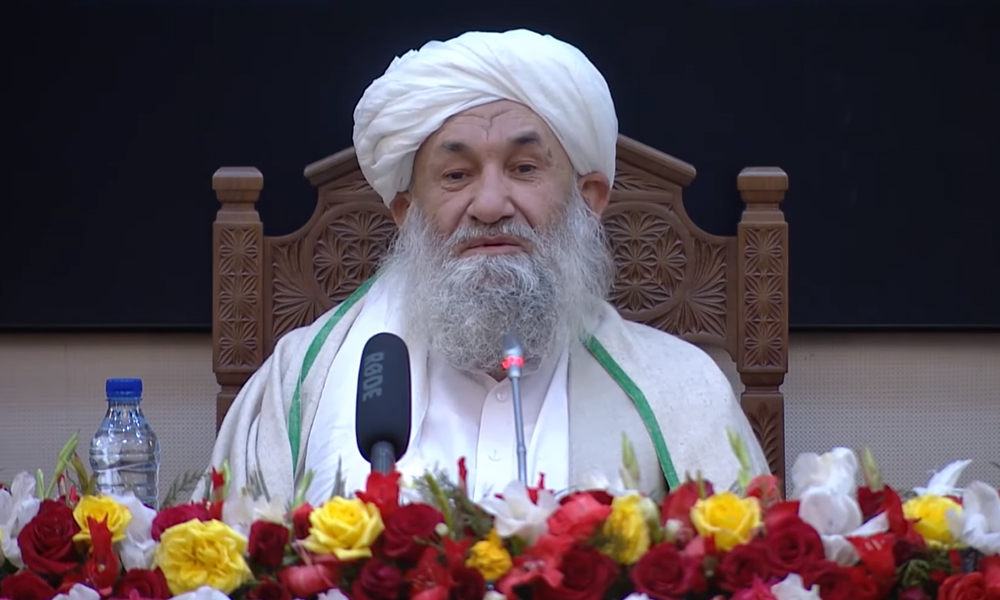
The Prime Minister of the Islamic Emirate of Afghanistan Mullah Muhammad Hasan Akhund has extended his condolences to Hamas and the people of Palestine on the assassination last week of the group’s political leader .
In a statement issued Sunday, Akhund said: “The assassination of Hamas’s political leader is a desperate and transparent attempt to divert attention from its (Israel) military shortcomings and failures.”
He said the targeted assassination of Haniyeh in Tehran by the Zionist regime is not only a heart-breaking loss but also a blatant violation of international laws and norms.
“This egregious act by the Zionist regime occurred while he was a guest of the government, highlighting the enemies’ utter contempt for diplomatic sanctity and the principles of international conduct,” he said.
Akhund also stated that the persistent silence of Western institutions and human rights organizations over the past ten months starkly reveals the true nature and biases of these entities.
“I unequivocally condemn this cowardly and unjustifiable attack on Martyr Ismail Haniyeh. May Allah grant him and all the martyrs of Gaza the highest ranks alongside the martyrs of Badr and Uhud.”
He went on to state that despite its relentless campaign of genocide against the Palestinian people, Israel’s strategic objectives remain unmet and that the Palestinian resistance will undoubtedly continue their righteous struggle for rights and freedom.
He said: “In light of these events, I urgently call upon the international community, particularly the influential nations of the region and the world, to take immediate and decisive action to halt the Zionist regime’s atrocities in Gaza.
“It is imperative to prevent the further escalation of this conflict, which threatens to engulf the entire region in flames. The responsibility for any expansion of this war rests solely with the Zionist regime and its supporters.”
Iran’s Revolutionary Guards said on Saturday in a statement that Haniyeh was slain in Tehran by a short-range projectile with a warhead of about 7 kg.
Wednesday’s assassination has aroused fears of direct conflict between Tehran and its arch-enemy Israel in a region shaken by Israel’s war in Gaza and a worsening conflict in Lebanon.
Revenge for the killing of the Hamas leader will be “severe and at an appropriate time, place, and manner”, the Guards’ statement added, blaming the “terrorist Zionist regime” of Israel for his death.
Iran and Hamas have accused Israel of carrying out the strike that killed Haniyeh hours after he attended the inauguration of Iran’s new president.
Israeli officials have not claimed responsibility.
The statement by the elite Guards force also accused the “criminal U.S. government” of supporting the attack which Iranian media said took place in a northern suburb of Tehran.
Haniyeh was buried on Friday in Qatar, where he was based.

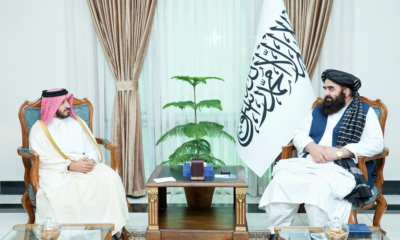




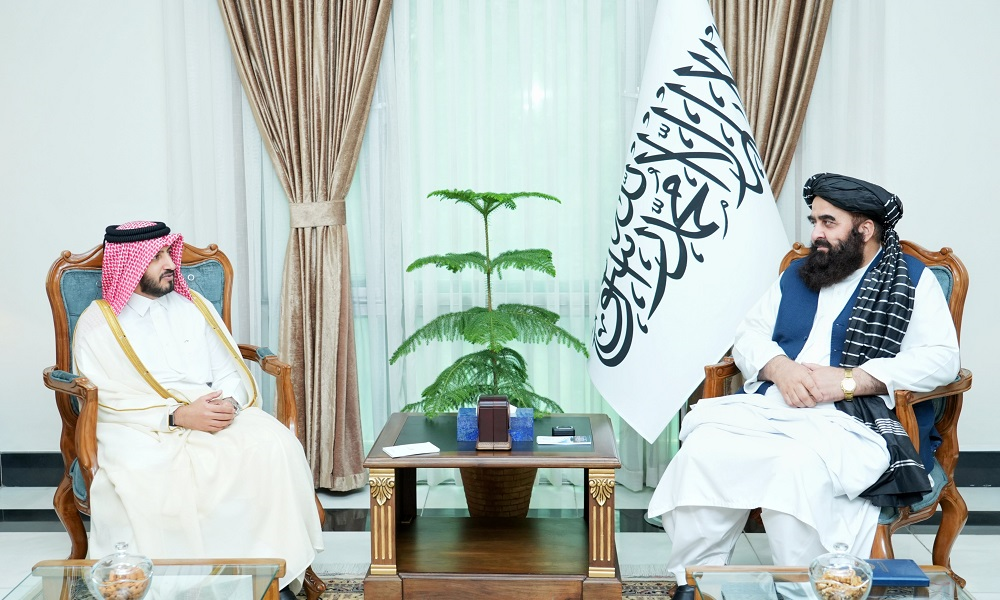
Afghanistan’s Foreign Minister Amir Khan Muttaqi met on Tuesday with Qatar’s ambassador to Kabul, Mirdif Al-Qashouti, to discuss strengthening bilateral relations and expanding Afghanistan’s engagement with the international community.
In a statement, the Ministry of Foreign Affairs said the meeting focused on Qatar’s efforts to facilitate the Islamic Emirate’s engagement with the international community.
Muttaqi welcomed the growing engagement between Afghanistan and the international community and praised Qatar’s role in supporting these efforts.
Meanwhile, Qatar’s ambassador reaffirmed Doha’s commitment to continuing its efforts and described the progress made so far as encouraging.
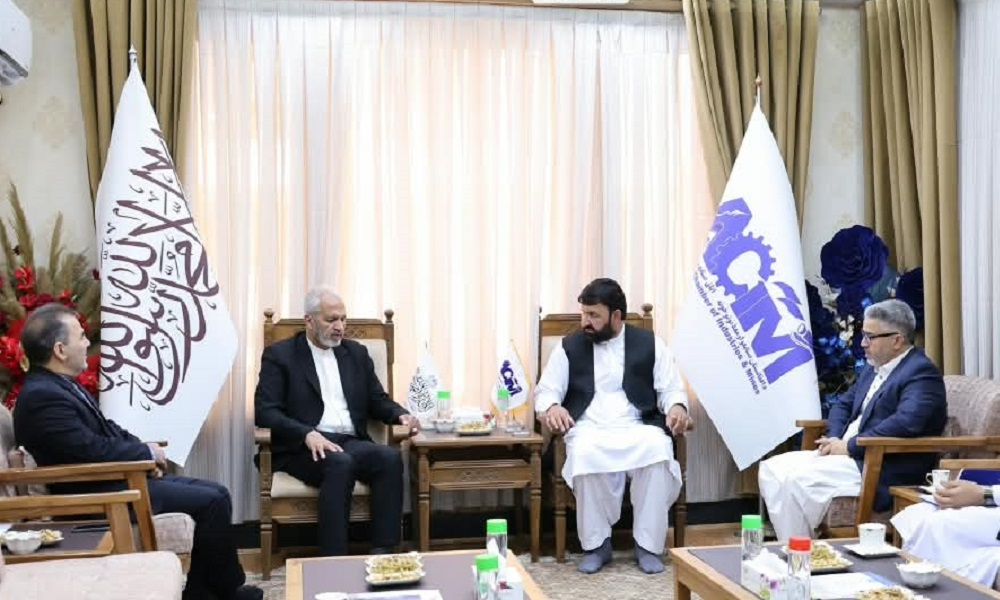
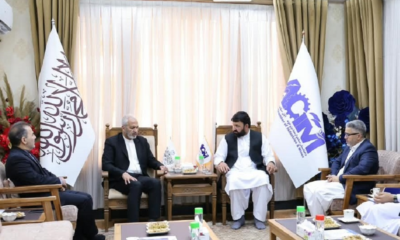
Alireza Bikdeli, Iran’s ambassador to Kabul, met on Tuesday with officials of the Afghanistan Chamber of Industries and Mines to discuss expanding economic relations, joint investment, and strengthening cooperation in the industrial and mining sectors.
During the meeting, Khan Mohammad Khan, deputy for industry at the Afghanistan Chamber of Industries and Mines, highlighted the existing opportunities in Afghanistan’s industrial and mining sectors and called on Iranian investors to make practical investments in these areas.
He said that with suitable opportunities available for industrial growth and the processing of raw minerals in Afghanistan, greater prospects exist for economic cooperation and joint investment with regional countries, particularly Iran.
Meanwhile, Bikdeli said that Iranian investors are showing growing interest in operating in various economic and production sectors in Afghanistan. He also emphasized Iran’s willingness to expand economic relations and bilateral cooperation between the two countries.
At the end of the meeting, he invited officials of the Afghanistan Chamber of Industries and Mines to participate in a mining exhibition scheduled to be held in Iran.

Afghanistan’s Ministry of Information and Culture says BBC radio broadcasts across the country have been suspended due to what it described as “repeated violations.”
Safiullah Raed, head of media monitoring at the ministry, confirmed the suspension, without providing further details.
The BBC has also confirmed that its radio broadcasts have been suspended across Afghanistan. A spokesperson for the broadcaster said it was in contact with officials of the Islamic Emirate to resolve the issue.


Tahawol: Warnings over worsening insecurity in Pakistan discussed

Saar: Concerns over potential return of US military bases to Afghanistan discussed

Afghanistan hold Bangladesh to dramatic draw in Abu Dhabi Test

Muttaqi and Qatar’s envoy discuss Afghanistan’s ties with international community

Afghanistan and Iran stress expanding industrial and mining cooperation

Cricket Bonanza: Afghanistan set for packed international schedule

New warnings reignite debate over AI threat to humanity

UN warns of mounting humanitarian and human rights pressures in Afghanistan

Afghanistan says 28 killed, 32 captured in Nuristan operation

CNN, MS NOW and Politico sue Trump, challenging White House ban
Tahawol: Warnings over worsening insecurity in Pakistan discussed
Saar: Concerns over potential return of US military bases to Afghanistan discussed

Tahawol: Kabul’s criticism of Islamabad’s policy toward Afghanistan

Saar: Pakistan deploying army in KP

Tahawol: EU appointing new envoy for Afghanistan
-

 Regional5 days ago
Trump says US will not attack Iran before midterm elections in November
-
 Latest News4 days ago
Pakistan issues new directives for Afghan medical students and doctors
-
 World5 days ago
Witkoff, Kushner to meet Ukrainians for talks on the war, says US source
-
 Latest News3 days ago
Iranian lawmaker praises Afghanistan’s support, accuses Pakistan of ‘hypocrisy’
-
 Latest News4 days ago
US senator cites Afghanistan visits in Pentagon ‘cover-up’ allegations over Iran war
-
 World4 days ago
US imposes sanctions on ICC amid dispute over international prosecutions
-
 Sport4 days ago
Bangladesh reach 317/8 on Day One against Afghanistan in Test match
-
 Business4 days ago
Iran allocates over 110 hectares in Chabahar for Afghan economic activities