
Climate Change
Summer of 2024 was world’s hottest on record, EU climate change monitor says
The exceptional heat increases the likelihood that 2024 will outrank 2023 as the planet’s warmest on record.


The world is emerging from its warmest northern hemisphere summer since records began, the European Union’s climate change monitoring service said on Friday, as global warming continues to intensify.
The boreal summer of June to August this year blew past last summer to become the world’s warmest, the Copernicus Climate Change Service (C3S) said in a monthly bulletin.
The exceptional heat increases the likelihood that 2024 will outrank 2023 as the planet’s warmest on record.
“During the past three months of 2024, the globe has experienced the hottest June and August, the hottest day on record, and the hottest boreal summer on record,” said C3S deputy director Samantha Burgess.
Unless countries urgently reduce their planet-heating emissions, extreme weather “will only become more intense”, she said. Greenhouse gas emissions from burning fossil fuels are the main cause of climate change.
The planet’s changed climate continued to fuel disasters this summer. In Sudan, flooding from heavy rains last month affected more than 300,000 people and brought cholera to the war-torn country.
Elsewhere, scientists confirmed climate change is driving a severe ongoing drought on the Italian islands of Sicily and Sardinia, and it intensified Typhoon Gaemi, which tore through the Philippines, Taiwan and China in July, leaving more than 100 people dead.
Human-caused climate change and the El Nino natural weather phenomenon, which warms the surface waters in the eastern Pacific Ocean, both pushed temperatures to record highs earlier in the year.
Copernicus said below-average temperatures in the equatorial Pacific last month indicated a shift to La Nina, which is El Nino’s cooler counterpart.
But that didn’t prevent unusually high global sea surface temperatures worldwide, with average temperatures in August hotter than in the same month of any other year except for 2023.
C3S’ dataset goes back to 1940, which the scientists cross-checked with other data to confirm that this summer was the hottest since the 1850 pre-industrial period.










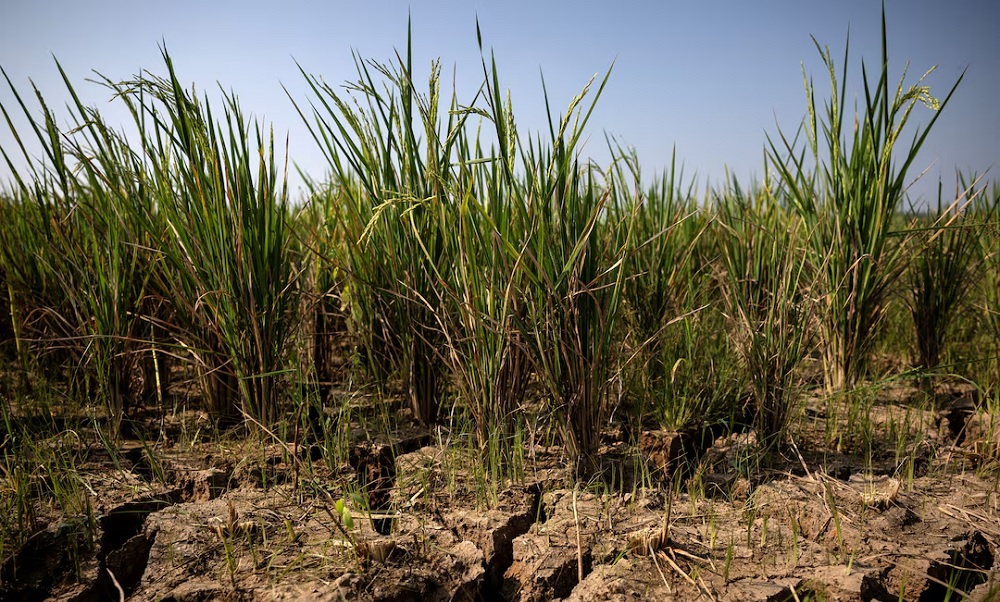
A powerful El Niño weather event could push an additional nearly 49 million people into acute food insecurity across some of the world’s most vulnerable regions by the end of next year, the World Food Programme said on Wednesday.
The U.N. agency said in a report that there was an 81% chance of a very strong El Niño event, with sea surface temperatures at their warmest levels since at least 1982 and potentially making it the strongest such event since 1950, Reuters reported.
El Niño, a periodic warming of ocean surface temperatures in the Pacific, alters global weather patterns and is often associated with drought in Southern Africa, delayed monsoons in parts of Asia and erratic rainfall elsewhere.
“These are events that in the past have triggered large-scale hunger,” Jean-Martin Bauer, director of WFP’s Food Security and Nutrition Analysis Service, told reporters.
Based on an analysis of 45 countries deemed vulnerable to the adverse effects of El Niño, WFP estimates that the number of people facing acute food insecurity could rise by almost 49 million to a total of 274 million people, an increase of 22%, relative to the baseline population already experiencing crisis-level food insecurity or worse.
Central America and Southern Africa are expected to be among the hardest-hit regions, with the number of food-insecure people set to increase by 83% in Central America and nearly 75% in Southern Africa, the WFP report said.
Southern Africa as well as South America and the Caribbean could each see more than 12 million additional people fall into acute food insecurity.
Bauer said global food markets entered the El Niño period in a relatively strong position following good harvests in 2025, but warned that conflict in the Middle East and potential weather-related crop losses could put further upward pressure on prices.
While past El Niño events have not typically triggered major global food price spikes, regional shortages and higher prices could worsen food access for vulnerable households, he said.
Funding cuts from U.S. and European donors in 2025 were also hampering efforts to monitor the developing crisis, with Bauer describing a growing drought of food-security data used to assess the impact of El Niño.
WFP conducted about 1.1 million household surveys in 2024, compared with about 800,000 in 2025, while data collection has fallen further this year due to funding restrictions.
“At a time when you have a risk like an El Niño, it is important to have high-frequency data collection,” Bauer said, warning that reduced monitoring could make it harder to identify emerging food crises quickly.
EARLY ACTION REQUIRED
WFP said current forecasts point to rainfall deficits in parts of East Africa, the Sahel, Central America and the Caribbean, while flood risks could rise in Somalia and neighbouring areas.
Significant impacts are also projected across South and Southeast Asia, where drought risks, uneven monsoons and localized flooding could disrupt agricultural production, the report stated.
The agency stressed that the forecasts remain uncertain and that impacts will vary across regions, but warned that governments and aid agencies needed to prepare.
Richard Choularton, director of WFP’s Climate and Resilience Service, said the agency had scaled up anticipatory action programmes in 18 countries, reaching more than 1.3 million people so far this year with cash and other assistance to help in the event of extreme weather.
Climate Change
Heavy monsoon rains claim lives across India as flooding and landslides continue
Further northeast, flood conditions in Assam have shown slight improvement, although nearly 179,000 people remain affected across seven districts.

Heavy monsoon rains continue to batter large parts of India, triggering deadly landslides, flash floods and widespread disruption across several states.
In the southern state of Karnataka, three members of the same family were killed early Sunday after a rain-triggered landslide caused a hill to collapse onto their home in Shivamogga district. The state has experienced moderate to heavy rainfall over the past two days, with schools closed in several districts, including Karwar, Udupi, Chikkamagaluru and Dakshina Kannada.
Rivers in parts of Karnataka remain above danger levels, while flooded roads and waterlogged homes have prompted authorities to issue a high alert and urge residents to avoid rivers and low-lying areas.
In neighbouring Kerala, at least eight people have died in rain-related incidents after torrential downpours triggered landslides, flash floods and extensive damage, particularly in the state’s hilly regions. Several rivers burst their banks overnight, inundating towns across central districts. Authorities have opened 65 relief camps, providing shelter to more than 1,400 displaced residents.
Further northeast, flood conditions in Assam have shown slight improvement, although nearly 179,000 people remain affected across seven districts. The death toll from the state’s floods stands at 82, with thousands still living in relief camps. Several rivers, including the Dikhow and Dhansiri, continue to flow above danger levels, while more than 15,000 hectares of farmland remain submerged.
The Indian government has approved the early release of more than 21 billion rupees from the State Disaster Response Fund to support seven flood-affected states.
The India Meteorological Department has forecast heavy to very heavy rainfall across several regions, including Karnataka, Kerala, Rajasthan, Assam, Nagaland, Manipur, Mizoram, Tripura, West Bengal and Sikkim. Thunderstorms, lightning and strong winds are also expected in many parts of the country, with authorities urging residents in vulnerable areas to remain alert.
Climate Change
Hundreds of thousands flee as devastating wildfires rage across France and Spain
Firefighters, military personnel and emergency responders have been deployed across the affected regions, while thousands of residents remain displaced.
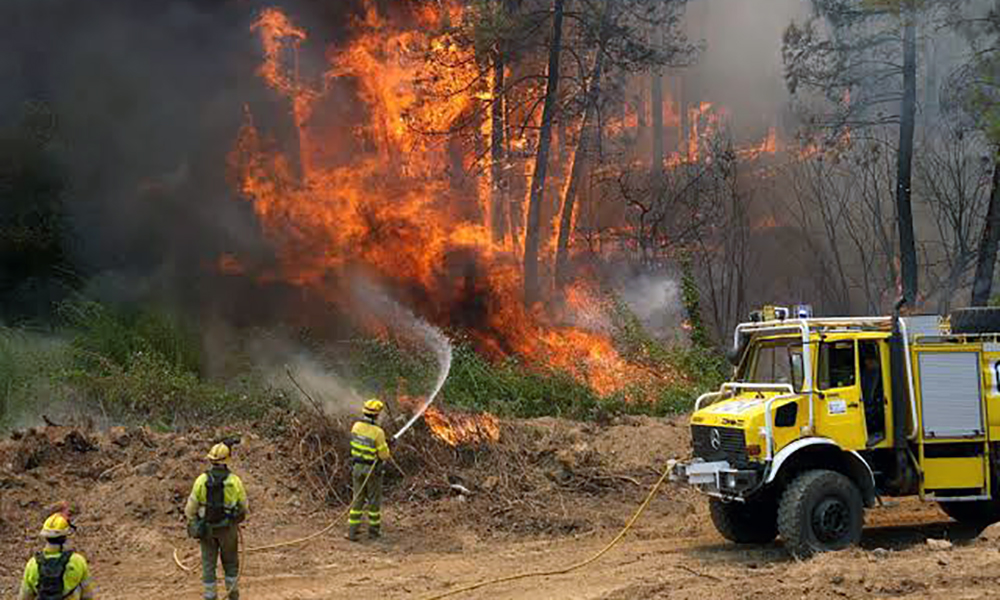
Hundreds of thousands of people have been forced to evacuate their homes as massive wildfires continue to sweep across parts of France and Spain, prompting emergency declarations and international assistance.
Authorities say more than 267,000 people have been evacuated as the fast-moving blazes, fueled by high temperatures, strong winds and dry conditions, continue to spread across large areas of both countries.
In France, officials ordered the complete evacuation of the Cap Ferret peninsula on the Atlantic coast as wildfires burned through more than 10,000 hectares of forest. Thousands of residents and tourists were instructed to leave the area by road and boat as flames advanced despite extensive firefighting efforts.
French President Emmanuel Macron described the situation as “very intense,” while the government activated the European Union’s Civil Protection Mechanism, bringing in additional firefighting aircraft from other EU member states to help battle the blazes.
In neighboring Spain, the government declared a national emergency after multiple wildfires threatened communities west of Madrid and in the province of Ávila. Authorities warned that several fires risked merging into larger fronts, complicating efforts to contain them.
Firefighters, military personnel and emergency responders have been deployed across the affected regions, while thousands of residents remain displaced.
Scientists have repeatedly warned that climate change is increasing the frequency and intensity of extreme heatwaves and wildfire conditions across southern Europe, with prolonged drought and soaring temperatures creating ideal conditions for rapidly spreading fires.
No final estimate of the damage has yet been released, and officials cautioned that dangerous weather conditions are expected to persist, raising concerns that the fires could continue to spread in the coming days.
Emergency services remain on high alert as authorities urge residents in affected areas to follow evacuation orders and avoid travel near active fire zones.


Tahawol: Afghanistan: An Alternative to the Strait of Hormuz?

Saar: Pakistan-Saudi-Turkey Pact: Regional Impact

Ariana Airlines brings $2.3 million Boeing 737 engine from US to Kabul

Israel rejects Trump’s 15-point plan for Gaza, PM Netanyahu says

Afghanistan issues more than 650,000 passports in one year

Pakistan’s governance system has ‘collapsed’: Mohsin Naqvi

India offers 1,000 online scholarships for Afghan students for 2026-27 academic year

Turkey spent over $120 million to prepare airport for Qatar-donated U.S. presidential aircraft

FIFA’s inaugural YouTube Creator Cup to stream live on Ariana Television and Ariana Sport YouTube channels

FIFA World Cup semi-final line-up confirmed
Tahawol: Afghanistan: An Alternative to the Strait of Hormuz?
Saar: Pakistan-Saudi-Turkey Pact: Regional Impact

Tahawol: Escalating disputes over Iran war discussed

Saar: Turkey, Saudi Arabia and Pakistan defense pact reviewed

Tahawol: End of US sanctions waiver for Chabahar Port discussed
-

 Latest News5 days ago
Khalilzad says Pakistan needs ‘reset’ amid economic crisis and rising instability
-

 Latest News4 days ago
First Afghanistan-Ireland ODI abandoned without a ball bowled
-

 Sport5 days ago
Afghanistan aim for winning start against Ireland
-

 Sport4 days ago
Afghanistan holds Russia to 3-3 draw, earns first point at Continental Futsal Championship
-

 Latest News4 days ago
Afghan boxer appears in Greek court over death of Scottish woman
-

 Regional4 days ago
Iran threatens to hit Gulf states if US launches new strikes
-

 Business3 days ago
Uzbekistan’s Fergana region strengthens economic ties with Afghanistan
-

 World2 days ago
US Senate passes Russia sanctions championed by Graham; US House next