
World
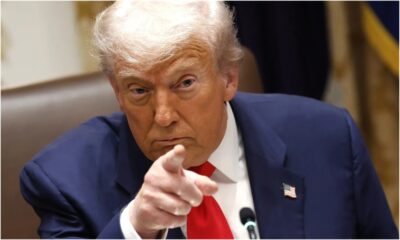
Trump holds Situation Room meeting on Iran, officials say
Trump has threatened military action against Iran if it does not give up its nuclear program while also stressing the need for diplomacy and negotiations.

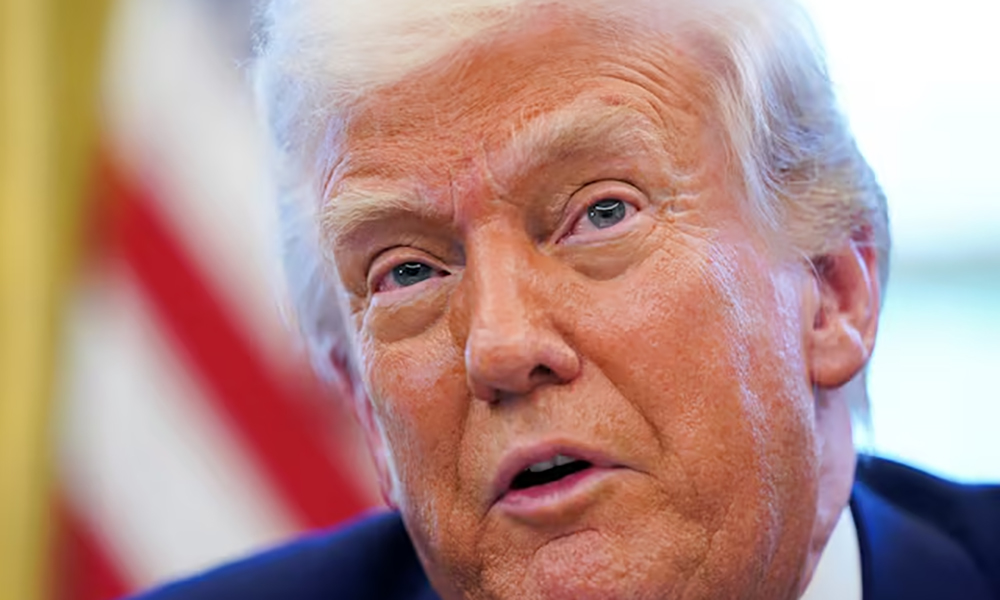
President Donald Trump met with his top national security aides on Tuesday to discuss Iran’s nuclear program ahead of a second meeting between U.S. and Iranian officials on Saturday, sources said.
U.S. special envoy Steve Witkoff is to meet his Iranian counterpart on Saturday, a session currently scheduled to be held in Oman. Trump spoke to the sultan of Oman, Haitham bin Tariq, about Oman’s mediation role between Washington and Tehran.
A White House official confirmed the White House Situation Room meeting on Iran and said the location was not unusual since Trump gets briefed there regularly to take advantage of the chamber’s secure setting.
A second source briefed on the meeting said Trump and his top aides discussed the Iran talks and next steps. U.S. officials have been working on a framework for a potential nuclear deal.
Trump has threatened military action against Iran if it does not give up its nuclear program while also stressing the need for diplomacy and negotiations.
White House press secretary Karoline Leavitt told reporters Trump’s bottom line in the talks, which included an initial session last Saturday, is he wanted to use negotiations to ensure Iran does not obtain a nuclear weapon.
Trump and the Omani leader also discussed ongoing U.S. operations against Yemen’s Houthis, she said.
“The maximum pressure campaign on Iran continues,” Leavitt said at a press briefing. “The president has made it clear he wants to see dialogue and discussion with Iran, while making his directive about Iran never being able to obtain a nuclear weapon quite clear.”
She added that he had “emphasized” this directive during the call with Sultan Haitham.
Both sides described last weekend’s U.S.-Iran talks in Oman as positive.
Trump has restored a “maximum pressure” campaign on Tehran since February, after he ditched a 2015 nuclear pact between Iran and six world powers during his first term and reimposed crippling sanctions on the Islamic Republic.
Iran’s nuclear program has leaped forward since then. The two countries held indirect talks during former President Joe Biden’s term but made little, if any progress.
Iran’s clerical rulers have publicly said that demands such as dismantling the country’s peaceful nuclear program or its conventional missile capabilities were off the table.



World
Trump says men arrested at UK air base used by US planned ‘big damage’
WATCH: Trump praises UK authorities for arrests Sunday near RAF airbase used by US forces in England.
British police have arrested five men on suspicion of explosives offences and preparing a terrorist act near RAF Fairford, a UK air base used by the United States military, authorities said.
The arrests were made early Sunday after police received a report of three suspicious vans travelling towards the airfield in Gloucestershire, western England.
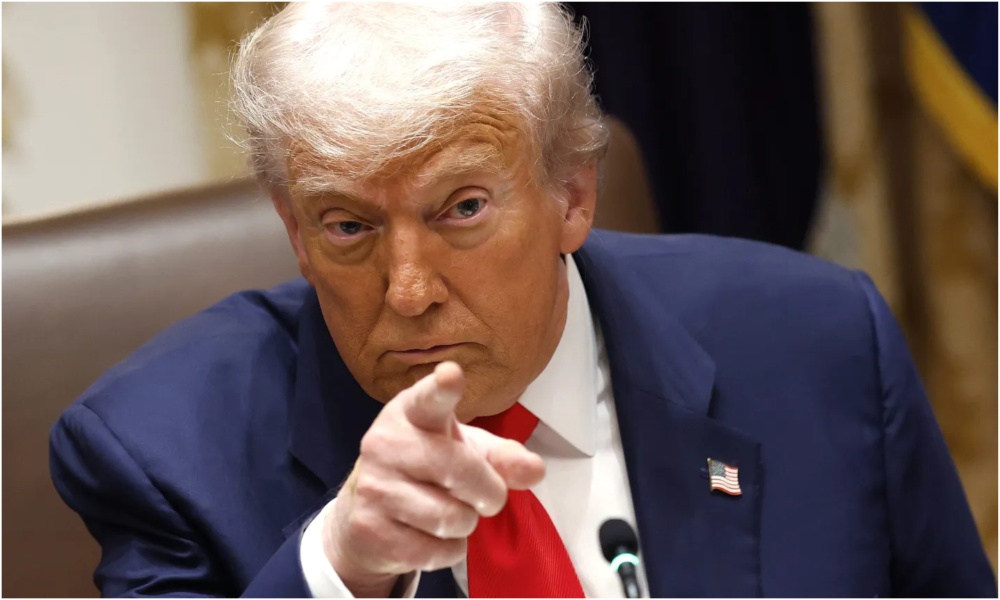
US President Donald Trump said the suspects had been under investigation by British and US authorities and were looking to cause “big damage” to the base.
“The arrest in the UK was fantastic,” Trump told reporters, praising cooperation between US and British authorities.
Counter Terrorism Policing said five men remained in custody and that officers were working with partner agencies to establish the circumstances surrounding the incident.
Police placed a 400-metre cordon around the area while bomb disposal experts examined the vehicles. About 85 homes in a nearby village were evacuated, while armed officers patrolled the area.
RAF Fairford has been used by US forces for military operations against Iran. Security was also increased at other UK bases used by the US, including RAF Lakenheath and RAF Mildenhall.
A source familiar with the investigation told Reuters an Iranian-linked motive was considered the most likely, while possible Russian involvement or an Islamist plot were also being examined.
No motive has been publicly confirmed by police.
The arrests come amid heightened security concerns in Britain following Iranian warnings over the use of UK bases by US forces. Russia has also been accused by Western governments of supporting sabotage operations in Europe, allegations Moscow has denied.
World
Serbia’s President Vucic resigns ahead of October parliamentary elections
He had said in late June that he planned to resign and that Serbia would hold early parliamentary and presidential elections.
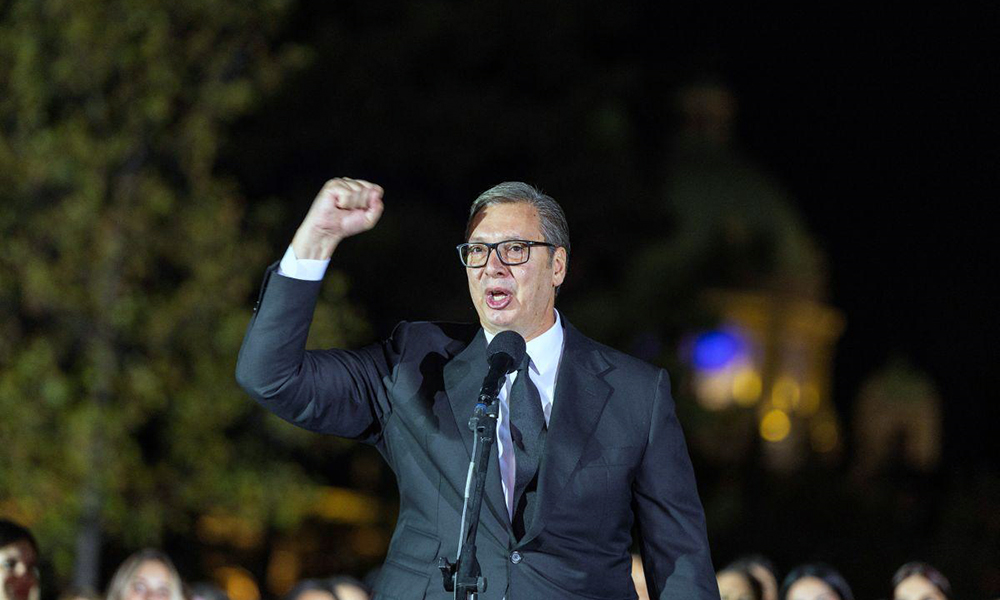
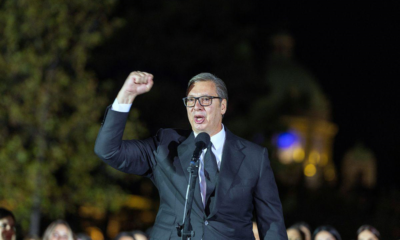
Serbia’s populist President Aleksandar Vucic announced his resignation on Sunday, ending his second and final five-year term and paving the way for early presidential elections, Reuters reported.
Vucic’s resignation, seven months before his term ends, comes amid campaigning for Serbia’s October 25 snap parliamentary vote and allows him to be appointed prime minister if his Serbian Progressive Party (SNS) forms the new government.
He had said in late June that he planned to resign and that Serbia would hold early parliamentary and presidential elections.
Rights groups have accused Vucic and his allies of increasingly authoritarian rule, with anti-government protesters saying they have been beaten by police and unfairly detained. Authorities have denied those allegations.
On Sunday, hundreds of Vucic’s supporters cheered him in front of the Presidency building in Belgrade’s city centre.
“This is the last evening for me in this building,” he told the flag-waving crowd minutes before resigning.
“I have faithfully served you and my fatherland, Serbia, … I am proud of what we have done together,” he said.
Under Serbia’s constitution, outgoing Parliament Speaker Ana Brnabic will serve as interim president until a new one is elected. The presidential election must be completed within 90 days, with the campaign lasting between 30 and 60 days.
“By the end of December … we will have the first round of presidential elections,” Vucic said.
Next month’s snap parliamentary election will pit Vucic’s SNS and its allies against Students Win, a student-led anti-corruption movement, and European Serbia, an alliance of pro-Western opposition parties.
Students Win, European Serbia and other parties have yet to nominate their presidential candidates.
Vucic, 56, has dominated Serbian politics for more than a decade, read the report.
He was a hardline nationalist and information minister during the era of the late Slobodan Milosevic and the wars of the 1990s, and later served as deputy prime minister from 2012-14 and prime minister from 2014-17.
He moved to the largely ceremonial position of president in 2017, but kept tight control over his party and the government.
In foreign policy, Vucic has pursued a balancing act that seeks closer ties with China, a major investor, and Russia, Serbia’s principal supplier of natural gas, while maintaining a long-term goal of joining the EU. He also has sought to bolster ties with the United States and Israel.
Vucic’s term in office suffered a major blow in November 2024 when an awning of a newly reconstructed railway station in the northern city of Novi Sad collapsed, killing 16 people.
The disaster sparked nationwide protests by students and the opposition, who demanded accountability for those responsible, transparency in public procurement, an end to systemic corruption, and an early parliamentary vote.
The government repeatedly denied accusations by the protesters, although several officials, including two ministers, were arrested or resigned after the incident.
On Sunday, Vucic said he has granted amnesty and a pardon to 49 people, including 12 activists and 11 of his own supporters, who were arrested or tried in connection with the protests.
World
Trump rejects Iranian proposal to open Hormuz and end fighting
WATCH: Trump speaks to reports about “fake media” and Iran proposal
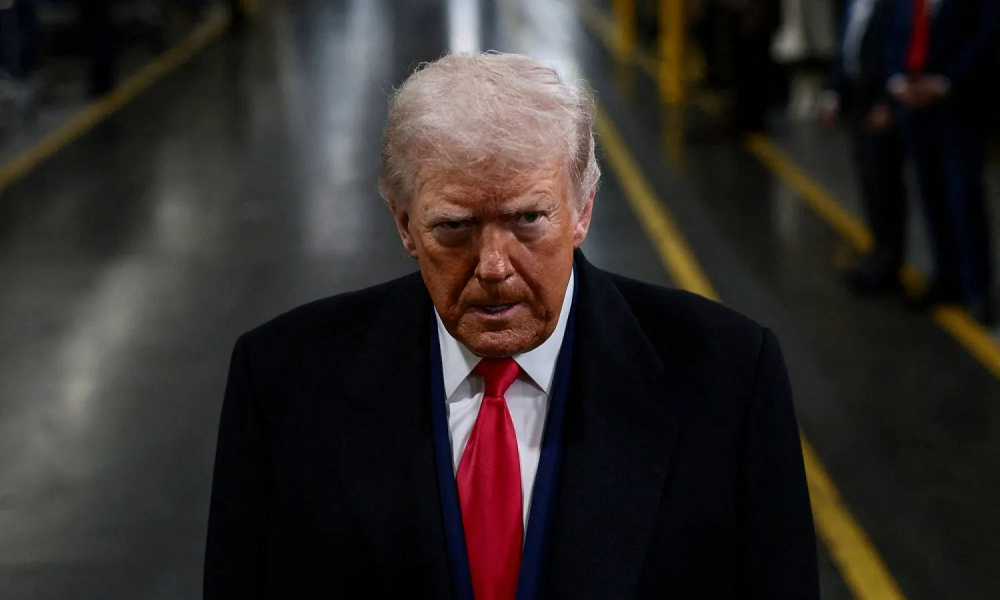
US President Donald Trump said on Saturday he had rejected an Iranian proposal to reopen the Strait of Hormuz and end fighting in the Middle East, Reuters reported.
Iran raised the initiative at the UN General Assembly in New York, saying it had been transmitted to the Americans via Qatari mediators and that it could reopen the strategic waterway and put an end to hostilities in the region within seven days.
But in comments to reporters at the White House, Trump said: “I reject their proposal. … I rejected their deal.
“They want to make a deal to open the Hormuz Strait immediately because they’re losing so badly,” he said before leaving for Tennessee. “We’re winning tremendously.
“They want to make a deal and I think that’s fine, I like making a deal too. What they want to do is immediately open the Hormuz Strait … because they have no money coming in, because they get their money from the Hormuz Strait,” Trump said.
The US has imposed an economic blockade on Iran to put pressure on Tehran to lift its blockade of Hormuz, which has drastically reduced shipping through the strait, even though Trump again asserted that the US had control of the waterway.
The Wall Street Journal first reported that Trump had rejected the Iranian proposal, citing unnamed US officials.
It said Trump was privately sceptical that Iran would meet his demands and had told his staff that he sees a renewed bombing campaign as likely after the November US midterm elections to Congress.
A US official had said earlier that discussions with Iran through mediators were “positive and constructive”.
The Iranians also engaged their Saudi rivals regarding the Strait of Hormuz, underscoring the stakes of a seven-month-old conflict that has disrupted oil flows through a critical shipping lane and taken a toll on the global economy.
Iranian Foreign Minister Abbas Araqchi told reporters at the United Nations on Friday the proposed deal would trigger a seven-day countdown to reopening the strait and a pause in regional fighting, read the report.
“If there is seriousness on the US side to come to a deal and reopen the Strait of Hormuz, everything is now prepared,” Araqchi said. If the US were to agree, the warring parties could start wider talks “on mutually agreed subjects.”
That could potentially include discussions of Iran’s nuclear programme. Trump has said Tehran must never acquire a nuclear bomb, while a senior Iranian official told Reuters that Iran would show no flexibility over its nuclear programme even if the US accepted its peace deal.
Iran would grant no concessions over its rights, including enriching uranium or shipping its highly enriched uranium out of the country, the official said.
Iranian President Masoud Pezeshkian, in an interview with the CBS show “Face the Nation”, said Tehran was ready for talks on its nuclear programme and other issues, but would not accept “bullying or coercion”.
“Iran is not seeking war, but will defend itself against pressure, threats and attacks,” Pezeshkian said, adding that it had already agreed that “we’re not supposed to develop nuclear weapons”.
Previous attempts at diplomacy have failed to end the war, which began on February 28 with US and Israeli attacks, Reuters reported.
Since then the war has alternated between pauses and renewed strikes, killing thousands while degrading Iran’s conventional forces and damaging Iran’s already ailing economy.
Iran and its allies have retaliated by extending the conflict throughout the region. Iran has struck US allies in the Gulf with drones and missiles while its Houthi allies in Yemen have targeted Saudi interests.


Afghanistan vs India Asian Games quarter-final abandoned without a toss

Afghanistan raises import tariffs on several goods to support domestic industry

Khalilzad calls for end to Pakistan’s ‘double game’, urges new chapter with Afghanistan

Afghanistan-Kazakhstan trade reaches $581 million in six months

Trump says men arrested at UK air base used by US planned ‘big damage’

Saudi energy group signs major Afghanistan deals covering gas exploration and pipeline plans

Trump floats idea of renaming Atlantic or Pacific Ocean

Nepal flood rescue mission enters critical phase as thousands remain missing

Iranian clubs to face Gulf opponents at neutral venues in Asian Champions League Elite

Khalilzad: Afghanistan ready to attract major investment

Saar: Afghanistan’s image at UNGA

Saar: Concerns over Pakistan’s political crisis discussed

Exclusive interview with Abdul Latif Mansoor, Minister of MRRD

Tawsia: Overview of Afghanistan’s iron mines

Tahawol: Discussion on fresh Pakistani airstrikes on Afghanistan
-

 Latest News5 days ago
Ariana Afghan Airlines ranks seventh among 45 Central Asian airlines
-

 Regional4 days ago
Iran airlines cancel flights as US sanctions hit
-

 Latest News5 days ago
Silk Road highway in Wakhan corridor now reaches the China border
-

 Sport4 days ago
Afghanistan open Asian Games cricket campaign with win over Japan
-
 World4 days ago
Trump welcomes Chinese President Xi as US-China summit gets underway
-
 Latest News5 days ago
Refugees minister, UNAMA deputy discuss challenges facing returnees
-
 Latest News4 days ago
Khalilzad warns Pakistan-Afghanistan tensions likely to worsen after fresh airstrikes
-
 Latest News1 day ago
Afghanistan says 28 killed, 32 captured in Nuristan operation