
Business
Afghan transit trade via Pakistan’s Gwadar port begins

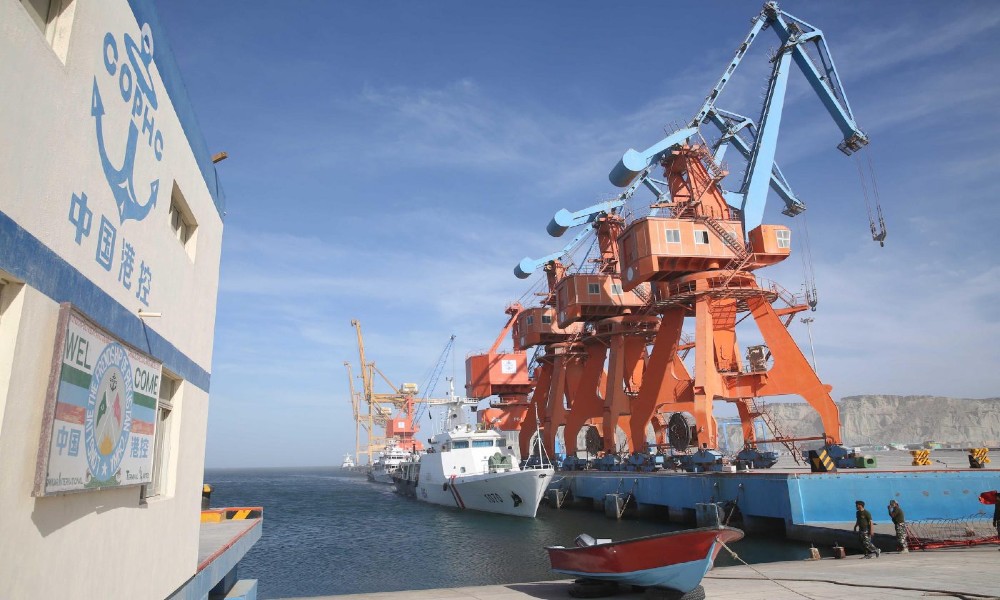
Transit trade to Afghanistan through Pakistan’s strategic Gwadar seaport began on Sunday with a consignment of bulk cargo from the United Arab Emirates (UAE), Anadolu Agency reported.
“The first transit consignment of bulk cargo through Gwadar to Afghanistan started today. Several consignments are lined up for coming days,” said Mohammad Sadiq, Pakistan’s special envoy for Afghanistan, on Twitter.
“We have crossed another milestone towards establishing our credentials as a transit city,” he added.
The ship carrying trade goods for Afghanistan anchored at the port, after which the goods were transported to Afghanistan after customs clearance, local broadcaster Geo News reported.
With its 600-kilometer coastline, Gwadar is a key deep seaport currently operated by China, which seeks to gain direct access to the Indian Ocean via Gwadar in line with its $64 billion Pakistan-China Economic Corridor (CPEC) project.
The economic corridor is hoped to provide China cheaper access to Africa and the Middle East and also earn Pakistan billions of dollars to provide transit facilities to the world’s second-largest economy.
On July 13, Islamabad reopened a key border crossing to resume exports from Afghanistan to India under the Pakistan-Afghanistan Transit Trade Agreement (APTTA). Anadolu Agency reported.
The 2010 bilateral trade agreement provides Afghan traders access to the eastern Wagah border with India, where Afghan goods are offloaded onto Indian trucks.
The agreement, however, does not permit Indian goods to be loaded onto trucks for transit back to Afghanistan.
Last month, Pakistan also reopened three key trade routes – the southwestern Chaman, northwestern Torkham, and Ghulam Khan border crossings – for transit trade and exports to Afghanistan.




Business
Uzbekistan launches new cargo corridor linking China and Afghanistan
From Uzbekistan, shipments will be transferred onto trucks and transported across Turkmenistan en route to Herat in western Afghanistan.

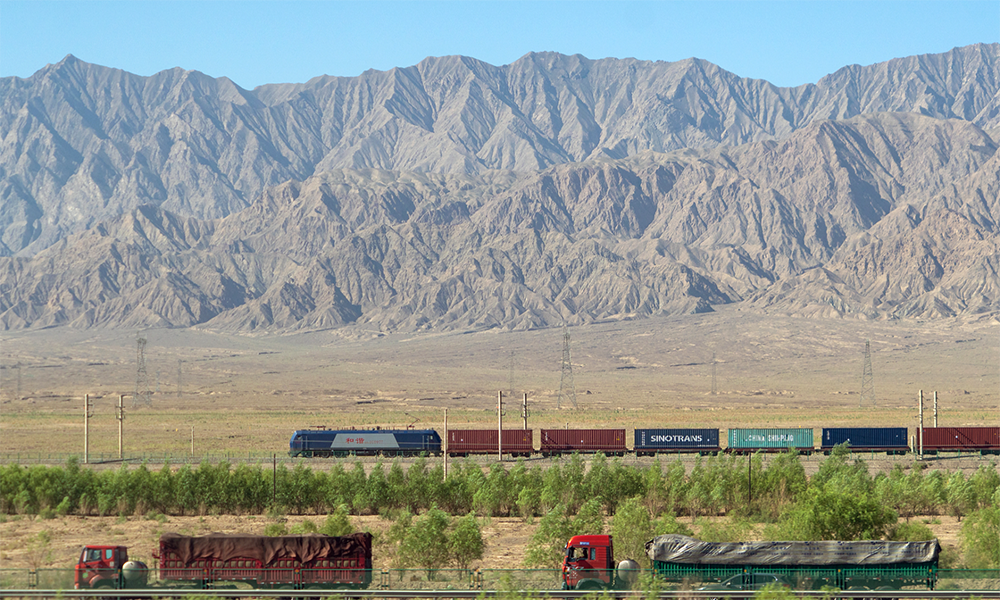
Uzbekistan’s national railway operator has announced the launch of a new multimodal freight route designed to strengthen logistics links between China and Afghanistan via Central Asia.
According to Trend news agency the new corridor will see container used goods transported by rail from China through Kazakhstan’s Altynkol station into Uzbekistan. Cargo will then be handled at the Bukhara logistics centre, operated by Uztemiryulkonteyner, before continuing its journey by road.
From Uzbekistan, shipments will be transferred onto trucks and transported across Turkmenistan en route to Herat in western Afghanistan.
Previously, freight along this trade corridor was largely routed via sea from China to Iran’s Bandar Abbas port, before continuing overland into Afghanistan. The new overland alternative is expected to streamline logistics and improve reliability.
Covering approximately 7,400 kilometres, the route is projected to reduce transit times to around 30 days, offering a more efficient option for regional cargo movement between East Asia and South Asia.
Business
Afghanistan presses Chinese contractor over delays in Mes Aynak copper project
During the meeting, the MCCT president assured that pending operations would be implemented in line with contractual provisions.
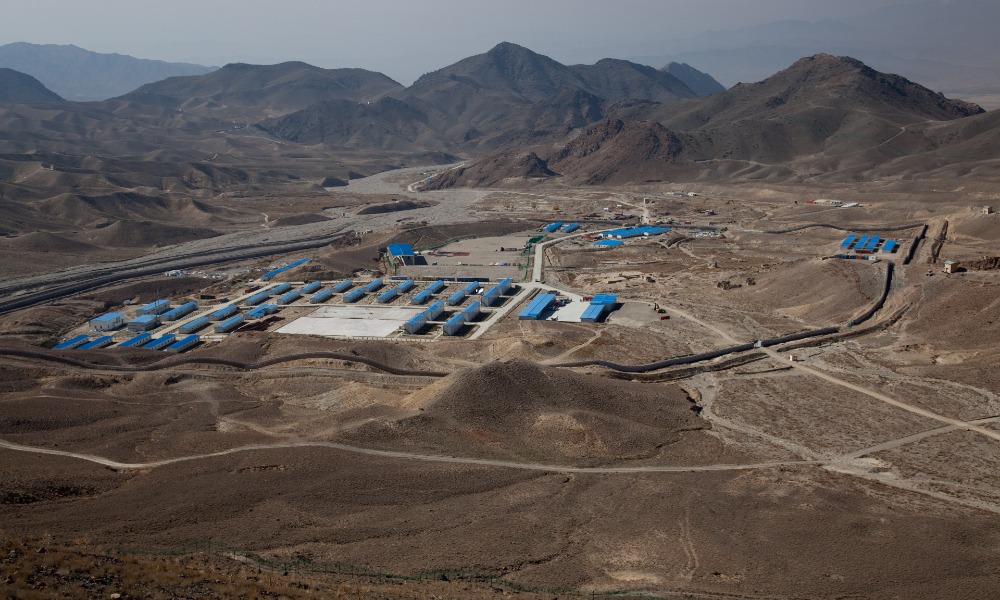
Afghanistan’s Minister of Mines and Petroleum Hedayatullah Badri has raised concerns over delays in the Mes Aynak copper project during a meeting with Chinese officials and company representatives.
The talks brought together the Chinese ambassador, the head of MCCT, and the chairman of MJAM, the contractor responsible for the major mining project. Discussions focused on the lack of progress and the failure to implement key obligations outlined in the mining contract.
Officials reviewed outstanding commitments that had previously been formally communicated to the company, with Afghan authorities stressing that agreed mining activities have yet to be carried out.
During the meeting, the MCCT president assured that pending operations would be implemented in line with contractual provisions.
Badri emphasized that the contractor must fully comply with all terms and conditions of the agreement, as well as follow the ministry’s formal directives. He called for concrete and immediate steps to accelerate the project and ensure full implementation of planned activities.
Mes Aynak copper project
The Mes Aynak copper deposit, located about 40 kilometres southeast of Kabul, is one of the world’s largest untapped copper reserves, with an estimated 11 million tonnes of copper.
The project was awarded to a Chinese consortium led by state-run Metallurgical Corporation of China in 2007 and formally signed in 2008 under a 30-year lease. Valued at roughly $3–4 billion, it was the largest foreign investment in Afghanistan at the time.
The agreement included plans to develop the mine along with major infrastructure such as railways, roads, and power facilities, although several of these commitments were later delayed or renegotiated.
Despite its scale, the project has seen little progress over the past decade. Work slowed significantly around 2013–2014, with ongoing delays attributed to security concerns, lack of infrastructure, and disputes over contractual terms. The presence of a significant archaeological site at Mes Aynak — containing ancient Buddhist remains — has also complicated development, requiring extensive preservation efforts.
Afghan authorities have repeatedly raised concerns over the contractor’s failure to meet key obligations and timelines, while Chinese companies have cited security and logistical challenges as major obstacles.
Since the political changes in Afghanistan in 2021, the project has repeatedly come under focus, with officials pushing to revive stalled mining initiatives as part of broader economic recovery efforts. Chinese firms have signaled continued interest, but meaningful progress has yet to materialize.
The project remains strategically important, with the potential to generate significant revenue, create jobs, and support Afghanistan’s long-term economic development — if longstanding challenges can be resolved.
Business
Kazakhstan grain exports to Afghanistan jump sharply
Shipments to Afghanistan reached 302,000 tons during the period, marking a 4.2-fold increase compared to the same timeframe last year.
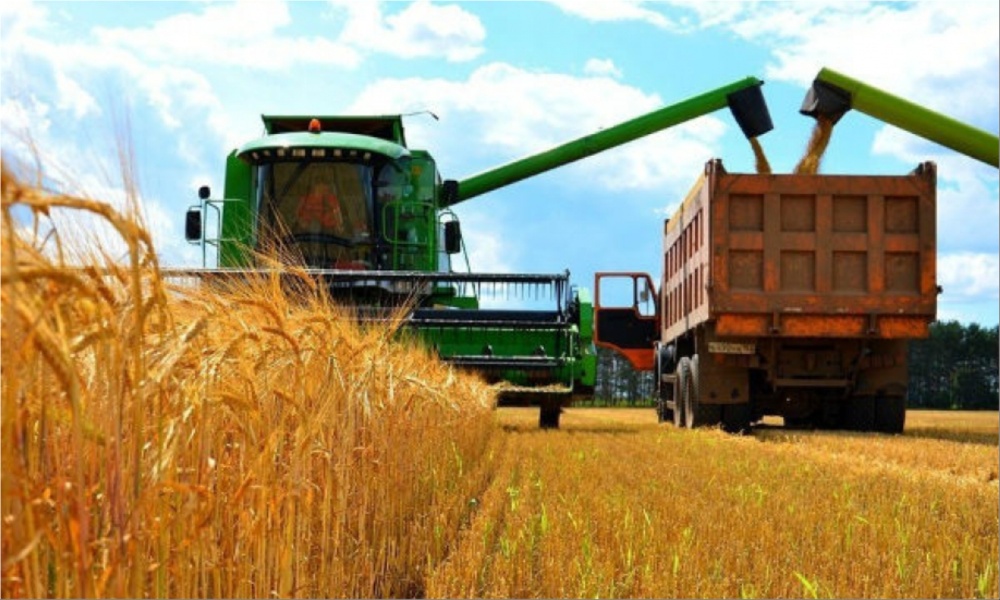
Grain exports from Kazakhstan to Afghanistan surged more than fourfold in the first quarter of 2026, according to a report by Kazinform International News Agency.
Shipments to Afghanistan reached 302,000 tonnes during the period, marking a 4.2-fold increase compared to the same timeframe last year.
Kazakhstan’s overall grain exports also recorded solid growth, rising 18 percent to 3.2 million tonnes. Domestic grain shipments increased by 8 percent, totaling 0.9 million tonnes.
Looking ahead, Kazakhstan plans to expand its agricultural processing capacity, with new grain facilities expected to handle a combined 5.8 million tonnes annually by 2028.


Pakistan says cross-Durand Line communities seek peace and stability

Afghanistan-Gambia ties discussed during Doha meeting

Ariana Snooker Championship Season 2 set to kick off next week

Pakistan’s Achakzai calls for freer movement across disputed Durand Line

US and Iran closing in on one-page memo to end war, Axios reports

Bayat Power extends gas supply deal with Afghan Gas

Etihad Airways to expand Kabul–Abu Dhabi flights to daily service amid surging demand

Afghanistan’s new cricket head coach Richard Pybus arrives in Kabul

Afghanistan moves toward self-sufficiency in car battery production

ATN seals Ariana Snooker Championship deal for five seasons

Tahawol: Diplomatic turn in Iran–US confrontation discussed

Saar: Expanding interaction between countries and IEA discussed

Tahawol: Deportation of Afghan refugees from Germany discussed

Saar: Criticism over Pakistan’s policies discussed

Tahawol: Pakistan’s dual policy on Afghanistan
-

 World4 days ago
Trump says US could restart Iran strikes ‘if they misbehave’
-

 Regional4 days ago
Iran says it has received US response to its latest offer for talks
-

 Business4 days ago
Afghan economic commission approves 12 major development projects across key sectors
-

 Sport3 days ago
Afghanistan set for Maldives four-nation tournament
-
 Latest News4 days ago
UN warns funding cuts are slowing mine clearance efforts in Afghanistan
-

 Business3 days ago
Kazakhstan grain exports to Afghanistan jump sharply
-
 Latest News4 days ago
Afghan officials say media should align with Islamic and national values
-

 Tahawol5 days ago
Tahawol: Trump’s ongoing contradictory statements on Iran discussed