
Latest News
Afghanistan’s prime minister condemns killing of Hamas leader in Iran
Akhund said the assassination of Hamas’s political leader is a desperate and transparent attempt to divert attention by Israel from its military shortcomings and failures

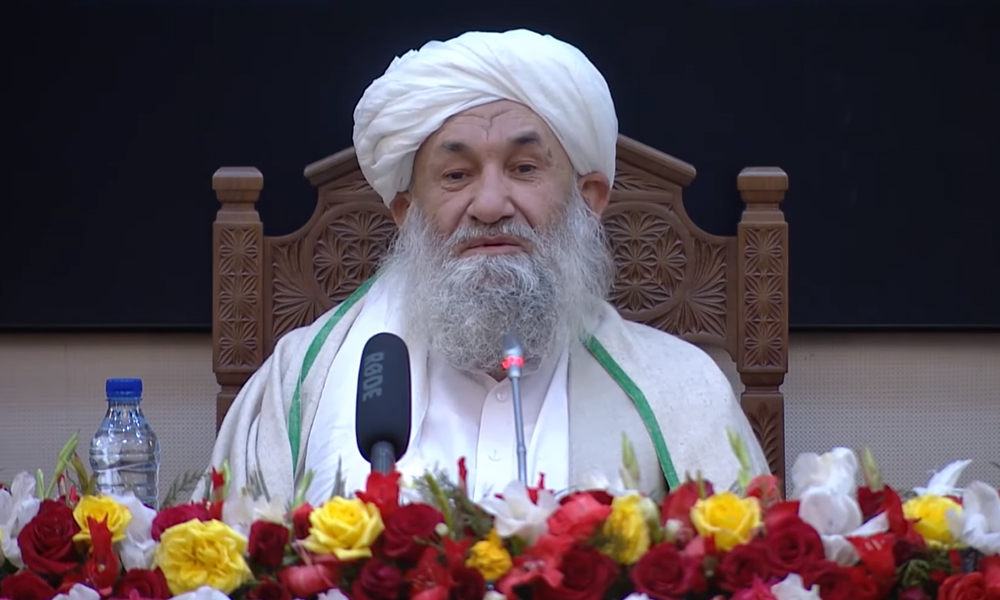
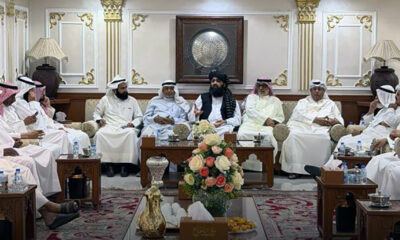
The Prime Minister of the Islamic Emirate of Afghanistan Mullah Muhammad Hasan Akhund has extended his condolences to Hamas and the people of Palestine on the assassination last week of the group’s political leader .
In a statement issued Sunday, Akhund said: “The assassination of Hamas’s political leader is a desperate and transparent attempt to divert attention from its (Israel) military shortcomings and failures.”
He said the targeted assassination of Haniyeh in Tehran by the Zionist regime is not only a heart-breaking loss but also a blatant violation of international laws and norms.
“This egregious act by the Zionist regime occurred while he was a guest of the government, highlighting the enemies’ utter contempt for diplomatic sanctity and the principles of international conduct,” he said.
Akhund also stated that the persistent silence of Western institutions and human rights organizations over the past ten months starkly reveals the true nature and biases of these entities.
“I unequivocally condemn this cowardly and unjustifiable attack on Martyr Ismail Haniyeh. May Allah grant him and all the martyrs of Gaza the highest ranks alongside the martyrs of Badr and Uhud.”
He went on to state that despite its relentless campaign of genocide against the Palestinian people, Israel’s strategic objectives remain unmet and that the Palestinian resistance will undoubtedly continue their righteous struggle for rights and freedom.
He said: “In light of these events, I urgently call upon the international community, particularly the influential nations of the region and the world, to take immediate and decisive action to halt the Zionist regime’s atrocities in Gaza.
“It is imperative to prevent the further escalation of this conflict, which threatens to engulf the entire region in flames. The responsibility for any expansion of this war rests solely with the Zionist regime and its supporters.”
Iran’s Revolutionary Guards said on Saturday in a statement that Haniyeh was slain in Tehran by a short-range projectile with a warhead of about 7 kg.
Wednesday’s assassination has aroused fears of direct conflict between Tehran and its arch-enemy Israel in a region shaken by Israel’s war in Gaza and a worsening conflict in Lebanon.
Revenge for the killing of the Hamas leader will be “severe and at an appropriate time, place, and manner”, the Guards’ statement added, blaming the “terrorist Zionist regime” of Israel for his death.
Iran and Hamas have accused Israel of carrying out the strike that killed Haniyeh hours after he attended the inauguration of Iran’s new president.
Israeli officials have not claimed responsibility.
The statement by the elite Guards force also accused the “criminal U.S. government” of supporting the attack which Iranian media said took place in a northern suburb of Tehran.
Haniyeh was buried on Friday in Qatar, where he was based.





Latest News
Juma Khan Fateh surrenders to IEA forces in Badakhshan
According to the sources, Fateh’s remaining associates are expected to be disarmed, while IEA forces are set to establish full control over the area.
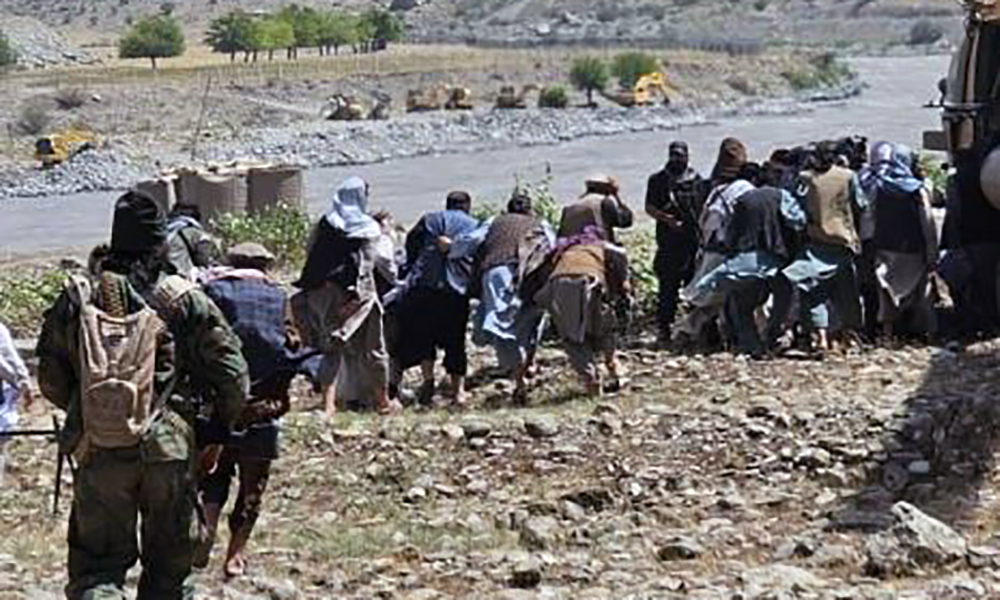
Juma Khan Fateh and his forces have surrendered to the Islamic Emirate of Afghanistan (IEA) in Nusay district of Badakhshan province following several days of pressure and encirclement, security sources told Ariana News.
Sources said increasing pressure on Fateh’s group left them with no option but to surrender. Fateh and his fighters reportedly laid down their weapons at positions held by IEA forces in Nusay.
Qari Fasihuddin Fitrat, the IEA’s Army Chief of Staff, had travelled to Nusay to oversee the situation and the operation against Fateh’s group.
According to the sources, Fateh’s remaining associates are expected to be disarmed, while IEA forces are set to establish full control over the area.
The reported surrender marks the latest development in the security situation in Nusay, although further details about the terms of the surrender and the number of fighters involved were not immediately available.
Latest News
Afghanistan Supreme Court says rights of almost 119,000 women addressed over five years
The courts also handled 8,904 cases related to women’s maintenance and other associated rights, according to Hamza.
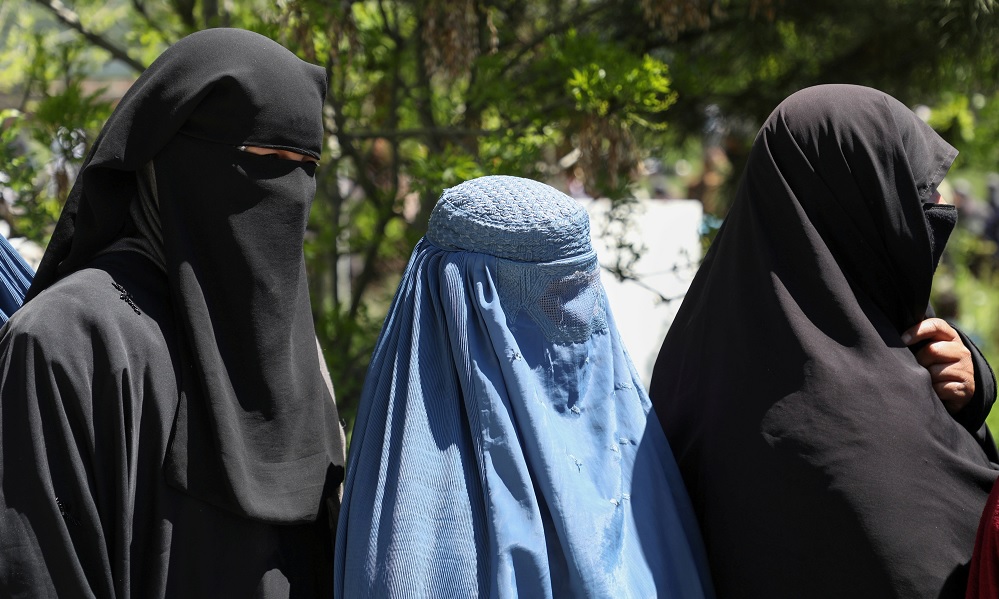
Afghanistan’s Supreme Court says the country’s courts have addressed the legal and Sharia-based rights of 118,869 women over the past five years.
Mansoor Ahmad Hamza, deputy spokesman for the Supreme Court, said the cases covered a range of issues, including inheritance, property, maintenance, documentation and other legal matters.
Hamza said courts handled 12,976 cases involving women’s inheritance and property rights during the five-year period. Another 9,021 inheritance-related cases were registered for information gathering and review.
He added that 18,750 cases involving the registration, verification and certification of women’s property and related documents were addressed, while 22,703 cases concerned the processing of inheritance and property documents.
The courts also handled 8,904 cases related to women’s maintenance and other associated rights, according to Hamza.
He said inheritance, property, dowry, maintenance and other rights granted to women under Islamic Sharia are recognized as established rights, and that courts are required to examine such cases carefully and impartially in accordance with Sharia and applicable laws.
Hamza added that judicial proceedings involving women’s rights will continue, with the aim of ensuring that eligible individuals receive their legal and religious rights and preventing those rights from being denied or lost.
Latest News
China’s special envoy for Afghanistan visits Türkiye, Pakistan and Afghanistan
According to China’s Foreign Ministry, Yue held consultations in Türkiye with Cihad Erginay, Director General for South Asia at the Turkish Foreign Ministry, discussing issues of mutual interest.
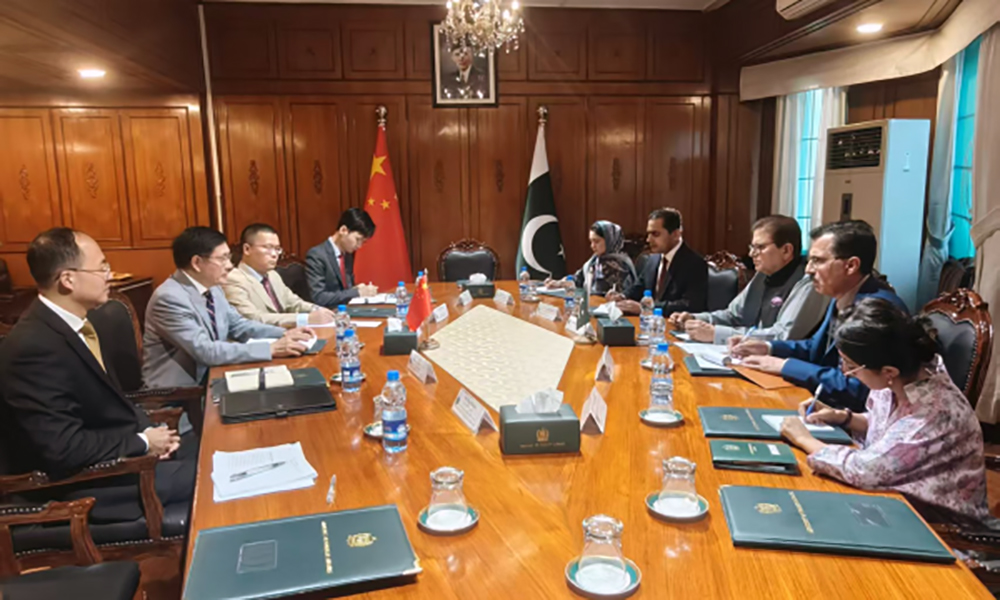
China’s Special Envoy for Afghanistan Affairs Yue Xiaoyong visited Türkiye, Pakistan and Afghanistan from July 30 to August 8, 2026, as Beijing continues diplomatic engagement on regional issues.
According to China’s Foreign Ministry, Yue held consultations in Türkiye with Cihad Erginay, Director General for South Asia at the Turkish Foreign Ministry, discussing issues of mutual interest.
During his visits to Pakistan and Afghanistan, Yue also held talks with officials from both countries on ways to improve and develop relations between Kabul and Islamabad.
China did not provide further details about the discussions.
The visit comes as relations between Afghanistan and Pakistan remain strained by ongoing security and political tensions, with both sides facing challenges in their bilateral ties.


Trump envoy discusses Gaza plan with Netanyahu after rare Hamas meeting

Darwish Rasooli named captain as Afghanistan unveil Asian Games squad

Juma Khan Fateh surrenders to IEA forces in Badakhshan

Afghanistan Supreme Court says rights of almost 119,000 women addressed over five years

Seven killed in temple stampede in India

Pakistan’s governance system has ‘collapsed’: Mohsin Naqvi

Spain sweep FIFA World Cup player awards after historic triumph

First Chinese transit shipment arrives in Herat via Iran’s railway corridor

Afghanistan exports first stone shipment to US in $100,000 trade milestone

AFC confirms clubs for 2026/27 competitions; draw set for August 18

Tahawol: U.S. non-recognition of IEA

Saar: Tensions between Iran and the United States

Debate with Nooruddin Azizi, Minister of Industry and Commerce

Saar: Marking IEA’s fifth anniversary in Afghanistan discussed

Tawsia: $420M investment in TAPI gas distribution network in Herat discussed
-

 Latest News4 days ago
HesabPay unveils new visa card and digital payment app in Kabul
-

 International Sports4 days ago
AFC Champions League Elite draw nears as Al-Nassr seeded above Al-Hilal
-
 Latest News4 days ago
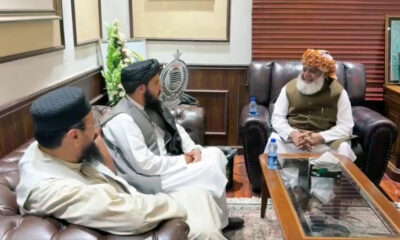
Afghan envoy invites Fazlur Rehman to embassy event marking IEA’s return to power
-
 Sport5 days ago
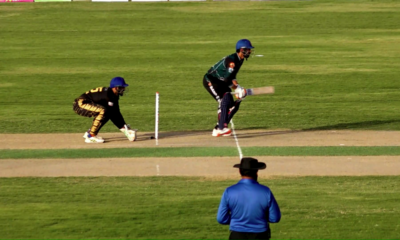
Kabul Premier League: Abasin Defenders thrash Band-e Amir Stars by 163 runs
-
 Regional4 days ago
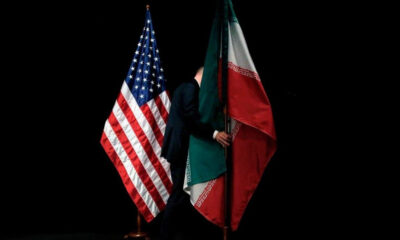
Iran says no progress on reviving interim peace deal with US
-

 Sport4 days ago
Afghanistan clinch Ireland series with record ODI score
-

 Latest News4 days ago
Afghanistan’s future depends on inclusive progress and sustained international engagement: UNAMA
-
 Latest News4 days ago
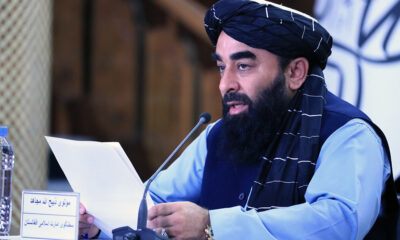
Mujahid rejects UN sanctions monitoring team’s report on foreign militant groups in Afghanistan