
Sport
Beijing marks 100 days to Winter Olympics amid COVID, rights concerns

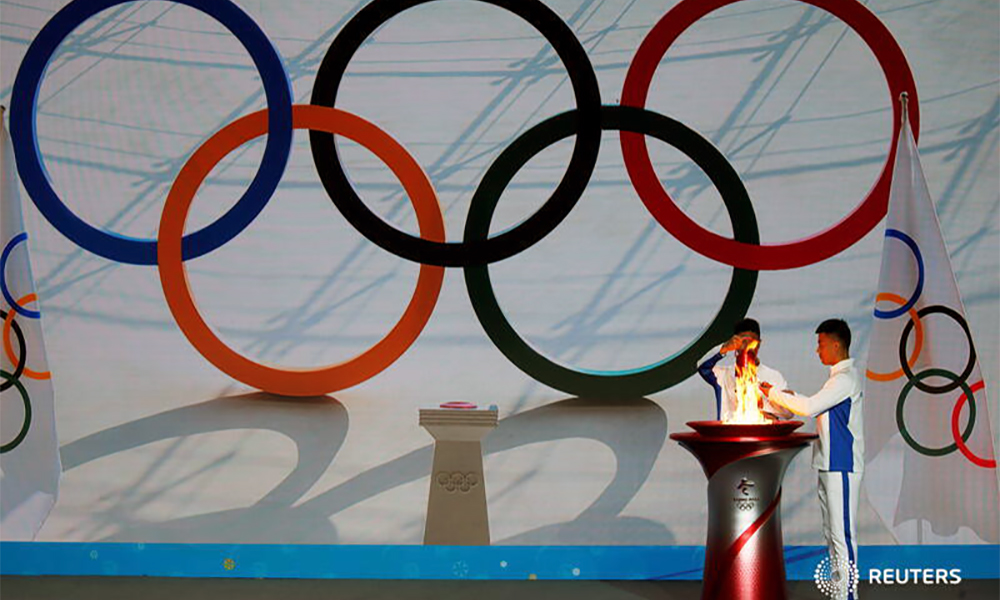
With 100 days until the start of the Winter Olympics, Beijing is promising a “simple and safe” 2022 Games – although preparations are anything but simple as China readies to host thousands of athletes and personnel as it battles COVID-19 flare-ups, Reuters reported.
Beijing will be the first city to stage both the Summer and Winter Games, but the 2022 event is shadowed by the coronavirus pandemic and calls from human rights groups for a boycott over China’s treatment of Tibet, Uyghur Muslims and Hong Kong.
The Games will run Feb. 4 to 20, with all participants subject to daily COVID-19 tests and no international spectators. Unlike this year’s Tokyo Summer Games local spectators will be allowed at events in and around the Chinese capital.
According to the report athletes and other Games-related personnel will be enveloped in a “closed loop” including three clusters of venues – one in downtown Beijing, one in the outskirts near the Great Wall, and one to the northwest of the city, in Hebei province.
Also unlike the Tokyo Games, which were delayed by a year and faced speculation they would be cancelled, there has been little doubt the Beijing Winter Olympics will take place – no matter what – as an increasingly assertive China seizes the opportunity to demonstrate soft power.
Still, the countdown comes as China, with some of the world’s most stringent COVID-19 controls, battles small Delta variant outbreaks. The Beijing and Wuhan marathons were postponed this week, and curbs on travel into the capital were announced due to dozens of daily new cases, read the report.
Restrictions on gatherings and travel have contributed to a lack of the anticipatory buzz that marked Beijing 2008 Summer Olympics – an extravaganza widely seen as China’s global coming-out party.
Since then, China has risen to superpower status, locked in antagonistic competition with the United States and under the increasingly authoritarian leadership of President Xi Jinping, with tightened censorship and suppression of dissent.
During the torch-lighting ceremony in Athens earlier this month, rights activists unfurled a banner reading “No Genocide Games” and waved a Tibetan flag, although the ceremony itself was not interrupted, as had been the case for the 2008 Beijing Summer Games.
Rights groups and some U.S. lawmakers have called on the International Olympic Committee to postpone the Winter Games and relocate the event unless China ends what the United States deems ongoing genocide against Uyghurs and other Muslim minority groups.
Activists and U.N. rights experts have said that at least 1 million Muslims were detained in camps in Xinjiang since 2017. Beijing denies all allegations of abuse of Uyghurs and describes the camps as vocational training facilities to combat religious extremism, Reuters reported.
After Boston Celtics centre Enes Kanter posted videos denouncing China’s human rights record last week, his name appeared to be blocked on China’s social media platform Weibo, and his team’s highlights were dropped from a domestic sports platform.
While no country has said its athletes will boycott the Games, European, British and American lawmakers have all voted for their diplomats to do so.
According to the report some facilities built for 2008, including the Bird’s Nest Stadium, will be re-used for 2022. Others have been newly built near the city of Zhangjiakou in Hebei province, connected to Beijing by high speed rail, with the region’s cold but dry winters requiring the help of artificial snow to cover slopes.
The Games are also set to feature players from North America’s National Hockey League after they skipped the 2018 edition in Pyeongchang, South Korea, with superstars like Canada’s Sidney Crosby and Russia’s Alexander Ovechkin poised to add star power.
And while Xi has positioned the Games as an opportunity to accelerate development of winter sports, China is not expected to be among the biggest medals winners.
China topped the gold medals table at the 2008 Summer Games and came second at Tokyo, but won just one in the Winter Games in Pyeongchang and finished 14th overall.








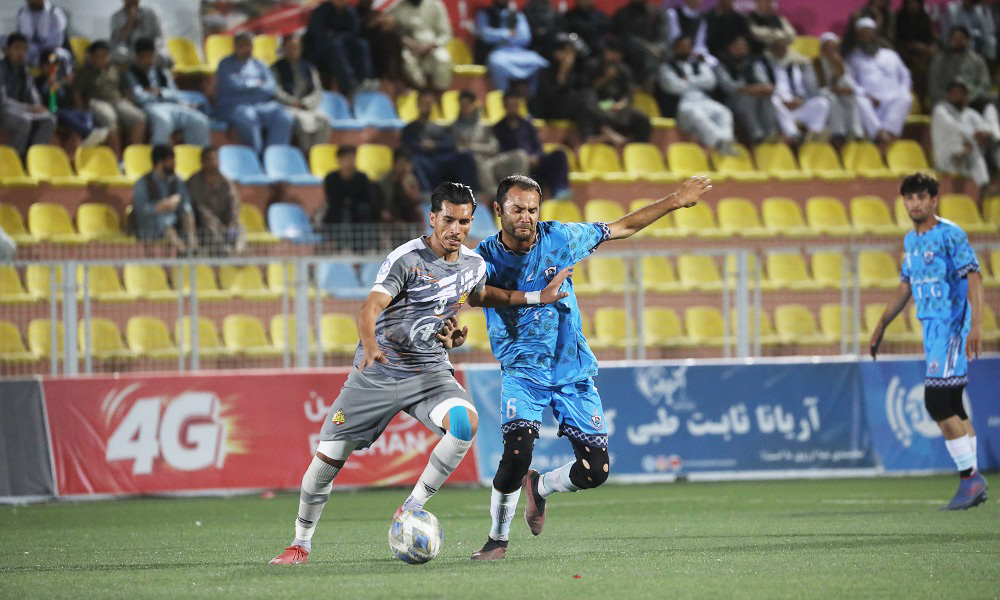
Abu Muslim Farah defeated Khurasan Faryab 2-0 in the 25th match of the sixth season of Afghanistan Champions League Roshan.
The match was played on Saturday at the Afghanistan Football Federation Stadium in Kabul.
Both teams pushed for an opening goal in the first half, but neither side managed to find the net, and the teams went into the break goalless.
Just two minutes into the second half, Abu Muslim Farah broke the deadlock to take a 1-0 lead.
Alireza Panahi later doubled Abu Muslim Farah’s advantage, sealing a 2-0 victory for the Farah side.
Abu Muslim Farah committed 13 fouls and received two yellow cards, while Khorasan Faryab committed seven fouls and received one yellow card.
Matches from the sixth season of the Roshan Afghanistan Champions League are being broadcast live and exclusively on Ariana Television.
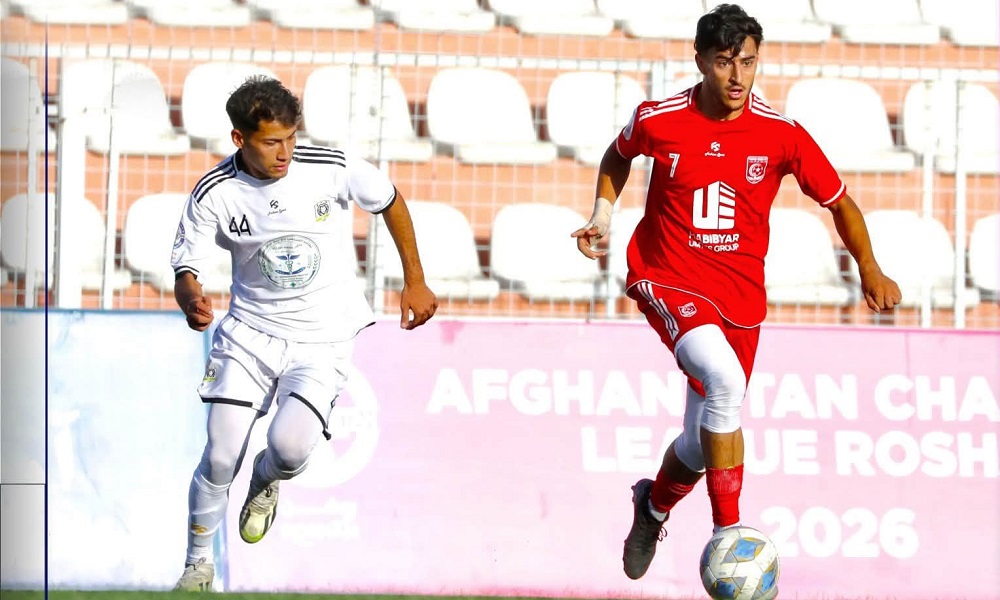
Omar Zawak Herat secured a 1-0 victory over Toofan Herat in the 24th match of the sixth season of Afghanistan Champions League Roshan in Kabul.
The match was played on Saturday at the Afghanistan Football Federation Stadium.
Both sides created scoring opportunities in the first half, but neither team managed to find the net before the break.
Omar Zawak Herat broke the deadlock in the 86th minute when Shadab Malikzadah scored with a fine strike to give his side the lead.
Toofan Herat committed eight fouls and received two yellow cards, while Omar Zawak Herat recorded six fouls and received one yellow card and one red card.
Toofan Herat will face Aino Mina Kandahar on September 29, while Omar Zawak Herat will take on Abu Muslim Farah on September 30.
Matches from the sixth season of the Roshan Afghanistan Champions League are being broadcast live on Ariana Television.
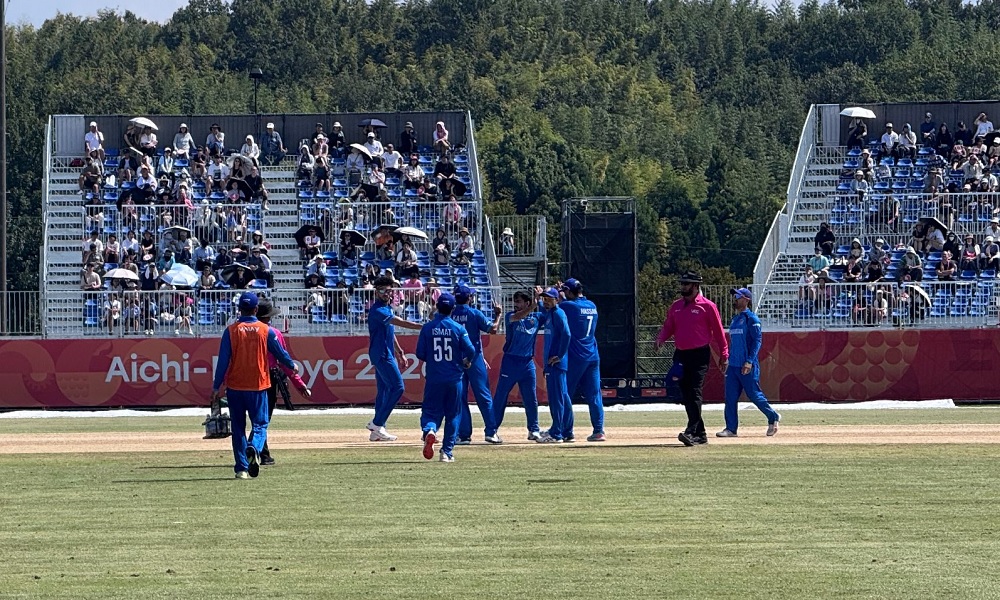
Afghanistan are set to face India in the Asian Games cricket quarter-finals after Saturday’s rain-hit match between Nepal and Japan confirmed the Pool A standings.
The quarter-final between India and Afghanistan is scheduled to take place on September 28 in Nisshin, Japan.
Nepal secured first place in the group after Japan’s chase was washed out. Nepal had scored 149 runs for four wickets in 15 overs after being sent in to bat, but persistent rain prevented Japan from starting its innings.
The result saw Nepal advance as Pool A winners, with Afghanistan joining them in the quarter-finals as the other qualifying team. Nepal will face Sri Lanka in the quarter-finals.
Japan have been eliminated from the tournament.


Abu Muslim Farah defeat Khurasan Faryab 2-0 in ACL season six

Saar: Concerns over Pakistan’s political crisis discussed

Afghanistan Champions League: Omar Zawak Herat beat Toofan Herat 1-0

Blast in Pakistan’s Dera Ismail Khan kills 11, injures 30

Ariana Afghan Airlines increases Kabul-Delhi cargo flights

Saudi energy group signs major Afghanistan deals covering gas exploration and pipeline plans

Trump floats idea of renaming Atlantic or Pacific Ocean

US hits Egyptian bank branches with Iran sanctions as war marks six months

Nepal flood rescue mission enters critical phase as thousands remain missing

Iranian clubs to face Gulf opponents at neutral venues in Asian Champions League Elite
Saar: Concerns over Pakistan’s political crisis discussed

Exclusive interview with Abdul Latif Mansoor, Minister of MRRD

Tawsia: Overview of Afghanistan’s iron mines

Tahawol: Discussion on fresh Pakistani airstrikes on Afghanistan

Saar: Calls for international support for Afghanistan discussed
-

 World5 days ago
CNN, MS NOW and Politico sue Trump, challenging White House ban
-

 Latest News3 days ago
Ariana Afghan Airlines ranks seventh among 45 Central Asian airlines
-

 Latest News5 days ago
UN reiterates call for respect for international law after Kunar airstrikes
-

 Regional4 days ago
US and Iran hold first talks since June after Trump’s ‘annihilation’ threat
-

 Latest News4 days ago
Silk Road highway in Wakhan corridor now reaches the China border
-

 Regional3 days ago
Iran airlines cancel flights as US sanctions hit
-

 Latest News5 days ago
Afghan Official: Pakistan’s airstrikes will not go unanswered
-

 Sport5 days ago
Afghan boxing referee heads to China for international festival