
Latest News
Britain’s Prince Philip, husband of Queen Elizabeth, dies aged 99

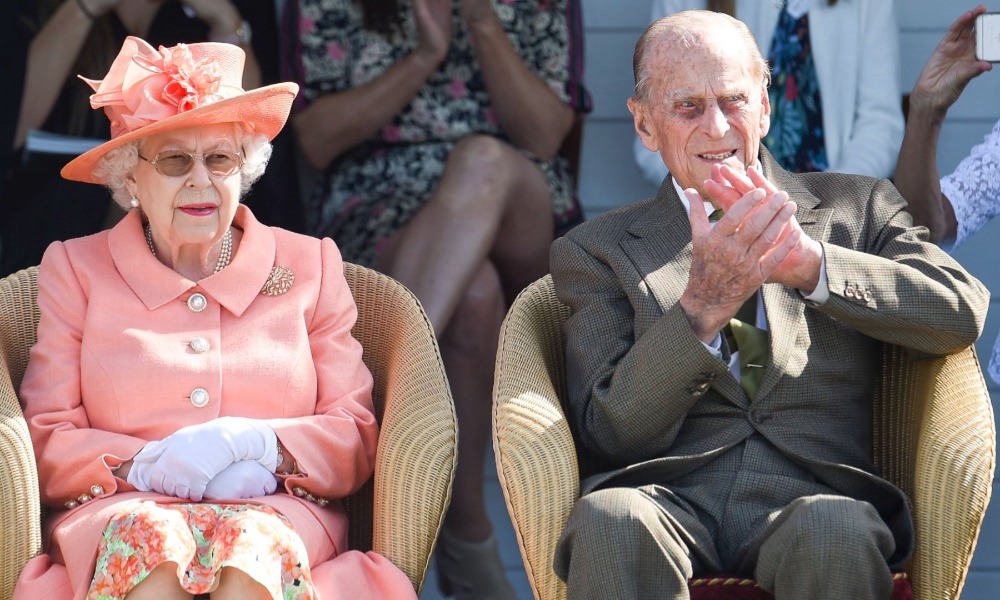
Prince Philip, the husband of Queen Elizabeth and a leading figure in the British royal family for almost seven decades, has died aged 99, Buckingham Palace said on Friday.
The Duke of Edinburgh, as he was officially known, had been by his wife’s side throughout her 69-year reign, the longest in British history. During that time he earned a reputation for a tough, no-nonsense attitude and a propensity for occasional gaffes.
“It is with deep sorrow that Her Majesty The Queen announces the death of her beloved husband, His Royal Highness The Prince Philip, Duke of Edinburgh,” the palace said in a statement.
“His Royal Highness passed away peacefully this morning at Windsor Castle. Further announcements will be made in due course. The Royal Family join with people around the world in mourning his loss.”
A Greek prince, Philip married Elizabeth in 1947. He went on to play a key role in modernising the monarchy in the post-World War Two period, and behind the walls of Buckingham Palace was the one key figure the queen could turn to and trust.
“He has, quite simply, been my strength and stay all these years,” Elizabeth said in a rare personal tribute to Philip, made in a speech marking their 50th wedding anniversary in 1997.
Philip spent four weeks in hospital earlier this year for treatment for an infection to have a heart procedure, but returned to Windsor in early March.
His charm and disinclination to tolerate those he regarded as foolish or sycophantic earned him a position of respect among some Britons. But to others, his sometimes brusque demeanor made appear him rude and aloof. He was a delight to newspaper editors keen to pick up on any stray remark at official events.
The former naval officer admitted he found it hard to give up the military career he loved and to take on the job as the monarch’s consort for which there was no clear-cut constitutional role.
“Like the expert carriage driver that he was, he helped to steer the royal family and the monarchy so that it remains an institution indisputably vital to the balance and happiness of our national life,” British Prime Minister Boris Johnson said.
HEAD OF THE FAMILY
In private, the prince was regarded as the unquestioned head of his family, but protocol obliged the man dubbed “the second handshake” to spend his public life literally one step behind his wife.
“There was no precedent. If I asked somebody ‘what do you expect me to do?’, they all looked blank – they had no idea, nobody had much idea,” he said in an interview to mark his 90th birthday.
After completing more than 22,000 solo appearances, Philip retired from public life in August 2017, although after that he occasionally appeared at official engagements.
His last appearance was last July at a military ceremony at Windsor Castle, the royal palace to the west of London where he and the monarch have resided during COVID-19 lockdowns.
The queen, who is 94, came to the throne in 1952, and the couple, who were third cousins, married at Westminster Abbey on Nov. 20, 1947.
They had four children, Prince Charles, the heir to the throne, Princess Anne, and Princes Andrew and Edward.
They celebrated their 72nd anniversary on the same day that Andrew stepped down from public duties over the controversy surrounding his association with the disgraced late U.S. financier Jeffrey Epstein, one of a number of recent crises the family have faced.
The death of the queen’s husband and closest confidant will raise questions over whether she might consider abdication, but royal commentators say there is little or no chance than this will happen.
In recent years, the queen has cut the number of official engagements she carries out and has passed many royal duties and patronages onto Prince Charles, his son William and other senior royals. But she still carries out the most symbolic of the monarchy’s state duties, such as the opening of parliament.
While he officially played second fiddle to his wife, Prince Philip regarded as the private head of the family.
Some royal watchers have said that his absence from this role in recent years with declining health has played a role in some of the monarchy’s recent travails, such as the crisis of Charles’ younger son Prince Harry and his wife Meghan, and the decision that saw them give up their royal roles.
“The main lesson that we have learned is that tolerance is the one essential ingredient of any happy marriage,” Philip said in a speech in 1997.
“It may not be quite so important when things are going well, but it is absolutely vital when things get difficult. You can take it from me that the queen has the quality of tolerance in abundance.”


Latest News
Four members of one family killed in Helmand in Pakistan airstrike
The family, originally from Ghazni province, reportedly operated a small restaurant in the area.
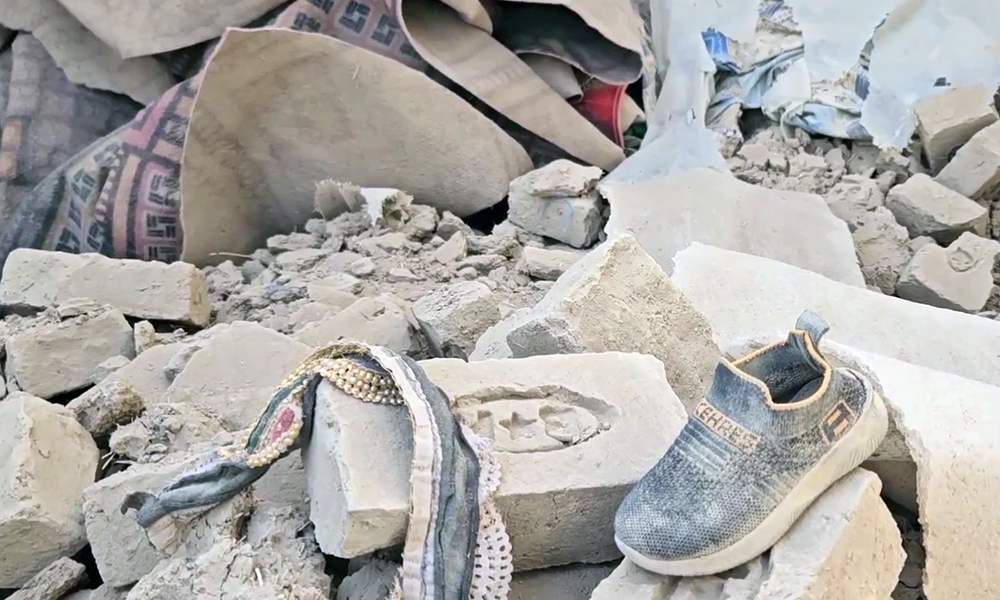
Four members of a family were killed and seven others wounded in an airstrike in Safar area of Garmser district in southern Afghanistan’s Helmand province, according to local reports.
The family, originally from Ghazni province, reportedly operated a small restaurant in the area.
The bodies of those killed and the wounded were transported by helicopter to Ghazni province for burial and medical treatment, according to the reports.
Latest News
UNAMA acting chief visits Islam Qala border to assess support for returnees
UN launched a $529 million response plan aimed at assisting around 2.7 million Afghans expected to return from Iran and Pakistan between April and December 2026.
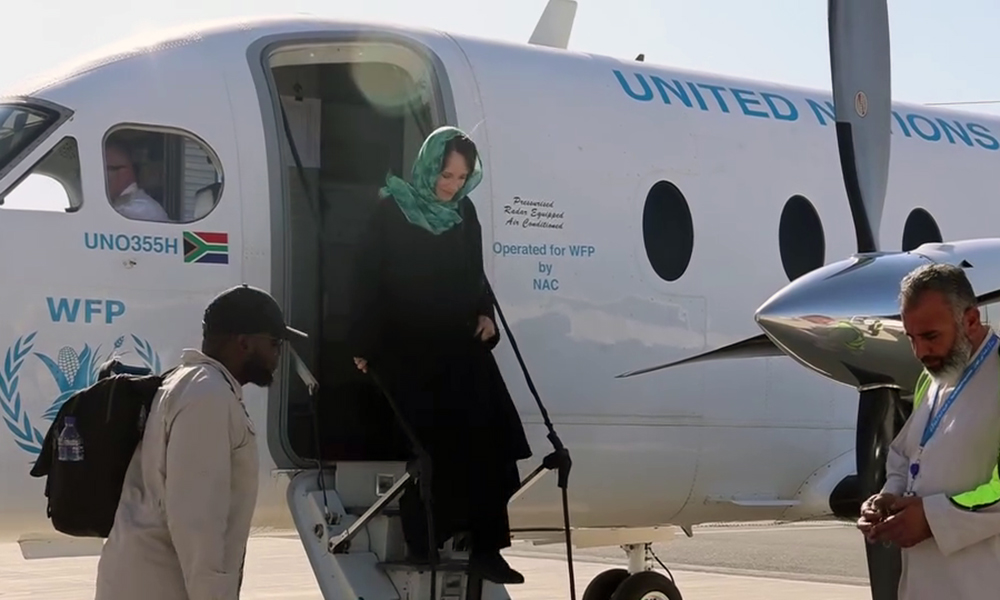
Georgette Gagnon, UNAMA’s acting head, visited western Afghanistan, including the Islam Qala border crossing, to see firsthand UN efforts to support millions of Afghans returning from neighboring Iran and Pakistan.
Earlier this year, the UN launched a $529 million response plan aimed at assisting around 2.7 million Afghans expected to return from Iran and Pakistan between April and December 2026.
Latest News
Trump: Unlike Afghanistan, US took all equipment from Iraq
Trump said the withdrawal from Iraq marked the end of what he described as a costly military involvement, adding that he had set a clear mission and instructed commanders to complete it without allowing the US presence to become permanent.
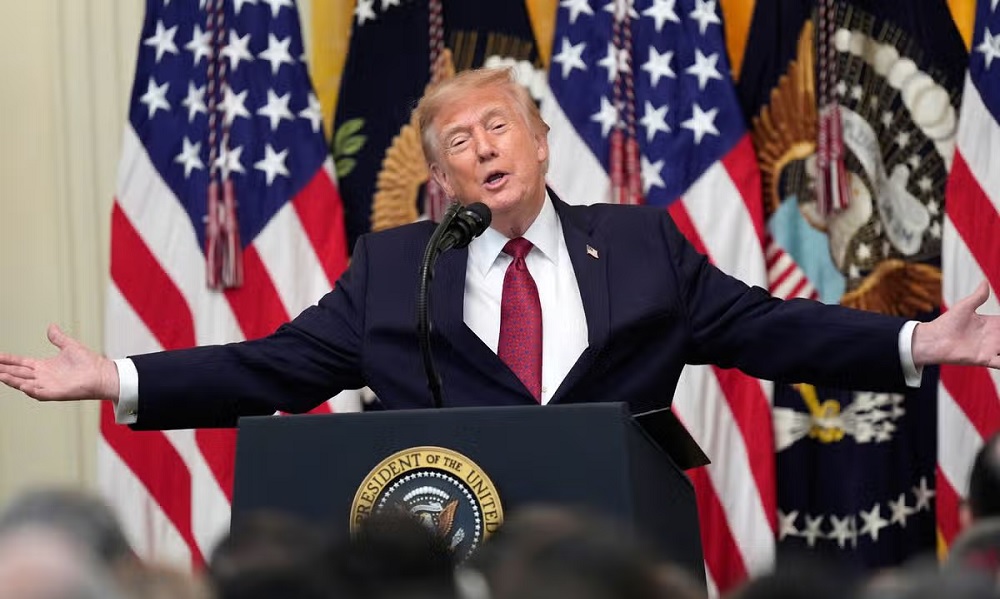
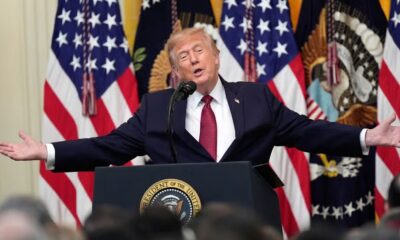
US President Donald Trump on Wednesday compared the withdrawal of US forces from Iraq with the 2021 US withdrawal from Afghanistan, saying military equipment had been left behind in Afghanistan, while US forces leaving Iraq took their equipment with them.
Speaking at a White House event, Trump referred to the final departure of US-led coalition forces and equipment from Erbil Air Base in northern Iraq, which marked the end of the US military mission against Daesh in Iraq.
“I said, take a little longer. Take everyone. We left all of the equipment, if you remember, in Afghanistan. Everything was left behind,” Trump said.
“I said, ‘I want every screw taken. If there’s a screw lying on the ground, take it. If we have a canvas tent, take it.’ We took everything,” he added.
He also mentioned the August 2021 attack at Kabul airport that killed 13 US soldiers.
Trump said he had become acquainted with the families of the US service members killed in the attack and also highlighted those who were seriously wounded.
“What happened to those—to their children should never have been allowed to happen,” he said, adding that 48 wounded service members were severely injured and “never get mentioned.”
Trump said the withdrawal from Iraq marked the end of what he described as a costly military involvement, adding that he had set a clear mission and instructed commanders to complete it without allowing the US presence to become permanent.
The US military announced on Wednesday that its forces and equipment had completed an orderly departure from Erbil Air Base, formally ending Operation Inherent Resolve in Iraq. The US-led mission began in 2014 to fight Daesh after the group seized large areas of Iraq and Syria. The US is continuing its counter-Daesh mission in Syria from a headquarters in Jordan.
Trump said the US had entered Iraq to fight the Islamic State and that the group no longer controlled a territorial “caliphate.”
“We came to fight a caliphate, and there is no longer a caliphate, so we are going home indeed,” he said.


Khurasan Faryab and Ariana Khost settle for 1-1 draw

Four members of one family killed in Helmand in Pakistan airstrike

UNAMA acting chief visits Islam Qala border to assess support for returnees

Rashid Khan, Azmatullah Omarzai maintain top spots in ICC ODI rankings

Trump: Unlike Afghanistan, US took all equipment from Iraq

Saudi energy group signs major Afghanistan deals covering gas exploration and pipeline plans

Iranian clubs to face Gulf opponents at neutral venues in Asian Champions League Elite

Khalilzad: Afghanistan ready to attract major investment

Ariana Television Network secures exclusive rights to Afghanistan’s 2026/27 cricket series

El Niño likely to intensify, may become strongest ever recorded, WMO says

Tahawol: Improvement in Afghanistan-China relations discussed

Saar: Expanding ties with regional and global countries discussed

Tahawol: Absence of Afghanistan’s envoy at UNGA discussed

Saar: Assessment of war between Afghanistan and US discussed

Saar: Afghanistan’s image at UNGA
-

 Sport4 days ago
Afghan bodybuilder Ali Bilal finishes runner-up at Mr Olympia for third straight year
-
 Latest News4 days ago
Afghanistan says 28 killed, 32 captured in Nuristan operation
-
 World4 days ago
Trump rejects Iranian proposal to open Hormuz and end fighting
-
 Sport3 days ago
Afghanistan vs India Asian Games quarter-final abandoned without a toss
-
 Latest News4 days ago
UNDP, UN Women launch financing initiative for Afghan women entrepreneurs
-
 Latest News4 days ago
Germany reports 488 Afghans for possible deportation, 267 have no criminal convictions
-
 Regional4 days ago
Aimal Wali Khan calls Dera Ismail Khan attack a ‘state failure’
-
 Regional3 days ago
Floods, landslides kill 56 in India and 14 in Nepal