
Latest News
Coronavirus death toll jumps to 80, more than 2,750 infected


 The coronavirus outbreak that began in the central Chinese city of Wuhan, in the province of Hubei, has killed 80 people in China so far and infected more than 2,750 globally, most of them in China.
The virus has caused alarm because it is still too early to know how dangerous it is and how easily it spreads between people. Also because it is new, humans have not been able to build immunity to it.
Here is what we know so far:
* As of Jan. 27 the death toll in China had risen to 80, with 76 in Hubei province, authorities reported. Another 2,744 people in China had been infected: As of the end of Jan. 26, there were 1,423 confirmed cases in Hubei province.
* Thailand and Hong Kong have each reported eight cases of infection; the United States and Macau have five each; Taiwan, Australia, Singapore and Malaysia each have reported four; France and Japan three each; Vietnam and South Korea two apiece, and one each in Canada and Nepal.
* No fatalities have been reported outside China.
 * The previously unknown coronavirus strain is believed to have emerged late last year from illegally traded wildlife at an animal market in Wuhan, a city of 11 million people.
* The World Health Organization said that while the outbreak was an emergency for China, it was not yet a global health emergency.
* Symptoms include fever, cough and difficulty breathing. Most of those affected are older people and those with underlying health conditions.* China says the virus is mutating and can be transmitted through human contact.
* Two scientific analyses of the epidemic say each person infected is passing the disease on to between two and three other people.
* Three research teams have begun work on developing potential vaccines, the Coalition for Epidemic Preparedness Innovations said. Scientists hope to be testing the first possible vaccines in three months’ time.
* China is testing the HIV drug Aluvia as a treatment.
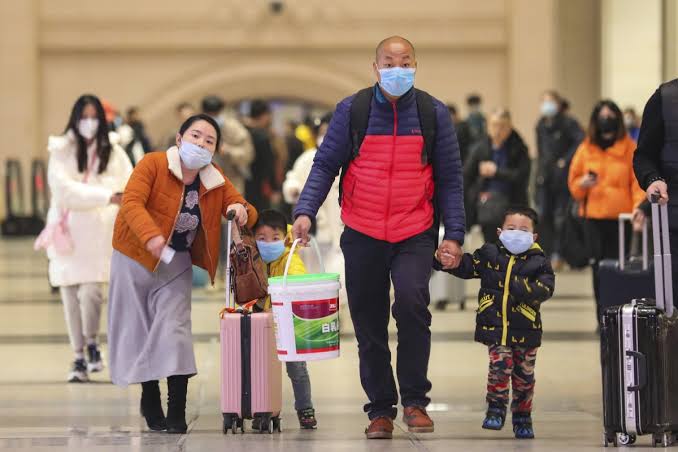 * There are severe travel restrictions in Wuhan, with urban transport shut and outgoing flights suspended.
* Among other measures to contain the virus, China will halt all group tours, affecting tourism both at home and to other countries, from Jan. 27.
* Hong Kong has barred residents of Hubei province from entering the city.
* France, Italy, Japan, Australia and the United States have all said they are working to evacuate citizens from Wuhan.
* Airports around the world have stepped up screening.
* Some experts believe the virus is not as dangerous as the 2002-03 Severe Acute Respiratory Syndrome (SARS) that killed nearly 800 people, or the Middle East Respiratory Syndrome (MERS), which has killed more than 700 people since 2012.
Source: Reuters









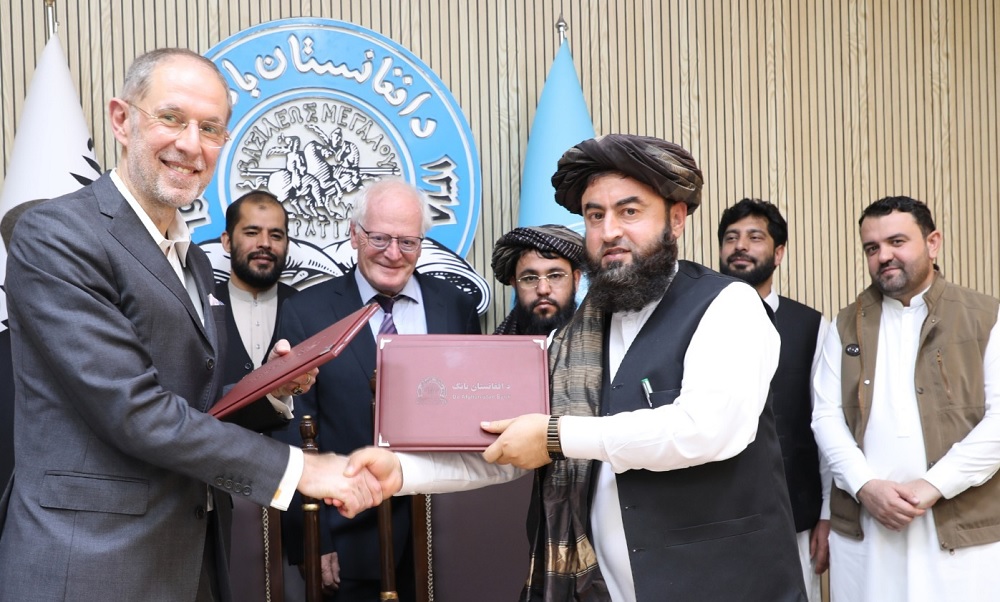
Da Afghanistan Bank (DAB) and the Afghan Credit Guarantee Foundation (ACGF) have signed a cooperationmemorandum of understanding (MoU) aimed at strengthening the financial sector and expanding access to financial resources for small, medium and large businesses.
The agreement was signed during a ceremony at the DAB Supreme Council Hall, where DAB First Deputy Governor Sediqullah Khalid said such agreements create opportunities to provide suitable and diverse Islamic financial services to citizens and expand access to financing for small and medium-sized enterprises.
Khalid said that under the agreement, banks and financial institutions will initially receive technical and professional support. He added that five banks and one microfinance institution will receive grants worth around $1 million in the first phase to support financing for small and medium-sized businesses.
He said other banks and financial institutions that meet the required criteria would benefit from the grants and related facilities in later phases.
Khalid also said that attention would be given to facilitating the creation and financing of small businesses for Afghans returning from other countries.
Under the agreement, the two sides will cooperate on strengthening the financial sector, expanding access to financial resources for businesses, promoting Islamic financial services and building the capacity of financial institutions.
Technical and professional assistance, training programs and capacity-building opportunities will also be provided to banking and non-banking financial institutions.
Roger Thomas Piltzer, chairman of the ACGF Board of Trustees, also welcomed the agreement and stressed the importance of continuing and expanding cooperation with Da Afghanistan Bank.
The agreement aims to establish a framework for cooperation between the two sides to strengthen Afghanistan’s financial sector, expand access to Islamic financial services and provide financial resources for small and medium-sized businesses.
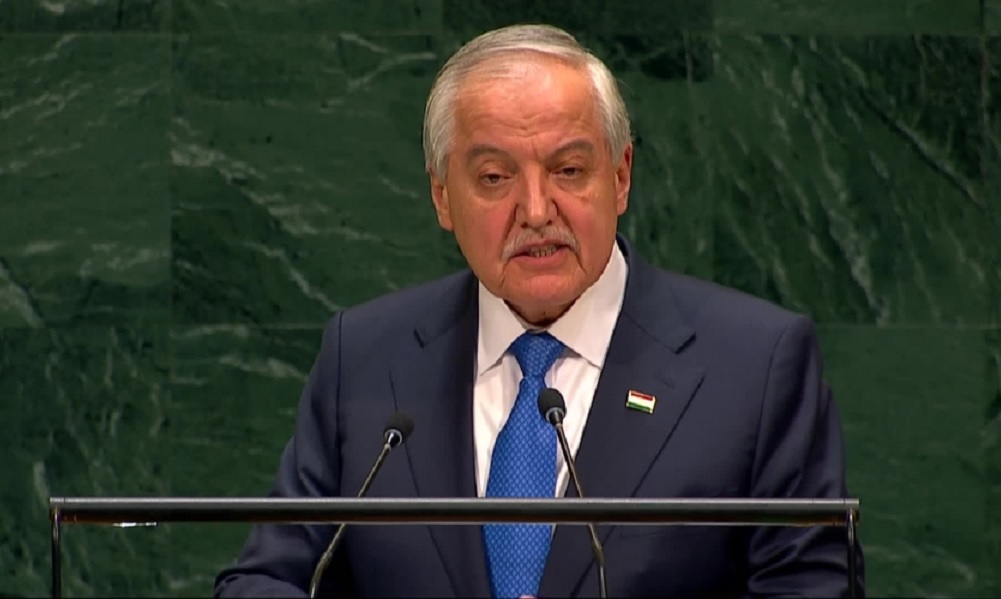
Tajikistan has reaffirmed its support for the Afghan people, stressing that peace, stability and economic opportunities in Afghanistan are closely linked to security and sustainable development in the region.
Speaking at the 81st session of the United Nations General Assembly in New York on Saturday, Tajik Foreign Minister Sirodjiddin Muhriddin said lasting security and sustainable development in the region are closely connected to the situation in Afghanistan.
“Afghanistan needs peace, stability and economic opportunity,” Muhriddin said.
He added that Tajikistan would continue to support the Afghan people and constructive regional cooperation aimed at achieving a peaceful and stable Afghanistan.
“When Tajikistan speaks about peace, we also speak from experience,” Muhriddin said.
Latest News
Germany reports 488 Afghans for possible deportation, 267 have no criminal convictions
The Interior Ministry says around 250 Afghan nationals have been deported to Afghanistan since the current coalition government took office.
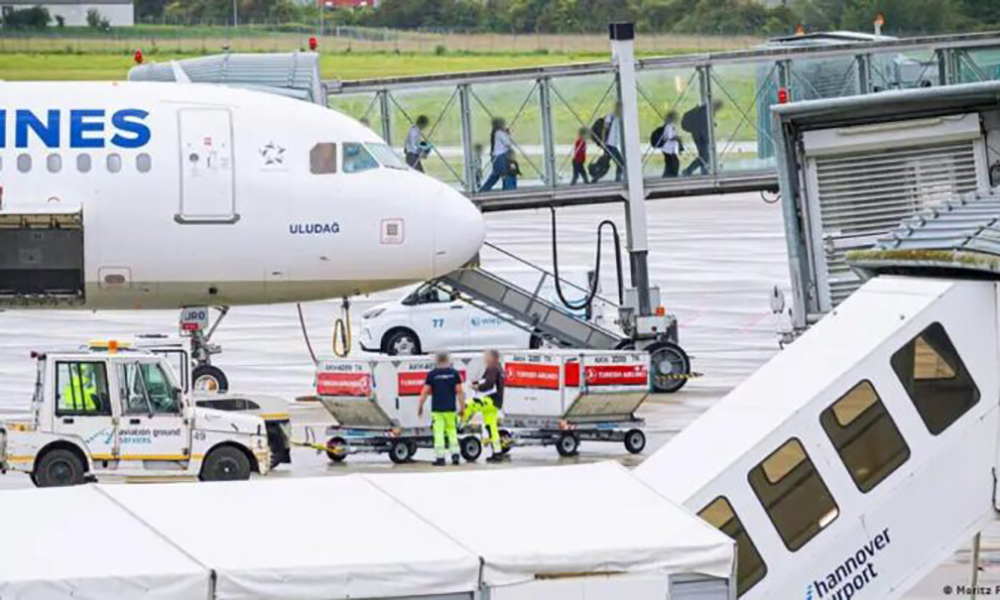
German authorities have identified 488 Afghan nationals for possible deportation to Afghanistan, including 267 who have no criminal convictions, according to figures from the Interior Ministry.
The figures were disclosed in a written response to a parliamentary inquiry by Left Party lawmaker Clara Bünger and reported by German media. They cover cases submitted by Germany’s federal states to the Federal Police between July 8 and September 18. All federal states except Bremen and Mecklenburg-Vorpommern submitted Afghan nationals for possible removal.
Seven Afghan nationals are currently being held in deportation detention at the request of the Federal Police, while another is in custody pending refusal of entry, the ministry said.
The figures come as Germany expands preparations for deportations to Afghanistan. In July, Germany carried out its first deportation of an Afghan national without a criminal conviction since the Islamic Emirate of Afghanistan (IEA) returned to power in 2021.
Germany had suspended deportations to Afghanistan following the IEA takeover in 2021. Flights resumed in 2024, initially focusing on people convicted of serious crimes. The government has since moved to broaden removals to some Afghans who have no criminal convictions.
The German government has said deportations should be carried out against people who are legally required to leave Germany and for whom no individual deportation ban applies. Earlier government statements said the initial focus would be on convicted criminals and people considered security threats.
The policy has drawn criticism from opposition politicians and refugee and human rights groups. Bünger questioned the deportation of Afghans without criminal convictions, citing security, humanitarian and human rights concerns in Afghanistan.
Germany’s Federal Constitutional Court has also ruled that the government cannot cancel certain humanitarian admission commitments to Afghans en masse without examining individual cases, adding to legal scrutiny of its Afghanistan policy.
The Interior Ministry says around 250 Afghan nationals have been deported to Afghanistan since the current coalition government took office.


Trump says men arrested at UK air base used by US planned ‘big damage’

Serbia’s President Vucic resigns ahead of October parliamentary elections

Floods, landslides kill 56 in India and 14 in Nepal

Afghanistan central bank and ACGF sign cooperation agreement

Saar: Afghanistan’s image at UNGA

Saudi energy group signs major Afghanistan deals covering gas exploration and pipeline plans

Trump floats idea of renaming Atlantic or Pacific Ocean

Nepal flood rescue mission enters critical phase as thousands remain missing

Iranian clubs to face Gulf opponents at neutral venues in Asian Champions League Elite

Khalilzad: Afghanistan ready to attract major investment
Saar: Afghanistan’s image at UNGA

Saar: Concerns over Pakistan’s political crisis discussed

Exclusive interview with Abdul Latif Mansoor, Minister of MRRD

Tawsia: Overview of Afghanistan’s iron mines

Tahawol: Discussion on fresh Pakistani airstrikes on Afghanistan
-

 Latest News5 days ago
Ariana Afghan Airlines ranks seventh among 45 Central Asian airlines
-

 Regional4 days ago
Iran airlines cancel flights as US sanctions hit
-

 Latest News5 days ago
Silk Road highway in Wakhan corridor now reaches the China border
-

 Sport4 days ago
Afghanistan open Asian Games cricket campaign with win over Japan
-
 World4 days ago
Trump welcomes Chinese President Xi as US-China summit gets underway
-
 Latest News5 days ago
OIC Contact Group reaffirms support for Afghan people
-

 Latest News5 days ago
UK Afghanistan war crimes inquiry faces delay over 97 million newly identified documents
-
 Latest News5 days ago
Refugees minister, UNAMA deputy discuss challenges facing returnees