
CSTO members stress continued support for Afghanistan at 42nd working group meeting
Officials also underlined the necessity for continued monitoring of developments in Afghanistan and the importance of encouraging progress toward long-term peace and stability.

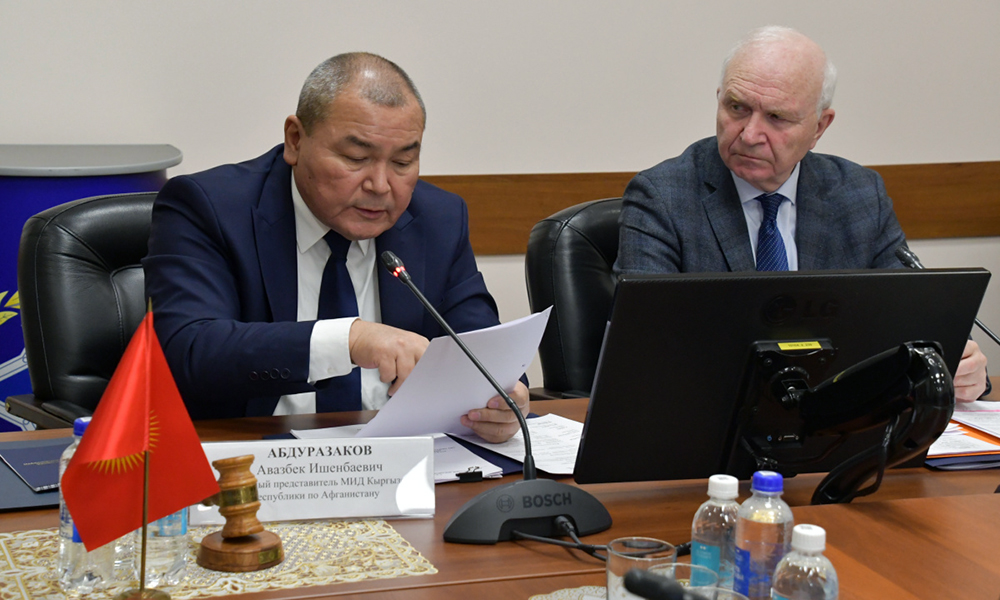
The 42nd meeting of the Working Group on Afghanistan under the CSTO Council of Foreign Ministers was convened on December 3, 2025, at the CSTO Secretariat, bringing together senior representatives from CSTO member states and major international organizations.
Participants included officials from the UN Office of Counter-Terrorism, UNRCCA, CIS Anti-Terrorism Center, SCO RATS, CIS Council of Border Guard Commanders, and the ICRC, alongside CSTO Secretariat staff and state delegations.
During the meeting, attendees conducted an in-depth review of the current situation in Afghanistan, highlighting the ongoing high levels of security risks and regional threats emanating from the country.
The delegations unanimously emphasized the importance of maintaining humanitarian and economic support for the Afghan population, especially in the face of existing challenges and regional instability.
Officials also underlined the necessity for continued monitoring of developments in Afghanistan and the importance of encouraging progress toward long-term peace and stability.
The session concluded with the adoption of the official minutes of the 42nd meeting and approval of the Working Group’s Plan for the first half of 2026, marking another step in CSTO’s regional engagement strategy.









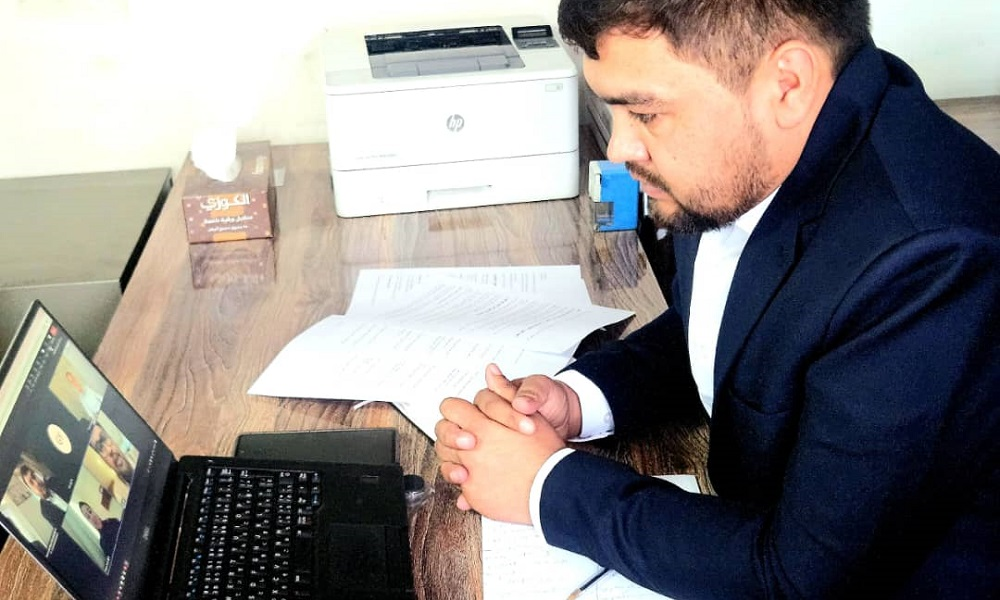
An online meeting between the heads of the Afghanistan National Canoeing Federation, the International Canoe Federation and the Asian Canoe Confederation was held on Wednesday to discuss challenges and opportunities for developing canoeing in Afghanistan.
According to a statement from the Afghanistan National Canoeing Federation, Mohammad Nasir Hakimzada, head of the federation, outlined the challenges, needs and existing opportunities for the development of the sport in the country. The heads of the International Canoe
Federation and the Asian Canoe Confederation praised the efforts of Afghan federation officials and emphasized their commitment to continued cooperation and support for the growth of the sport.
Officials from the organizations pledged to organize national and international training seminars, featuring international instructors, both inside and outside Afghanistan, to enhance the skills of Afghan coaches. They also announced plans to support the Afghanistan National Canoeing Federation in the near future, including the donation of around 10 canoes and other sports equipment.
During another part of the meeting, the heads of the International Canoe Federation and the Asian Canoe Confederation were formally invited to visit Afghanistan. They pledged to travel to the country next year.
The meeting marks a step toward strengthening international cooperation, improving technical capacity and providing better facilities for the growth and development of canoeing in Afghanistan.

Uzbek and Norwegian officials have held a two-day workshop in Oslo to discuss Afghanistan’s regional integration, security and economic cooperation, according to Javlon Vakhabov, an adviser to Uzbekistan’s president.
In a post on X, Vakhabov said the discussions were convened by the Norwegian Center for Conflict Resolution (NOREF) and focused on promoting pragmatic engagement with Afghanistan through sustained dialogue and cooperation in security, trade, energy, transit and regional connectivity.
The Uzbek delegation included Ismatulla Irgashev, the president’s special envoy for Afghanistan; Rakhmatulla Nurimbetov, Uzbekistan’s ambassador to Norway; Odil Gafarov, deputy director of the Institute for Advanced International Studies at the University of World Economy and Diplomacy; and Vakhabov himself.
Vakhabov said he shared Uzbekistan’s experience in peacebuilding and good-neighbourly relations, stressing that lasting stability depends on Afghanistan’s gradual integration into regional cooperation processes.
World
Governments warn citizens over security risks in France after riots
The unrest on Saturday saw clashes between protesters and police, looting at shops and a town hall set on fire, prompting several countries to update their travel advisories.
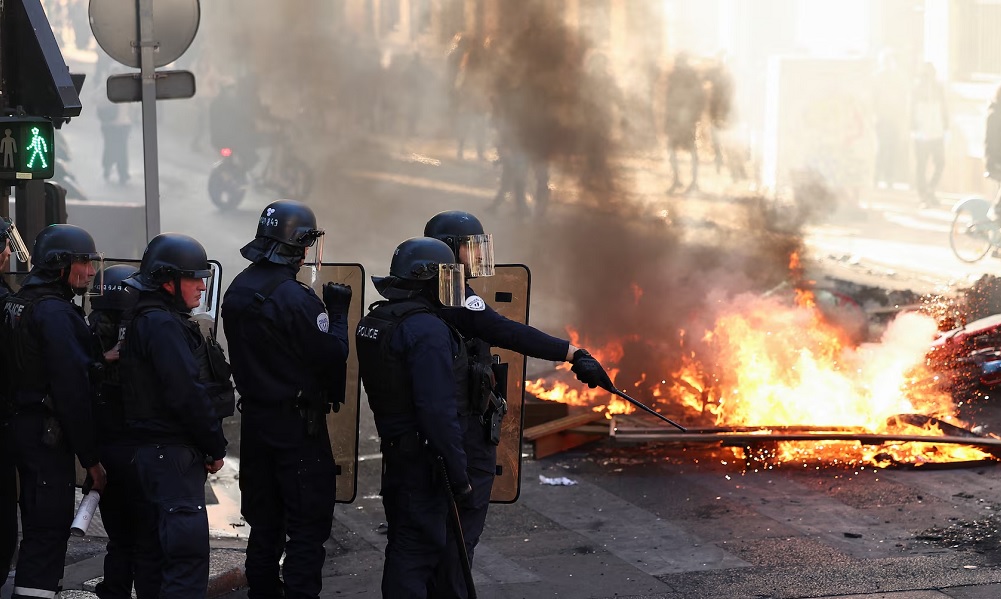
Governments across Europe and Asia have warned their citizens to exercise caution in France following violent protests over the rising cost of living and declining public services that erupted into riots over the weekend.
The unrest on Saturday saw clashes between protesters and police, looting at shops and a town hall set on fire, prompting several countries to update their travel advisories.
Italy urged its citizens in France to avoid large crowds and exercise extreme caution. Its foreign ministry also advised travellers to register their presence through an official website or mobile application to help authorities locate them if necessary.
Germany warned that further riots could occur in the coming days and urged its nationals to follow instructions from local police. It also cautioned that people could face fines or claims for damages if they failed to leave unauthorised demonstrations when ordered to do so.
The Czech Republic advised its citizens to stay away from demonstrations, marches and public gatherings, citing a deterioration in the security situation, the Czech news agency CTK reported.
Poland similarly urged visitors to avoid areas where demonstrations were taking place, although it made no changes to its overall assessment of France as a travel destination.
The Netherlands has also advised travellers to avoid protests, according to its travel guidance, last updated on October 7.
Denmark, Sweden, Finland and Norway issued similar warnings, urging their citizens in France to avoid demonstrations and follow instructions from local authorities.
Outside Europe, Malaysia’s Foreign Ministry said it was monitoring the demonstrations. While travel to France remained unrestricted, it advised Malaysians to consider postponing non-essential trips until the situation improved.
Malaysia’s embassy in Paris also urged citizens in France to remain vigilant and exercise caution.
The warnings reflect growing concern among foreign governments over the potential for further violence as France faces public anger over living costs and pressure on public services. Authorities have urged visitors and residents to monitor local developments and follow police instructions.


Afghanistan, world and Asian canoeing federations hold online meeting

Uzbekistan, Norway discuss Afghanistan and regional security in Oslo

Governments warn citizens over security risks in France after riots

Transit of Afghan goods through Sheikh Abu Nasr Farahi border crossing doubles

Qatar calls for shift from humanitarian aid to economic recovery in Afghanistan

Cricket Bonanza: Afghanistan set for packed international schedule

Afghanistan says 28 killed, 32 captured in Nuristan operation

Silk Road highway in Wakhan corridor now reaches the China border

CNN, MS NOW and Politico sue Trump, challenging White House ban

Afghanistan on climate front line as Kabul faces groundwater warning
Governments warn citizens over security risks in France after riots

Tahawol: Iran’s reaction to Pakistan’s mediation discussed

Saar: Review of SCO meeting in Tajikistan

Trump blames migrants for violence in France as US midterms loom

Tahawol: US–Iran tensions escalate with mutual threats
-
 Sport3 days ago
Afghanistan reach Brazil futsal tournament final after beating Cape Verde 4-2
-

 Regional4 days ago
Trump says US may strike Iran’s ‘Pickaxe Mountain’ nuclear facility
-
 World2 days ago
Violent protests spread across Europe as Albanian PM blames ‘foreign hand’
-
 Latest News4 days ago
Afghanistan’s hunger crisis deepens as 16 million face food insecurity ahead of winter
-

 Sport5 days ago
Afghanistan Champions League: Abu Muslim Farah beat Sarsabz Yashlar 3-1
-

 Latest News3 days ago
Hegseth says only a few NATO allies were involved in fighting in Afghanistan
-

 World3 days ago
France rocked by nationwide clashes, looting and fires
-

 Sport2 days ago
Afghanistan finish runners-up after 6-0 defeat to Brazil in futsal final