Daesh claims responsibility for killing Badakhshan deputy governor
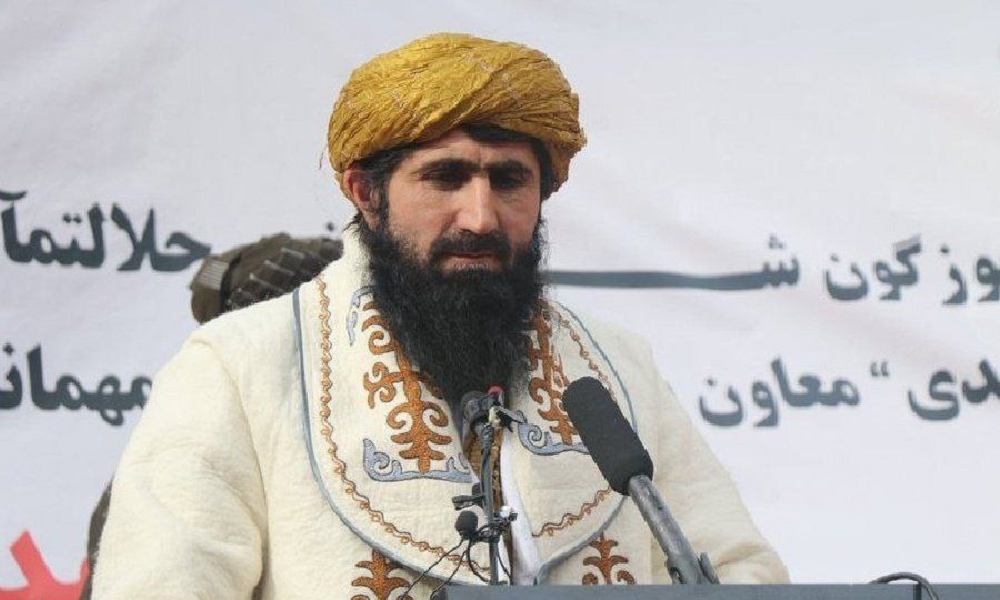
Daesh has claimed responsibility for Tuesday’s car bombing in northern Badakhshan province that killed its deputy governor.
Nisar Ahmad Ahmadi, the deputy governor of Badakhshan, was one of two people who were killed outside a court in the provincial capital, Faizabad.
Six others were injured in the blast, local officials said.
The Islamic Emirate of Afghanistan (IEA) has been carrying out raids against members of Daesh, which has claimed several deadly attacks in the country over the past year.
Daesh has also targeted IEA officials, including the governor of northern Balkh province who was killed in his office in March.

World
Colombia military plane crash kills 66, four still missing
A Colombian military plane crashed in a takeoff disaster on Monday, killing 66 people as rescuers shuttled dozens of survivors to nearby hospitals and searched for four who were still missing, according to a top official.
The Lockheed Martin-built Hercules C-130 transport plane was carrying 128 people, including 11 Air Force members, 115 army personnel and two national police officers, according to Hugo Alejandro Lopez, head of the nation’s armed forces, Reuters reported.
The death toll was nearly double that of the previous figure given by authorities, who continued search and recovery efforts at the site of the deadly crash.
The accident occurred as the plane was taking off from Puerto Leguizamo, on the border with Peru, Defense Minister Pedro Sanchez said on X.
The plane was believed to have suffered an impact near the end of the runway as it was taking off, firefighter Eduardo San Juan Callejas told Caracol, with a wing of the plane later clipping a tree as it was plummeting.
The crash caused the plane to catch fire and detonate some sort of explosive devices on board, he added.
Residents of the remote area were the first to pull out survivors, with videos showing men speeding down a dirt road with wounded soldiers on the back of their motorcycles.
Military vehicles later arrived, though authorities said the crash site was difficult to reach, impeding rescue efforts.
Lopez said that 57 of the survivors had been hospitalized, with 30 of them in non-serious condition at a military clinic.
MODERNIZING THE MILITARY
President Gustavo Petro, in the twilight of his administration, on Monday criticized bureaucratic obstacles for delaying his plans to modernize the military.
“I will grant no further delays; it is the lives of our young people that are at stake,” he said in a post on X. “If civilian or military administrative officials are not up to this challenge, they must be removed.”
Several candidates in Colombia’s upcoming May 31 presidential election offered condolences and called for an investigation.
A spokesperson for Lockheed Martin said the company was committed to helping Colombia as it investigates the incident.
Hercules C-130 planes were first launched in the 1950s and Colombia acquired its first models in the late 1960s. It has more recently modernized some older C-130s with newer models sent from the U.S. under a provision that allows for the transfer of used or surplus military equipment.
Hercules C-130s are frequently used in Colombia to transport troops as part of the military’s operations amid a six-decade-long internal conflict that has claimed more than 450,000 lives.
The tail number of the plane that crashed on Monday matches that of the first of three planes delivered by the U.S. to Colombia in recent years.
At the end of February, another Hercules C-130 belonging to the Bolivian Air Force crashed in the populous city of El Alto, barely missing a residential block.
More than 20 people died in that incident and another 30 were injured, and banknotes from the plane’s cargo scattered around the crash site, prompting clashes between residents and security forces.
Latest News
Airstrike on Kabul drug rehabilitation centre sparks legal concerns
Amnesty International’s Deputy Regional Director for Research, Isabelle Lassee, said the scale of casualties suggests the presence of a significant civilian population at the site.
An airstrike on a drug rehabilitation facility in Kabul has drawn sharp criticism from Amnesty International, raising serious questions about compliance with international humanitarian law.
The strike, carried out on 16 March, targeted a site at Camp Phoenix, a former military base that has functioned largely as a rehabilitation centre since 2016. Pakistani officials have claimed the attack was aimed at an ammunition depot allegedly located within the compound.
Responding to those claims, Amnesty International’s Deputy Regional Director for Research, Isabelle Lassee, said the scale of casualties suggests the presence of a significant civilian population at the site.
“While the total number of casualties has yet to be independently verified, it is clear that the attack caused extensive civilian harm, with reports indicating hundreds killed or injured,” she said.
Lassee emphasized that the facility was widely known to house civilians undergoing treatment, and warned that any military action should have taken this into account. “Pakistan’s military should have taken all feasible precautions to avoid harming civilians and civilian infrastructure,” she added.
She further noted that even if a military target had been present within the compound, international law requires that any strike be proportionate, ensuring that civilian harm is not excessive in relation to the anticipated military advantage.
“The scale of destruction raises serious concerns about whether an adequate proportionality assessment was conducted and whether sufficient steps were taken to verify the target and minimize civilian casualties,” Lassee said.
Amnesty International has called on Pakistani authorities to disclose the intelligence behind the strike and to launch an independent, impartial, and transparent investigation into the incident. The organization stressed that findings should be made public to ensure accountability.
The group also urged all parties involved in the conflict to adhere strictly to international humanitarian law and to protect civilian infrastructure, including medical and rehabilitation facilities.
The airstrike formed part of Pakistan’s “Operation Ghazab Lil Haq,” which included strikes in both Kabul and Nangarhar Province. The targeted rehabilitation centre, known as Omid, reportedly had the capacity to accommodate around 2,000 individuals.
Casualty figures remain contested. Islamic Emirate officials claim more than 400 civilians were killed and over 200 injured, though these numbers have not been independently verified. The United Nations has so far confirmed 143 deaths.
The strike comes amid escalating tensions between Afghanistan and Pakistan. According to the United Nations Assistance Mission in Afghanistan, at least 76 civilian casualties had already been recorded since the conflict intensified in February.
Pakistani officials, meanwhile, reported civilian casualties on their side of the border, including four deaths in Bajaur district on 15 March and the killing of a child in North Waziristan earlier in the month, allegedly due to cross-border fire from Afghanistan.
The latest developments underscore growing concerns about civilian safety as hostilities between the two countries continue to intensify.
Regional
Trump backs down on strikes on Iran’s power network, says US and Tehran holding talks
Iranian attacks have effectively closed the Strait, which carries a fifth of global oil and liquefied natural gas.
President Donald Trump backed down on targeting Iran’s power network on Monday, saying the U.S. and Iran have held constructive talks and that he would postpone any strikes on power plants and energy infrastructure, Reuters reported.
Trump’s statement came after Iran threatened to attack Israel’s power plants and those supplying U.S. bases across the Gulf region if the U.S. targets Iran’s power network.
The dollar plunged and stocks surged following Trump’s post.
The United States and Iran “have had, over the last two days, very good and productive conversations regarding a complete and total resolution of our hostilities in the Middle East,” Trump wrote in a post on Truth Social.
“I have instructed the Department of War to postpone any and all military strikes against Iranian power plants and energy infrastructure for a five-day period, subject to the success of the ongoing meetings and discussions.”
On Saturday, Trump warned that Iranian power plants would be destroyed if Tehran failed to “fully open” the Strait of Hormuz to all shipping within 48 hours. Trump set a deadline of around 7:44 p.m. EDT (2344 GMT) on Monday.
Iranian attacks have effectively closed the Strait, which carries a fifth of global oil and liquefied natural gas, read the report.
More than 2,000 people have been killed in the war the U.S. and Israel launched on February 28, which has upended markets, driven up fuel costs, fuelled global inflation fears and convulsed the postwar Western alliance.
-
Latest News5 days agoPakistani shelling hits Kunar districts despite ‘pause in hostility’ over Eid
-
Sport4 days agoAfghanistan national buzkashi falls short in Kokpar World Championship semifinals
-
Regional5 days agoPakistan among top nuclear threats to America, US intelligence chief tells senate
-
Sport3 days agoIreland to host Afghanistan for ODI series in August
-
Latest News5 days agoPeshawar High Court grants bail to 68 detained Afghan nationals, including minors
-
World5 days agoUS weighs troop deployment as Iran war enters new phase
-
Latest News3 days agoMojtaba Khamenei calls for improved Afghanistan–Pakistan relations, offers help
-
Latest News5 days agoSecurity Sources: Pakistani military shelling in Kunar and Nuristan leaves female doctor dead