
Latest News
Drought compounds humanitarian crisis in Afghanistan as conflict intensifies

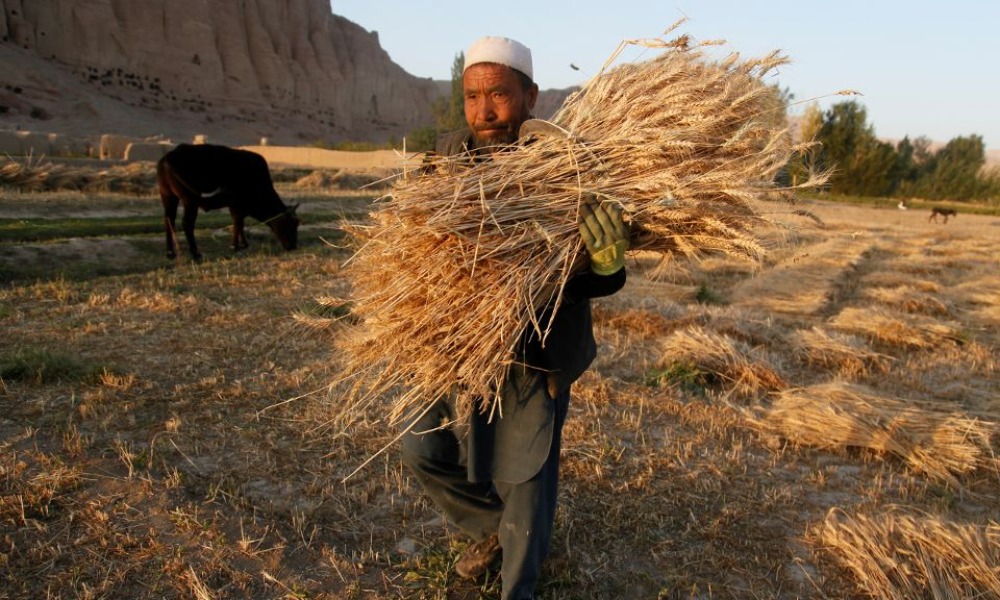
Millions of Afghans are struggling to put food on the table as prolonged drought disrupts supplies in a country reeling from a surge in violence as U.S.-led foreign troops complete their withdrawal.
Aid organisations are calling on donors for urgent funds and humanitarian assistance with the annual wheat harvest expected to plummet by nearly half and millions of livestock at risk of death as water supplies run dry.
“It’s a multiple shock,” said Necephor Mghendi, head of the International Federation of Red Cross and Red Crescent Societies (IFRC) in Afghanistan.
“Generally, there has been an impact on availability and distribution of food … and the conflict is causing internal displacement, which means increased demand for resources in certain regions.”
The entire country is facing moderate to severe drought, President Ashraf Ghani said in late June, acknowledging that the national disaster management budget was not enough to cover what experts say is one of the worst droughts in decades in terms of geographic scale.
“We … will not allow the country to face famine,” Ghani said in a statement. “Our effort is to address all districts, even those under the Taliban control.”
The Islamist insurgents have stepped up their campaign to defeat Ghani’s U.S.-backed government as foreign forces leave after 20 years of conflict and have swept into numerous rural districts across the country.
With very little functioning irrigation, Afghanistan relies on snow melting in its mountains to keep its rivers flowing and fields watered during the summer and snowfall last winter was again very low.
Fahad Saeed, a climate scientist at Climate Analytics, said a La Niña phenomenon and a weakening jet stream moving weather systems more slowly across the planet could be factors behind Afghanistan‘s extremely dry weather.
While it is difficult to link individual events to climate change, scientists agree that global warming driven by greenhouse gas emissions is contributing to extreme weather around the world.
“Afghanistan is a good example of climate injustice. It has historically no role in the climate change mess but they are bearing the brunt of it,” Saeed said.
Afghanistan was one of 23 countries the United Nations identified as “hunger hotspots” in a report last month, with at least 12 million people out of a population estimated at 36 million facing a food security crisis of not knowing when or where their next meal will come from.
The IFRC is trying to raise US$16.5 million but has managed less than half of that, Mghendi said.
“It’s a dire humanitarian situation that requires as much support as possible to get the very basics,” Mghendi said.












Kazakhstan’s Foreign Minister Mukhtar Tileuberdi has called for pragmatic and coordinated international engagement with Afghanistan, saying the country’s long-term stability is closely linked to the security and sustainable development of Central Asia.
Speaking during the general debate of the 81st session of the United Nations General Assembly in New York on Friday, Tileuberdi said humanitarian assistance to Afghanistan remains essential but alone cannot break the cycle of poverty, displacement and dependency.
He said Kazakhstan supports a “pragmatic, coordinated and step-by-step” approach to international engagement with Afghanistan, with the United Nations playing a central role.
Tileuberdi also said Kazakhstan is working with the UN to operationalize the United Nations Regional Centre for the Sustainable Development Goals for Central Asia and Afghanistan in Almaty.
He said the success of the centre should be measured by the results and assistance it delivers to the region.


Abu Muslim Farah defeat Khurasan Faryab 2-0 in ACL season six

Saar: Concerns over Pakistan’s political crisis discussed

Afghanistan Champions League: Omar Zawak Herat beat Toofan Herat 1-0

Blast in Pakistan’s Dera Ismail Khan kills 11, injures 30

Ariana Afghan Airlines increases Kabul-Delhi cargo flights

Saudi energy group signs major Afghanistan deals covering gas exploration and pipeline plans

Trump floats idea of renaming Atlantic or Pacific Ocean

US hits Egyptian bank branches with Iran sanctions as war marks six months

Nepal flood rescue mission enters critical phase as thousands remain missing

Iranian clubs to face Gulf opponents at neutral venues in Asian Champions League Elite
Saar: Concerns over Pakistan’s political crisis discussed

Exclusive interview with Abdul Latif Mansoor, Minister of MRRD

Tawsia: Overview of Afghanistan’s iron mines

Tahawol: Discussion on fresh Pakistani airstrikes on Afghanistan

Saar: Calls for international support for Afghanistan discussed
-

 World5 days ago
CNN, MS NOW and Politico sue Trump, challenging White House ban
-

 Latest News4 days ago
Ariana Afghan Airlines ranks seventh among 45 Central Asian airlines
-

 Latest News5 days ago
UN reiterates call for respect for international law after Kunar airstrikes
-

 Regional4 days ago
US and Iran hold first talks since June after Trump’s ‘annihilation’ threat
-

 Latest News4 days ago
Silk Road highway in Wakhan corridor now reaches the China border
-

 Regional3 days ago
Iran airlines cancel flights as US sanctions hit
-

 Latest News5 days ago
Afghan Official: Pakistan’s airstrikes will not go unanswered
-
 Regional5 days ago
G7 foreign ministers call on Iran to stop arming Houthis