
Latest News
Dutch envoy says Afghanistan is at a crossroads in history

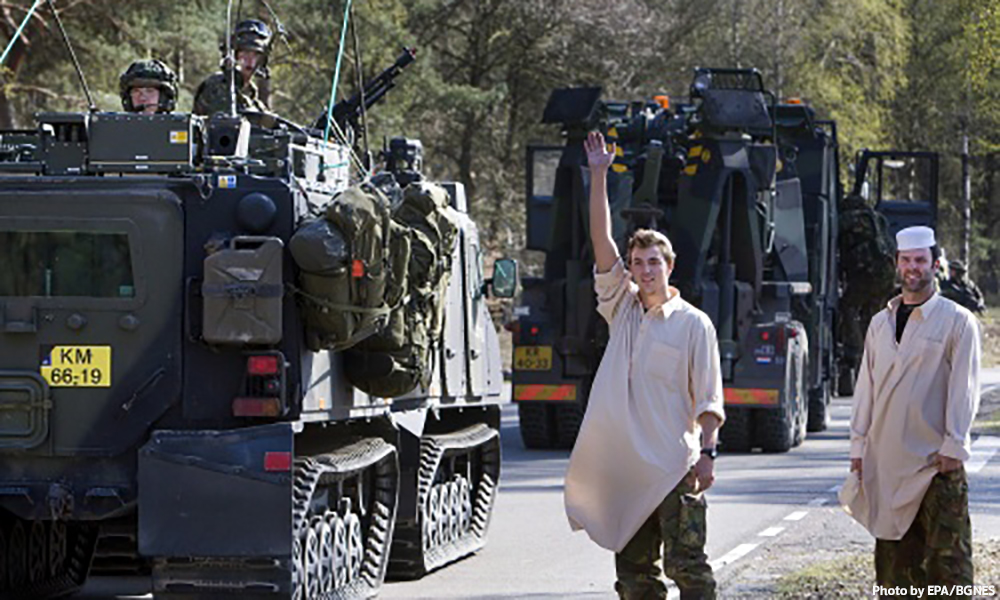
Caecilia Wijgers, the Dutch ambassador to Kabul, said on Thursday her country will continue to provide development assistance to Afghanistan as long as it can be done safely and responsibly.
Speaking after the last of Netherlands’ troops withdrew from Afghanistan this week,Wijgers said in a statement: “Development cooperation and military and diplomatic efforts have achieved significant results … and the security sector – which had to be built more or less from scratch – has been solidly underpinned thanks to financial support and training missions.
“The country now has a democratically elected government that allows space for free media. But growing instability and a lack of security show that these results are not irreversible.”
She said there has also been a change in the mindset of the people of Afghanistan and that society is showing the will to bring about positive change, and the strength to do so.
“This is not the same Afghanistan that was conquered by the Taliban in the late 1990s,” she said.
“We are standing at a crossroads in history. A new generation of Afghans has arisen, including many women who are not afraid to speak out.
“That progress needs to be safeguarded. And we need to continue supporting these people. Many sacrifices have been made to promote security, stability and human rights in Afghanistan. By Afghans, and also by the 25 Dutch military personnel who gave their lives for this cause. And the job is not yet done,” she said.
Wijgers also stated that a stable and secure Afghanistan is in the interests of the wider world, to prevent the country from once again becoming a haven of international terrorism, and to prevent large migration flows resulting from instability and conflicts in the future.’
Wijgers also noted it was “important to make clear that the Netherlands and other NATO Allies are still in Afghanistan, despite the withdrawal of the troops. As long as it’s safe to do so, the Netherlands will have a presence in the country, and we will work from Kabul together with Afghan government and civil society leaders. Because the ultimate goal is to achieve lasting – and above all independent – stability in Afghanistan.”
According to her, the Netherlands will go on providing development assistance as long as this can be done safely and responsibly, and as long as Dutch efforts remain sustainable.
“Among other things, our support is helping to build and strengthen the police and judicial sectors, to protect the Afghan people by enhancing the security of their communities, and to carry on demining activities. NATO will also continue to assist Afghanistan, for example by funding the Afghan armed forces,” she said.
Wijgers said peace talks between the Afghan Republic and the Taliban offer the best prospect of a stable and secure Afghanistan. “But this will take a great deal of effort and time to achieve. There is a very real chance that instability will increase again in the coming period, now that the Taliban are capturing more and more territory,” she said.
However, she stated the Netherland’s was not turning its back on Afghanistan – despite their troops having withdrawn.
“As we see it, now that we’re on board we can’t just abandon ship. It’s important that we remain committed to Afghanistan. So that everyone who has the courage to defend human rights can be supported. They are the agents of change. We are still there, for them and with them,” she said.
Wijgers said it was also important that the Afghan police continue to function effectively and that the Netherlands has invested a great deal in efforts to ensure this.
She went on to state that before “you can develop and progress, either as an individual or as a country, you first need to be able to exit survival mode.
“The people of Afghanistan are suffering from a collective trauma. For over 40 years, the country has been ravaged by conflict. Every family has lost someone, or seen someone killed.
“More and more victims of the country’s violent past are uniting to make their voices heard. For example at the peace talks in Doha, or in efforts to improve their own economic development. There also needs to be recognition of the suffering endured in order to move on,” she said.
Wijgers noted that despite the increasing violence, life in Afghanistan is not at a standstill. Children are going to school, and a growing number of women are attending higher education centers.
“In fact, at Herat University, over half the students are women.
“I have come to know the Afghans as a courageous, strong and proud people. They carry on resiliently, despite all they’ve gone through, and literally risk their lives every day to be able to do their work. We cannot abandon these people,” she said.
“Afghanistan has enormous potential and much to offer the world. But to achieve that, the country needs peace and stability. That remains its biggest challenge.”



Latest News
Iran says nearly 60,000 Afghan students attend its universities, urges more refugee aid
Iran has hosted millions of Afghan refugees and migrants, with access to education, healthcare and other essential services remaining key concerns for Afghan communities.
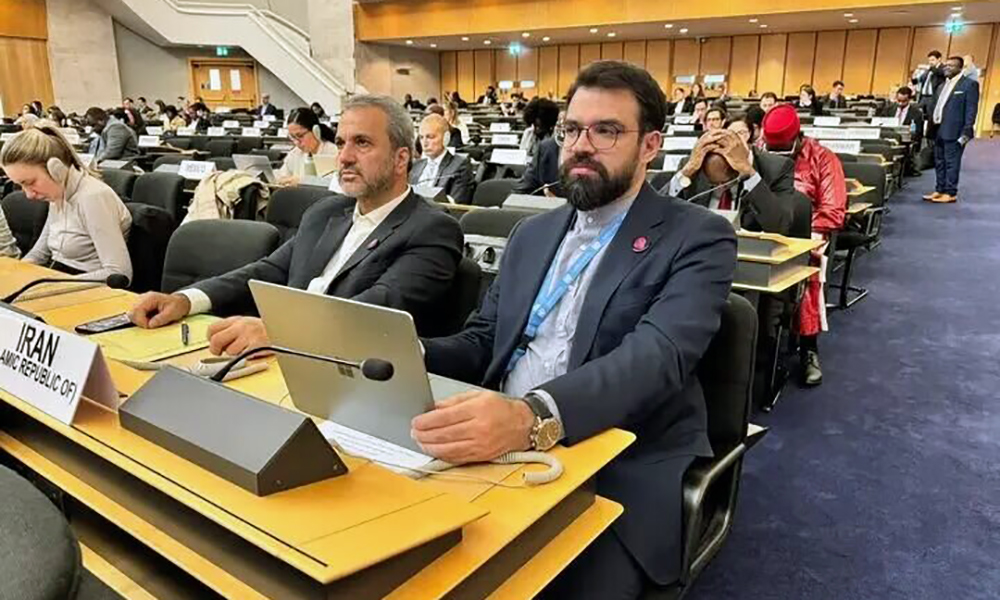
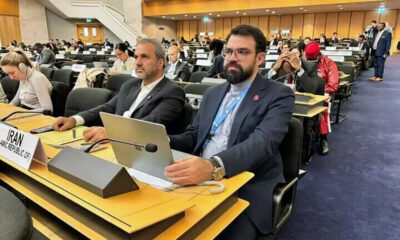
Nearly 60,000 Afghan students are enrolled at Iranian universities and scientific institutions, an Iranian official said, calling for increased international assistance to countries hosting refugees.
Nader Yar-Ahmadi, head of Iran’s Bureau for Aliens and Foreign Immigrants Affairs, gave the figures during the 77th annual session of the UN refugee agency’s Executive Committee in Geneva.
He said 59,658 Afghan students were studying at Iranian institutions, while many others had graduated. Yar-Ahmadi added that Iran continued providing education and healthcare to refugees despite international sanctions and economic pressures.
Iran Calls for More Funding
Yar-Ahmadi said international support for refugee-hosting countries remained inadequate and urged the global community to share responsibility more fairly.
He said annual funding requirements for UNHCR operations in Iran had been estimated at around $140 million in recent years, but less than 10% of the required amount was funded in 2025.
UN High Commissioner for Refugees Barham Salih thanked Iran for hosting refugees over several decades.
Iran has hosted millions of Afghan refugees and migrants, with access to education, healthcare and other essential services remaining key concerns for Afghan communities.
The remarks renew calls for greater international burden-sharing as countries hosting displaced populations face mounting economic and social pressures.
Latest News
Uzbekistan gains ground in Afghanistan’s flour market as Kazakhstan loses exports
Russian flour exporters are also facing increasing challenges in maintaining their position in Afghanistan as competition across regional markets intensifies.
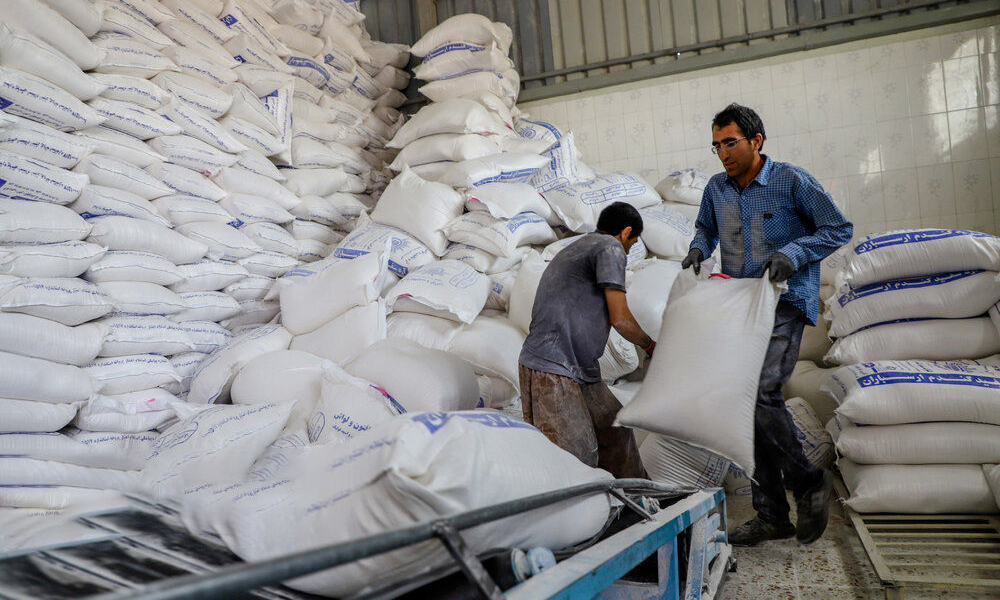
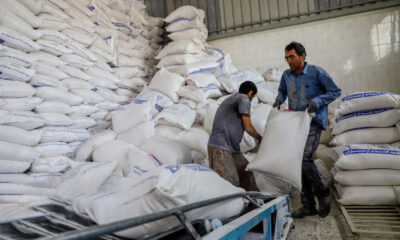
Uzbekistan is strengthening its position in Afghanistan’s wheat flour market, intensifying competition for traditional suppliers Kazakhstan and Russia, according to a representative of Kazakhstan’s grain processing industry.
Yevgeny Gan, chairman of the board of founders of Kazakhstan’s Union of Grain Processors, said Uzbekistan exported approximately 1.6 million tonnes of flour worth $441.7 million in 2025. Afghanistan accounted for 99.9% of these shipments, highlighting the country’s importance as a destination for Uzbek flour.
Kazakhstan has been among the biggest losers from the shift. Gan said Kazakh flour exports to Afghanistan fell by around 200,000 tonnes in 2025 compared with the previous year, as Uzbek producers strengthened their competitive position.
Lower transportation costs and the absence of transit tariffs along relevant trade routes have helped Uzbek flour producers offer more competitive prices in the Afghan market, Gan said.
The changing trade pattern has created an unusual dynamic in the regional grain industry. Uzbekistan relies heavily on wheat supplied by Kazakhstan, processes the grain in its own mills and then exports the finished flour to Afghanistan.
This means Kazakhstan continues to supply a key raw material to its neighbour while its own flour processors face growing competition from Uzbek producers in one of their important export markets.
Russian flour exporters are also facing increasing challenges in maintaining their position in Afghanistan as competition across regional markets intensifies.
According to the report, Russian suppliers are looking towards alternative destinations, including China, to offset mounting competitive pressure.
The developments highlight how transport costs, domestic processing capacity and access to efficient trade routes are reshaping agricultural trade across Central Asia. Countries able to process grain and deliver flour at competitive prices are gaining an advantage in regional markets.
For Afghanistan, the figures underline the country’s strong reliance on regional suppliers for wheat flour and the growing role of Uzbekistan in meeting that demand.
However, the reported export figures do not establish whether the shift in suppliers has affected flour prices in Afghanistan or reduced costs for consumers.
Latest News
Afghanistan, Saudi Arabia discuss solar and wind energy cooperation
The discussions covered potential energy projects, technical expertise sharing and joint initiatives to develop renewable energy resources.
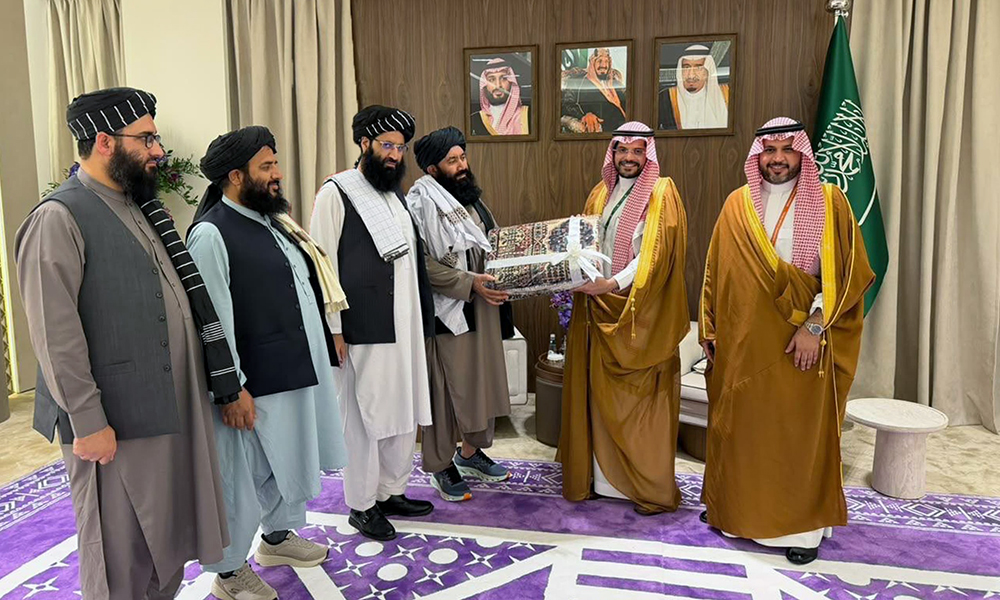
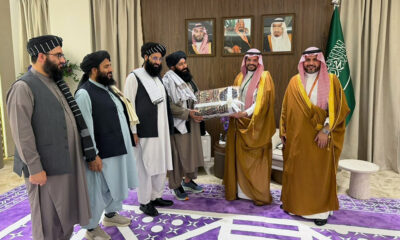
Afghanistan and Saudi Arabia have discussed expanding cooperation in renewable energy, with a focus on developing solar and wind power projects, Afghanistan’s Ministry of Water and Energy said.
The ministry said Water and Energy Minister Mohammad Younus Akhundzada, accompanied by a delegation, met Saudi Deputy Minister of Energy Mohammad Ibrahim during an official visit to the Kingdom.
The discussions covered potential energy projects, technical expertise sharing and joint initiatives to develop renewable energy resources.
Akhundzada invited the Saudi deputy minister and technical officials to visit Afghanistan to assess opportunities for cooperation. Ibrahim welcomed the invitation and said a technical team would visit Afghanistan in the near future, according to the ministry.
The planned visit is expected to focus on identifying investment opportunities in Afghanistan’s energy sector and exploring practical ways to implement joint projects.
The discussions come as Afghanistan seeks to expand its domestic electricity generation capacity, attract foreign investment and develop renewable energy resources to meet growing demand for power.


Iran says nearly 60,000 Afghan students attend its universities, urges more refugee aid

School roof collapse kills teacher, 21 children in NW Pakistan

Uzbekistan gains ground in Afghanistan’s flour market as Kazakhstan loses exports

IsDB urges MENAP countries to boost economic resilience and private investment

Afghanistan, Saudi Arabia discuss solar and wind energy cooperation

Cricket Bonanza: Afghanistan set for packed international schedule

UN warns of mounting humanitarian and human rights pressures in Afghanistan

Afghanistan says 28 killed, 32 captured in Nuristan operation

CNN, MS NOW and Politico sue Trump, challenging White House ban

Silk Road highway in Wakhan corridor now reaches the China border

Tahawol: Kyrgyzstan’s rejection of Afghan refugees discussed

Saar: Central Asia’s trade alternative to Pakistan discussed

Tahawol: Warnings over worsening insecurity in Pakistan discussed

Saar: Concerns over potential return of US military bases to Afghanistan discussed

Tahawol: Kabul’s criticism of Islamabad’s policy toward Afghanistan
-
 Regional4 days ago
Houthis warn airlines to avoid Saudi airports after deadly Riyadh attack
-

 World3 days ago
One dead in new attack on Saudi airport, a day after Houthi strike kills 13
-
 Sport4 days ago
Afghanistan Champions League second half to kick off on October 16
-

 World4 days ago
14 killed in two separate mass shootings across the United States
-
 Regional3 days ago
Pakistan deploys military to Peshawar after emergency rule declared
-
 Business4 days ago
Afghanistan signs nearly $400 million in regional trade and investment deals
-
 Health5 days ago
WHO calls for greater mental health support in Afghanistan
-

 Sport4 days ago
Bangladesh take 329-run lead against Afghanistan in one-off Test